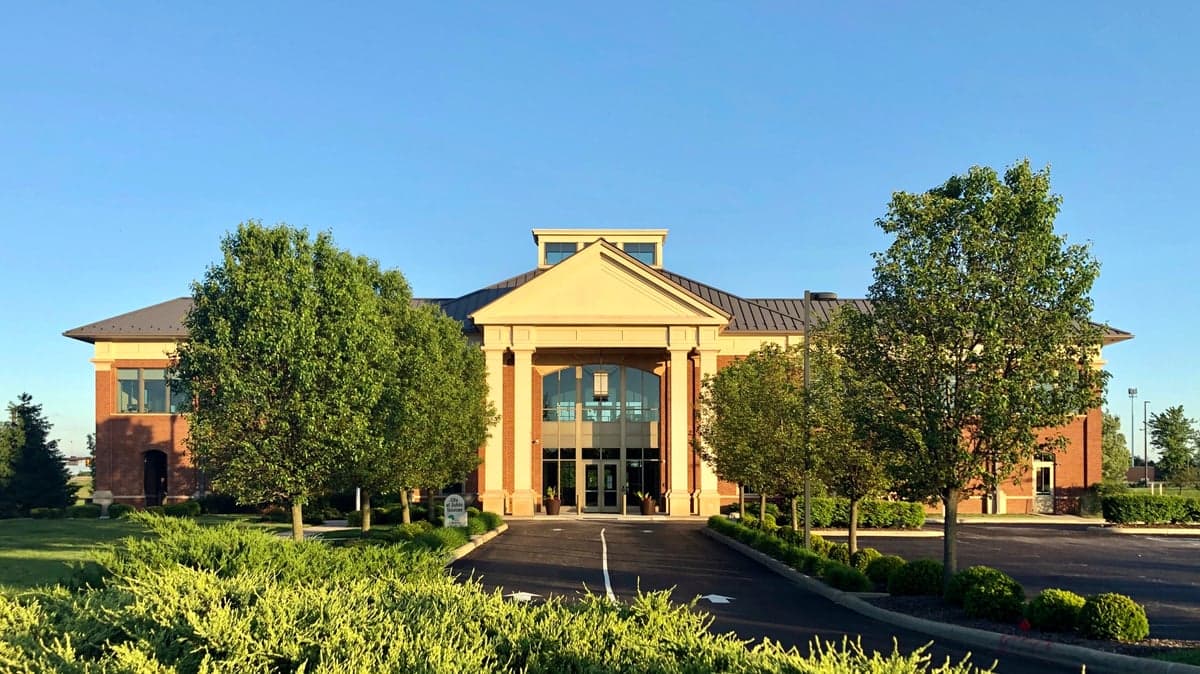
Photo: Wikipedia
Strategic Assessment of Dublin, OH
Multiple tactical vulnerabilities. Population density, target proximity, or disaster risk are likely compounding. A retreat property and exit planning is required.
What does the Strategic Assessment tell us?
Our Strategic Assessment grades tactical survivability of an area. Major population centers, military targets, fallout zones, natural disasters, and border exposure all drive risk — lower exposure means a more defensible position in a crisis.
This is heavily inspired by Joel Skousen's Strategic Relocation book. Highly recommended you checkout the book ($)What does this tell us?
Our Strategic Assessment grades tactical survivability of an area. Major population centers, military targets, fallout zones, natural disasters, and border exposure all drive risk — lower exposure means a more defensible position in a crisis.
This is heavily inspired by Joel Skousen's Strategic Relocation book. Highly recommended you checkout the book ($)Strategic Pillars

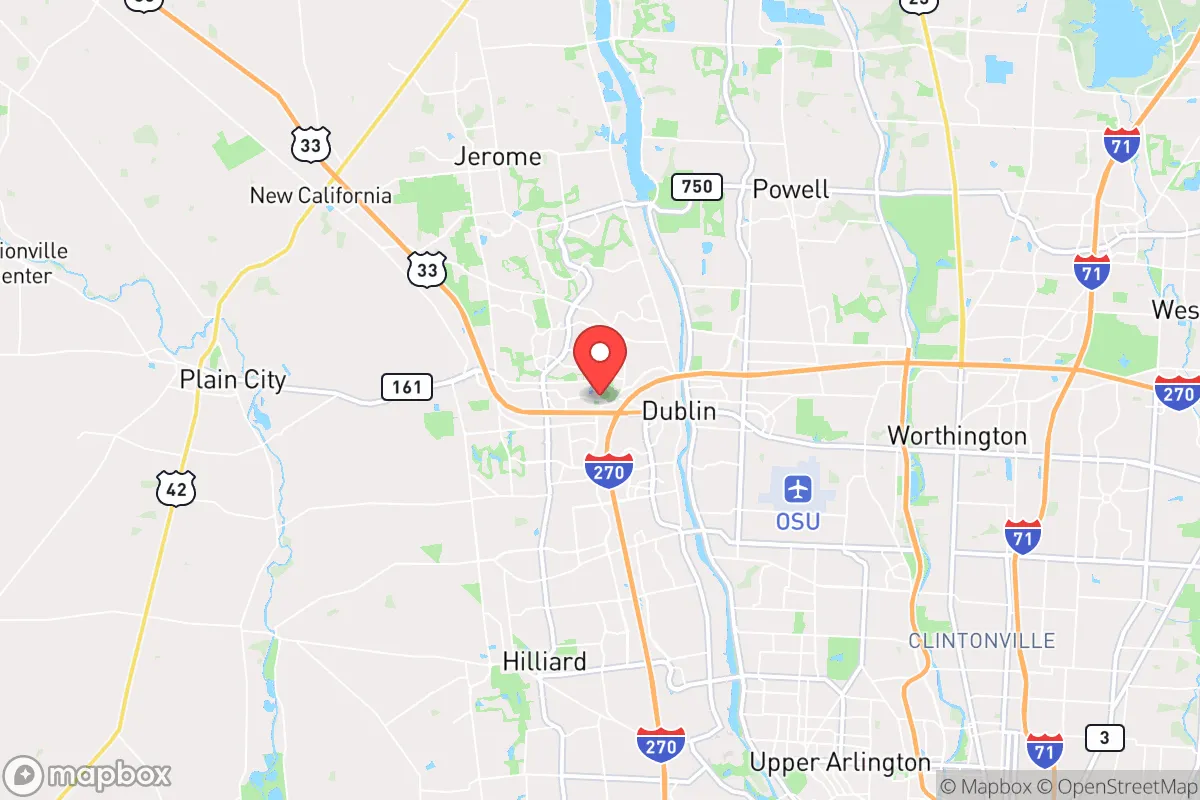
Key Distances
Regional Safe Places
Below is our recommended "safe zones" in Ohio and the surrounding area based on our strategic heuristics. For most people, it's unrealistic to live in a “safe zone” full-time due to work, family or other personal reasons. They tend to be more rural. However, many of these areas are perfect for second homes and retreat properties that double as a vacation home or even a short-term rental.

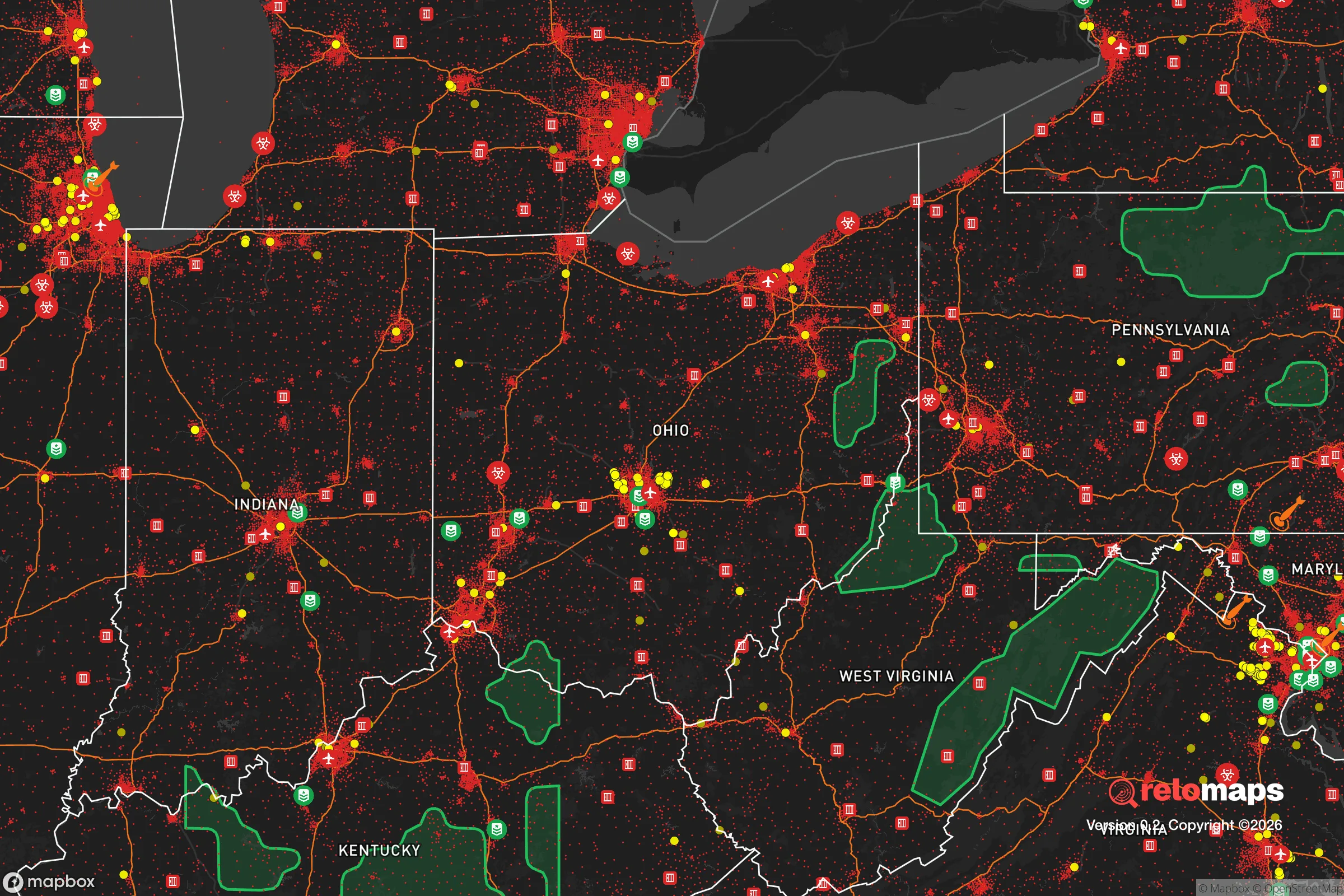


Important Note: For informational purposes only. This does not mean nothing bad ever happens in the green zones. Please use common sense. This is based on public data and modeled with AI. We tried to take a conservative approach but mistakes happen. We update this regularly as new information becomes available.
Solar Generator Recommendations
Backup power matters more here than in safer locations. We've picked three solar generators across budgets and capacity tiers — start with the budget unit if you only need a few essentials, or step up if you want to run a fridge and HVAC for days at a time.

Jackery Portable Power Station Explorer 300
Budget OptionPower on the Go: Weighing only 11 lbs, it's convenient to set up and store with book-sized foldable solar panels

BLUETTI Portable Power Station AC180
Designed for both indoor and outdoor scenarios, AC180 is highly capable as it has a robost capacity and continuous output power.

EF ECOFLOW DELTA Pro Ultra Power Station
Upgraded PickEcoFlow DELTA Pro Ultra is a whole-home energy system designed to grow with your family. Integrated with the Smart Home Panel 2, it scales to meet your evolving energy needs — keeping your home powered, intelligent, and secure through every stage of life.
We earn a commission, at no additional cost to you.
Strategic Assessment Analysis
Dublin, Ohio, presents a mixed strategic picture for the conservative prepper: it offers strong institutional resilience and economic stability, but its location within the Columbus metropolitan area introduces significant vulnerabilities that cannot be ignored. The city’s robust infrastructure, high median household income (around $130,000), and low crime rates make it a stable base for daily life, but its proximity to a major population center and key government infrastructure means it sits within the blast radius of any large-scale disruption. For the relocator prioritizing long-term survivability over suburban convenience, Dublin demands a clear-eyed assessment of trade-offs.
Geographic position and natural advantages for long-term stability
Dublin’s geographic position in central Ohio offers a few genuine strategic advantages. The city sits on the Scioto River, providing a reliable freshwater source, and the surrounding terrain is flat to gently rolling, which is favorable for agriculture and groundwater access. The region is far from active seismic zones, hurricane paths, and major wildfire corridors, meaning natural disaster risk is low. The climate is temperate, with four distinct seasons that support food storage and off-grid living without extreme temperature stress. Dublin’s location along Interstate 270 and near I-71 gives it decent road connectivity, but the real benefit is that it’s not a coastal choke point—no single bridge or tunnel failure would isolate it. The area’s agricultural hinterland, including nearby Delaware and Union counties, provides a buffer of farmland that could sustain local food production if supply chains falter. For a relocator, the land itself is not the problem; the problem is what sits on top of it.
Risks, exposures, and proximity to fallout-relevant landmarks
The primary strategic liability is Dublin’s proximity to Columbus—roughly 15 miles from downtown. Columbus is a major logistics hub (home to the Rickenbacker Air National Guard Base and a major FedEx hub), a state capital, and a population center of nearly 1 million. In a scenario of civil unrest, mass casualty events, or a coordinated attack, Columbus would be a high-priority target. Dublin’s location on the northwest side of the metro area places it downwind of prevailing weather patterns from the city center, meaning fallout from a chemical, biological, or radiological event in Columbus could drift directly over Dublin. Additionally, the city is near the I-270 outer belt, which in a crisis would become a chokepoint for evacuation or a vector for looting and refugee movement. The presence of major corporate campuses—including the Wendy’s headquarters and a large IBM office—makes Dublin a potential secondary target for symbolic attacks. The nearby Wright-Patterson Air Force Base (about 70 miles southwest) is a high-value military installation; while not immediately adjacent, its proximity means Dublin could see overflight traffic or secondary effects from a strike on that base. For the prepper, the risk is not that Dublin itself is a target, but that it’s close enough to be caught in the blast radius of a larger event.
Practical resilience for a relocator: food, water, energy, and defensibility
On the ground, Dublin offers mixed practical resilience. The water supply is municipally managed from the Scioto River and groundwater wells, which is reliable in normal times but vulnerable to contamination or disruption in a crisis. A relocator would need a private well or a robust rainwater catchment system to achieve true water independence—most suburban homes here are on city water. Food access is good in peacetime, with multiple grocery stores and a strong local farmers’ market scene, but the area is not a food-producing region in the way that rural Ohio is. The city’s zoning and HOA restrictions can be a barrier to visible prepping—raising chickens, installing solar panels, or storing large fuel tanks may draw unwanted attention. Energy-wise, the grid is stable but aging, and Ohio’s reliance on natural gas and coal means a prolonged grid-down scenario would hit hard. Solar is feasible but requires upfront investment and battery storage; the region gets about 170 sunny days per year, which is below the national average. Defensibility is the weakest point. Dublin is a sprawling suburban development with open layouts, cul-de-sacs, and limited natural cover. The terrain offers no high ground or natural barriers. A single-family home on a quarter-acre lot is not a defensible position. The city’s police force is well-funded and responsive, but in a widespread collapse, they would be overwhelmed. The best strategy for a relocator here is to treat Dublin as a base for daily life and maintain a secondary retreat property in a more rural, defensible location within a two-hour drive—say, in the hillier parts of southeastern Ohio or the farmland of western Ohio.
The overall strategic picture for Dublin is one of calculated risk. It is not a survivalist’s paradise, but it is a functional, low-crime, economically stable place to live while the world holds together. For the conservative relocator who values community stability, good schools, and a low probability of random violence, Dublin works—as long as you accept that you are living within the shadow of a major city. The key is to treat it as a peacetime base, not a bug-out location. If you are looking for a place to ride out a decade of slow decline, Dublin’s infrastructure and tax base will hold up better than most. But if you are planning for a sudden, catastrophic collapse, you need a plan B that is farther from the interstate and farther from Columbus. In short: Dublin is a solid B+ for daily resilience, but a C- for hardcore survival scenarios. The wise relocator will use it as a springboard, not a final destination.

* Values derived from national, state, county, city and local statistics and may differ in a specific area. Last updated: 2026-04-19T06:47:41.000Z
Narrative content on this page is AI-generated and may contain mistakes. Verify any details that matter before acting on them.
ReloMaps may earn a commission from affiliate links at no extra cost to you.

