Photo: Wikipedia
Political ClimatePolitical Climate in Downers Grove, IL
District shown is the primary district for this city’s centroid. Cities may span multiple districts.
Local Political AnalysisPolitical Analysis of Downers Grove, IL
Downers Grove has always had a bit of a split personality politically, but the needle has been shifting left for a while now. The Cook PVI rating of D+3 tells you the basics—it’s a district that leans Democratic, but not by a landslide. If you’ve lived here as long as I have, you remember when this was a reliably conservative village, a place where folks kept their heads down, paid their taxes, and expected the government to stay out of their business. That’s not the whole story anymore. The last few election cycles have shown a steady march toward progressive policies, and while it’s not Chicago yet, the trajectory is something to keep an eye on if you value personal freedoms and local control.
How it compares
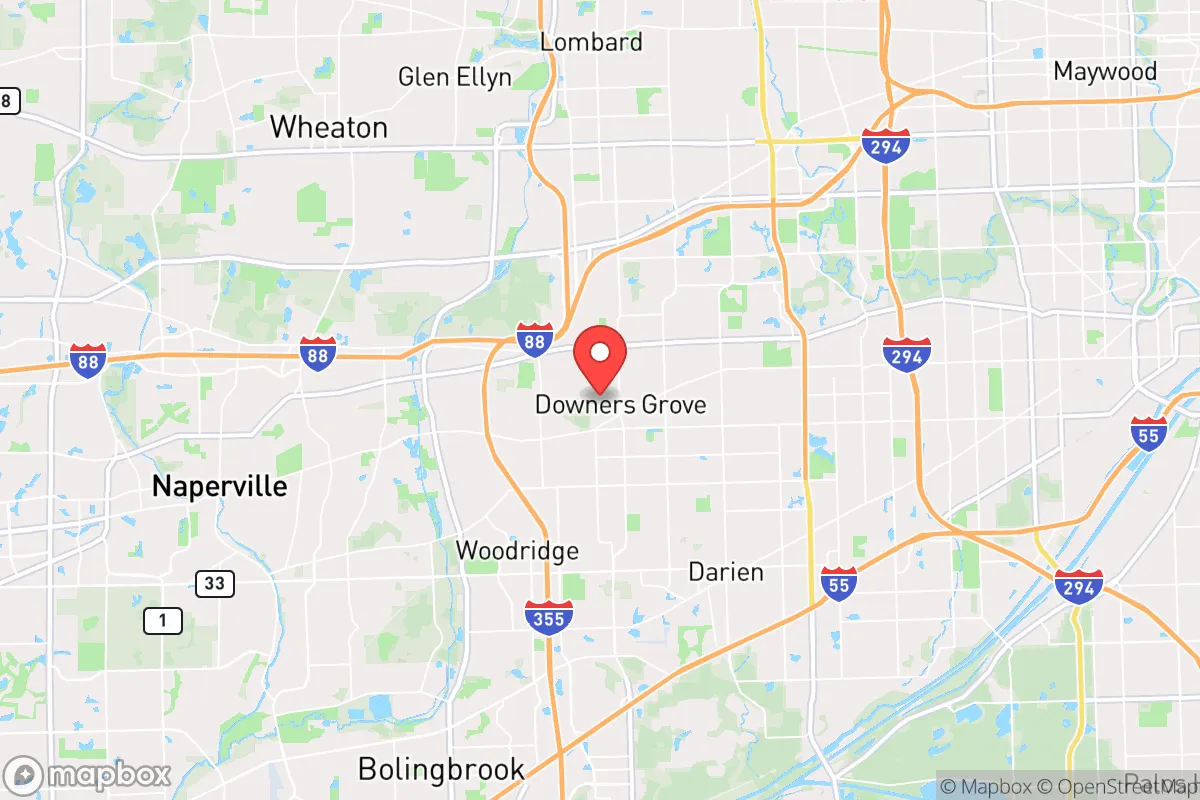
To get a real feel for Downers Grove, you have to look at the towns around it. Head west to Naperville or Lisle, and you’ll find a similar story—blue-leaning suburbs with a veneer of moderation. But drive a little further out to places like Woodridge or Darien, and the political vibe gets noticeably more conservative. Those towns still vote red in local races and push back harder on things like zoning overrides and tax hikes. Downers Grove, though, sits right in the middle of that tension. It’s not as far left as Oak Park or Evanston, but it’s also not the bastion of common-sense conservatism it used to be. The county-level politics in DuPage have gone from reliably red to a purple mess, and Downers Grove is ground zero for that shift. You’ll see it in school board elections, where progressive slates have been winning seats, and in village council votes that lean toward more regulation and higher spending.
What this means for residents
For the average person living here, the biggest change is the creeping sense that government is getting more involved in daily life. Property taxes have been climbing, and there’s a push for more “equity” initiatives in the schools—things that sound nice on paper but often mean more bureaucracy and less parental control. The village has also gotten stricter on things like short-term rentals and home-based businesses, which used to be a non-issue. If you’re someone who values the freedom to run a small operation out of your garage or rent out a room without a dozen permits, you’re going to feel the squeeze. The local government isn’t hostile, but it’s definitely more comfortable telling you what you can and can’t do on your own property. That’s a red flag for anyone who remembers when the village motto was basically “leave us alone.”
On the cultural side, you’ll notice more rainbow flags on downtown businesses and a louder presence from activist groups at community events. It’s not overwhelming, but it’s a sign of where things are heading. The long-time residents who used to run the local civic groups are being replaced by younger, more progressive voices. If that doesn’t bother you, fine. But if you’re concerned about government overreach—whether it’s mask mandates, zoning laws, or school curriculum—Downers Grove is a place where you’ll need to stay engaged. The next few years will tell us whether this is a temporary shift or a permanent change. My gut says it’s the latter, and I’d advise anyone moving here to get involved in local politics early if you want to keep the village from sliding too far into the progressive playbook.

State Political ClimatePolitical Climate in Illinois
State Political AnalysisPolitical Environment in the State
Illinois has been a reliably blue state in presidential elections for over three decades, with Democrats holding a structural advantage in statewide races thanks to the massive population centers of Chicago and its inner suburbs. However, the state’s political landscape is far from monolithic—it’s a tale of two Illinoises: the deep-blue Cook County and the collar counties versus a vast, increasingly red downstate. Over the last 10-20 years, the Democratic coalition has consolidated power through gerrymandering and legislative dominance, while rural and exurban areas have swung hard right, creating a polarized environment where state policy often feels disconnected from the values of families and individuals outside the Chicago metro.
Urban vs. rural divide
The political map of Illinois is essentially a battle between Chicago and everywhere else. Cook County, home to Chicago, reliably delivers 70-75% of its vote to Democrats, with the city itself often exceeding 80% for Democratic candidates. The collar counties—DuPage, Lake, Kane, Will, and McHenry—have been trending blue over the past decade, particularly in suburban areas like Naperville and Arlington Heights, where educated professionals have shifted left on social issues. Meanwhile, downstate Illinois—places like Peoria, Springfield, and the Metro East region across from St. Louis—votes solidly Republican, with many rural counties like Effingham and Macoupin routinely giving 70% or more to GOP candidates. The divide is stark: in 2024, Cook County alone provided over 1.5 million votes for the Democratic presidential candidate, while the rest of the state combined barely broke even. This geographic split means that state policy is largely dictated by Chicago’s urban agenda, leaving downstate conservatives feeling politically voiceless.
Policy environment
Illinois’s policy environment is a case study in progressive governance with significant consequences for personal freedom. The state has the second-highest property tax burden in the nation, with effective rates averaging over 2.0% of home value—a direct hit on homeowners and families. The state income tax is a flat 4.95%, but a 2020 graduated income tax amendment (which failed) showed the legislature’s appetite for higher taxes. On education, Illinois mandates a comprehensive sex education curriculum (Public Act 102-0522) that includes LGBTQ+ topics from kindergarten, and the state has eliminated parental notification requirements for abortion (HB 370, 2021). Election laws are among the most permissive in the country: no-excuse mail-in voting, same-day registration, and automatic voter registration are all law. The state also has a sanctuary state policy (TRUST Act, 2017) that limits cooperation between local law enforcement and federal immigration authorities. For a conservative family, the policy environment feels like a top-down imposition of Chicago values on the entire state, with little room for local opt-outs.
Trajectory & freedom
Over the past five years, Illinois has moved decisively toward less personal freedom, particularly in areas of parental rights, gun rights, and economic liberty. The 2023 Protect Illinois Communities Act banned the sale and possession of many semi-automatic firearms and high-capacity magazines, directly infringing on Second Amendment rights—a law that has sparked ongoing federal lawsuits. On parental rights, the state passed HB 370 (2021) removing parental notification for minors seeking abortions, and the Keeping Youth Safe and Healthy Act (2021) mandates sex education that many parents find objectionable. The state also enacted a Worker Freedom of Speech Act (2024) that restricts employer speech about unionization, effectively limiting workplace free expression. On the positive side for conservatives, Illinois has no state-level rent control (preempted by state law), and property rights remain relatively strong outside of Chicago’s zoning ordinances. However, the overall trajectory is concerning: the legislature has consistently expanded state power over local communities, and the governor’s office has been held by Democrats since 2003, with no sign of a shift.
Civil unrest & political movements
Illinois has seen its share of political flashpoints. The 2020 George Floyd protests in Chicago, Naperville, and even smaller towns like Champaign resulted in widespread property damage and looting, with the city of Chicago paying out over $50 million in settlement claims. The state’s sanctuary policy has made it a magnet for immigration-related activism, with groups like the Illinois Coalition for Immigrant and Refugee Rights pushing for even more protections. On the right, the Illinois Family Institute and local gun rights groups like the Illinois State Rifle Association have been active in lawsuits and legislative battles, particularly around the gun ban. There have been recurring calls for downstate secession—most notably the “New Illinois” movement, which advocates for Cook County to become its own state—though these remain fringe. Election integrity has been a hot topic: the state’s universal mail-in voting system (made permanent in 2023) has led to concerns about ballot security, though no major scandals have been proven. A new resident in a downstate town like Quincy or Marion would notice a palpable cultural tension between the local conservative ethos and the state government’s progressive mandates.
Projection
Over the next 5-10 years, Illinois is likely to become even more polarized. Demographic trends favor Democrats: Chicago’s population is stabilizing after a post-COVID dip, while the collar counties continue to suburbanize and trend blue. Downstate, however, is shrinking—rural counties like Alexander and Pulaski have lost 20-30% of their population since 2010, reducing their political clout. The state’s gerrymandered legislative maps (drawn by Democrats in 2021) ensure that the General Assembly will remain under Democratic control for the foreseeable future, even if the governor’s race tightens. In-migration patterns are negative: Illinois lost over 100,000 residents in 2023 alone, many of them moving to red states like Texas, Florida, and Indiana. This self-selection means that those who stay or move in are increasingly aligned with the state’s progressive direction. For a conservative family moving in now, the expectation should be that state-level policies will continue to expand government control over education, firearms, and taxation, with little chance of reversal at the ballot box.
For a new resident, the bottom line is this: Illinois offers a high cost of living, heavy taxation, and a policy environment that prioritizes urban progressive values over rural and suburban conservative ones. If you value low taxes, strong Second Amendment protections, and local control over schools, you will find yourself fighting an uphill battle against a well-entrenched state government. The state’s natural beauty, strong job market in Chicago, and excellent universities are real draws, but they come with a political price tag that many conservative families find too steep. If you’re considering a move here, be prepared to engage in local politics—or accept that your voice will be one of many in a state that increasingly leans left.
* Values derived from national, state, county, city and local statistics and may differ in a specific area. Last updated: 2026-04-23T09:37:46.000Z
Narrative content on this page is AI-generated and may contain mistakes. Verify any details that matter before acting on them.
ReloMaps may earn a commission from affiliate links at no extra cost to you.

