 Popular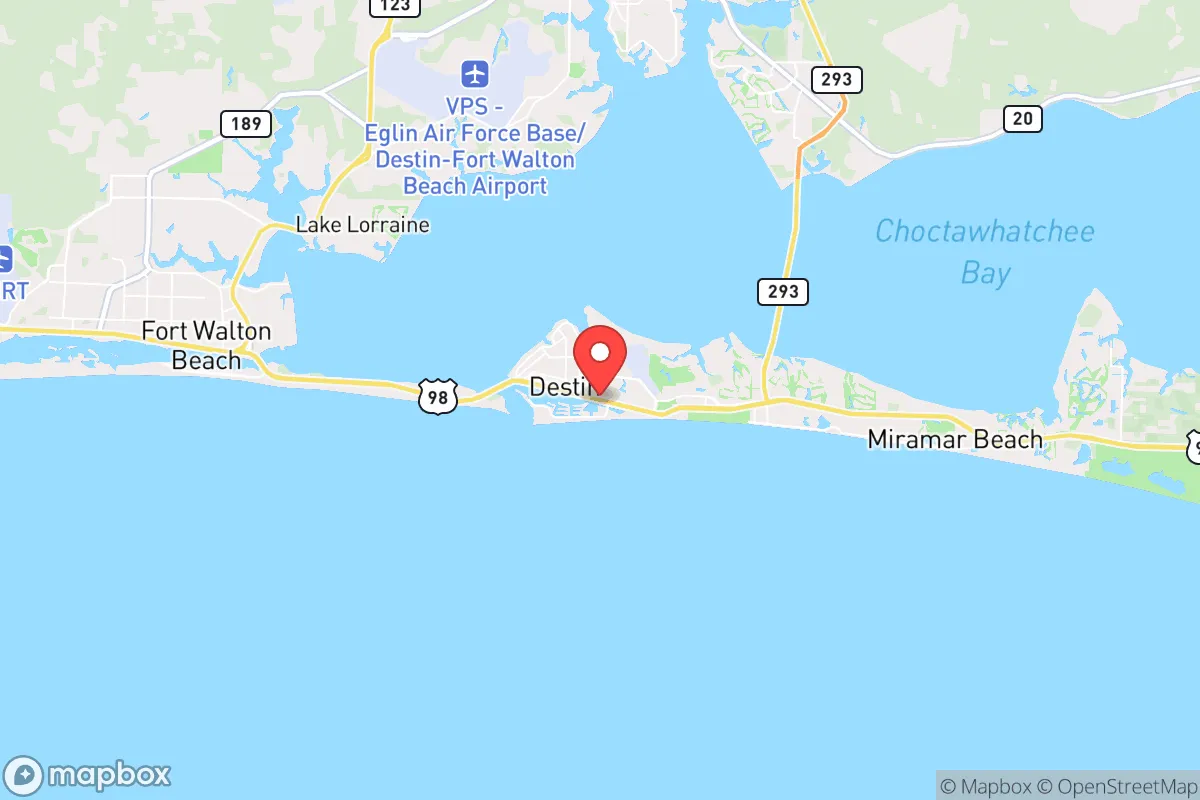
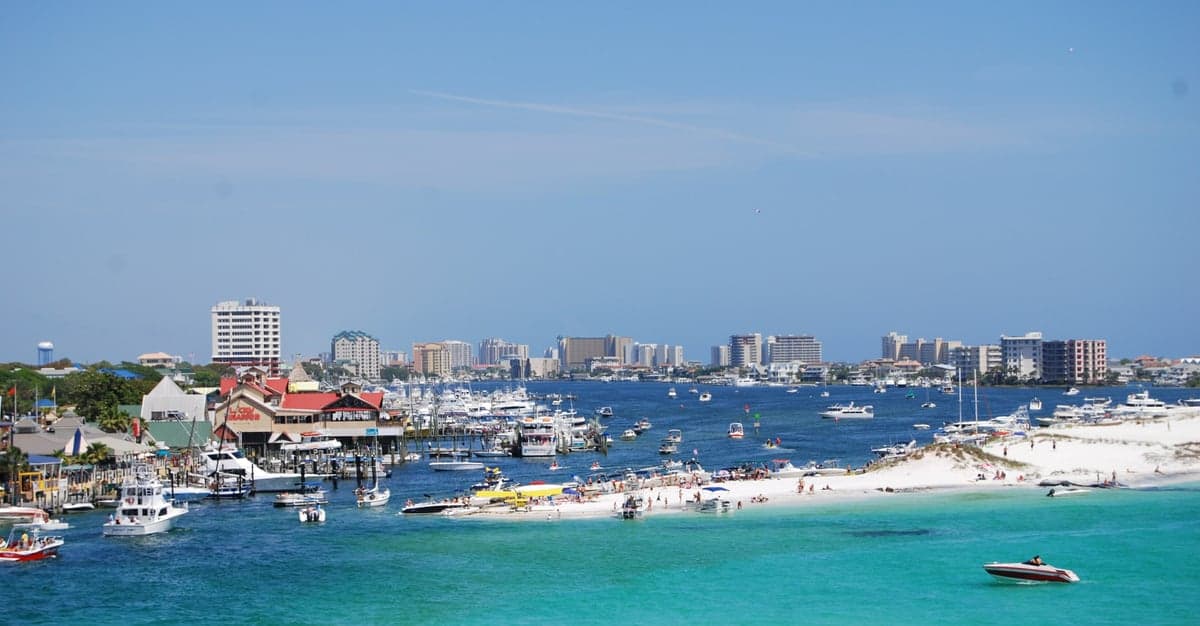
Photo: Wikipedia
Strategic Assessment of Destin, FL
Meaningful friction. Expect exposure to either population pressure, blast zones, or natural disaster risk. Consider buying a retreat property.
What does the Strategic Assessment tell us?
Our Strategic Assessment grades tactical survivability of an area. Major population centers, military targets, fallout zones, natural disasters, and border exposure all drive risk — lower exposure means a more defensible position in a crisis.
This is heavily inspired by Joel Skousen's Strategic Relocation book. Highly recommended you checkout the book ($)What does this tell us?
Our Strategic Assessment grades tactical survivability of an area. Major population centers, military targets, fallout zones, natural disasters, and border exposure all drive risk — lower exposure means a more defensible position in a crisis.
This is heavily inspired by Joel Skousen's Strategic Relocation book. Highly recommended you checkout the book ($)Strategic Pillars

Key Distances
Regional Safe Places
Below is our recommended "safe zones" in Florida and the surrounding area based on our strategic heuristics. For most people, it's unrealistic to live in a “safe zone” full-time due to work, family or other personal reasons. They tend to be more rural. However, many of these areas are perfect for second homes and retreat properties that double as a vacation home or even a short-term rental.

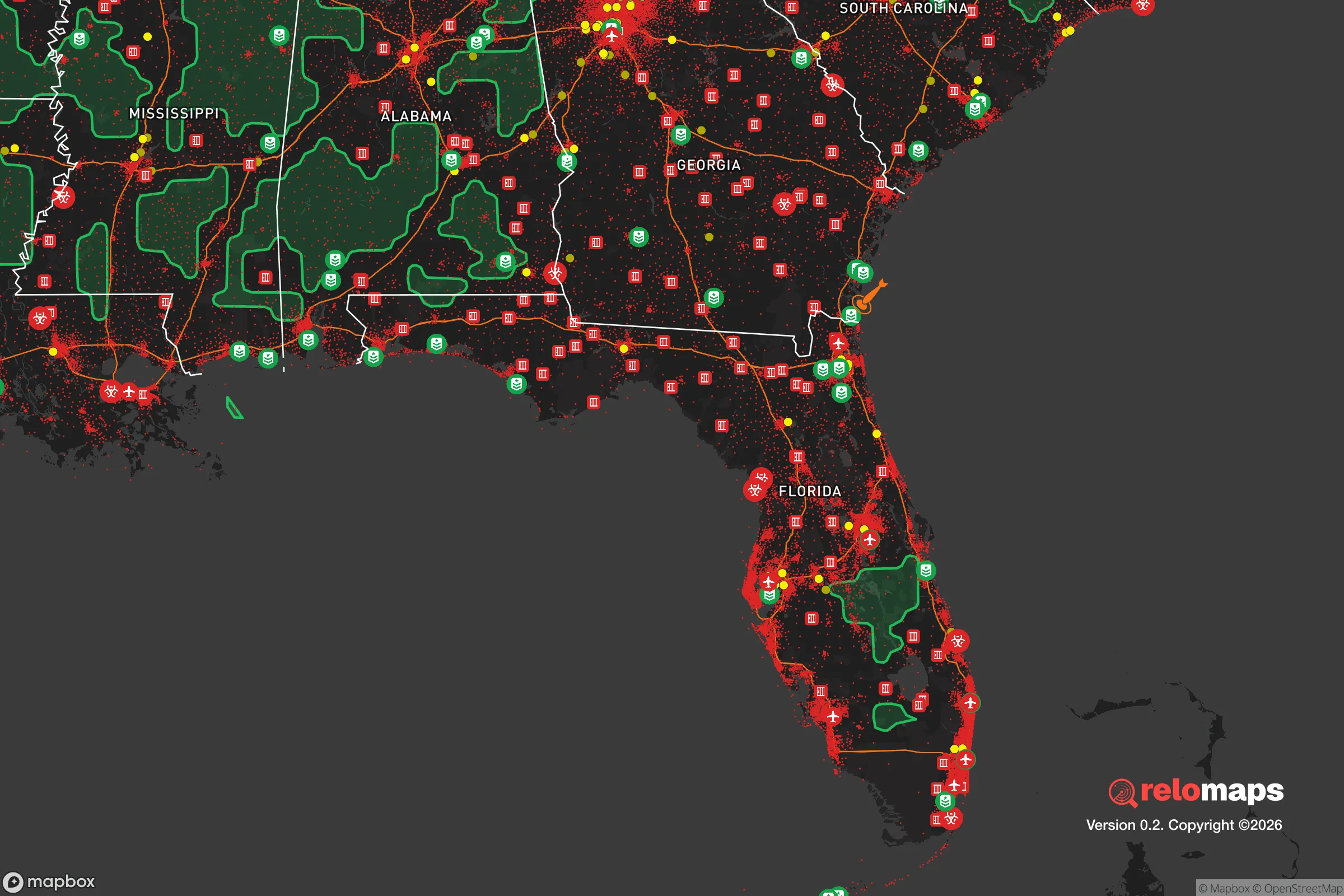


Important Note: For informational purposes only. This does not mean nothing bad ever happens in the green zones. Please use common sense. This is based on public data and modeled with AI. We tried to take a conservative approach but mistakes happen. We update this regularly as new information becomes available.
Solar Generator Recommendations
Backup power matters more here than in safer locations. We've picked three solar generators across budgets and capacity tiers — start with the budget unit if you only need a few essentials, or step up if you want to run a fridge and HVAC for days at a time.

Jackery Portable Power Station Explorer 300
Budget OptionPower on the Go: Weighing only 11 lbs, it's convenient to set up and store with book-sized foldable solar panels

BLUETTI Portable Power Station AC180
Designed for both indoor and outdoor scenarios, AC180 is highly capable as it has a robost capacity and continuous output power.

EF ECOFLOW DELTA Pro Ultra Power Station
Upgraded PickEcoFlow DELTA Pro Ultra is a whole-home energy system designed to grow with your family. Integrated with the Smart Home Panel 2, it scales to meet your evolving energy needs — keeping your home powered, intelligent, and secure through every stage of life.
We earn a commission, at no additional cost to you.
Strategic Assessment Analysis
Destin, Florida, offers a unique strategic position for those prioritizing resilience, but its advantages come with significant trade-offs that demand clear-eyed assessment. Located on a narrow peninsula along the Emerald Coast, the city benefits from geographic isolation relative to major population centers, yet its reliance on a single primary evacuation route and exposure to Gulf hurricanes create vulnerabilities that any serious prepper must account for. For a conservative-leaning relocator concerned with civic unrest, supply chain disruptions, or large-scale disasters, Destin presents a mixed picture: strong local resources and a tight-knit community culture, but also proximity to high-value military infrastructure and tourism-dependent fragility.
Geographic position and natural defensive advantages
Destin sits on a narrow strip of land between the Choctawhatchee Bay and the Gulf of Mexico, giving it a natural chokepoint geography that can be both a blessing and a curse. The only land route in and out is via U.S. Highway 98, which runs east-west through the Florida Panhandle. This single artery means that in a crisis—whether a hurricane evacuation or a civil unrest scenario—egress can become gridlocked within hours. On the plus side, the surrounding water bodies provide natural barriers against ground-based threats; the bay and gulf make it difficult for large-scale ground incursions, and the area's relatively low population density (around 14,000 year-round residents, swelling to over 100,000 in peak tourist season) means fewer eyes and less competition for resources compared to a major metro. The proximity to Eglin Air Force Base, roughly 15 miles west, is a double-edged sword: it brings military presence and potential security, but also makes Destin a plausible secondary target in a conflict scenario. The base is one of the largest in the world by land area, housing critical testing ranges and munitions storage, which could draw attention in a national emergency.
Risks, exposures, and proximity to fallout-relevant landmarks
The most immediate risk to Destin is its vulnerability to Gulf hurricanes, which can produce storm surges of 15 feet or more, catastrophic wind damage, and prolonged power outages. The 2018 Hurricane Michael, which devastated Mexico Beach 60 miles east, demonstrated that even well-built structures can be leveled in this region. Destin itself has been spared direct hits in recent decades, but the statistical probability of a major storm remains high. Beyond weather, the area's reliance on tourism means that a prolonged economic disruption—such as a pandemic, currency collapse, or civil unrest—would devastate local employment and tax revenue, potentially leading to a rapid decline in services. The nearby Destin-Fort Walton Beach Airport (VPS) is a civilian-military joint-use facility, which could become a contested asset in a crisis. Additionally, the city lies within 100 miles of Hurlburt Field, home to the Air Force Special Operations Command, and the Naval Surface Warfare Center in Panama City. These are high-value targets in any conflict scenario, and their proximity means that a major event could bring fallout—both literal and figurative—to Destin. For the prepper, this means that while Destin is not a primary target like Washington D.C. or New York, it sits within the blast radius of strategic military infrastructure.
Practical resilience for a relocator: food, water, energy, and defensibility
Destin's practical resilience is a mixed bag. Water security is a major concern: the city draws its drinking water from the Sand and Gravel Aquifer, a shallow groundwater source that is vulnerable to saltwater intrusion during droughts and storm surges. A Category 3+ hurricane could contaminate the aquifer for weeks or months, making well-water access critical for long-term survival. Food security is better than average due to the Gulf's fisheries—red snapper, grouper, and shrimp are abundant year-round—and the presence of local farms in nearby Walton and Okaloosa counties. However, the area's sandy soil is poor for large-scale agriculture, so a garden would require raised beds and significant soil amendment. Energy infrastructure is fragile: power lines run along the narrow peninsula and are frequently knocked out by tropical storms. Solar panels are viable given the region's 230+ sunny days per year, but they must be hurricane-rated and secured against 140 mph winds. Defensibility is moderate: the single road in and out makes it easy to monitor traffic, but also easy for authorities to block access. The dense residential neighborhoods near the beach offer limited concealment, while the bayous and state forests to the north provide better options for a remote retreat. For a relocator, the key is to secure a property with a private well, solar backup, and a boat—the latter being the only reliable alternative to Highway 98 for evacuation or resupply.
Overall strategic picture for the conservative prepper
Destin is not a bug-out location for the lone wolf; it is a community-oriented survival environment that rewards preparation and local knowledge. The city's conservative lean—Okaloosa County voted +33 points Republican in 2024—aligns with a culture of self-reliance, church networks, and neighborly mutual aid that can be invaluable in a crisis. However, the seasonal tourist influx creates a "summer surge" of transient populations that strain resources and introduce unknown variables. For a single individual or family, the best strategy is to establish a year-round presence, build relationships with local fishermen and farmers, and maintain a low profile. The military presence provides a stabilizing force in the short term, but in a prolonged national emergency, it could also attract federal attention or become a target. The bottom line: Destin offers a defensible coastal position with good natural resources, but its single-point failure in transportation and vulnerability to hurricanes make it a location that demands robust backup plans. If you can secure a property with a well, solar, and a boat, and you're willing to ride out the storms, it's a viable option. If you're looking for a landlocked, self-sufficient homestead with no external dependencies, look inland to the Florida Panhandle's rural counties—but for a coastal community with a strong conservative ethos and access to the sea, Destin is worth a serious look.

* Values derived from national, state, county, city and local statistics and may differ in a specific area. Last updated: 2026-04-19T06:57:33.000Z
Narrative content on this page is AI-generated and may contain mistakes. Verify any details that matter before acting on them.
ReloMaps may earn a commission from affiliate links at no extra cost to you.

