Photo: Wikipedia
Personal Sovereignty in Del Norte, CO
Viable for self-reliance. Generally workable, though some barriers may limit total independence.
What does Personal Sovereignty tell us?
Personal Sovereignty measures your capacity for self-reliance and independence with minimal government friction. Higher scores mean fewer barriers between you and the way you want to live... but it assumes you have the space you need and good neighbors.
What does this tell us?
Personal Sovereignty measures your capacity for self-reliance and independence with minimal government friction. Higher scores mean fewer barriers between you and the way you want to live... but it assumes you have the space you need and good neighbors.
State Policy
Energy independence: Net exporter (110% of energy produced in-state)
Personal Liberty
Homesteading

Personal Liberty Analysis
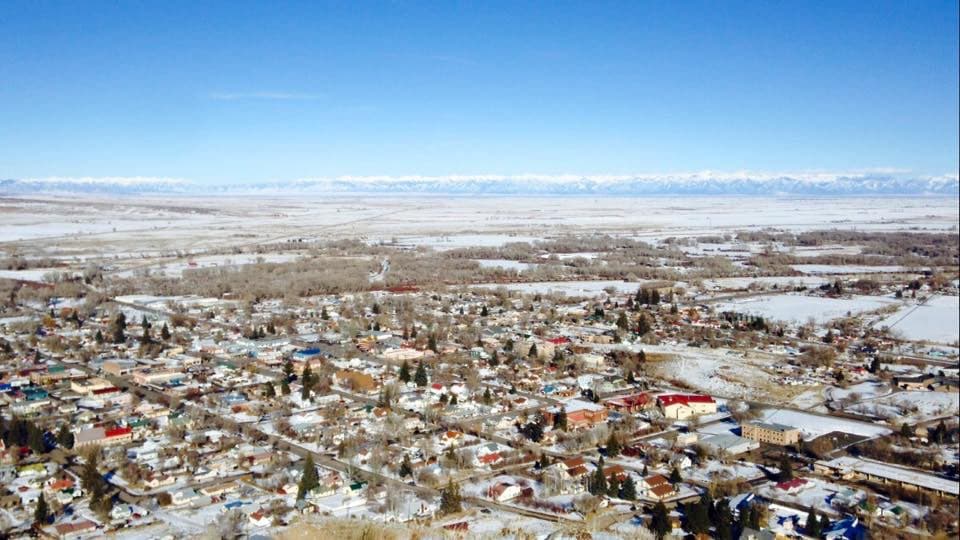
Del Norte, Colorado, offers a notably high degree of personal sovereignty relative to many other parts of the state and the nation, largely due to its remote location in the San Luis Valley and the prevailing culture of self-reliance. For those with a survivalist or prepper mindset, this small town of roughly 1,600 people represents a strategic outpost where government overreach feels distant, and the practical ability to live by your own rules is tangible. The area’s political leanings are mixed—Rio Grande County voted +14 R in 2024—but the dominant ethos is less about party affiliation and more about a deep-seated expectation that individuals handle their own affairs, from security to sustenance. This is not a place where you look to the state for solutions; it’s a place where you look to your own skills, land, and community.
Tax burden and regulatory posture: How Colorado’s state policies affect Del Norte
Colorado’s state-level tax burden is moderate, but Del Norte’s local implementation offers significant advantages for those seeking to minimize government extraction. The state income tax is a flat 4.4%, and the state sales tax is 2.9%, but Del Norte itself adds a modest 3.5% city sales tax, bringing the total to around 6.4%—lower than many Front Range cities. Property taxes are the real draw: Rio Grande County’s effective rate is approximately 0.49% of assessed value, one of the lowest in Colorado. On a $200,000 home, that’s roughly $980 annually, a fraction of what you’d pay in Boulder or Denver. Regulatory posture is light-touch at the county level. There is no county-wide building code for rural areas, and zoning is minimal outside the town limits. For a prepper, this means you can construct a workshop, root cellar, or even a small bunker without navigating a thicket of permits. The state’s energy code and environmental regulations still apply to major projects, but enforcement is lax in this sparsely populated region. The biggest regulatory risk is state-level overreach on water rights—Colorado’s prior appropriation system is strict, and any well or diversion requires a permit from the Division of Water Resources. For homesteaders, this is the one area where the state’s hand is heavy, so securing a legal water source before purchasing land is non-negotiable.
Self-defense and gun law specifics: What the Second Amendment looks like in Del Norte
Colorado is a shall-issue state for concealed carry permits, and Del Norte sits in a county where the sheriff’s office is known for a pro-Second Amendment stance. The state does require a background check for all firearm transfers, including private sales, which is a point of friction for those who view it as an infringement. However, there is no state-level magazine capacity ban, no assault weapons ban, and no red flag law enforcement that is aggressive in rural counties. Open carry is legal without a permit, and the sheriff’s office in Rio Grande County has publicly stated it will not enforce any federal firearms laws it deems unconstitutional. For practical self-defense, the area’s low crime rate—violent crime is roughly 60% below the national average—means you’re more likely to need a firearm for wildlife (mountain lions, black bears, and coyotes) than for human threats. The nearest gun store is in Alamosa, about 30 minutes north, but private sales within the community are common. For those building a survival stockpile, there are no county-level restrictions on ammunition storage or quantity. The key takeaway: Del Norte offers a sanctuary-level environment for gun owners, provided you comply with the state’s background check requirement. The cultural norm is that self-defense is a personal responsibility, not a government service.
Self-reliance and homesteading viability: Lot sizes, zoning, and off-grid feasibility
Del Norte’s surrounding area is a homesteader’s dream, with land prices among the lowest in Colorado and zoning that encourages self-reliance. Outside the town limits, you can find 5- to 40-acre parcels for $1,500 to $3,000 per acre, often with water rights or irrigation ditches already in place. There is no county-wide zoning for agricultural or residential use on parcels over 35 acres, meaning you can build a home, barn, greenhouse, or workshop without a building permit. Off-grid living is fully feasible: solar irradiance in the San Luis Valley is among the highest in the state, averaging 5.5 peak sun hours per day, making photovoltaic systems highly effective. Rainwater collection is legal for outdoor use, but indoor use requires a permit from the Colorado Department of Public Health and Environment—a bureaucratic hurdle, but not a prohibitive one. Composting toilets are allowed, and there are no county health department inspections for rural properties. The growing season is short (about 100 days) due to the 7,900-foot elevation, but cold-hardy crops like potatoes, kale, and root vegetables thrive. For livestock, the county allows up to 10 animal units per acre without a special permit, so a small herd of goats or a few head of cattle is straightforward. The biggest limitation is water: you must have a decreed water right or a well permit, and new wells are difficult to obtain in some basins. Buy land with existing water rights, and you’re golden. For the prepper, this is a low-regulation, high-autonomy environment where you can build a self-sufficient compound with minimal government interference.
Personal liberties: Parental rights, medical autonomy, speech, and property
In Del Norte, personal liberties are largely respected, with the state’s progressive policies often feeling abstract rather than enforced. Parental rights are strong in practice: the local school district (Del Norte C-7) has a conservative school board that has resisted state mandates on curriculum and health policies. There is no local enforcement of Colorado’s universal preschool program if parents choose to opt out, and homeschooling is common, with a supportive community of families. Medical autonomy is a mixed bag: Colorado has legalized recreational marijuana and assisted suicide, but the local culture is skeptical of government-mandated medical interventions. The nearest hospital is in Alamosa, and many residents drive to Colorado Springs or Denver for specialized care to avoid what they see as overreach in the state’s public health apparatus. Freedom of speech is robust—this is a community where you can voice opinions on federal overreach, immigration, or local governance without social or legal repercussions. Property rights are the crown jewel: Rio Grande County has no rent control, no inclusionary zoning, and no short-term rental restrictions outside the town limits. You can build, fence, or gate your land as you see fit, and there is no county noise ordinance that would restrict generator use or shooting on your property. The only significant property restriction is the state’s oil and gas regulations, which don’t apply here as there is no drilling activity. For the liberty-minded individual, Del Norte offers a rare combination of low taxes, minimal regulation, and a culture that treats personal freedom as the default, not a privilege.
Overall, Del Norte’s personal sovereignty profile is among the strongest in Colorado for those with a survivalist or prepper perspective. The combination of low property taxes, minimal zoning, a pro-Second Amendment sheriff, and a community that values self-reliance creates an environment where government overreach is the exception, not the rule. Compared to the Front Range or even other rural Colorado towns like Durango or Salida, Del Norte is less influenced by state-level progressive policies and more insulated by geography and local culture. The trade-offs are real: limited healthcare access, a short growing season, and the need to secure water rights. But for someone willing to invest in infrastructure and skills, this is a place where you can live largely on your own terms, with the state as a distant presence rather than a daily manager of your life. It’s not a libertarian utopia—Colorado’s state laws still apply—but it’s as close as you’ll find in the modern West for a strategic relocation.

* Values derived from national, state, county, city and local statistics and may differ in a specific area. Last updated: 2026-05-16T21:14:41.000Z
Narrative content on this page is AI-generated and may contain mistakes. Verify any details that matter before acting on them.
ReloMaps may earn a commission from affiliate links at no extra cost to you.

