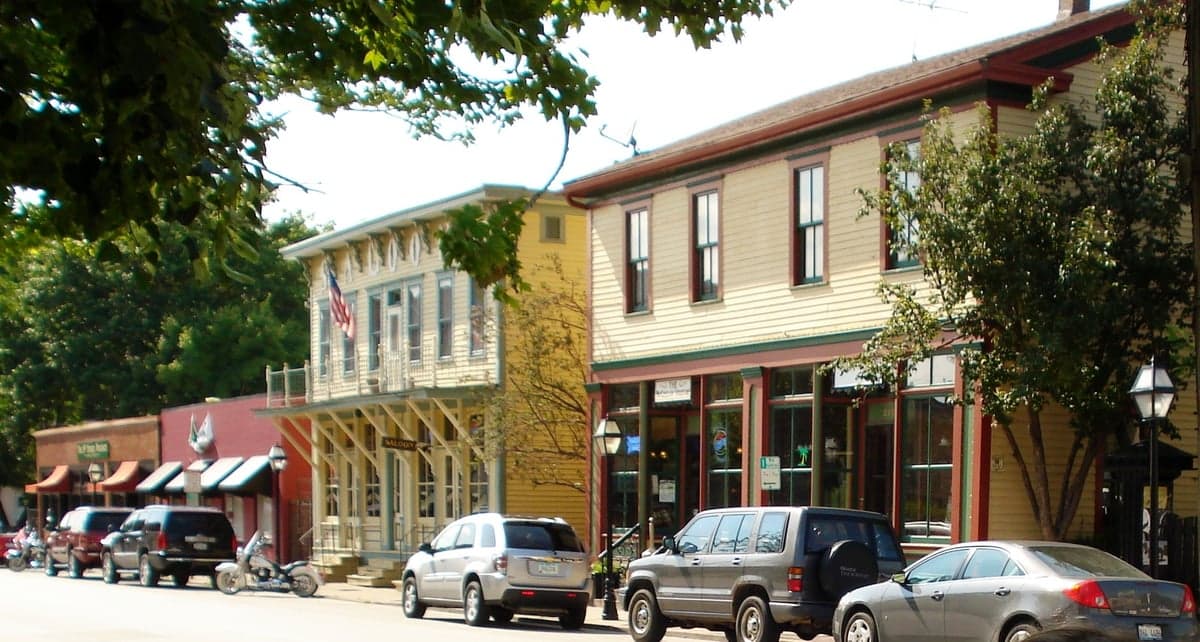
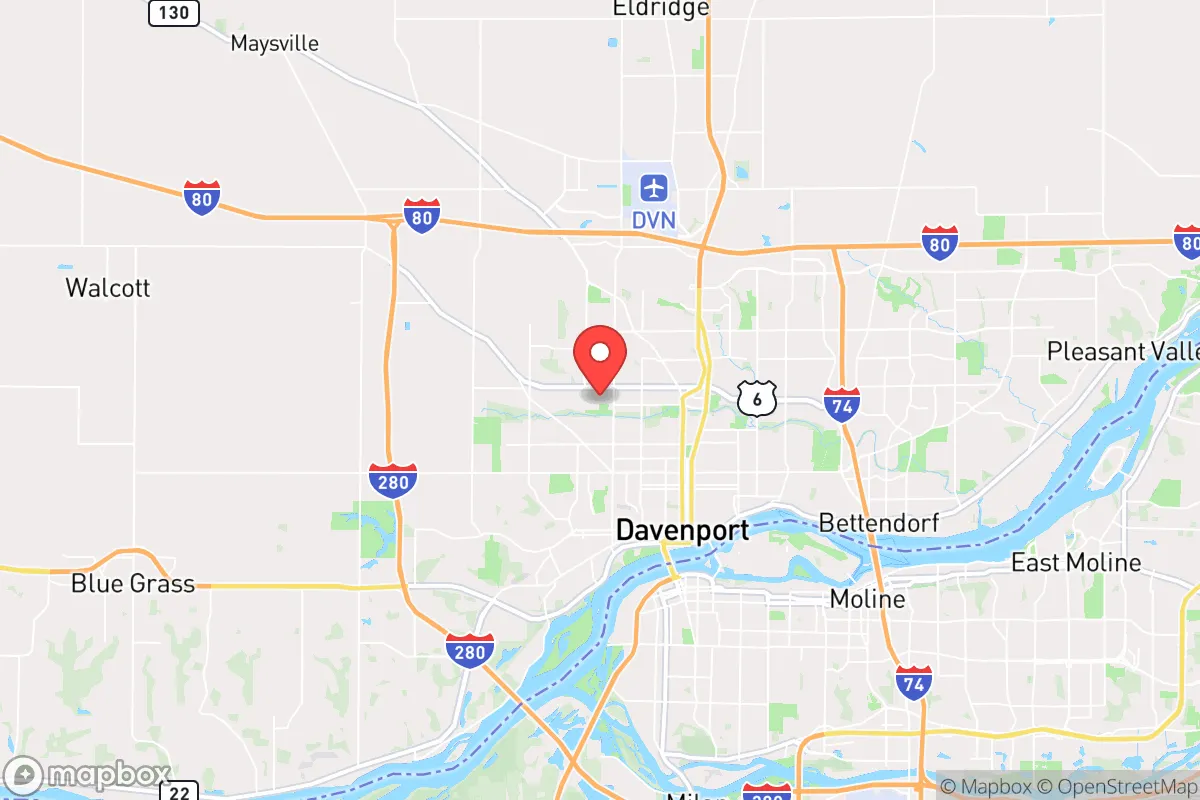
Photo: Wikipedia
Personal Sovereignty in Davenport, IA
Viable for self-reliance. Generally workable, though some barriers may limit total independence.
What does Personal Sovereignty tell us?
Personal Sovereignty measures your capacity for self-reliance and independence with minimal government friction. Higher scores mean fewer barriers between you and the way you want to live... but it assumes you have the space you need and good neighbors.
What does this tell us?
Personal Sovereignty measures your capacity for self-reliance and independence with minimal government friction. Higher scores mean fewer barriers between you and the way you want to live... but it assumes you have the space you need and good neighbors.
State Policy
Energy independence: Importer (50% of energy produced in-state)
Personal Liberty
Homesteading

Personal Liberty Analysis
Davenport, Iowa, offers a mixed bag for those prioritizing personal sovereignty, sitting in a state that has historically leaned conservative but with a local government that can feel more interventionist than its rural neighbors. For the strategic relocation analyst, the Quad Cities region presents a unique tension: the low population density and Midwestern ethos of self-reliance clash with a city council that has shown willingness to impose mask mandates, business closures, and zoning restrictions that would make a prepper’s blood run cold. The key question isn’t whether you can live free here—it’s how much friction you’re willing to tolerate from local bureaucrats who see their role as managing your life rather than protecting your rights.
Tax burden and regulatory posture: how much of your income and freedom does the state take?
Iowa’s tax climate is a bright spot for sovereignty-minded individuals, with a flat individual income tax rate of 3.8% as of 2026, down from a progressive system that once hit nearly 9%. This is a deliberate move by the state legislature to attract residents and businesses fleeing high-tax states like Illinois, which sits just across the Mississippi River. Property taxes in Davenport are moderate—around 1.8% of assessed value—but the city’s regulatory appetite is the real concern. Davenport has a history of aggressive code enforcement, particularly around rental properties and home-based businesses, which can stifle the kind of side-hustle or small-scale manufacturing that preppers often rely on. The city’s zoning code is thick with restrictions on “home occupations,” limiting what you can do on your own property without a special permit. Compare this to unincorporated Scott County, where you can run a welding shop out of your barn without a city inspector breathing down your neck. The state’s regulatory posture is generally favorable—no state-level income tax on Social Security benefits, and a right-to-work law that keeps unions from forcing their way into your paycheck—but the local layer adds friction that a survivalist should factor into their cost-benefit analysis.
Self-defense and gun law specifics: what can you carry and where?
Iowa is a constitutional carry state, meaning as of July 2021, any law-abiding adult can carry a concealed firearm without a permit. This is a non-negotiable for personal sovereignty, and Davenport residents enjoy this right fully—no waiting periods, no firearm registration, and no magazine capacity limits. The state preempts local gun ordinances, so Davenport cannot ban carry in city parks or impose its own restrictions beyond what state law allows. However, there are practical limits: you cannot carry in courthouses, school grounds (with narrow exceptions for vehicles), or federal buildings. Stand-your-ground laws are in effect, with no duty to retreat if you are lawfully present and believe deadly force is necessary to prevent death or great bodily harm. For the prepper, this is solid legal ground—you can defend your home, vehicle, or person without worrying about a prosecutor second-guessing your split-second decision. The only real downside is that Iowa’s gun culture is strong but not militant; you won’t find the same level of armed community preparedness as in, say, rural Montana or Texas. Still, for a midwestern city of 100,000, Davenport offers a legal framework that respects the right to keep and bear arms without the bureaucratic hoops of coastal states.
Self-reliance and homesteading viability: lot sizes, zoning, and off-grid feasibility
If your vision of sovereignty involves growing your own food, raising livestock, and reducing dependence on the grid, Davenport’s urban core will frustrate you. Standard residential lots in the city are 6,000 to 8,000 square feet, with zoning that restricts chickens to a few hens (no roosters) and outright bans goats, pigs, or any “farm animals” on lots under two acres. The city’s animal control ordinance is written with suburban sensibilities in mind—your neighbor’s complaint about a rooster crowing can bring a code enforcement officer to your door. For serious homesteading, you need to look outside city limits. Unincorporated Scott County allows livestock on parcels as small as one acre, and many properties in the surrounding townships (like Blue Grass or Walcott) come with 1-5 acre lots at prices under $50,000. Off-grid feasibility is mixed: Iowa’s net metering policy allows you to sell excess solar power back to the grid, but the local utility, MidAmerican Energy, requires interconnection agreements and inspections that can feel like a permission slip from the state. Rainwater collection is legal without restriction, and composting toilets are allowed under state plumbing code, but you’ll need to navigate county health department approvals for a septic system if you go fully off-grid. The bottom line: Davenport itself is not homestead-friendly, but the surrounding rural areas within a 15-minute drive offer genuine self-reliance potential at a fraction of the cost of similar land in Colorado or the Pacific Northwest.
Personal liberties: parental rights, medical autonomy, speech, and property
Iowa has been a battleground for parental rights, with a 2023 law requiring school districts to notify parents of any “mental, emotional, or physical health” changes in their child—a direct response to the transgender activism that has swept many school boards. This law gives parents a legal foothold to push back against curriculum that undermines their values, though enforcement has been uneven in Davenport’s public schools. Medical autonomy is a mixed bag: Iowa has no state-level vaccine mandate for adults, but hospitals and employers can impose their own requirements, and the state’s medical freedom laws are weaker than in, say, Idaho or Oklahoma. The COVID-era emergency powers granted to the governor were used to shut down businesses and mandate masks in Davenport, and those powers remain on the books—a sobering reminder that a future crisis could see the same overreach. Free speech is protected under the Iowa Constitution, which has its own free speech clause that courts have interpreted broadly, but the city has a history of enforcing “disorderly conduct” ordinances against protesters, particularly around the courthouse. Property rights are generally strong: Iowa is a “Dillon’s Rule” state, meaning local governments only have powers explicitly granted by the state, which limits Davenport’s ability to impose rent control or land-use restrictions beyond what the legislature allows. However, the city’s nuisance property ordinances can be weaponized against preppers who store supplies in plain sight or have vehicles that don’t meet aesthetic standards—a reminder that “sovereignty” often means keeping a low profile.
In the broader landscape of American personal sovereignty, Davenport ranks as a middle-tier option—better than the police-state atmosphere of Illinois or California, but not as free as the rural strongholds of the Mountain West or the deep South. The state’s tax reforms and gun laws are genuine wins, but the local government’s willingness to meddle in your daily life, combined with zoning that discourages self-sufficiency, means you’ll need to be strategic about where you plant your flag. For the single individual or family willing to live just outside city limits, the Quad Cities region offers a solid foundation for building a life of autonomy. For those who insist on living within the city proper, be prepared to fight for every inch of freedom—or accept that you’re trading some sovereignty for the convenience of urban infrastructure. The choice, as always, is yours, but the data suggests that the smart money is on the rural fringe, not the urban core.

* Values derived from national, state, county, city and local statistics and may differ in a specific area. Last updated: 2026-04-22T23:51:42.000Z
Narrative content on this page is AI-generated and may contain mistakes. Verify any details that matter before acting on them.
ReloMaps may earn a commission from affiliate links at no extra cost to you.

