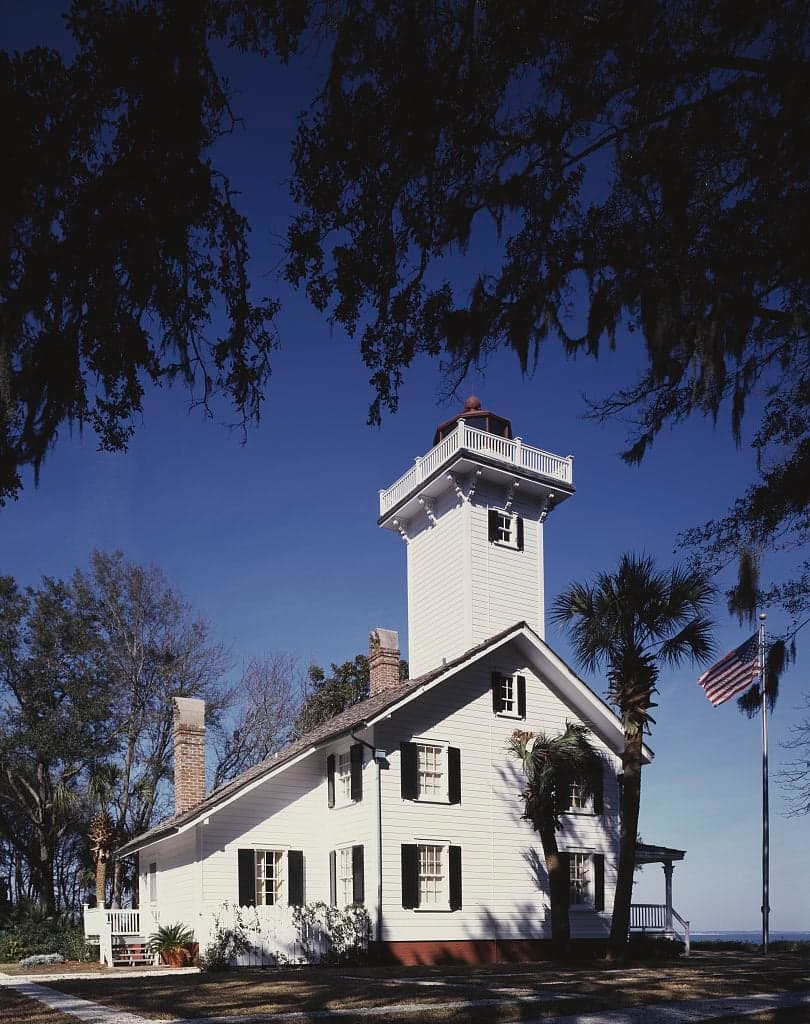
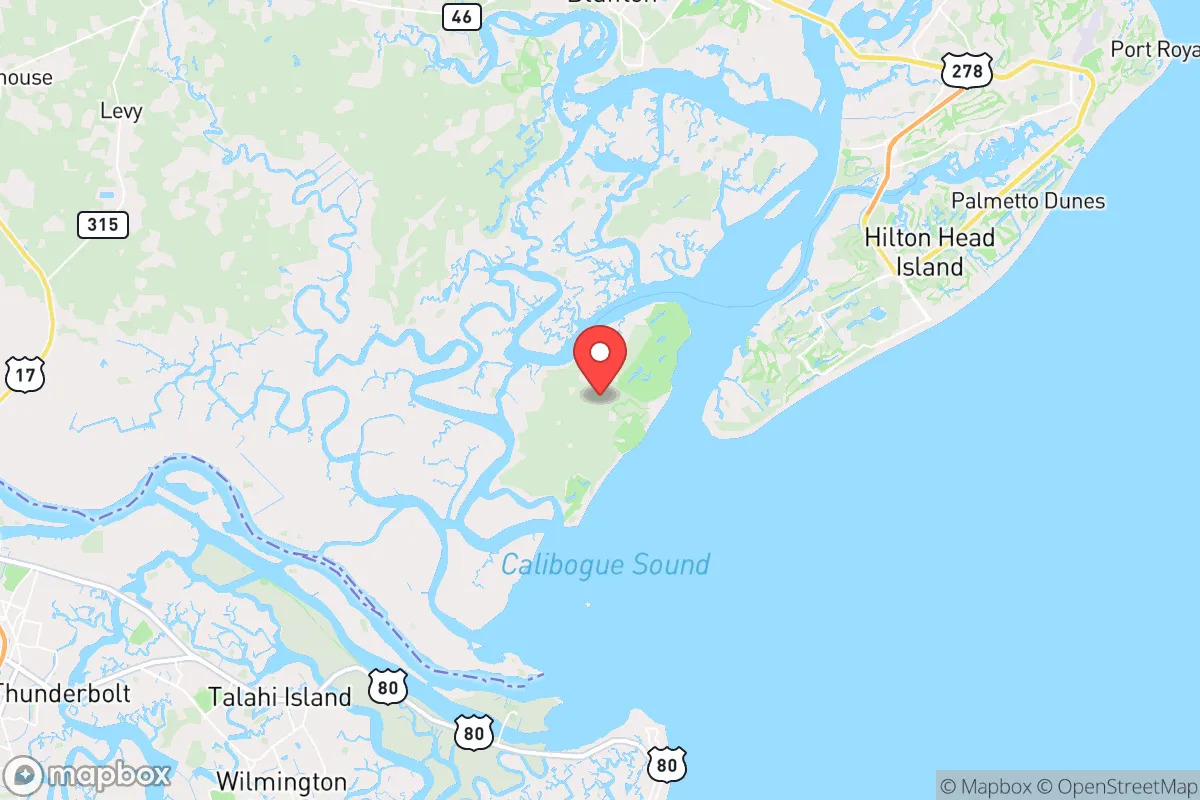
Photo: Wikipedia
Demographics of Daufuskie Island, SC
Historical data isn't available for Daufuskie Island, SC. Trends shown are for Beaufort County, SC.
Affluence Level in Daufuskie Island, SC
An upper-middle-class area. Household wealth, education levels, and homeownership run ahead of national benchmarks.
People of Daufuskie Island, SC
Today, Daufuskie Island’s 636 residents form one of South Carolina’s most distinctive and isolated communities—a place where a high concentration of college-educated professionals (83.9%) lives alongside a significant Hispanic minority (30.5%), while the white population stands at 66.4% and the Black share at 3.1%. The island’s character is defined by its car-free, low-density lifestyle, accessible only by ferry or private boat, and its population is overwhelmingly native-born (98.9% U.S.-born). This is not a typical suburban or urban setting; it is a tight-knit, amenity-rich enclave where second-home owners and full-time residents coexist in historic Gullah-Geechee landscapes now reshaped by luxury resort development.
How the city was settled and grew
Daufuskie Island’s human history begins with the Gullah-Geechee people, descendants of enslaved West Africans brought to the Sea Islands in the 18th and 19th centuries to work on cotton and indigo plantations. After the Civil War, freedmen established self-sufficient communities in areas like Cooper River Landing and Haig Point, farming oysters, fishing, and building a distinct creole culture that survived into the 20th century. The island’s population peaked around 1900 at roughly 2,000 residents, supported by a thriving oyster-canning industry centered at Maryfield and Bloody Point. However, the collapse of the oyster industry in the 1950s, combined with the lack of a bridge to the mainland, triggered a steep population decline. By 1960, fewer than 100 year-round residents remained, most of them elderly Gullah-Geechee families who had lived on the island for generations.
Modern era (post-1965)
The modern transformation of Daufuskie began in the 1980s and 1990s, when resort developers purchased large tracts of land and built private residential communities. The 1965 Hart-Cellar Act had little direct effect here—the island’s foreign-born share remains just 1.1%—but the broader national trend of coastal second-home development reshaped the population. The Melrose Resort and Haig Point Club neighborhoods became magnets for affluent white retirees and seasonal residents from the Northeast and Midwest, drawn by golf courses, equestrian facilities, and oceanfront lots. Meanwhile, the historic Gullah-Geechee population shrank further as property taxes rose and heirs’ property disputes forced sales. Today, the Black share of the population is just 3.1%, down from a majority as recently as the 1970s. The Hispanic share of 30.5% is a newer development, driven largely by service-sector workers employed in resort hospitality, landscaping, and construction—many of whom live in workforce housing near Freeport Marina or commute from mainland Beaufort County.
The future
Daufuskie’s population is likely to remain small and stable, but its demographic composition is shifting toward greater economic stratification. The white, college-educated share (83.9% of residents hold a bachelor’s degree or higher) will probably grow as luxury home prices continue to rise, pricing out lower-income service workers. The Hispanic population, currently 30.5%, may plateau or decline if off-island commuting becomes more common or if resort employers shift to seasonal staffing models. The Gullah-Geechee presence, already minimal, is unlikely to rebound without deliberate land-preservation efforts. The island is not tribalizing into distinct ethnic enclaves—its small size and single-road layout prevent that—but it is homogenizing into a wealthy, predominantly white, amenity-focused community. The historic neighborhoods of Cooper River Landing and Bloody Point retain some cultural markers, but their residential character is now overwhelmingly tied to resort ownership.
For someone moving to Daufuskie Island now, the bottom line is clear: this is a place of extreme privilege and isolation, where the population is becoming wealthier, whiter, and more transient. The island’s Gullah-Geechee roots are preserved in place names and historic sites, but the people who built that culture are largely gone. New residents should expect a quiet, car-free lifestyle with high property costs, limited services, and a social fabric shaped by resort membership rather than generational community ties.

* Values derived from national, state, county, city and local statistics and may differ in a specific area. Last updated: 2026-05-11T15:12:29.000Z
Narrative content on this page is AI-generated and may contain mistakes. Verify any details that matter before acting on them.
ReloMaps may earn a commission from affiliate links at no extra cost to you.

