Photo: Wikipedia
Demographics of Danville, VA
Affluence Level in Danville, VA
A below-average socioeconomic profile. Incomes, home values, and educational attainment trail the U.S., with higher poverty and unemployment.
People of Danville, VA
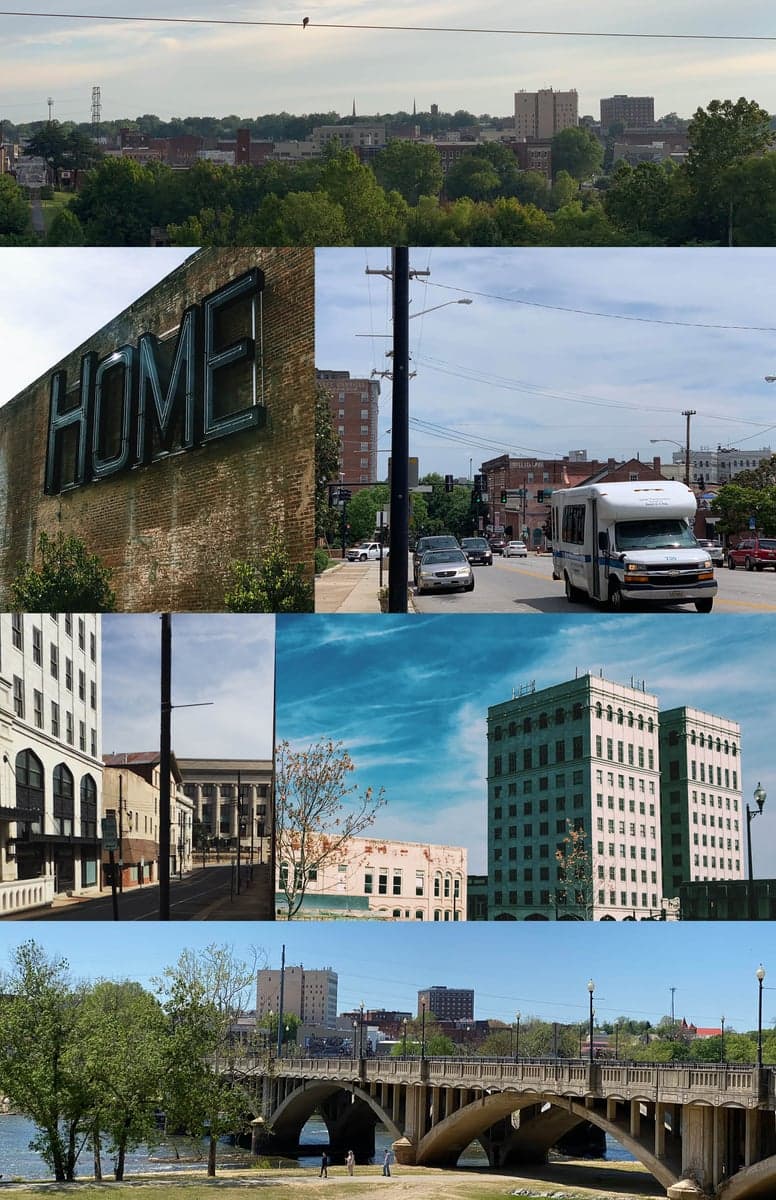
Danville, Virginia, is a city of 42,239 residents where Black residents make up a 50.3% majority and White residents account for 39.4%, creating a demographic profile shaped by deep-rooted Southern history and recent economic reinvention. The city has a notably low foreign-born population of just 3.0% and a college attainment rate of 18.3%, reflecting its industrial past and limited recent immigration. Danville’s identity is defined by its tobacco and textile heritage, a strong sense of local community, and a population that is now slowly diversifying after decades of decline.
How the city was settled and grew
Danville’s population history begins with its founding in 1793 as a trading post on the Dan River, but the city’s real growth came from tobacco. By the mid-19th century, the city was a major tobacco market, drawing White farmers and merchants from surrounding Pittsylvania County and the Piedmont region. The arrival of the railroad in the 1850s accelerated this growth, and the Old West End neighborhood became the home of wealthy tobacco barons and their families, with grand Victorian homes still standing today. After the Civil War, the city’s tobacco factories and later textile mills attracted a large Black workforce from the rural South. These workers settled in neighborhoods like Fairmont and North Danville, which became the historic centers of Black community life, with churches, schools, and small businesses. The early 20th century saw a second wave of White migration from Appalachia and the rural South, drawn by jobs at Dan River Mills, which by the 1950s employed over 13,000 people. These workers often settled in Schoolfield, a company-built mill village that remains a distinct neighborhood today.
Modern era (post-1965)
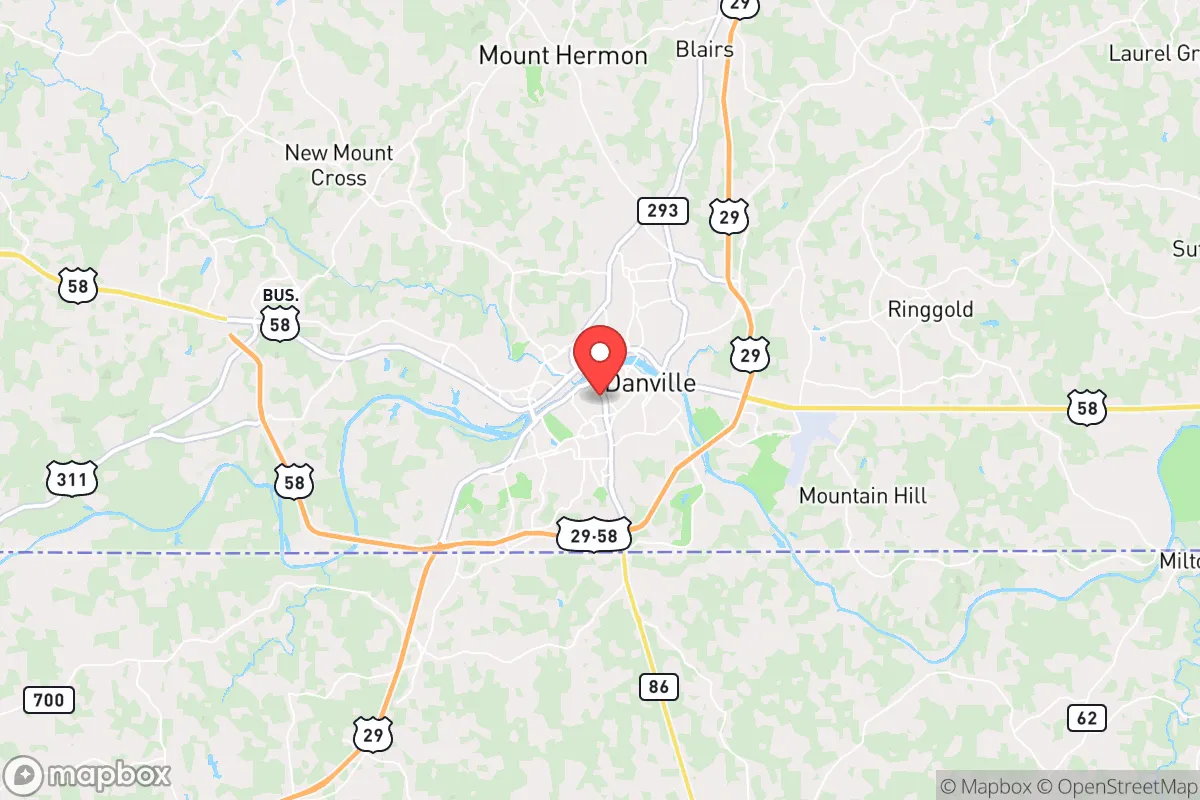
The post-1965 era in Danville is defined by deindustrialization and demographic stability rather than new immigration. The collapse of the textile industry in the 1980s and 1990s triggered a population decline from a peak of over 47,000 in 1970 to the current 42,239. The White population, which was a majority through the 1960s, has shrunk as younger families left for jobs in Raleigh, Greensboro, and other Sun Belt metros. Meanwhile, the Black population has become the majority, concentrated in the Westmoreland and North Danville neighborhoods, where historic Black institutions remain anchors. The small Hispanic population (5.2%) has grown modestly since 2000, largely settling in the Mount Hermon area and near the Danville Mall, drawn by low housing costs and service-sector jobs. The East/Southeast Asian community (0.6%) and Indian subcontinent community (0.7%) are tiny and largely composed of professionals working at the Danville Regional Medical Center or the new Institute for Advanced Learning and Research. Unlike many Virginia cities, Danville has seen almost no refugee resettlement or significant immigrant enclave formation.
The future
Danville’s population is projected to remain stable or grow slightly over the next decade, driven by the arrival of the Caesars Virginia casino and the Danville-Pittsylvania Regional Industrial Facility (home to IKEA’s supply chain and other advanced manufacturing). These projects are attracting a modest inflow of White and Hispanic workers from outside the region, many of whom are settling in newer subdivisions on the city’s western edge, near the Berry Hill area. The Black population is expected to remain the majority, but the city is not tribalizing into distinct enclaves; instead, neighborhoods like Schoolfield and Fairmont are slowly becoming more mixed as housing turnover increases. The foreign-born share is likely to rise from 3.0% to perhaps 5-6% by 2035, driven by Hispanic and Indian professionals in the tech and logistics sectors. However, Danville is not on a path to becoming a diverse immigrant gateway; it remains a predominantly Black and White Southern city with a slow, incremental diversification.
For someone moving in now, Danville is a city where community ties run deep and the cost of living is low, but where the demographic story is one of continuity rather than transformation. The population is stable, aging slightly, and slowly diversifying around a Black majority that has deep roots in the city’s tobacco and textile history. New arrivals will find a place where neighborhoods still carry the imprint of the mill era, and where the future is being built on industrial revival rather than immigration or rapid growth.

* Values derived from national, state, county, city and local statistics and may differ in a specific area. Last updated: 2026-05-01T03:48:06.000Z
Narrative content on this page is AI-generated and may contain mistakes. Verify any details that matter before acting on them.
ReloMaps may earn a commission from affiliate links at no extra cost to you.

