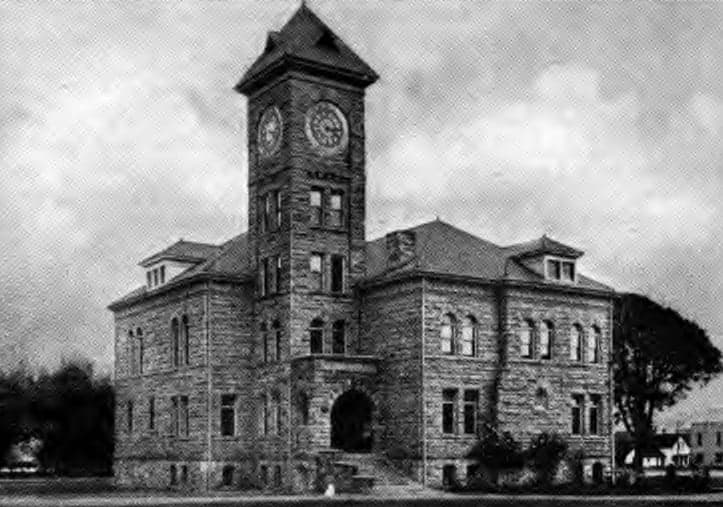
Photo: Wikipedia
Personal Sovereignty in Dallas, OR
Viable for self-reliance. Generally workable, though some barriers may limit total independence.
What does Personal Sovereignty tell us?
Personal Sovereignty measures your capacity for self-reliance and independence with minimal government friction. Higher scores mean fewer barriers between you and the way you want to live... but it assumes you have the space you need and good neighbors.
What does this tell us?
Personal Sovereignty measures your capacity for self-reliance and independence with minimal government friction. Higher scores mean fewer barriers between you and the way you want to live... but it assumes you have the space you need and good neighbors.
State Policy
Energy independence: Importer (35% of energy produced in-state)
Personal Liberty
Homesteading

Personal Liberty Analysis
Dallas, Oregon offers a notably high degree of personal sovereignty compared to the Portland metro area or the Willamette Valley's more regulated enclaves, but it operates within a state government that has increasingly centralized control over individual choices. For the strategic relocator—whether a single professional or a parent—the town’s rural character and conservative-leaning local governance provide a buffer against some of Oregon’s more intrusive state-level policies. However, the key to understanding autonomy here is recognizing that Dallas sits in a tension zone: local culture and county enforcement often prioritize individual freedom, while state mandates on land use, taxation, and health mandates can feel like overreach. This analysis breaks down the specific areas where you can expect genuine self-determination versus where you’ll need to navigate state-level restrictions.
Tax burden and regulatory posture: How Oregon’s system affects your wallet and choices
Oregon’s tax structure is a double-edged sword for those seeking sovereignty. The state has no sales tax, which preserves your purchasing power and avoids the regressive bite of consumption taxes. However, it compensates with a progressive income tax that tops out at 9.9% for high earners—a significant hit for anyone with a solid income or side hustle. Property taxes in Polk County, where Dallas is located, are moderate by Oregon standards, averaging around 1.0% of assessed value, but they are subject to the state’s Measure 5 and Measure 50 caps, which limit annual increases to 3% plus new construction. This predictability is a plus for long-term planning. The regulatory posture at the local level is more favorable: Dallas’s city council and county commissioners lean conservative, meaning fewer business license hurdles and less aggressive code enforcement than in Portland or Salem. That said, Oregon’s statewide land-use laws (SB 100) remain a major constraint—you cannot simply build a workshop or second dwelling on rural land without navigating the state’s strict zoning framework. For the prepper or homesteader, this is the primary regulatory friction point.
Self-defense and gun law specifics: What you can and cannot do in Dallas
Oregon’s gun laws have tightened significantly since 2022, and Dallas residents must operate within that reality. The state now requires a permit to purchase any firearm (Measure 114, partially blocked but largely in effect), a background check for all transfers, and a 10-day waiting period for handguns. Magazine capacity is capped at 10 rounds for new purchases, though pre-ban magazines are grandfathered. Open carry is legal without a permit, but concealed carry requires a license issued by the county sheriff—and Polk County is known for being shall-issue with minimal delays, unlike Multnomah County. For self-defense in the home, Castle Doctrine applies, but Oregon does not have a Stand Your Ground law; you have a duty to retreat if safely possible before using deadly force outside the home. The practical takeaway: Dallas is a gun-friendly community where most neighbors own firearms, but the state’s legal framework has eroded some traditional freedoms. If you’re a prepper, stockpiling standard-capacity magazines before further restrictions is wise. The local sheriff’s office is generally supportive of Second Amendment rights, but you must comply with state registration and permitting requirements.
Self-reliance and homesteading viability: Lot sizes, zoning, and off-grid feasibility
Dallas’s zoning code is more permissive than many Oregon towns, but state land-use laws still limit full off-grid independence. Within city limits, standard residential lots range from 6,000 to 10,000 square feet, which allows for substantial vegetable gardens, small livestock (chickens, rabbits, and even a goat with a permit), and rainwater collection for irrigation. However, off-grid power is effectively illegal for grid-tied homes—Oregon requires connection to the electrical grid for new construction, and solar-only setups are only permitted on remote parcels without utility access. The county’s rural areas (zones EFU and RR) offer 5- to 20-acre parcels where you can build a shop, keep horses, and install a septic system, but you must still comply with state building codes and well-water testing. Composting toilets are allowed in rural zones but require a permit. For the serious homesteader, the best bet is to buy 10+ acres outside the Urban Growth Boundary, where you can raise meat animals, store bulk supplies, and install a backup generator without city interference. The local extension office is helpful for soil testing and livestock advice, and the community has a strong network of small-scale farmers who share knowledge.
Personal liberties: Parental rights, medical autonomy, speech, and property
Parental rights in Oregon are under active debate, and Dallas families should be aware of the landscape. The state has mandated comprehensive sex education in public schools (Oregon Revised Statute 336.455), which includes LGBTQ+ topics and consent education, and parents cannot opt out of the entire curriculum—only specific lessons. This has led many conservative families to homeschool or enroll in private religious schools; Dallas has several options, including Dallas Christian School and a growing homeschool co-op network. Medical autonomy is constrained: Oregon has no religious or philosophical exemption for childhood vaccines required for school attendance, though medical exemptions are available. The state also legalized assisted suicide (Death with Dignity Act) and maintains a strong public health apparatus that can mandate masks or isolation during emergencies—a sore point for those who value bodily autonomy. Free speech is protected by the First Amendment, and Dallas’s local government has not attempted to restrict political expression, unlike some larger cities. Property rights are the strongest area: Oregon’s property tax system is stable, and Polk County has no rent control and minimal short-term rental restrictions, allowing you to use your land as you see fit within zoning limits. However, the state’s land-use appeals process can be weaponized by neighbors to delay building permits, so buying a property with existing structures is often the path of least resistance.
Overall, Dallas offers a moderately high degree of personal sovereignty relative to the Pacific Northwest, but it is not a libertarian enclave. Compared to Idaho’s panhandle or eastern Oregon’s Harney County, you’ll find more state-level interference in education, healthcare, and gun rights. However, compared to Portland, Eugene, or Salem, Dallas is a sanctuary of local control, low crime, and a community that values self-reliance. For the strategic relocator who wants to live free without constant government friction, Dallas is a solid choice—provided you accept that Oregon’s state government will continue to push mandates, and your best defense is a strong local network, a compliant legal posture, and a property that gives you room to breathe. The key is to buy land outside the Urban Growth Boundary, keep your paperwork in order, and engage with the local community to preserve the culture of autonomy that still defines this town.

* Values derived from national, state, county, city and local statistics and may differ in a specific area. Last updated: 2026-05-01T04:41:56.000Z
Narrative content on this page is AI-generated and may contain mistakes. Verify any details that matter before acting on them.
ReloMaps may earn a commission from affiliate links at no extra cost to you.

