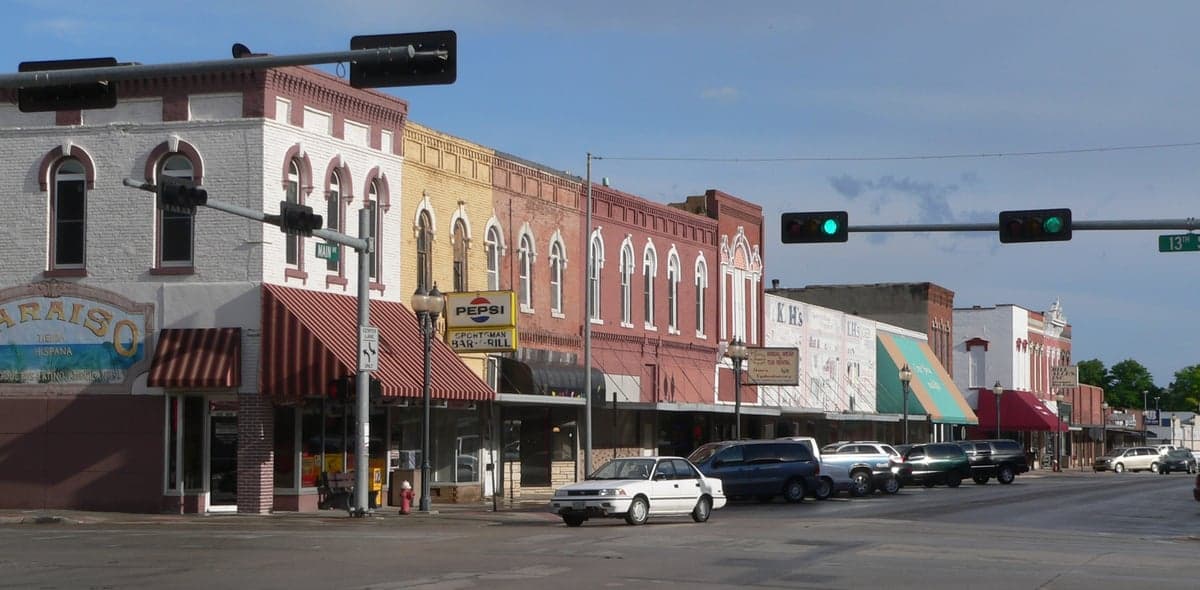
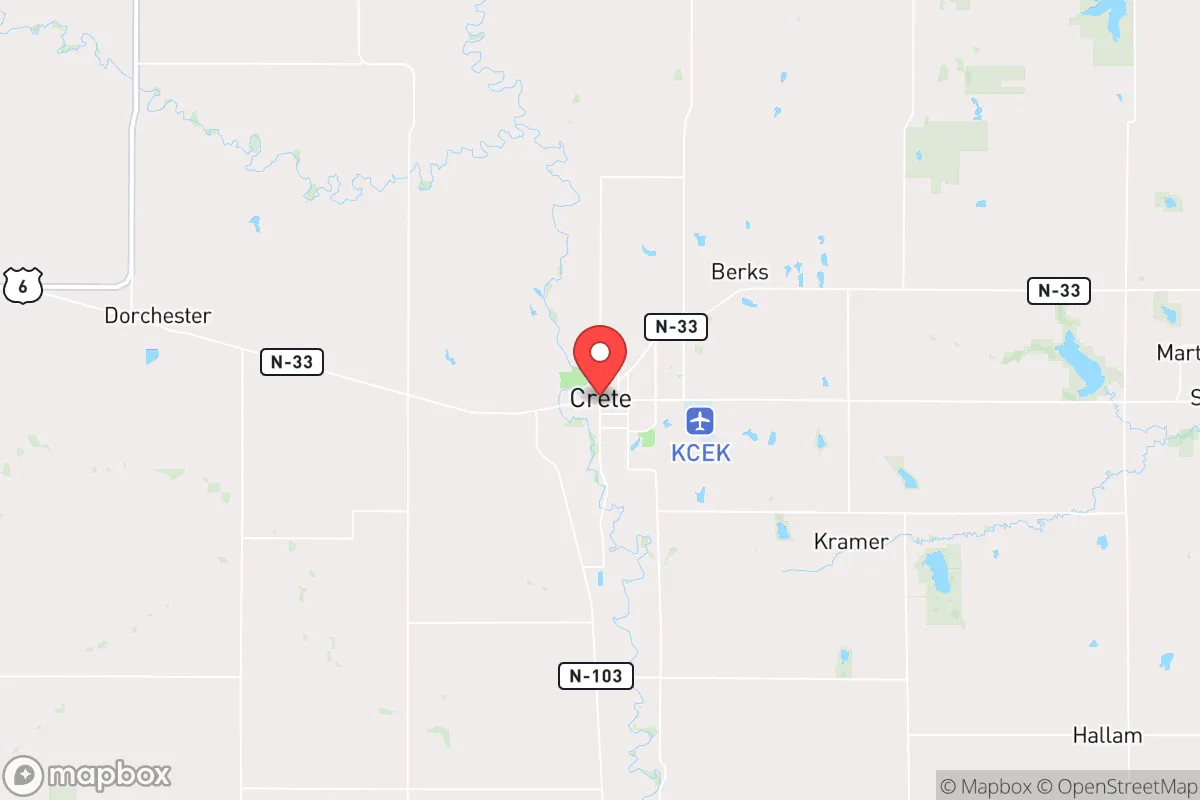
Photo: Wikipedia
Personal Sovereignty in Crete, NE
Moderate friction. Expect trade-offs in some aspect of personal liberty and independence.
What does Personal Sovereignty tell us?
Personal Sovereignty measures your capacity for self-reliance and independence with minimal government friction. Higher scores mean fewer barriers between you and the way you want to live... but it assumes you have the space you need and good neighbors.
What does this tell us?
Personal Sovereignty measures your capacity for self-reliance and independence with minimal government friction. Higher scores mean fewer barriers between you and the way you want to live... but it assumes you have the space you need and good neighbors.
State Policy
Energy independence: Importer (35% of energy produced in-state)
Personal Liberty
Homesteading

Personal Liberty Analysis
Crete, Nebraska, offers a notably high degree of personal sovereignty for those seeking to minimize government overreach and maximize self-reliance, particularly when compared to coastal or urban jurisdictions. This small village in Saline County sits within a state that consistently ranks among the most freedom-oriented in the nation, with a political culture that generally respects individual autonomy over collective mandates. For the strategic relocator—whether a single prepper or a family looking to insulate themselves from federal and state overreach—Crete provides a legal and cultural environment where personal responsibility is the default, not an exception.
Tax burden and regulatory posture: How Nebraska compares to high-tax states
Nebraska’s tax structure is a mixed bag but remains far more favorable than high-tax states like California, New York, or Illinois. The state levies a progressive income tax with rates ranging from 2.46% to 6.64% as of 2025, which is moderate but not negligible. Property taxes in Saline County are a more significant concern, with effective rates around 1.5% to 1.8% of assessed value—higher than the national average but still manageable compared to the 2%+ rates found in many Northeastern states. Sales tax in Crete is 7%, combining the state’s 5.5% base with local levies. The regulatory posture in Nebraska is generally business-friendly, with no state-level occupational licensing for many trades and a right-to-work law that limits union power. For the prepper mindset, the key advantage is the absence of onerous state-level environmental or land-use regulations that plague states like Oregon or Washington. Nebraska’s state government does not mandate energy codes for rural residential construction, and there are no state-level bans on rainwater collection or composting toilets—common restrictions in more regulated states. The overall regulatory burden is low enough that a determined individual can operate a home-based business, keep livestock, or modify their property without endless permits or inspections.
Self-defense and gun law specifics: What Crete offers for the armed citizen
Nebraska is a strong Second Amendment state, and Crete residents benefit from some of the most permissive gun laws in the Midwest. The state is a constitutional carry jurisdiction, meaning no permit is required to carry a concealed firearm for anyone legally allowed to possess one. This went into effect in 2023, and local law enforcement in Saline County generally respects this right without the harassment seen in blue states. Open carry is also legal without a permit. There is no state-level magazine capacity ban, no assault weapon ban, and no waiting period for firearm purchases. The state does require a background check for all firearm sales from licensed dealers, but private sales between individuals are unregulated—a critical point for those who value off-the-record transactions. Nebraska also has a strong “Stand Your Ground” law, codified in Neb. Rev. Stat. § 28-1409, which removes any duty to retreat before using deadly force in self-defense, both inside and outside the home. Castle Doctrine protections are explicit, covering vehicles and occupied structures. For the survivalist, the legal environment in Crete allows for building a robust personal arsenal without fear of state-level confiscation or registration schemes. The nearest major city, Lincoln, is about 25 miles north, but its more restrictive local ordinances do not apply to Crete’s jurisdiction.
Self-reliance and homesteading viability: Lot sizes, zoning, and off-grid feasibility
Crete’s zoning and land-use policies are a major draw for those seeking self-sufficiency. Within the village limits, residential lots typically range from 0.1 to 0.5 acres, but many properties in the surrounding Saline County area offer acreage parcels of 1 to 10 acres at affordable prices—often under $5,000 per acre for raw land. The village zoning code allows for backyard chickens, small livestock like goats or rabbits, and vegetable gardens without special permits, though larger animals like cattle or horses may require a conditional use permit. Crucially, there are no county-level restrictions on off-grid living. Solar panels, wind turbines, and rainwater catchment systems are all legal without state interference. Nebraska has no net metering requirement, but it also has no prohibition on going fully off-grid—you simply disconnect from the grid if you choose. Composting toilets and greywater systems are permitted under state health codes as long as they meet basic sanitation standards, which are far less burdensome than in states like California or Colorado. For the prepper, the ability to drill a well for water is straightforward: Saline County requires a permit but no extensive environmental review, and groundwater is generally accessible at depths of 50 to 150 feet. The biggest practical limitation is the climate—Nebraska’s harsh winters and tornado risk require robust infrastructure—but the legal framework does not hinder self-reliance. The local county extension office offers resources for soil testing and livestock management, but there is no mandatory agricultural zoning that would prevent a family from turning a suburban lot into a mini-homestead.
Personal liberties: Parental rights, medical autonomy, speech, and property
Nebraska has a strong track record on parental rights, particularly in education. The state does not mandate any specific curriculum that would override parental authority, and there are robust school choice options, including charter schools and homeschooling. Homeschooling in Nebraska requires only a simple notification to the local school district and annual standardized testing, with no state oversight of curriculum or teacher qualifications—far less intrusive than states like New York or Pennsylvania. Medical autonomy is more nuanced. Nebraska has not adopted any state-level vaccine mandates for adults, and while COVID-era restrictions were implemented, they were lifted early compared to blue states. The state does not have a religious or philosophical exemption to school vaccine requirements, but medical exemptions are available and generally respected. For the prepper, the ability to stockpile prescription medications or use alternative treatments is limited by federal law, but state-level enforcement is minimal. Free speech protections are robust, with no state-level hate speech laws or social media censorship mandates. Property rights are strongly protected under Nebraska’s eminent domain laws, which require just compensation and a public purpose, and there are no state-level rent control or landlord-tenant laws that heavily favor tenants over owners. The overall legal climate in Crete is one where an individual can live largely unbothered by government interference, as long as they pay their taxes and avoid criminal activity.
In the broader context of personal sovereignty, Crete, Nebraska, offers a level of autonomy that is increasingly rare in the United States. While it does not match the extreme libertarian environments of rural Alaska or parts of the Mountain West, it provides a practical middle ground: affordable land, permissive gun laws, low regulatory burdens, and a culture that values self-reliance over state dependency. For the conservative-leaning prepper or family seeking to escape the encroaching overreach of federal and state governments, Crete represents a viable relocation target where one can live with minimal interference, build a resilient homestead, and exercise fundamental rights without fear of reprisal. The trade-offs—cold winters, limited local amenities, and moderate property taxes—are acceptable for those who prioritize freedom over convenience. In a country where personal sovereignty is under constant assault, Crete stands as a quiet bastion of individual liberty.

* Values derived from national, state, county, city and local statistics and may differ in a specific area. Last updated: 2026-05-03T20:28:58.000Z
Narrative content on this page is AI-generated and may contain mistakes. Verify any details that matter before acting on them.
ReloMaps may earn a commission from affiliate links at no extra cost to you.

