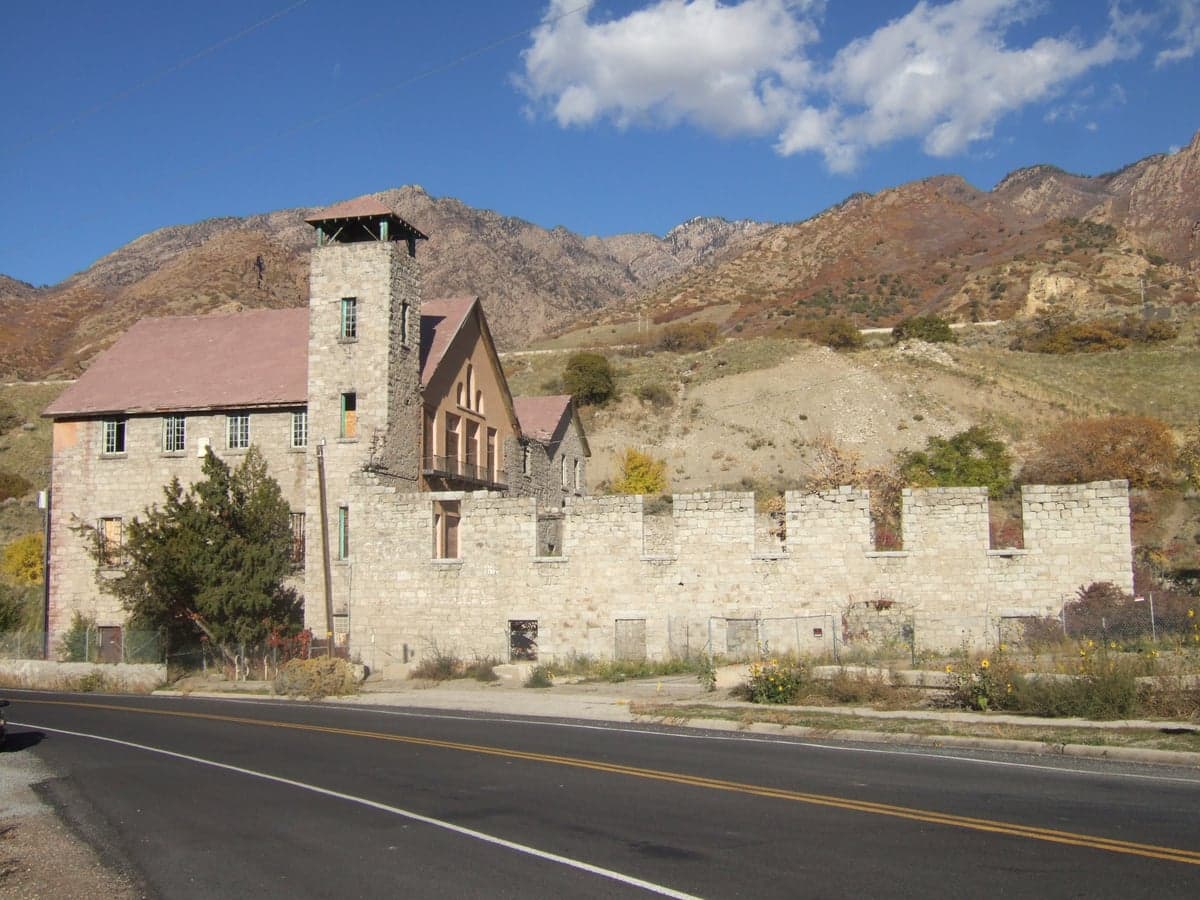
Photo: Wikipedia
Demographics of Cottonwood Heights, UT
Affluence Level in Cottonwood Heights, UT
An upper-middle-class area. Household wealth, education levels, and homeownership run ahead of national benchmarks.
People of Cottonwood Heights, UT
Cottonwood Heights, Utah, is a predominantly white, highly educated, and family-oriented city of 32,984 residents, where 84.7% of the population identifies as white and over half (52.8%) hold a college degree. The city’s character is defined by its strong Latter-day Saint (LDS) cultural roots, low foreign-born population (2.6%), and a reputation as an affluent, safe foothill suburb of Salt Lake City. Its residents are concentrated in established single-family home neighborhoods along the Wasatch Front, with a notably small but growing East/Southeast Asian community (2.7%) and a separate Indian-subcontinent population (1.6%). The city’s identity is less about diversity and more about stability, outdoor recreation access, and a quiet, family-centric lifestyle.
How the city was settled and grew
Cottonwood Heights was not a pioneer-era settlement in the traditional sense. The area was originally part of the larger Cottonwood region, used by Mormon pioneers in the mid-19th century for farming, grazing, and timber harvesting from the nearby canyons. The first permanent residents were LDS families who built small homesteads along the banks of Big Cottonwood Creek and Little Cottonwood Creek, drawn by the reliable water supply and fertile soil. These early settlers established the Historic Fort Union area (now a commercial district) and the Old Mill neighborhood, where remnants of a gristmill built in the 1850s still stand. For decades, the population remained sparse and agrarian, with families like the Butterfields and the Duncans farming the benchlands. The area remained unincorporated and rural until the post-World War II era, when the construction of Interstate 215 and the expansion of Salt Lake City’s suburbs triggered the first major wave of domestic in-migration. By the 1960s, developers began platting subdivisions like Cottonwood Estates and Holladay Hills (the latter straddling the border with Holladay), attracting white, middle-class LDS families seeking larger lots and mountain views. These neighborhoods remain the demographic core of the city today.
Modern era (post-1965)
The 1965 Hart-Cellar Act had minimal direct impact on Cottonwood Heights, as the city never developed a significant immigrant gateway. Instead, the post-1965 period was defined by steady domestic suburbanization. The 1970s and 1980s saw the development of Wasatch Hollow and Boulder Creek neighborhoods, which absorbed second- and third-generation LDS families moving up from the Salt Lake Valley floor. These subdivisions were built around golf courses, parks, and hiking trailheads, reinforcing the city’s reputation as an outdoor-oriented enclave. The foreign-born population remained below 3% through the 1990s, with the small East/Southeast Asian community (2.7% today) concentrated in newer condominium complexes near the Cottonwood Corporate Center office park, often tied to tech and medical professionals. The Indian-subcontinent population (1.6%) is similarly small and dispersed, with no single ethnic enclave. The Hispanic population (5.6%) is the largest minority group, but it is scattered rather than clustered, with families living in older ranch-style homes in the Cottonwood Meadows area. The city incorporated in 2005, largely to control zoning and preserve the low-density, single-family character that its predominantly white, college-educated residents valued. Since incorporation, the population has grown modestly (from roughly 30,000 in 2000 to 32,984 today), with most new arrivals being domestic migrants from other parts of Utah or the Mountain West.
The future
Cottonwood Heights is likely to remain a homogenizing, stable suburb rather than a diversifying one. The foreign-born share (2.6%) is well below the national average and shows no sign of rapid increase, as the city lacks the rental housing stock, transit connections, or ethnic institutions that attract immigrant populations. The East/Southeast Asian and Indian-subcontinent communities are small and professional, and they are assimilating into the broader white-collar culture rather than forming distinct enclaves. The Hispanic population is growing slowly, but it remains a small minority without a concentrated neighborhood. The biggest demographic shift will likely be generational: as older LDS families age out, younger families—still predominantly white and LDS—are moving in, drawn by the same factors (schools, safety, outdoor access) that attracted their parents. The city is not tribalizing into ethnic enclaves; it is becoming more uniformly affluent and educated. For a conservative-leaning individual or parent considering relocation, Cottonwood Heights offers a predictable, low-crime, family-oriented environment where the population is stable, the schools are strong, and the cultural fabric remains largely unchanged from the 1980s. The next 10-20 years will likely see continued infill development of townhomes along the Wasatch Boulevard corridor, but the city’s demographic character will remain overwhelmingly white, LDS-influenced, and college-educated.
Cottonwood Heights is becoming a more exclusive, amenity-rich version of its former self—a place where population growth is slow, diversity is modest, and the dominant culture is rooted in LDS family values and outdoor recreation. For someone moving in now, the city offers a stable, predictable community where the people are largely similar to those who built the neighborhoods 40 years ago, and where change comes gradually, not disruptively.

* Values derived from national, state, county, city and local statistics and may differ in a specific area. Last updated: 2026-04-21T10:11:39.000Z
Narrative content on this page is AI-generated and may contain mistakes. Verify any details that matter before acting on them.
ReloMaps may earn a commission from affiliate links at no extra cost to you.

