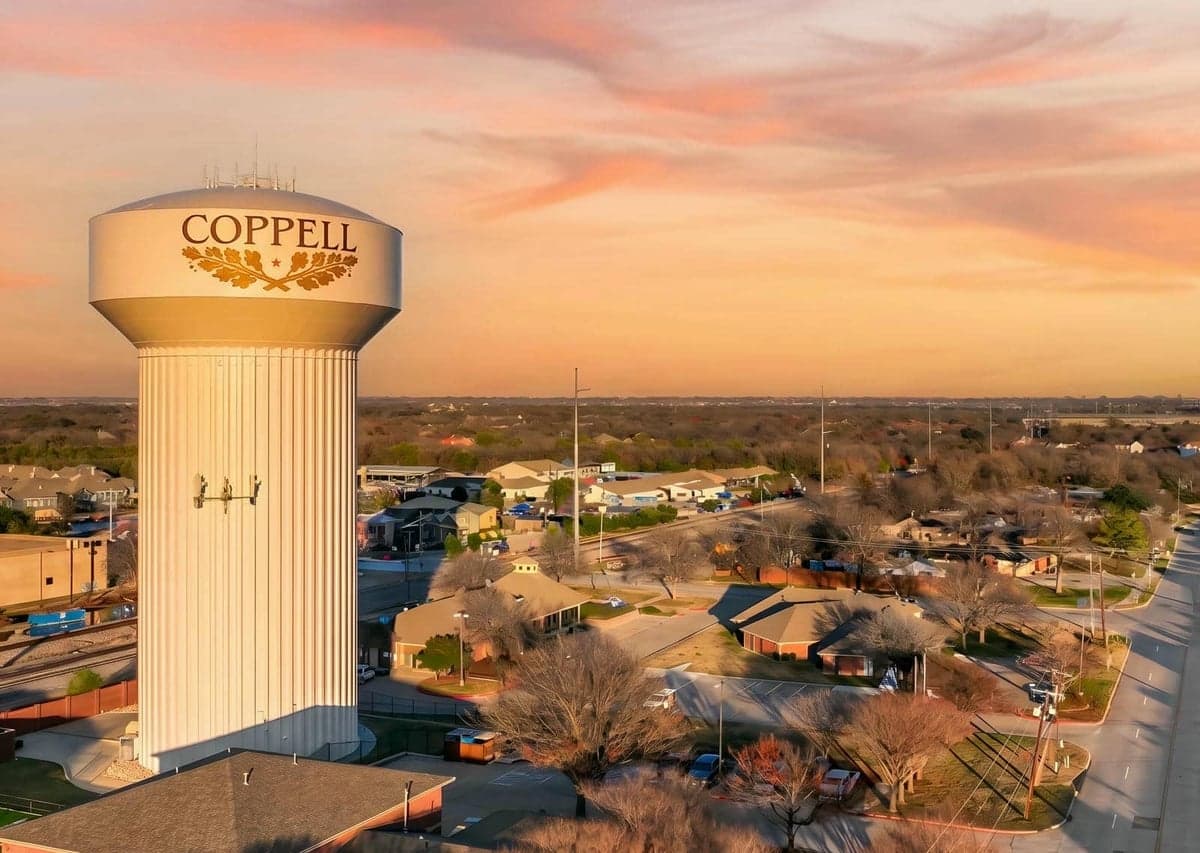
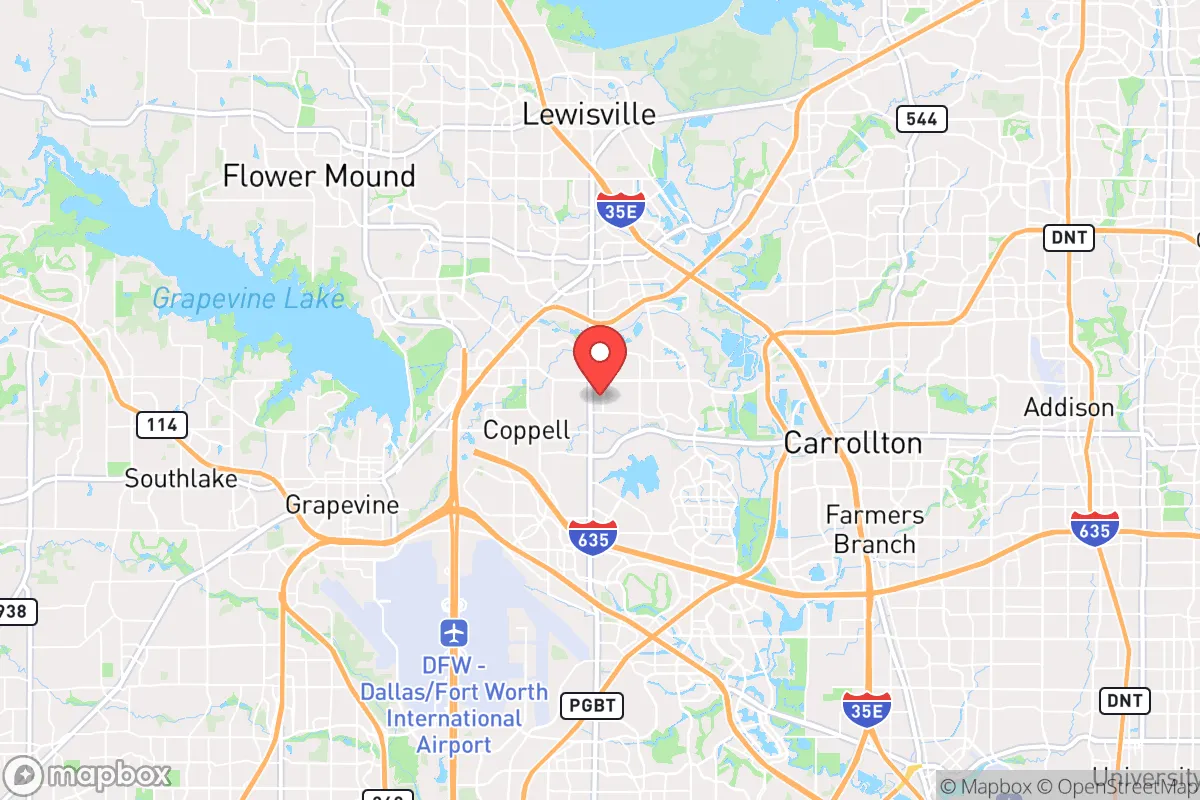
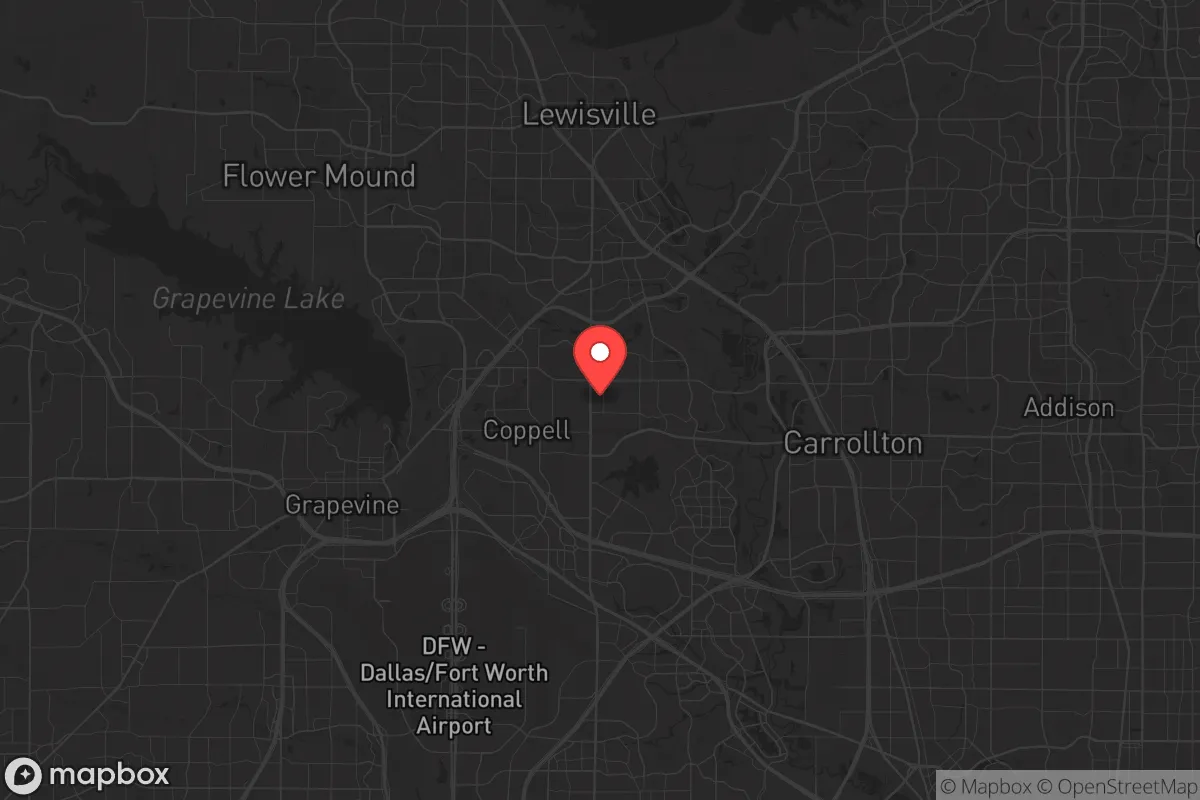
Strategic Assessment of Coppell, TX
Multiple tactical vulnerabilities. Population density, target proximity, or disaster risk are likely compounding. A retreat property and exit planning is required.
What does the Strategic Assessment tell us?
Our Strategic Assessment grades tactical survivability of an area. Major population centers, military targets, fallout zones, natural disasters, and border exposure all drive risk — lower exposure means a more defensible position in a crisis.
This is heavily inspired by Joel Skousen's Strategic Relocation book. Highly recommended you checkout the book ($)What does this tell us?
Our Strategic Assessment grades tactical survivability of an area. Major population centers, military targets, fallout zones, natural disasters, and border exposure all drive risk — lower exposure means a more defensible position in a crisis.
This is heavily inspired by Joel Skousen's Strategic Relocation book. Highly recommended you checkout the book ($)Strategic Pillars

Key Distances
Regional Safe Places
Below is our recommended "safe zones" in Texas and the surrounding area based on our strategic heuristics. For most people, it's unrealistic to live in a “safe zone” full-time due to work, family or other personal reasons. They tend to be more rural. However, many of these areas are perfect for second homes and retreat properties that double as a vacation home or even a short-term rental.

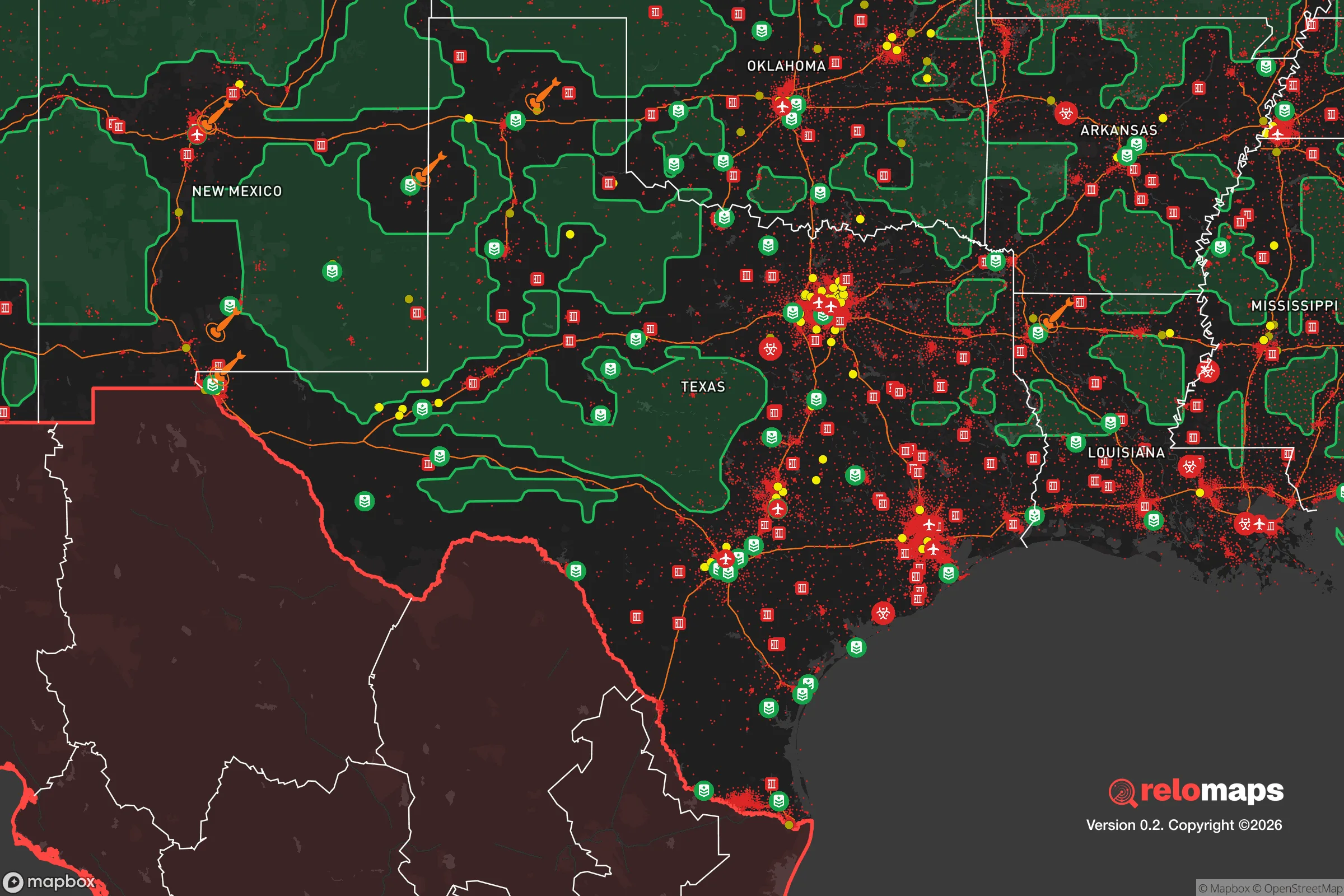


Important Note: For informational purposes only. This does not mean nothing bad ever happens in the green zones. Please use common sense. This is based on public data and modeled with AI. We tried to take a conservative approach but mistakes happen. We update this regularly as new information becomes available.
Solar Generator Recommendations
Backup power matters more here than in safer locations. We've picked three solar generators across budgets and capacity tiers — start with the budget unit if you only need a few essentials, or step up if you want to run a fridge and HVAC for days at a time.

Jackery Portable Power Station Explorer 300
Budget OptionPower on the Go: Weighing only 11 lbs, it's convenient to set up and store with book-sized foldable solar panels

BLUETTI Portable Power Station AC180
Designed for both indoor and outdoor scenarios, AC180 is highly capable as it has a robost capacity and continuous output power.

EF ECOFLOW DELTA Pro Ultra Power Station
Upgraded PickEcoFlow DELTA Pro Ultra is a whole-home energy system designed to grow with your family. Integrated with the Smart Home Panel 2, it scales to meet your evolving energy needs — keeping your home powered, intelligent, and secure through every stage of life.
We earn a commission, at no additional cost to you.
Strategic Assessment Analysis
Coppell, Texas, presents a mixed strategic picture for the conservative prepper: its location within the Dallas-Fort Worth metroplex offers economic resilience and logistical advantages, but its proximity to a major population center and critical infrastructure introduces significant vulnerabilities. For a relocator prioritizing self-sufficiency and security, Coppell is not a remote redoubt—it is a suburban node that requires a clear-eyed assessment of both its strengths and its exposure to cascading risks. The city’s strong local governance, relatively low crime rates, and access to multiple interstate highways make it a viable base for those who can afford the premium, but only if they accept that they are living within the blast radius of a potential national-level disruption.
Geographic position and natural advantages for long-term stability
Coppell sits in the heart of the Dallas-Fort Worth metroplex, roughly 15 miles northwest of downtown Dallas and 20 miles northeast of Fort Worth. This central position gives residents access to two major economic hubs, DFW International Airport (the second-busiest in the world), and a dense network of interstates—including I-635, I-35E, and State Highway 121. For a prepper, this means exceptional logistical mobility: you can reach suppliers, medical facilities, and alternate routes in multiple directions. The area’s natural advantages include a relatively stable climate with no hurricane storm surge risk, no wildfire-prone terrain, and no seismic activity. The Trinity River and its tributaries run nearby, but Coppell itself sits on higher ground, reducing flood risk compared to neighboring cities like Irving or Grand Prairie. The soil is clay-based, which is poor for large-scale gardening but workable with raised beds. The region’s water supply comes from the Elm Fork of the Trinity River and the Grapevine Lake reservoir, both of which are managed by the Tarrant Regional Water District—a robust system, but one that is heavily dependent on electrical pumping and treatment infrastructure.
Risks, exposures, and proximity to fallout-relevant landmarks
The single greatest vulnerability for Coppell is its location within the DFW metroplex, home to over 7.5 million people. In a scenario of civil unrest, mass casualty events, or a major disaster, the city would be directly affected by the chaos of a major urban center. DFW International Airport, just 5 miles east of Coppell, is a high-value target for any coordinated attack or disruption—a ground stop or security incident there would ripple through the entire region. Additionally, the city lies within 30 miles of the Pantex nuclear weapons assembly plant near Amarillo (though that is 300 miles away, the psychological and logistical ripple effects of a Pantex incident would be felt statewide). More immediate: Coppell is within 10 miles of the Dallas-Fort Worth National Cemetery, a potential symbolic target, and within 20 miles of the Dallas Federal Reserve Bank. The city’s proximity to major highways also means it would be a choke point for evacuation or supply routes during a crisis. The 2021 winter storm (Uri) exposed the fragility of the Texas power grid; Coppell experienced rolling blackouts and water pressure failures, a reminder that even affluent suburbs are not insulated from infrastructure collapse. For the prepper, the key takeaway is that Coppell is not a bug-out location—it is a location that requires a robust plan for sheltering in place or a pre-planned secondary retreat.
Practical resilience for a relocator: food, water, energy, and defensibility
For a relocator focused on practical resilience, Coppell offers a mixed bag. Food security is moderate: the city has multiple H-E-B, Kroger, and Walmart stores, but these are standard suburban grocery outlets with thin supply chains. Local farmers' markets exist (e.g., the Coppell Farmers Market, seasonal) but are not year-round. For long-term storage, residents would need to rely on bulk suppliers or drive to rural areas. Water security is a concern: the municipal supply is treated and reliable under normal conditions, but a prolonged grid failure would halt pumping. A well is not feasible in most of Coppell due to urban zoning and shallow water tables. Rainwater collection is legal in Texas but limited by HOA restrictions in many neighborhoods—preppers should check covenants before buying. Energy resilience is improving: after Uri, many homeowners installed natural gas generators or solar-plus-battery systems. The city has not banned solar panels, but HOAs may impose aesthetic restrictions. Natural gas lines are widespread, which is a plus for generator fuel. Defensibility is the weakest point: Coppell is a typical suburban grid of cul-de-sacs and arterial roads, with no natural barriers. The city’s police department is well-funded and responsive (response times under 5 minutes in most areas), but in a widespread breakdown, a single-family home on a 0.25-acre lot offers limited standoff. The best defensive strategy here is community: Coppell has active neighborhood watch programs and a relatively high rate of homeownership (around 70%), which fosters social cohesion. For the prepper, the ideal property would be on a corner lot with a fenced backyard, near a park or greenbelt that provides a secondary exit route.
The overall strategic picture for Coppell is one of calculated trade-offs. It is not a survivalist’s paradise—it is a well-managed suburb that offers economic stability, good schools, and a low-crime environment, but sits squarely within the target-rich environment of a major metroplex. For a conservative relocator who values community resilience, access to medical infrastructure, and the ability to maintain a professional career while prepping, Coppell can work—provided you invest in off-grid power, water storage, and a solid neighborhood network. The city’s real strength is its position as a logistics hub: you can reach rural retreats in Oklahoma, East Texas, or the Hill Country within 3-4 hours. The wise prepper will treat Coppell not as a final destination, but as a forward operating base—a place to build resources and connections while keeping a bug-out bag ready and a secondary property in a lower-density area. If you are looking for a place to ride out a slow decline or a localized disruption, Coppell is a solid bet. If you are planning for a complete societal collapse, you are better off 100 miles north or west. Know your threat model, and plan accordingly.

* Values derived from national, state, county, city and local statistics and may differ in a specific area. Last updated: 2026-05-11T19:13:56.000Z
Narrative content on this page is AI-generated and may contain mistakes. Verify any details that matter before acting on them.
ReloMaps may earn a commission from affiliate links at no extra cost to you.

