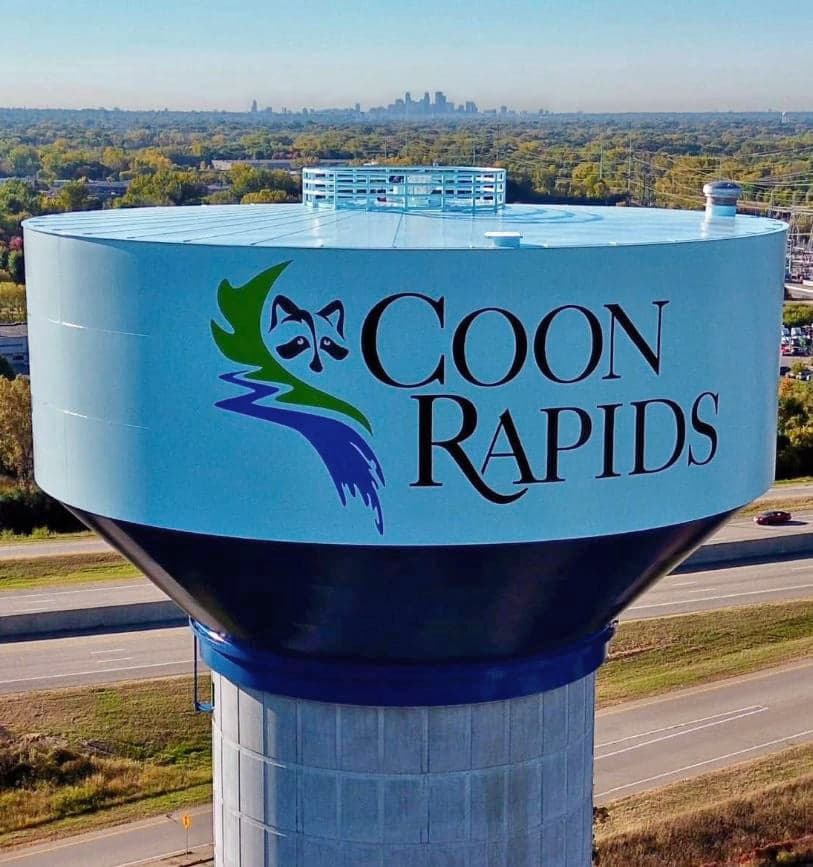
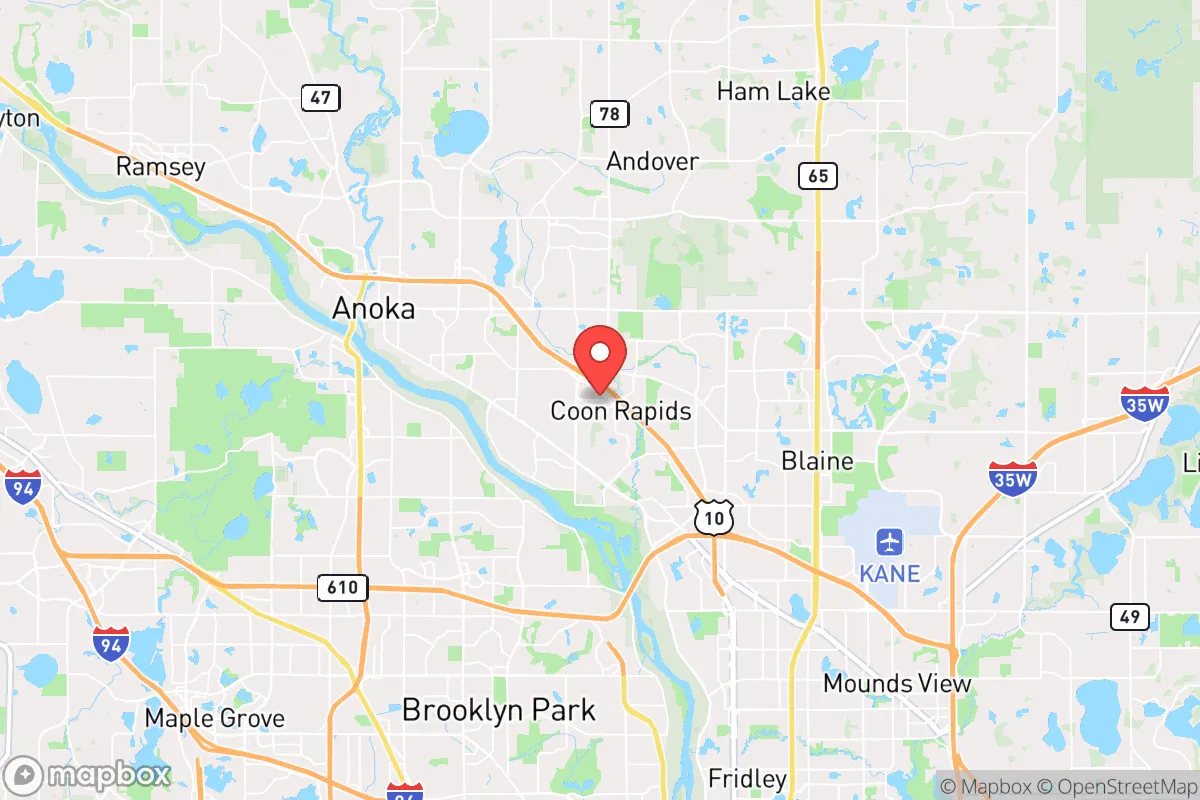
Photo: Wikipedia
Personal Sovereignty in Coon Rapids, MN
Viable for self-reliance. Generally workable, though some barriers may limit total independence.
What does Personal Sovereignty tell us?
Personal Sovereignty measures your capacity for self-reliance and independence with minimal government friction. Higher scores mean fewer barriers between you and the way you want to live... but it assumes you have the space you need and good neighbors.
What does this tell us?
Personal Sovereignty measures your capacity for self-reliance and independence with minimal government friction. Higher scores mean fewer barriers between you and the way you want to live... but it assumes you have the space you need and good neighbors.
State Policy
Energy independence: Importer (20% of energy produced in-state)
Personal Liberty
Homesteading

Personal Liberty Analysis
Coon Rapids, Minnesota, offers a mixed bag for those prioritizing personal sovereignty, with a state-level political climate that often leans interventionist but a local environment where practical self-reliance is still very much alive. As a suburb of the Twin Cities, it sits at a crossroads: close enough to benefit from economic infrastructure, yet far enough to retain a degree of autonomy in daily life. For the survivalist or prepper, the key question isn't whether Minnesota is a free state—it isn't, by many measures—but whether Coon Rapids provides enough breathing room to live on your own terms despite the state's regulatory appetite. The answer is cautiously optimistic, provided you understand the trade-offs and are willing to navigate a system that doesn't always favor individual choice.
Tax burden and regulatory posture: what you keep and what you fight
Minnesota's tax burden is among the highest in the nation, and Coon Rapids residents feel it directly. The state levies a progressive income tax that tops out at 9.85% for high earners, and the sales tax in Anoka County is 7.775% (state 6.875% plus county 0.5% plus transit 0.25% plus local 0.15%). Property taxes in Coon Rapids are moderate for the metro area—around 1.1% of assessed value—but that still means a $350,000 home costs roughly $3,850 annually in property tax. For a prepper mindset, every dollar taken is a dollar not spent on supplies, land improvements, or emergency reserves. The regulatory posture is similarly heavy: Minnesota has strict environmental review requirements for any land use changes, and the state's building codes are among the most detailed in the Midwest. This means that even simple projects—like adding a shed or installing a rainwater catchment system—can trigger permits and inspections. The silver lining is that Anoka County is generally more business-friendly than Hennepin or Ramsey counties, so small-scale operations like a home-based repair shop or a small farm stand face fewer bureaucratic hurdles than they would closer to downtown Minneapolis.
Self-defense and gun law specifics: what you can and cannot do
Minnesota is a "shall issue" state for concealed carry permits, and Coon Rapids does not impose its own additional restrictions beyond state law. As of 2026, you can carry a firearm openly or concealed with a permit (no permit needed for open carry in most places, but a permit is required for concealed). The state does have a "red flag" law (Extreme Risk Protection Order) that allows law enforcement to petition a court to temporarily seize firearms from someone deemed a danger—a provision that many in the prepper community view as a vulnerability. Magazine capacity is not restricted at the state level, and there is no state-level assault weapons ban, though some cities (Minneapolis, St. Paul) have their own restrictions. Coon Rapids itself has no local gun ordinances beyond state law, so you can own standard-capacity magazines and AR-15s without local interference. However, the state requires a permit to purchase for handguns and "semiautomatic military-style assault weapons" (a category that includes many common rifles), which involves a background check and a 7-day waiting period. For the self-defense-minded, the practical takeaway is that you can arm yourself adequately, but you'll need to stay on top of permit renewals and be aware that a change in state leadership could tighten things quickly.
Self-reliance and homesteading viability: lot sizes, zoning, and off-grid feasibility
Coon Rapids is a fully developed suburb, so don't expect 40-acre homesteads. Typical residential lots range from 0.15 to 0.5 acres, with some larger parcels near the Mississippi River corridor. The city's zoning code allows for "urban agriculture"—including chickens (hens only, no roosters) and beekeeping—on lots as small as 6,000 square feet, but you'll need a permit and neighbor notification. Goats, pigs, and other livestock are generally prohibited in residential zones. Off-grid living is effectively impossible within city limits: the city requires connection to municipal water and sewer, and building codes mandate grid-tied electrical systems for new construction. Solar panels are allowed but must be permitted and cannot be used as a primary power source if you're still connected to the grid. Rainwater collection for outdoor use is legal, but indoor use (for drinking or flushing) requires a separate permit and is rarely approved. For the serious prepper, Coon Rapids is better viewed as a base for supplies and community networking rather than a self-sufficient retreat. The real homesteading opportunity lies in the surrounding townships of Anoka County—places like Oak Grove or Nowthen—where you can find 5- to 40-acre parcels with fewer restrictions. But if you're tied to the metro for work, Coon Rapids offers a compromise: you can grow some of your own food, keep a few animals, and store supplies, but you'll never be fully off the grid.
Personal liberties: parental rights, medical autonomy, speech, and property
Minnesota has a mixed record on personal liberties. On the positive side, parental rights are relatively strong: the state does not have a universal vaccine mandate for schoolchildren (though individual school districts can require certain vaccines for attendance), and parents can opt out of sex education or specific health screenings with a written request. Medical autonomy is more constrained: Minnesota expanded Medicaid under the ACA and has a state-run health insurance exchange, which means the government is deeply involved in healthcare decisions. The state also has a "right to try" law for terminally ill patients, but it's rarely used in practice. Free speech is protected under the First Amendment, and Coon Rapids has no local ordinances restricting political speech or assembly—though the state's "safe spaces" laws in public universities have been criticized for chilling certain viewpoints. Property rights are where the tension is highest: Minnesota's "public trust doctrine" gives the state broad authority over water and wetlands, meaning that even on your own land, you may need permits to dig a pond, clear trees near a stream, or build a dock. The state also has a "right to farm" law that protects agricultural operations from nuisance lawsuits, but it doesn't apply to suburban lots. For the conservative-leaning individual, the overall picture is one of constant vigilance: you can exercise your rights, but you must be prepared to defend them against a state government that often views regulation as the default solution.
In the broader context of the Upper Midwest, Coon Rapids sits in a moderate zone for personal sovereignty—better than Illinois or Wisconsin in some respects (no magazine ban, no universal background checks on private sales), but worse than Iowa or the Dakotas (higher taxes, more environmental regulation, a red flag law). For the survivalist or prepper who values autonomy above all, the best strategy is to treat Coon Rapids as a staging area: live there for the economic opportunities and community infrastructure, but maintain a secondary property or a bug-out location in a less regulated county. The city itself won't let you live entirely on your own terms, but it won't stop you from preparing for the day you might need to.

* Values derived from national, state, county, city and local statistics and may differ in a specific area. Last updated: 2026-04-30T06:51:14.000Z
Narrative content on this page is AI-generated and may contain mistakes. Verify any details that matter before acting on them.
ReloMaps may earn a commission from affiliate links at no extra cost to you.

