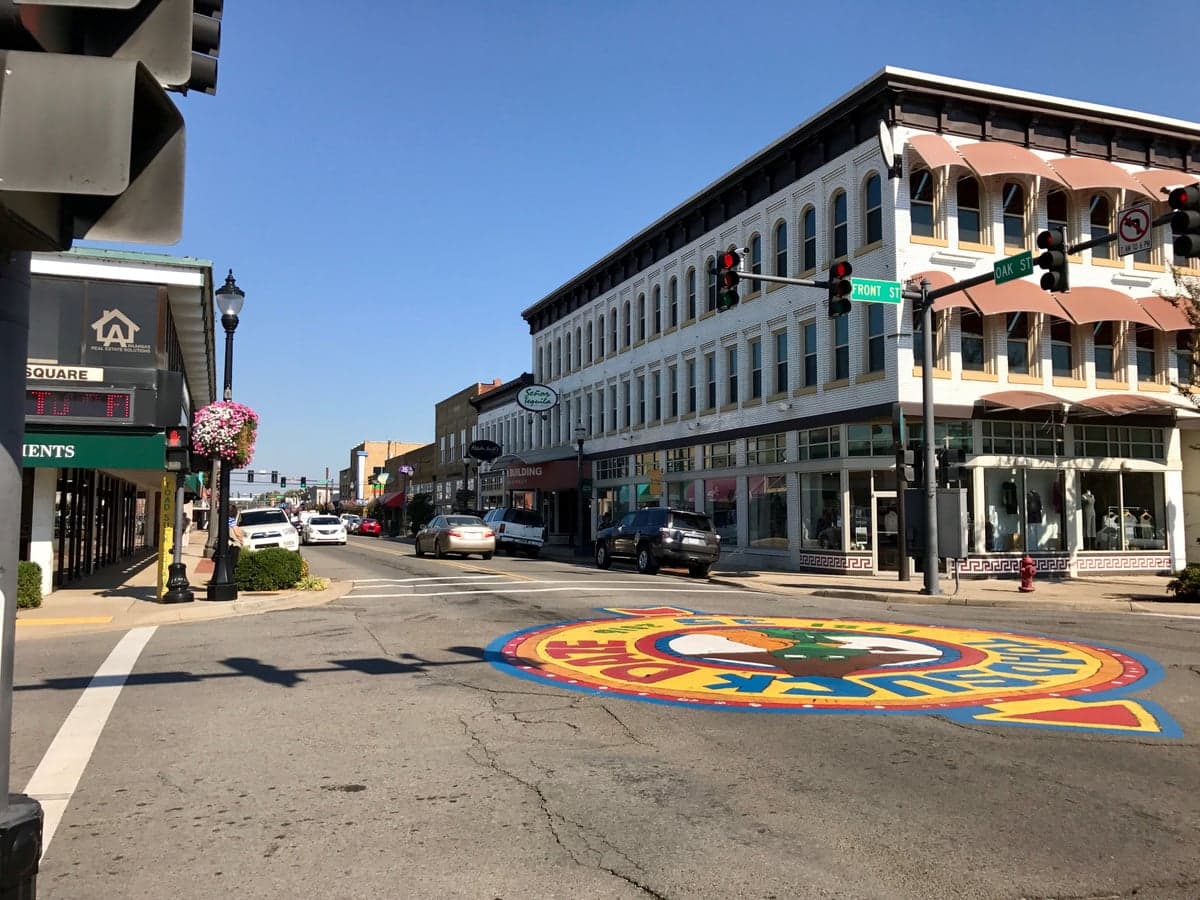
Photo: Wikipedia
Political ClimatePolitical Climate in Conway, AR
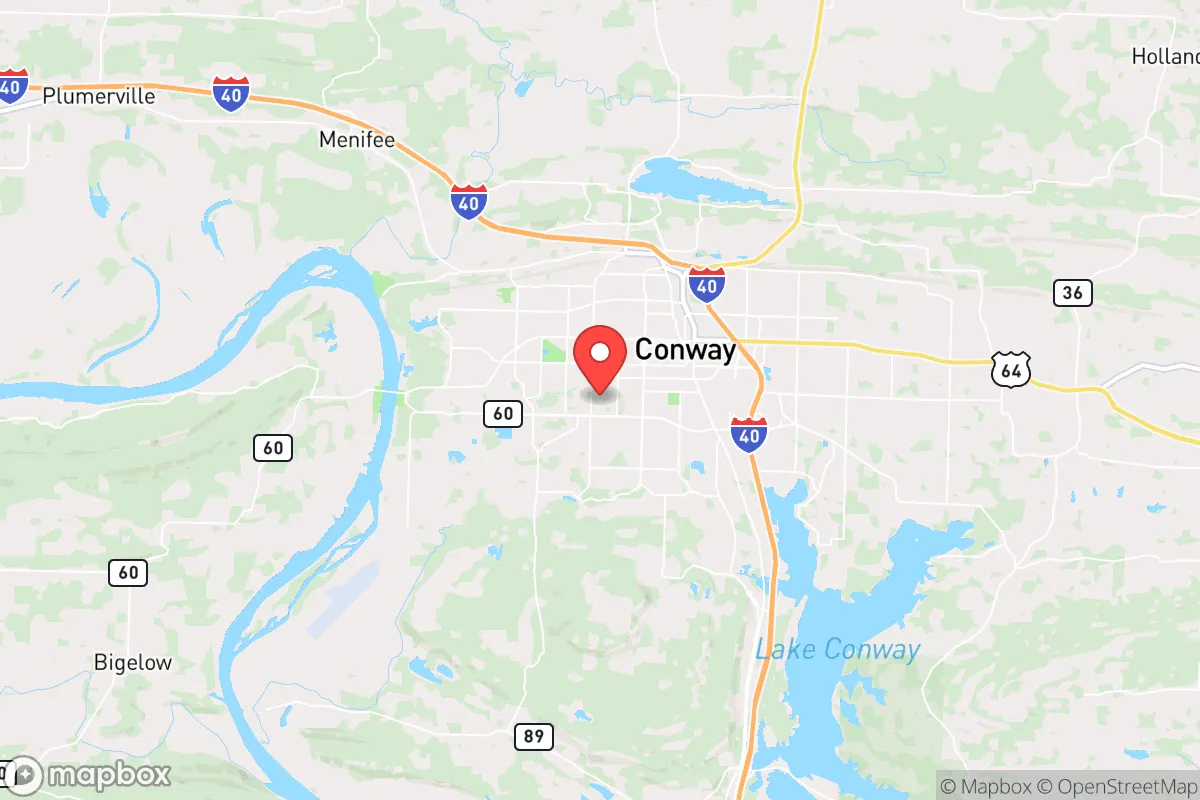
District shown is the primary district for this city’s centroid. Cities may span multiple districts.
Local Political AnalysisPolitical Analysis of Conway, AR
Conway, Arkansas, has long been a solidly conservative town, and the numbers back that up with a Cook PVI of R+8. But if you've lived here as long as I have, you know the political climate isn't quite as simple as a single number. For decades, Conway was a reliable Republican stronghold, driven by a strong sense of personal responsibility, a thriving faith community, and a deep skepticism of government overreach. While the city still leans right, you can feel a shift in the air, especially as the university and a wave of newcomers from more progressive parts of the country start to change the conversation. It's not a blue wave by any stretch, but the old, comfortable conservative consensus is being challenged, and that's something worth keeping an eye on.
How it compares
To really understand Conway's politics, you have to look at its neighbors. Drive 30 miles east to Little Rock, and you're in a deep blue island in a red state. The contrast is stark. Little Rock's politics are dominated by progressive urban priorities, while Conway's are still rooted in traditional values and limited government. Then head north to places like Greenbrier or Vilonia, and you'll find a much more pronounced, unapologetic conservatism. Conway sits right in the middle, acting as a kind of political buffer zone. It's conservative, but it's a more moderate, "live and let live" kind of conservatism compared to the rural areas. That said, the recent push for more progressive policies in the city council—things like zoning changes that feel like a backdoor to more government control—are a real red flag for those of us who remember when the city just focused on keeping taxes low and the streets paved.
What this means for residents
For the average resident, the political climate means you still have a lot of freedom to live your life without the government breathing down your neck. Property taxes are reasonable, business regulations are generally light, and there's a strong sense of community self-reliance. You won't find the kind of heavy-handed mandates or overreaching social engineering you see in places like Fayetteville or Little Rock. However, the creeping influence of progressive ideology is real. You see it in school board meetings, where there's a constant push to bring in divisive curriculum or policies that prioritize group identity over individual merit. It's also showing up in local elections, where candidates who talk about "equity" and "sustainability" are gaining a foothold. For now, the conservative majority holds, but it's a fight to keep it that way. The long-term trajectory depends on whether the new arrivals are people who moved here for the freedom and values, or people who moved here and want to change them.
One of the biggest cultural distinctions in Conway is the strong, independent spirit that still runs through the town. People here don't like being told what to do, whether it's by a federal agency or a city planner. There's a healthy distrust of any policy that sounds like it's for your own good but actually limits your choices. The local churches and civic clubs are still the backbone of the community, not government programs. That said, the university brings in a more transient population that often doesn't share those values. The key for Conway's future is whether the long-time residents and like-minded newcomers can hold the line against the kind of top-down, one-size-fits-all governance that's eroding freedom in so many other places. It's a good town, but it's not immune to the national trends, and that's why staying informed and involved is more important than ever.

State Political ClimatePolitical Climate in Arkansas
State Political AnalysisPolitical Environment in the State
Arkansas has been a reliably red state for decades, but the political climate here is more nuanced than a simple party label suggests. The state leans solidly Republican at the federal and state level, with every statewide elected office held by the GOP and a 2024 presidential margin of roughly +30 points for Trump. However, the 10-20 year arc shows a slow but steady shift: the old Democratic machine that dominated local offices until the 2010s has been replaced by a conservative coalition that is increasingly split between traditional business-friendly Republicans and a more populist, liberty-oriented wing. The real story is the growing tension between the fast-growing, moderate suburbs of Northwest Arkansas and the deeply conservative, rural rest of the state.
Urban vs. rural divide
The political map of Arkansas is a tale of three regions. Northwest Arkansas, anchored by Fayetteville, Bentonville, and Rogers, is the economic engine and the state’s most politically diverse area. Fayetteville, home to the University of Arkansas, is a blue dot in a red sea, voting Democratic in every recent presidential election. But the surrounding suburbs of Bentonville and Rogers are increasingly moderate Republican, driven by the influx of corporate transplants working for Walmart, Tyson Foods, and JB Hunt. This area is growing fast, and its politics are becoming more suburban and less reliably conservative on cultural issues. In contrast, Little Rock and its suburbs in Pulaski County are a Democratic stronghold, but the surrounding counties like Saline and Faulkner are deeply red. The rest of the state—the Delta, the River Valley, and the southern timberlands—is overwhelmingly Republican, with many counties voting 75%+ for Trump. The divide isn’t just urban vs. rural; it’s also about economic dynamism. The stagnant Delta counties are losing population and becoming even more conservative, while the booming Northwest is becoming more politically competitive.
Policy environment
Arkansas’s policy environment is a mixed bag for a conservative. On the plus side, the state has a flat income tax that was recently cut from 4.9% to 4.4%, with a goal of reaching 3.9% by 2027. There is no state property tax, and sales taxes are moderate. The regulatory posture is generally light, especially for agriculture and manufacturing. However, the state’s education policy is a flashpoint. Governor Sarah Huckabee Sanders signed the LEARNS Act in 2023, which created a universal school voucher program—a major win for school choice advocates. But the law also imposed new mandates on curriculum and teacher evaluations, which some conservatives see as government overreach into local control. On healthcare, Arkansas expanded Medicaid under the private option, which has been a point of contention. The state also has some of the strictest abortion laws in the country, with a near-total ban. Election laws are solid: voter ID is required, and the state has not seen the kind of election integrity controversies that plagued other states in 2020. Overall, the policy environment is conservative, but the growing influence of the Northwest Arkansas corporate class is pushing for more moderate positions on social issues and education.
Trajectory & freedom
Arkansas is becoming more free in some areas and less in others, and the trend is worth watching. On the positive side, the state passed constitutional carry (permitless carry) in 2021, and gun rights are broadly protected. The LEARNS Act expanded school choice, giving parents more control over their children’s education. The state also passed a law in 2023 banning gender transition procedures for minors, which was a major win for parental rights advocates. However, there are concerning trends. The state government has become more aggressive in preempting local ordinances, particularly in liberal-leaning cities like Fayetteville and Little Rock. In 2021, the legislature passed a law prohibiting local governments from banning discrimination based on sexual orientation or gender identity, overriding Fayetteville’s local ordinance. This kind of state preemption can be seen as protecting businesses from a patchwork of local rules, but it also limits local self-governance. On medical freedom, Arkansas has not gone as far as some states in restricting vaccine mandates, but there is growing skepticism of federal health agencies. The trajectory is toward more state-level control, which is a double-edged sword for liberty-minded residents.
Civil unrest & political movements
Arkansas has not seen the kind of widespread civil unrest seen in larger states, but there are visible flashpoints. The most organized political movements are on the right, particularly the Arkansas Citizens for Liberty and local gun rights groups. These groups are active in school board meetings and county quorum courts, pushing back against mask mandates and critical race theory. On the left, the Indivisible groups in Fayetteville and Little Rock are active but smaller. Immigration politics are relatively quiet, as Arkansas has a small foreign-born population, but there is a growing debate over the influx of migrants working in the poultry industry in the northwest. There have been no major sanctuary city controversies, as the state passed a law in 2019 requiring local law enforcement to cooperate with federal immigration authorities. Election integrity has not been a major issue, though there was a brief controversy in 2022 over ballot drop boxes in Pulaski County. The most visible flashpoint for a new resident would be the culture war battles in school board elections, particularly in the growing suburbs of Benton County and Washington County.
Projection
Over the next 5-10 years, Arkansas will likely become more politically competitive in the northwest and more conservative in the rural areas. The in-migration of corporate professionals to Northwest Arkansas will continue to moderate the politics of that region, potentially flipping some state legislative seats to Democrats or moderate Republicans. At the same time, the rural areas will continue to drift rightward, driven by population loss and cultural backlash. The state’s overall partisan lean will remain red, but the internal dynamics will become more complex. The biggest wildcard is the school choice movement: if the LEARNS Act proves popular, it could cement a conservative majority for a generation. If it leads to funding fights and school closures, it could create a backlash. A new resident moving to Bentonville or Rogers should expect to find a politically diverse community with a strong conservative base but growing progressive influence. Moving to Jonesboro or Fort Smith will feel much more uniformly conservative.
For a new resident, the bottom line is this: Arkansas offers a low-tax, low-regulation environment with strong protections for gun rights and school choice. But the state government is increasingly willing to override local control, which can be frustrating if you value community self-governance. The political climate is stable and conservative, but the growing influence of corporate interests in the northwest is a trend to watch. If you’re looking for a place where your vote counts and your values are respected, Arkansas is a solid choice—just be aware that the political landscape is not as simple as the red-state label suggests.
* Values derived from national, state, county, city and local statistics and may differ in a specific area. Last updated: 2026-04-23T16:31:40.000Z
Narrative content on this page is AI-generated and may contain mistakes. Verify any details that matter before acting on them.
ReloMaps may earn a commission from affiliate links at no extra cost to you.

