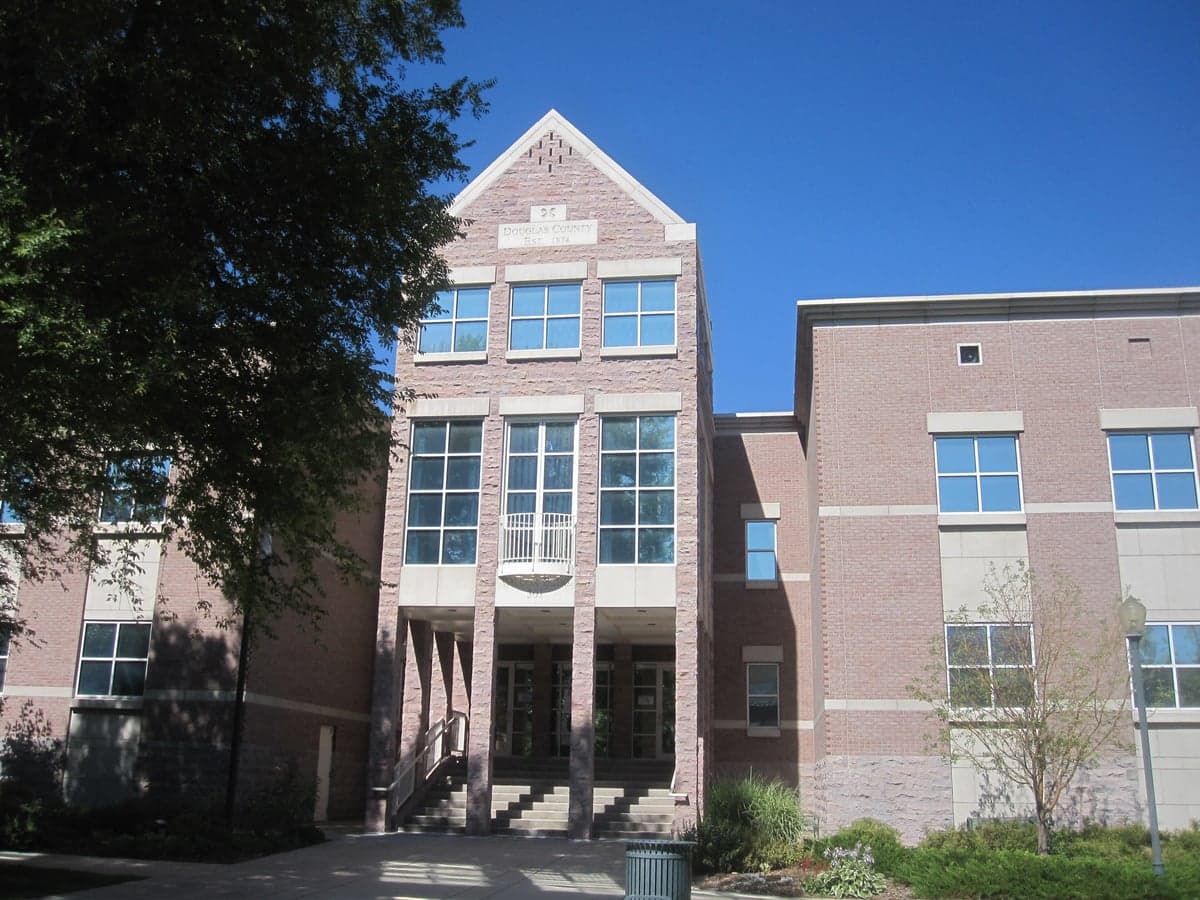
Photo: Wikipedia
Personal Sovereignty in Douglas County
Viable for self-reliance. Generally workable, though some barriers may limit total independence.
What does Personal Sovereignty tell us?
Personal Sovereignty measures your capacity for self-reliance and independence with minimal government friction. Higher scores mean fewer barriers between you and the way you want to live... but it assumes you have the space you need and good neighbors.
What does this tell us?
Personal Sovereignty measures your capacity for self-reliance and independence with minimal government friction. Higher scores mean fewer barriers between you and the way you want to live... but it assumes you have the space you need and good neighbors.
State Policy
Energy independence: Net exporter (110% of energy produced in-state)
Personal Liberty
Homesteading

Personal Liberty Analysis
Douglas County, Colorado, offers one of the strongest personal sovereignty environments in the Front Range, largely because its local governance has consistently pushed back against state-level overreach from Denver. While Colorado as a whole has trended left on taxation, gun control, and education mandates, Douglas County has maintained a distinct local culture of self-reliance and limited government. For individuals and parents who prioritize autonomy—whether in defending their family, choosing their children’s education, or living off-grid—this county stands out as a strategic foothold in an otherwise increasingly regulated state. The key is understanding where the county’s protections are solid and where state preemption still creates friction.
Tax burden and regulatory posture in Douglas County compared to Denver metro
Douglas County’s tax burden is among the lowest in the Denver metro area, with a property tax rate of roughly 0.55% of assessed value—significantly lower than Denver’s 0.85% or Boulder’s 0.75%. The county has no local income tax, and the sales tax rate in unincorporated areas is just 2.9%, though towns like Castle Rock add their own 2% for a combined 4.9%. This is a deliberate posture: the county commission has repeatedly rejected property tax increases that neighboring counties have adopted. Regulatory-wise, Douglas County is known for a “permit-friendly” approach to development, especially in Parker and Lone Tree, where business licensing is streamlined. However, the state’s 2021 oil and gas reform law (SB 21-181) imposes setback requirements that limit mineral rights development in the county’s rural eastern sections near Franktown. For preppers, the key takeaway is that local government is generally pro-property-rights, but state-level environmental regulations can still constrain what you can do on your land, particularly near water sources or in wildlife corridors.
Self-defense and gun law specifics in Douglas County’s local culture
Douglas County is one of the most gun-friendly jurisdictions in Colorado, with a sheriff’s office that has publicly stated it will not enforce certain state-level magazine bans or red-flag orders. In 2023, Sheriff Tony Spurlock (now retired) and his successor have maintained a policy of not enforcing the state’s 15-round magazine limit (HB 21-1106) or the 2024 “assault weapons” ban (SB 24-131) within county limits. This creates a de facto sanctuary for standard-capacity magazines and commonly owned rifles. Concealed carry permits are issued on a shall-issue basis, with typical processing times of 30-45 days in Castle Rock. Open carry is legal without a permit, though local ordinances in Lone Tree and Parker restrict firearms in municipal buildings and parks. For preppers, the practical reality is that you can carry a sidearm openly in most of the county without harassment, and the sheriff’s office is responsive to self-defense claims. However, state preemption still applies to NFA items—suppressors and short-barreled rifles require federal stamps, and the state does not recognize constitutional carry for non-residents. The culture in Sedalia and Larkspur is particularly strong on this front, with local gun shops reporting steady sales of AR-15s and high-capacity magazines despite state bans.
Self-reliance and homesteading viability: lot sizes, zoning, and off-grid feasibility
Homesteading viability varies dramatically across Douglas County. The western half, including Sedalia and Larkspur, offers 5- to 35-acre parcels zoned for agricultural use, with minimal restrictions on livestock, gardening, and rainwater collection. In Franktown, you can find properties with existing wells and septic systems, and the county allows off-grid solar installations without special permits as long as they meet electrical code. However, the eastern plains near Elizabeth (which is actually in Elbert County but adjacent) have even looser zoning—Douglas County requires a minimum of 2.5 acres for a single-family home in rural zones, while Elbert County allows 1-acre parcels. Off-grid living is feasible but not fully legal: the county requires a septic system and a well permit for any habitable structure, and composting toilets are not recognized as a primary sanitation solution. For preppers, the best bet is unincorporated areas near the Pike National Forest boundary, where you can legally hunt deer and elk on your own land. The county’s building code does not require sprinkler systems for single-family homes under 5,000 square feet, which reduces regulatory burden for DIY builders. Water rights are a critical issue—new wells in the county are subject to the state’s “augmentation plan” requirements, meaning you may need to pay for water credits if your well impacts senior water rights. This is a hidden cost that can run $5,000-$15,000 for a new well permit.
Personal liberties: parental rights, medical autonomy, speech, and property protections
Douglas County has been a battleground for parental rights, particularly in education. The county’s school board elections in 2023 saw a conservative majority elected that has banned critical race theory and gender ideology instruction in K-12 classrooms, and the district allows parents to opt children out of any sex education or health curriculum. The Douglas County School District also offers a robust school choice program, including charter schools and online learning options, which gives parents de facto control over their children’s education. Medical autonomy is more constrained: Colorado’s 2022 psilocybin legalization (Proposition 122) allows for therapeutic use, but Douglas County commissioners voted to opt out of retail sales, meaning no dispensaries operate in the county. Vaccine mandates are not enforced locally, and the county health department does not require masks or proof of vaccination for public services. Free speech is protected under the First Amendment, and the county has not adopted any hate speech ordinances that could chill political expression. Property rights are strong, with the county’s 2019 “Right to Farm” ordinance protecting agricultural operations from nuisance lawsuits—important for anyone raising livestock or running a small farm. However, the state’s 2023 “Land Use” bill (SB 23-213) requires counties to plan for higher-density housing near transit corridors, which could eventually force zoning changes in Castle Rock and Parker that reduce rural character.
Overall, Douglas County offers a high degree of personal sovereignty relative to other Front Range counties, but it is not a libertarian paradise. The state government in Denver continues to push preemptive laws on guns, water rights, and land use that local officials can only partially resist. For preppers and conservatives, the county’s strength lies in its local culture—sheriff’s deputies who respect self-defense, school boards that prioritize parental authority, and zoning that still allows for rural self-reliance. Compared to Boulder or Jefferson County, Douglas County is a clear win for autonomy. Compared to Elbert County or Weld County, it is slightly more regulated but offers better infrastructure and schools. The smart move for a relocation is to target the unincorporated areas near Sedalia or Franktown, where you get the county’s protections with the least state interference. Just budget for water rights and be ready to fight the next state-level encroachment—because in Colorado, the battle for personal sovereignty is never truly won, only held.

* Values derived from national, state, county, city and local statistics and may differ in a specific area. Last updated: 2026-05-12T11:55:31.000Z
Narrative content on this page is AI-generated and may contain mistakes. Verify any details that matter before acting on them.
ReloMaps may earn a commission from affiliate links at no extra cost to you.

