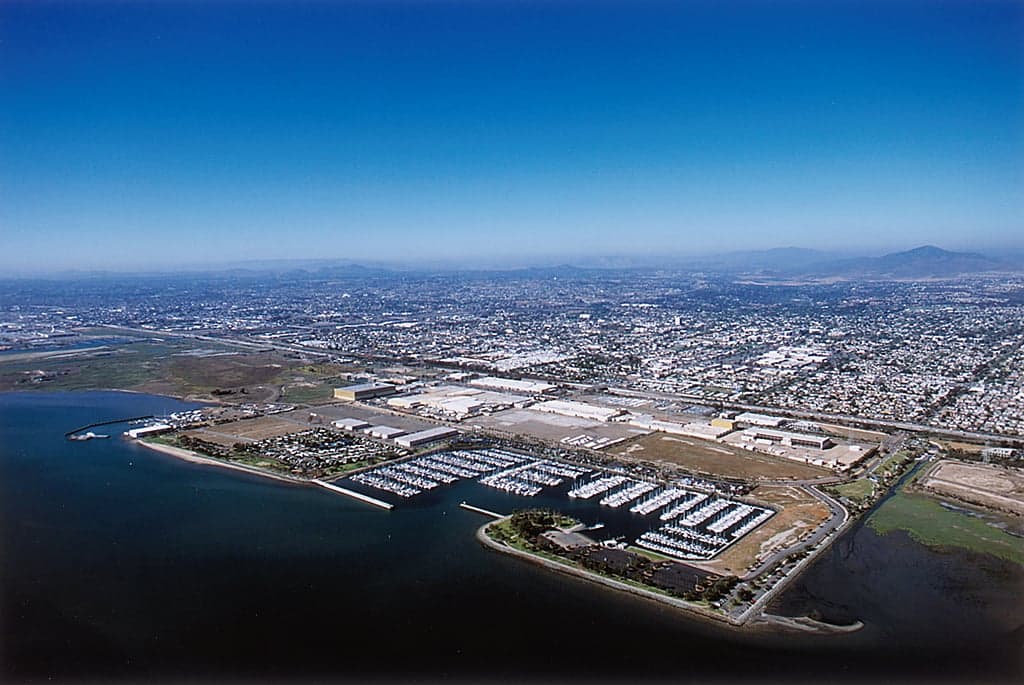
Photo: Wikipedia
Strategic Assessment of Chula Vista, CA
High tactical risk. This location is likely close to major population centers, strategic targets, or sits in a high-disaster corridor. A retreat property and careful exit planning is required.
What does the Strategic Assessment tell us?
Our Strategic Assessment grades tactical survivability of an area. Major population centers, military targets, fallout zones, natural disasters, and border exposure all drive risk — lower exposure means a more defensible position in a crisis.
This is heavily inspired by Joel Skousen's Strategic Relocation book. Highly recommended you checkout the book ($)What does this tell us?
Our Strategic Assessment grades tactical survivability of an area. Major population centers, military targets, fallout zones, natural disasters, and border exposure all drive risk — lower exposure means a more defensible position in a crisis.
This is heavily inspired by Joel Skousen's Strategic Relocation book. Highly recommended you checkout the book ($)Strategic Pillars

Key Distances
Regional Safe Places
Below is our recommended "safe zones" in California and the surrounding area based on our strategic heuristics. For most people, it's unrealistic to live in a “safe zone” full-time due to work, family or other personal reasons. They tend to be more rural. However, many of these areas are perfect for second homes and retreat properties that double as a vacation home or even a short-term rental.

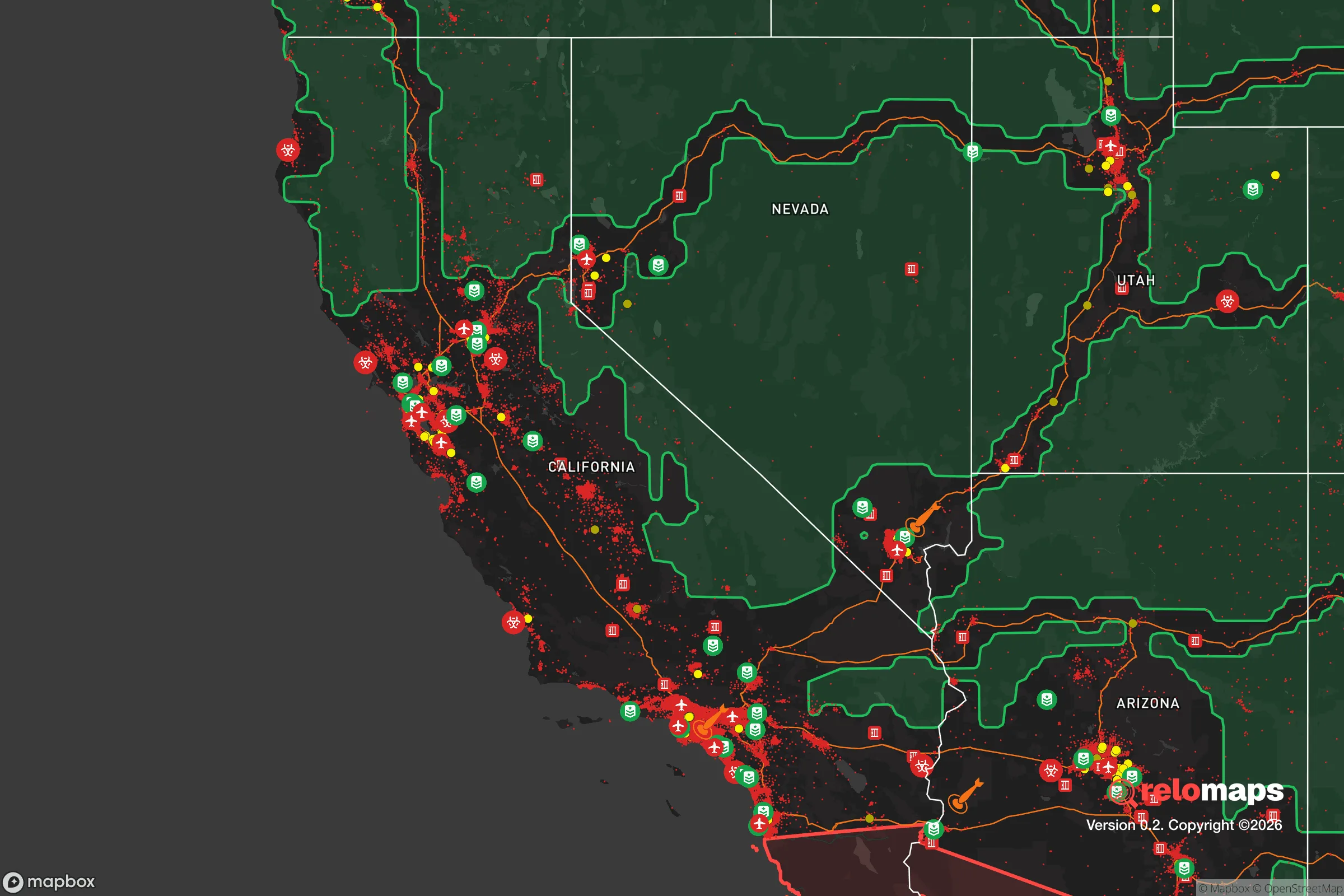


Important Note: For informational purposes only. This does not mean nothing bad ever happens in the green zones. Please use common sense. This is based on public data and modeled with AI. We tried to take a conservative approach but mistakes happen. We update this regularly as new information becomes available.
Solar Generator Recommendations
Backup power matters more here than in safer locations. We've picked three solar generators across budgets and capacity tiers — start with the budget unit if you only need a few essentials, or step up if you want to run a fridge and HVAC for days at a time.

Jackery Portable Power Station Explorer 300
Budget OptionPower on the Go: Weighing only 11 lbs, it's convenient to set up and store with book-sized foldable solar panels

BLUETTI Portable Power Station AC180
Designed for both indoor and outdoor scenarios, AC180 is highly capable as it has a robost capacity and continuous output power.

EF ECOFLOW DELTA Pro Ultra Power Station
Upgraded PickEcoFlow DELTA Pro Ultra is a whole-home energy system designed to grow with your family. Integrated with the Smart Home Panel 2, it scales to meet your evolving energy needs — keeping your home powered, intelligent, and secure through every stage of life.
We earn a commission, at no additional cost to you.
Strategic Assessment Analysis
Chula Vista offers a mixed strategic picture for the conservative prepper. Its location on the U.S.-Mexico border and proximity to San Diego provide economic opportunity but also create significant vulnerabilities. The city’s resilience is undermined by its position near major population centers, international ports, and critical infrastructure that could become targets or chokepoints during civil unrest or a mass casualty event. For a relocator prioritizing security and self-sufficiency, Chula Vista requires careful trade-off analysis.
Geographic position and natural advantages for a survival scenario
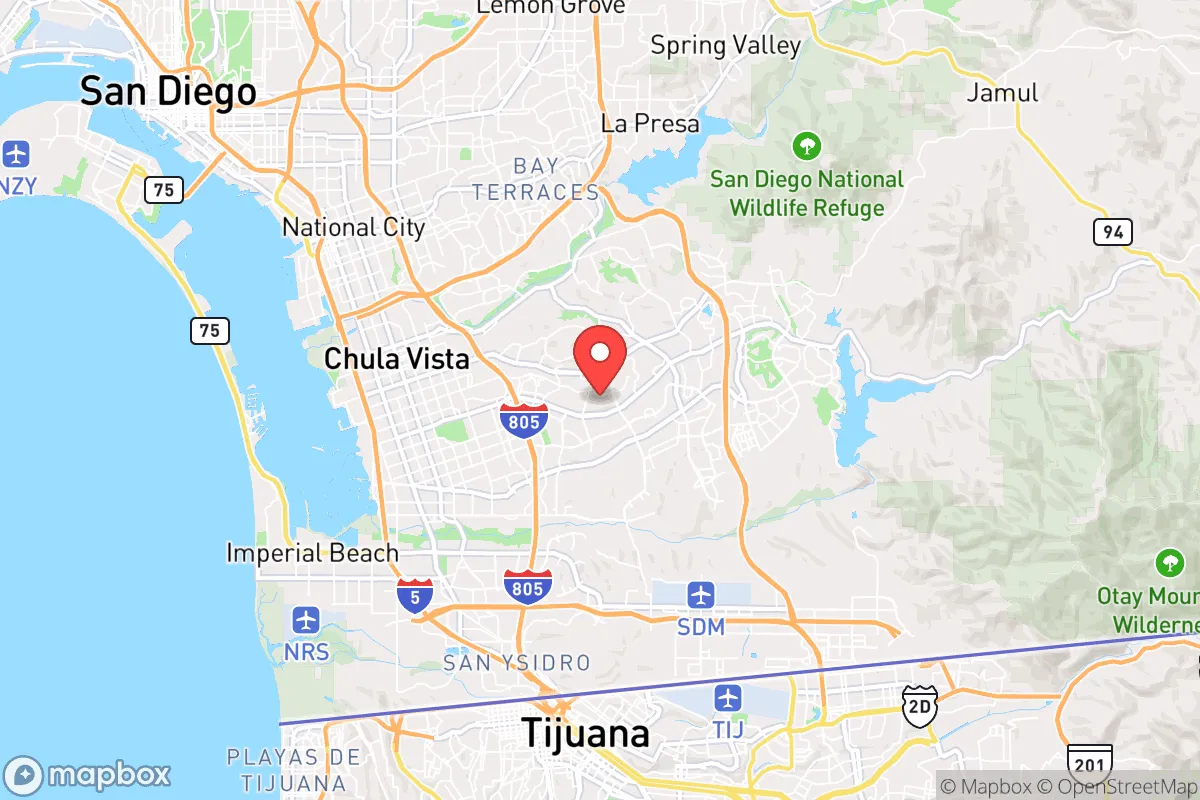
Chula Vista sits on the southern edge of San Diego Bay, roughly 7 miles from the Pacific Ocean and 15 miles from downtown San Diego. Its geography includes coastal plains rising into the foothills of the San Ysidro Mountains, offering some terrain diversity. The area benefits from a Mediterranean climate with mild winters and dry summers, reducing the risk of extreme weather events like blizzards or hurricanes. Average annual rainfall is about 10 inches, which limits natural water availability but also lowers flood risk. The nearby Otay Lakes and Lower Otay Reservoir provide surface water sources, though these are managed by the city and vulnerable to disruption. For a prepper, the key natural advantage is the moderate climate, which reduces heating and cooling demands and allows for year-round gardening. However, the region sits in a seismically active zone—the Rose Canyon Fault runs through the area—and a major earthquake could disrupt utilities and transportation for weeks. The proximity to the Pacific also means tsunami risk along the coast, though Chula Vista’s bayfront location offers some protection from open-ocean waves.
Risks, exposures, and proximity to fallout-relevant landmarks
The most significant strategic liability is Chula Vista’s location just 7 miles north of the U.S.-Mexico border at San Ysidro, the busiest land border crossing in the Western Hemisphere. During a national emergency or mass migration event, this crossing could become a flashpoint for civil unrest, cartel activity, or government lockdowns. The city is also within 15 miles of Naval Air Station North Island, Naval Base San Diego, and Marine Corps Base Camp Pendleton—all high-value military targets in a conflict scenario. San Diego International Airport and the Port of San Diego, both within 20 miles, are additional fallout-relevant landmarks. Chula Vista itself hosts the South Bay Power Plant (now decommissioned) and major electrical substations that could be targeted. The city’s population of roughly 280,000 is dense by suburban standards, with over 4,000 people per square mile. This density creates challenges for evacuation: major freeways like I-5 and I-805 are the primary routes north, and both can gridlock during emergencies. In a worst-case scenario involving a nuclear detonation at the San Diego naval facilities, prevailing westerly winds would carry fallout directly over Chula Vista. The city’s lack of significant fallout shelters or hardened infrastructure is a critical weakness.
Practical resilience for a relocator: food, water, energy, and defensibility
For a relocator seeking self-sufficiency, Chula Vista presents several practical hurdles. Water is the most pressing concern. The city relies on imported water from the Colorado River and the State Water Project, both of which are vulnerable to drought, earthquake, or sabotage. Local groundwater is limited and often brackish. Rainwater harvesting is possible but insufficient for full independence—a 1,000-square-foot roof captures only about 600 gallons per year. Food resilience is moderate: the surrounding Imperial Valley is a major agricultural region, but supply chains depend on trucking and fuel availability. Community gardens exist but are small-scale. For energy, San Diego Gas & Electric provides grid power, but the region has experienced Public Safety Power Shutoffs during wildfire risk events. Solar adoption is high—over 20% of homes have panels—but battery storage is less common. Defensibility is poor due to the city’s flat terrain and dense layout. Single-family homes in eastern Chula Vista offer more space and setback, but the area lacks natural chokepoints or elevated positions for security. The city’s police force is well-funded but would be overwhelmed during a widespread crisis. For a prepper, the best option is to secure a property with a well, solar, and a defensible perimeter in the eastern foothills, but such properties are rare and expensive—median home prices exceed $700,000. Evacuation routes are limited to I-5, I-805, and SR-125, all of which can be blocked by accidents or checkpoints.
The overall strategic picture for Chula Vista is one of high risk with limited upside for the conservative prepper. Its climate and economic opportunities are real advantages, but they are outweighed by the vulnerabilities of border proximity, military target density, population density, and dependence on fragile infrastructure. For a relocator prioritizing long-term security and self-reliance, inland areas of San Diego County—such as Ramona, Julian, or Alpine—offer better defensibility, water access, and distance from fallout zones. Chula Vista might serve as a temporary base for work or resupply, but it is not a location to ride out a major crisis. If you are serious about preparedness, look east, not south.

* Values derived from national, state, county, city and local statistics and may differ in a specific area. Last updated: 2026-04-24T09:52:18.000Z
Narrative content on this page is AI-generated and may contain mistakes. Verify any details that matter before acting on them.
ReloMaps may earn a commission from affiliate links at no extra cost to you.

