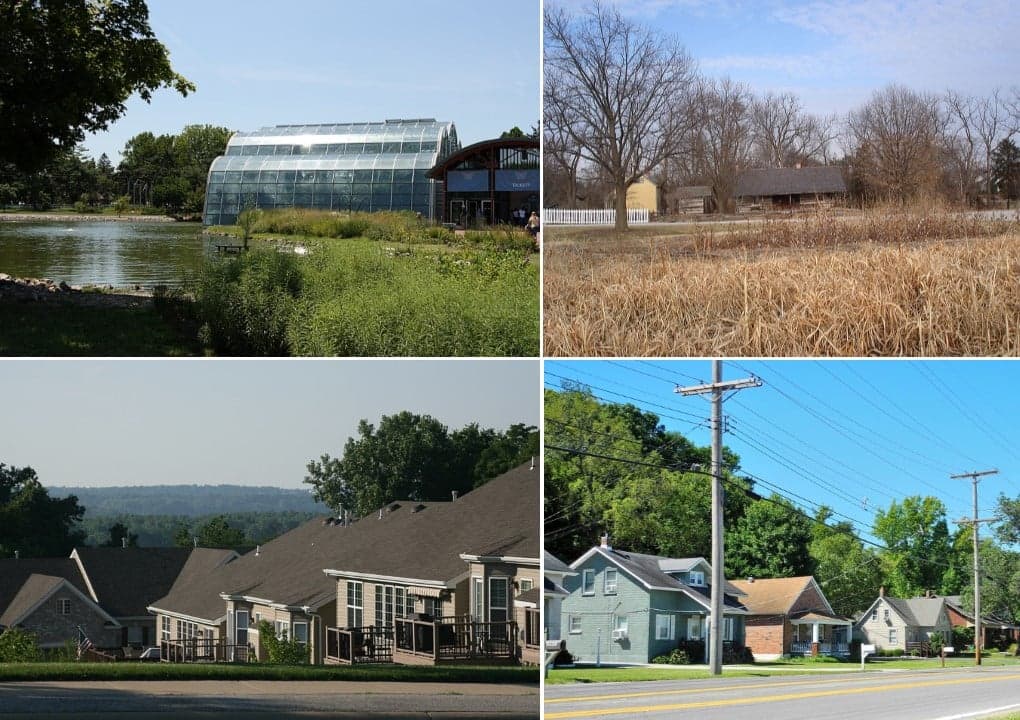
Photo: Wikipedia
Demographics of Chesterfield, MO
Affluence Level in Chesterfield, MO
An upper-middle-class area. Household wealth, education levels, and homeownership run ahead of national benchmarks.
People of Chesterfield, MO
Chesterfield, Missouri, is a predominantly white, highly educated suburban city of 49,591 residents, where 72.4% of adults hold a college degree and the median household income exceeds $120,000. The city’s population is notably diverse for a West County suburb, with a significant Indian-subcontinent community (8.4%) and a smaller East/Southeast Asian population (5.0%), alongside a 6.7% foreign-born share. Chesterfield’s identity is shaped by its role as a corporate and retail hub along the I-64 corridor, attracting professionals who value top-rated schools, low crime, and large-lot housing. The population is stable but slowly diversifying, with the Indian and Asian communities growing through professional migration rather than refugee resettlement.
How the city was settled and grew
Chesterfield’s human history begins not with a town square but with the Missouri River floodplain. The area was originally inhabited by the Osage and later by French fur traders, but permanent American settlement began in the 1830s when German immigrants—many from the Rhineland—farmed the fertile bottomlands. These families established the Gumbo and Bonhomme neighborhoods, named after local creeks, where small clusters of German Catholic and Lutheran churches still stand. The railroad arrived in the 1850s, connecting Chesterfield to St. Louis, but the population remained sparse—fewer than 500 residents—through the 1940s. The city was not formally incorporated until 1988, meaning its early growth was organic, driven by German-American farmers who sold land to developers as St. Louis expanded westward after World War II.
Modern era (post-1965)
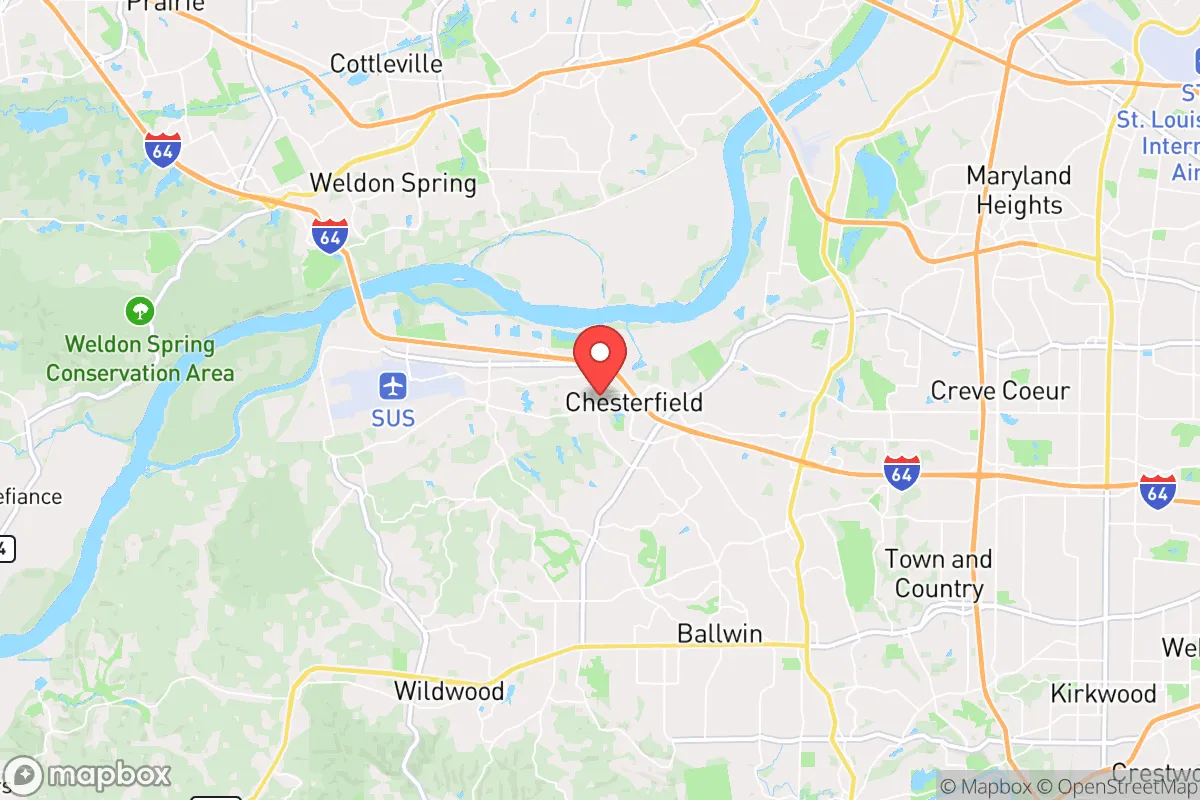
The post-1965 transformation of Chesterfield was driven by domestic white flight from St. Louis city and the construction of Interstate 64. Between 1970 and 1990, the population surged from roughly 5,000 to over 40,000 as middle- and upper-middle-class families—overwhelmingly white—moved into planned subdivisions like Hickory Ridge and Lakeside. These neighborhoods offered large homes on half-acre lots, low property taxes, and access to the Parkway School District, which became a magnet for college-educated professionals. The Indian-subcontinent community began arriving in the 1990s, drawn by tech and medical jobs at companies like Reinsurance Group of America and Mercy Hospital. They concentrated in the Wildwood Crossing and Winding Woods areas, where newer, larger homes suited extended-family living. The East/Southeast Asian population—primarily Chinese and Korean—grew more slowly, settling in Chesterfield Valley near the retail corridor. The Hispanic and Black populations each remain at 3.3%, largely employed in service and healthcare roles, and are dispersed rather than clustered in any single neighborhood.
The future
Chesterfield’s population is projected to remain stable or grow modestly, as the city is nearly built out. The Indian-subcontinent community is the fastest-growing demographic segment, driven by H-1B visa holders and their families who work in finance, IT, and medicine; this group is likely to reach 10-12% of the population within a decade. The East/Southeast Asian share is plateauing, as many second-generation families move to newer suburbs like O’Fallon or St. Charles for cheaper housing. The white population is aging—the median age is 44—and younger white families are increasingly choosing nearby Wildwood or Town and Country for newer inventory. The city is not tribalizing into ethnic enclaves; rather, all groups are assimilating into the same school system and civic life, with intermarriage rates rising. The Hispanic and Black populations are expected to remain small, as Chesterfield’s high housing costs ($500,000+ median) limit in-migration from lower-income groups.
For a conservative-leaning mover, Chesterfield is becoming a more diverse but still culturally stable suburb where professional achievement, not ethnic background, defines social standing. The city’s trajectory points toward a continued blend of white professionals and Indian-subcontinent families, with little political or cultural friction. The schools, safety, and property values that drew the first waves remain intact, making Chesterfield a reliable choice for those who prioritize order and opportunity over urban energy or ethnic diversity for its own sake.

* Values derived from national, state, county, city and local statistics and may differ in a specific area. Last updated: 2026-05-01T09:14:20.000Z
Narrative content on this page is AI-generated and may contain mistakes. Verify any details that matter before acting on them.
ReloMaps may earn a commission from affiliate links at no extra cost to you.

