Photo: Wikipedia
Demographics of Chester, PA
Affluence Level in Chester, PA
A low-income area with significant economic hardship. Household wealth and educational attainment are well below national averages.
People of Chester, PA
The people of Chester, Pennsylvania today form a densely packed, predominantly Black city of 33,209 residents, with a character shaped by industrial boom, white flight, and decades of economic disinvestment. The city is 70.9% Black, 14.3% White, and 9.6% Hispanic, with a foreign-born population of just 2.2% — far below the national average. Distinctive markers include a high poverty rate, a low college attainment rate of 13.3%, and a palpable sense of local identity rooted in the city’s historic role as a manufacturing powerhouse. For a conservative-leaning reader, Chester represents a cautionary case of what happens when a single-industry economy collapses and the population that remains is left without the tax base or social capital to rebuild.
How the city was settled and grew
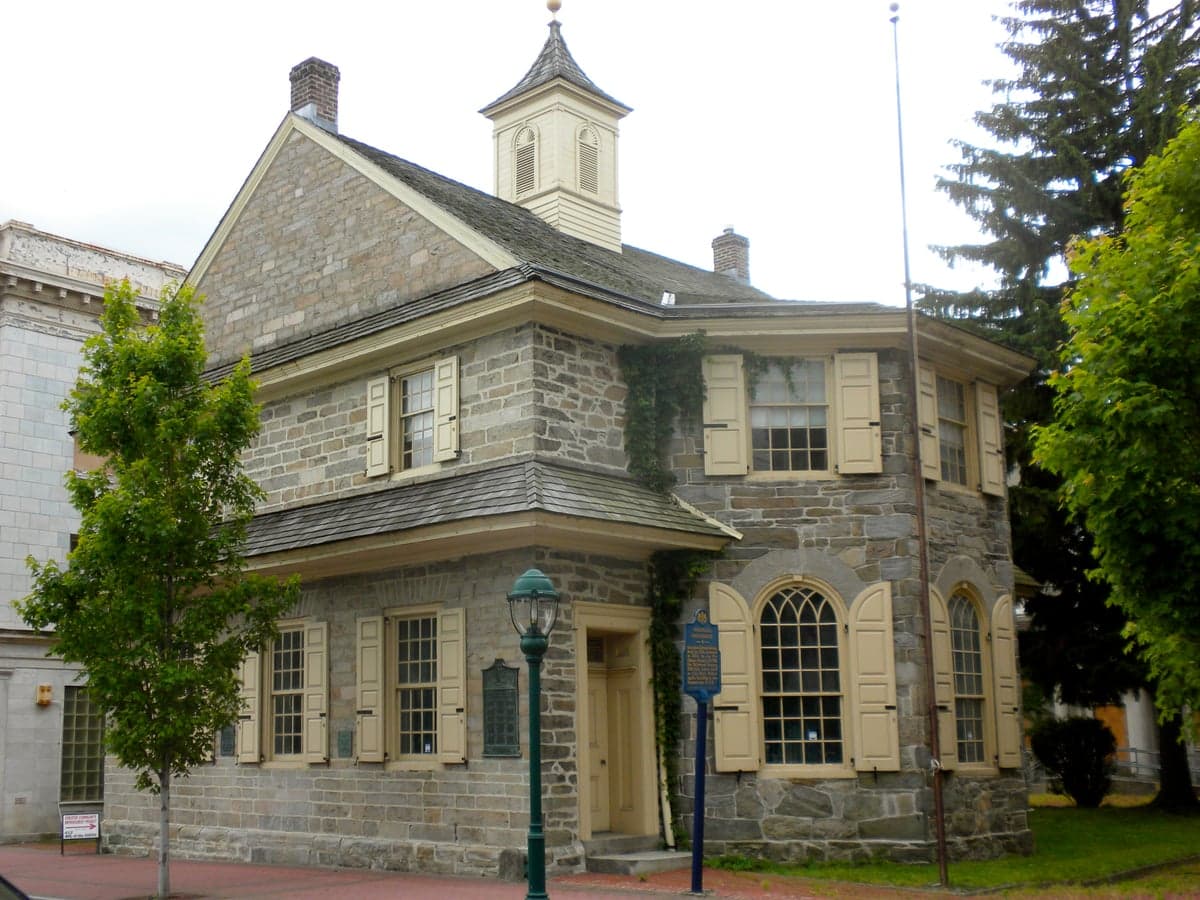
Chester was founded in 1682 by William Penn’s Quaker settlers, making it one of the oldest cities in Pennsylvania. Its early population was a mix of English, Welsh, and Swedish farmers who built the original core around what is now the Chester Historic District along the Delaware River. The city’s real growth came in the 19th and early 20th centuries, driven by heavy industry: shipbuilding at the Sun Shipbuilding & Dry Dock Company (launched in 1916) and steel fabrication at the Baldwin Locomotive Works (relocated to nearby Eddystone in 1906). These employers drew massive waves of European immigrants — Irish, Italian, Polish, and German — who settled in neighborhoods like Upland and East End, building dense row-house blocks and Catholic parishes. By 1950, Chester’s population peaked at 66,039, with a white working-class majority living in tight-knit ethnic enclaves. The Great Migration brought Black families from the South starting around World War I, who concentrated in the West End and South Chester neighborhoods, often in older housing stock that white residents were vacating.
Modern era (post-1965)
The post-1965 era was defined by rapid racial turnover and economic collapse. The 1965 Hart-Cellar Act opened immigration channels that largely bypassed Chester — the city’s foreign-born share today is just 2.2%, compared to roughly 14% nationally. Instead, the demographic shift was driven by domestic migration: as Sun Shipbuilding declined in the 1970s and 1980s, white families left for Delaware County suburbs like Brookhaven and Aston, and Black families moved into the vacated housing stock in Highland Gardens and East End. By 1990, Chester had become a majority-Black city, a status it retains today. The Hispanic population, now 9.6%, began growing in the 1990s and 2000s, primarily Puerto Rican families settling in the West End and parts of South Chester, though the share remains modest. The Asian population is negligible at 0.7% East/Southeast Asian and 0.1% Indian subcontinent, reflecting the city’s lack of the professional-class job base that attracts such immigrants to nearby Philadelphia or King of Prussia. The white population, now 14.3%, is concentrated in a few small pockets, including the Chester Historic District and some blocks near Widener University, where faculty and staff live.
The future
Chester’s population is likely to continue shrinking slowly, from 33,209 today, as the city struggles to retain families and attract new residents. The city is not homogenizing into a single identity — rather, it is tribalizing into distinct enclaves: the Black majority remains dominant citywide, but the Hispanic share is growing gradually in the West End, and the small white population is aging in place in the Historic District. The foreign-born population is not growing meaningfully, as Chester lacks the immigrant-friendly job base (light manufacturing, food processing, or caregiving) that drives growth in nearby cities like Upper Darby or Norristown. The next 10-20 years will likely see continued population loss, a slow increase in the Hispanic share to perhaps 12-15%, and a slight uptick in East/Southeast Asian residents if the city’s nascent waterfront redevelopment (the Chester Waterfront district) attracts new employers. However, without a major economic catalyst, the demographic trajectory is one of stagnation.
For someone moving in now, Chester is a city in demographic stasis — overwhelmingly Black, with a small and slowly growing Hispanic minority, and virtually no immigrant or Asian presence. The population is not diversifying in the way many American cities are; it is consolidating around its existing Black majority while losing overall numbers. A conservative-leaning reader should understand that Chester offers low home prices and proximity to Philadelphia, but also high crime, a weak tax base, and a population that has been shrinking for 70 years. The city is not becoming a melting pot — it is becoming a smaller, poorer version of its 1990s self.

* Values derived from national, state, county, city and local statistics and may differ in a specific area. Last updated: 2026-05-01T12:32:20.000Z
Narrative content on this page is AI-generated and may contain mistakes. Verify any details that matter before acting on them.
ReloMaps may earn a commission from affiliate links at no extra cost to you.

