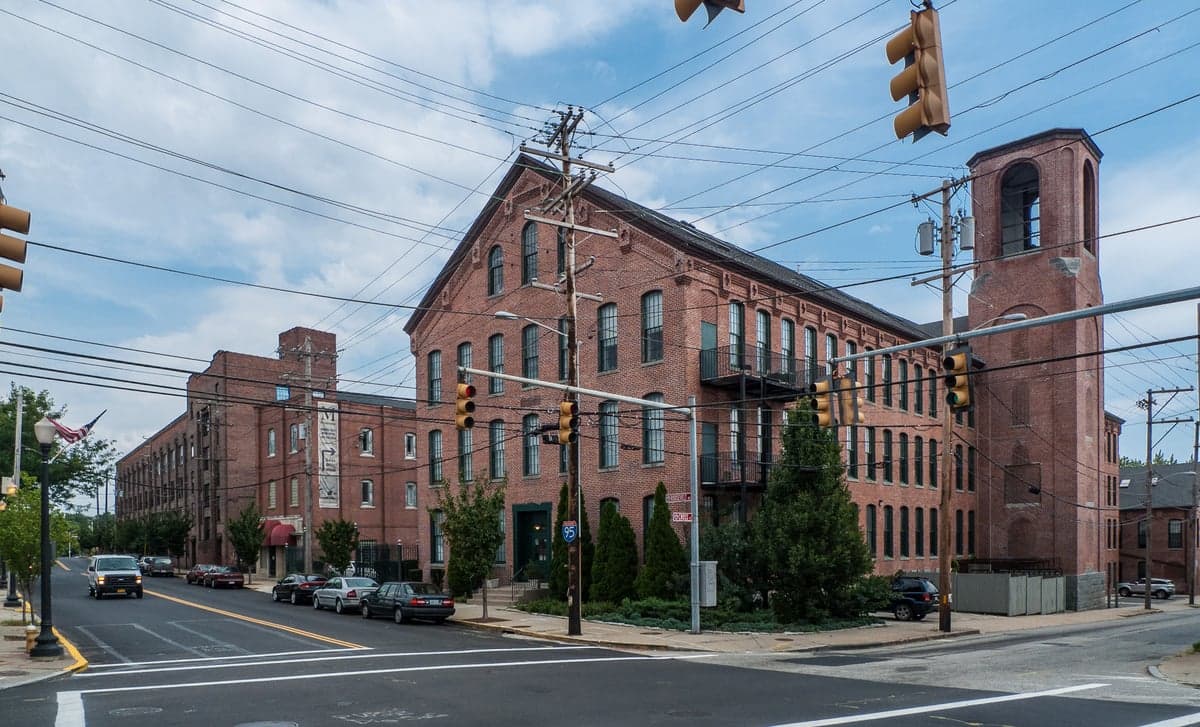
Photo: Wikipedia
Personal Sovereignty in Central Falls, RI
Viable for self-reliance. Generally workable, though some barriers may limit total independence.
What does Personal Sovereignty tell us?
Personal Sovereignty measures your capacity for self-reliance and independence with minimal government friction. Higher scores mean fewer barriers between you and the way you want to live... but it assumes you have the space you need and good neighbors.
What does this tell us?
Personal Sovereignty measures your capacity for self-reliance and independence with minimal government friction. Higher scores mean fewer barriers between you and the way you want to live... but it assumes you have the space you need and good neighbors.
State Policy
Energy independence: Importer (1% of energy produced in-state)
Personal Liberty
Homesteading

Personal Liberty Analysis
Central Falls, Rhode Island, presents a challenging environment for those prioritizing personal sovereignty, as its dense urban layout and deep integration into a state with some of the nation's most restrictive policies create significant headwinds for self-reliant living. For the strategic relocator with a survivalist or prepper mindset, this city represents a case study in how municipal density and state-level overreach can combine to severely limit individual autonomy. While the city itself is small, its policies are a direct reflection of Rhode Island’s broader regulatory climate, which consistently ranks among the least free in the nation for property owners, gun owners, and parents seeking educational alternatives.
Tax burden and regulatory posture for the self-reliant individual
Rhode Island’s tax climate is a primary concern for anyone seeking to maximize personal financial sovereignty. The state imposes a progressive income tax with a top marginal rate of 5.99%, which kicks in at a relatively modest income level, and a statewide sales tax of 7%. For property owners in Central Falls, the effective property tax rate is among the highest in the nation, hovering around 2.5% of assessed value annually. This means a modest home valued at $250,000 carries a yearly tax bill of roughly $6,250—a substantial drain on resources that could otherwise be directed toward preparedness, land acquisition, or savings. The regulatory posture is equally burdensome. Rhode Island is known for its complex permitting processes, particularly for any home-based business or construction project. The state’s building codes are stringent, and local zoning in Central Falls, a city of just over one square mile, leaves almost no room for the kind of independent workshops, small-scale agricultural operations, or storage facilities that a prepper would consider essential. The state’s overall business climate is consistently ranked in the bottom ten nationally, reflecting a deep-seated preference for regulatory control over individual economic initiative.
Self-defense rights and gun law specifics in Rhode Island
For those who view the Second Amendment as a cornerstone of personal sovereignty, Rhode Island is a deeply problematic state. It is a "may-issue" jurisdiction for concealed carry permits, meaning local authorities have broad discretion to deny a permit even if an applicant meets all statutory requirements. In practice, this discretion is often used to restrict carry rights, particularly in urban centers like Central Falls. The state also requires a purchaser's permit or blue card to buy a handgun, a process that involves a background check and a waiting period. Furthermore, Rhode Island bans "large capacity" magazines (over 10 rounds for long guns, over 10 for handguns) and has a red flag law that allows for the temporary seizure of firearms without a criminal conviction, based solely on a civil order. For the survivalist, these laws represent a direct infringement on the ability to defend oneself, one’s family, and one’s property. The legal landscape creates a chilling effect, where law-abiding citizens must navigate a bureaucratic maze to exercise a fundamental right, while the state’s posture suggests a fundamental distrust of the armed citizen. Stand-your-ground laws do not exist in Rhode Island; a duty to retreat is imposed before using deadly force outside the home, further limiting self-defense options.
Self-reliance and homesteading viability in a dense urban core
Central Falls is the most densely populated city in Rhode Island, and its urban fabric is fundamentally incompatible with traditional homesteading or off-grid living. The typical lot size is a fraction of an acre, often with no usable backyard space. Zoning ordinances are strictly residential and commercial, with no provisions for keeping livestock, maintaining substantial gardens, or installing alternative energy systems like solar panels with battery storage without extensive permitting. The city’s infrastructure is entirely grid-dependent, and the idea of drilling a well or installing a septic system is a non-starter. For the prepper seeking self-reliance, Central Falls offers virtually no opportunity for food production, water independence, or energy autonomy. The nearest viable land for any kind of rural homesteading is at least 30-45 minutes away in western Rhode Island or into Connecticut, but even there, state-level regulations on water rights, septic systems, and building codes remain restrictive. The practical takeaway is that Central Falls is a location for those who work in the region, not for those who wish to build a self-sufficient compound. Any serious attempt at homesteading would require a significant commute to a more rural, less regulated county.
Personal liberties: parental rights, medical autonomy, and speech
Rhode Island’s stance on parental rights and medical autonomy is a major red flag for conservative families. The state has some of the most aggressive vaccine mandates in the country, extending to school-age children with very limited philosophical exemptions. During the COVID-19 pandemic, Rhode Island was among the states with the most prolonged and stringent emergency orders, including broad business closures and mask mandates that were enforced with fines. This history suggests a government comfortable with overriding individual and parental judgment in the name of public health. On medical autonomy, the state has legalized assisted suicide and has a robust regulatory framework around healthcare that limits access to alternative or unapproved treatments. For the parent concerned about educational sovereignty, Rhode Island’s homeschool regulations are moderate but require annual notification and standardized testing, giving the state a degree of oversight that some find intrusive. Free speech protections are nominally strong, but the state’s political culture is overwhelmingly progressive, and social or professional consequences for expressing dissenting views on topics like public health mandates or gender ideology can be severe. Property rights are also weak; the state has a history of aggressive eminent domain use and environmental regulations that can restrict how landowners use their property, particularly near wetlands or waterways.
In the final analysis, Central Falls offers a very low degree of personal sovereignty compared to other areas in the region, let alone the more liberty-friendly states in the South or West. The combination of high taxes, restrictive gun laws, dense zoning, and a government posture that favors collective mandates over individual rights makes it a poor fit for the survivalist or prepper. For the single individual or family who values autonomy above all else, the entire state of Rhode Island should be viewed with caution. While the cost of housing in Central Falls is lower than in many New England suburbs, that savings is quickly eroded by taxes and the lack of freedom to live as one sees fit. The strategic recommendation is to look elsewhere—perhaps to New Hampshire or a more rural, less regulated state—if personal sovereignty is the primary relocation driver. Central Falls is a place to pass through, not a place to dig in.

* Values derived from national, state, county, city and local statistics and may differ in a specific area. Last updated: 2026-04-29T20:46:08.000Z
Narrative content on this page is AI-generated and may contain mistakes. Verify any details that matter before acting on them.
ReloMaps may earn a commission from affiliate links at no extra cost to you.

