
Photo: Wikipedia
Political ClimatePolitical Climate in Cedar City, UT
District shown is the primary district for this city’s centroid. Cities may span multiple districts.
Local Political AnalysisPolitical Analysis of Cedar City, UT
Cedar City is a solidly conservative community, anchored by a Cook PVI of R+10 that reflects generations of local values centered on personal responsibility, limited government, and traditional family life. The political lean here isn't just a voting pattern—it's woven into daily life, from the local school board meetings to the county commission chambers. That said, like many small cities in the West, we've seen a slow trickle of outside influence over the last decade, mostly from new residents moving in from California and the Front Range, bringing with them a more progressive set of ideas that don't always mesh with how things have always been done around here.
How it compares
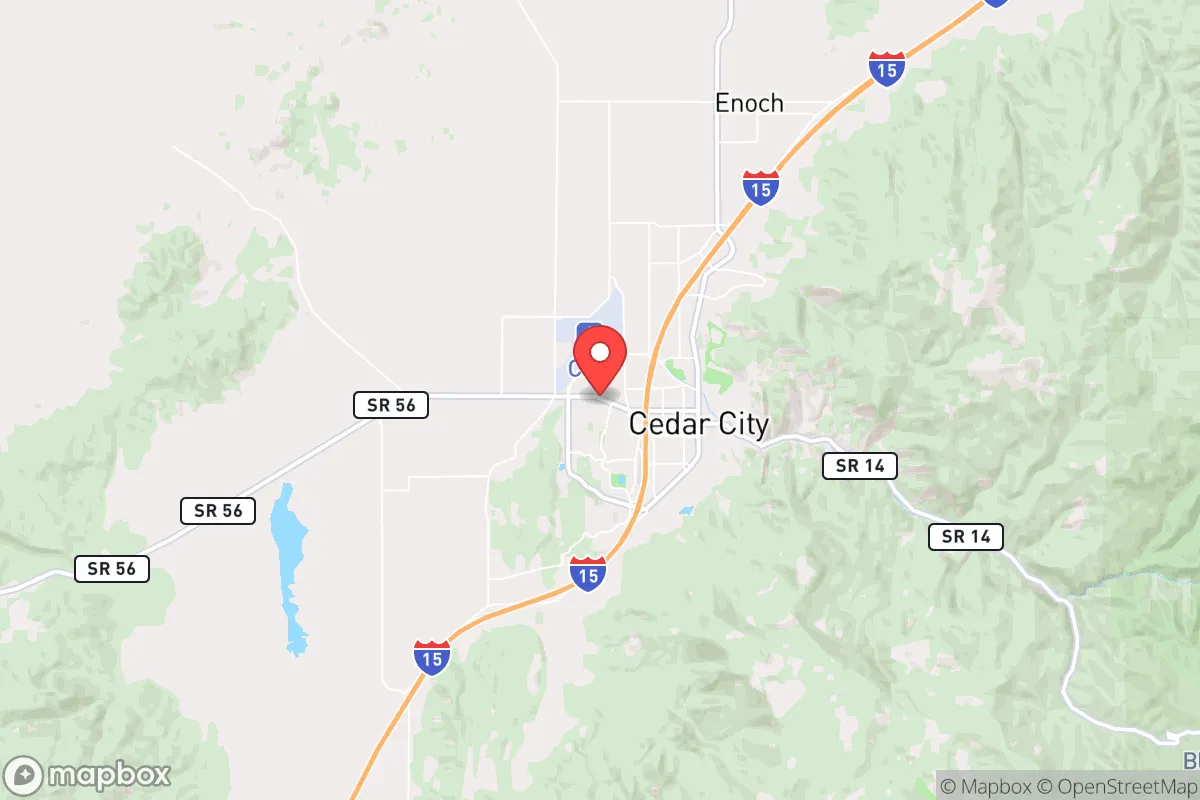
When you look at the broader region, Cedar City sits in a conservative stronghold, but it's not a monolith. Head north to Enoch or Parowan, and you'll find even deeper red communities—places where the R+10 feels almost moderate by comparison. Drive an hour south to St. George, and while it's still conservative, the rapid growth there has introduced a more libertarian-leaning, pro-business energy that sometimes clashes with Cedar's slower, more traditional pace. The real contrast, though, is with Salt Lake City and Park City, where progressive policies on land use, education, and social issues have taken hold. Those places feel like a different state entirely, and many locals here see that as a cautionary tale about what happens when government overreach creeps into everyday life—higher taxes, more regulations on small businesses, and a loss of the personal freedoms that make rural Utah livable.
What this means for residents
For the average person living here, the political climate means you can generally expect local government to stay out of your way. The city council and county commission have historically been reluctant to impose new ordinances on things like property rights, firearm ownership, or how you run your own household. That's a big reason why families and retirees choose Cedar City over more regulated areas. But there's a growing concern among long-time residents that the influx of new arrivals—especially those from states with heavy-handed COVID-era mandates and strict zoning laws—could shift the balance. We've already seen debates over short-term rental regulations and water use policies that feel like the first steps toward the kind of bureaucratic overreach that's choked communities in Colorado and California. The key issue for locals is whether we can maintain our independent character as the population grows, or if we'll slowly adopt the same top-down solutions that have eroded personal freedoms elsewhere.
Culturally, Cedar City still holds onto distinctions that set it apart from the Wasatch Front. The Utah Shakespeare Festival and Southern Utah University bring a steady stream of artists and academics, which gives the town a slightly more open-minded vibe than the surrounding rural areas, but the core values remain conservative. You won't find the same push for progressive social policies here that you see in college towns like Moab or Salt Lake City. The local economy is still driven by ranching, mining, and small manufacturing—industries that reward self-reliance and frown on government handouts. Looking ahead, the near-term trajectory seems stable, but the long-term picture depends on whether the next wave of newcomers respects the local culture or tries to reshape it. For now, Cedar City remains a place where you can still live your life without a lot of interference, and that's something worth protecting.

State Political ClimatePolitical Climate in Utah
State Political AnalysisPolitical Environment in the State
Utah is one of the most reliably Republican states in the nation, with a deep-rooted conservative culture that has held firm for decades. The state hasn’t voted for a Democratic presidential candidate since 1964, and in 2024, Donald Trump carried Utah by roughly 21 points, though the state’s unique political landscape includes a strong independent streak and a significant Latter-day Saint (LDS) influence that shapes policy and social norms. Over the last 10-20 years, the dominant coalition has been a blend of traditional fiscal conservatism, social traditionalism, and a growing libertarian-leaning wing, but recent in-migration from blue states and a rising urban progressive bloc in Salt Lake City are beginning to test that long-standing balance.
Urban vs. rural divide
The political map of Utah is a textbook study in contrast. The Wasatch Front—stretching from Salt Lake City down through Provo and Orem—is the state’s population and economic engine, but it’s far from monolithic. Salt Lake City itself is a deep blue island in a red sea, with a progressive city council and a mayor who has pushed for sanctuary city policies and expanded social services. In 2024, Salt Lake County as a whole voted for Kamala Harris by a narrow margin, driven by the city’s growing liberal base. Meanwhile, Utah County, anchored by Provo and Orem, is one of the most conservative metros in the country, with a heavy LDS population and a voting record that routinely delivers 70%+ margins for Republicans. The rural areas—places like St. George in the southwest, Moab in the east, and Vernal in the Uinta Basin—are deeply red, often voting 80% or more for GOP candidates. The divide is stark: the urban core of Salt Lake is trending left, while the suburbs and exurbs like Lehi, Sandy, and Draper remain reliably conservative, though with a growing number of moderate Republicans who are uneasy with the national party’s direction.
Policy environment
Utah’s policy environment is a mixed bag for conservatives. On the plus side, the state has a flat income tax rate of 4.65% (down from 4.95% in recent years), no state-level property tax on vehicles, and a relatively low overall tax burden compared to the national average. The regulatory posture is business-friendly, with a right-to-work law and minimal red tape for small businesses. Education policy is a flashpoint: Utah has a robust school choice program, including the Utah Fits All Scholarship (a universal education savings account passed in 2023), which allows parents to use state funds for private school, homeschooling, or tutoring. That’s a big win for parental rights. However, the state’s healthcare system is heavily influenced by the LDS Church’s nonprofit hospital network, Intermountain Health, which has pushed for Medicaid expansion and some progressive public health mandates. Election laws are solid—Utah has voter ID requirements and a mostly paper-based ballot system, though it also has a mail-in voting system that was expanded during COVID and remains in place, which some conservatives view as a vulnerability. The state legislature is dominated by Republicans, but they’ve occasionally passed measures that raise eyebrows, like a 2023 law banning transgender athletes from women’s sports and a 2024 law restricting social media access for minors—both popular with the base but seen as government overreach by some libertarians.
Trajectory & freedom
Utah’s trajectory on personal freedom is a tale of two trends. On one hand, the state has expanded gun rights significantly: permitless carry was signed into law in 2021, and there are no state-level magazine bans or red flag laws. Property rights are strong, with no state income tax on retirement income and a homestead exemption that protects primary residences from creditors. On the other hand, the state has seen a creep of government intervention in areas like public health and education. The 2020 COVID response was a mixed bag—Governor Gary Herbert declared a state of emergency and imposed some restrictions, but the legislature pushed back with a 2021 law limiting the governor’s emergency powers. More concerning for some is the Utah Inland Port Authority, a massive state-run development project near Salt Lake City that has used eminent domain and tax incentives in ways that feel like corporate welfare. The 2023 Utah Social Media Regulation Act requires age verification and parental consent for minors, which is popular with parents but raises free speech concerns. Overall, Utah is becoming more free in some areas (gun rights, school choice, tax cuts) but less free in others (government land use, digital regulation, and a growing administrative state). The net direction depends on your priorities.
Civil unrest & political movements
Utah is not a hotbed of civil unrest, but it has its flashpoints. The most visible recent movement was the 2020 Black Lives Matter protests in Salt Lake City, which turned violent on a few occasions, leading to property damage and clashes with police. That same year, a group of armed protesters gathered at the Utah State Capitol to oppose COVID restrictions, but the demonstrations were largely peaceful. Immigration politics are a simmering issue: Salt Lake City declared itself a “welcoming city” in 2017, limiting cooperation with ICE, which has created tension with the state legislature. In 2023, lawmakers passed a bill banning sanctuary city policies, effectively overriding the city’s ordinance. There’s also a growing secessionist sentiment in rural areas—the “Greater Idaho” movement has some support in eastern Utah counties like Duchesne and Uintah, where residents feel ignored by the Wasatch Front. Election integrity controversies are minimal compared to other states, but the 2020 election saw some local GOP activists question the mail-in system, leading to a 2021 law that tightened signature verification and ballot tracking. Overall, the political climate is stable, but the urban-rural divide is widening, and new residents will notice the tension between Salt Lake’s progressive activism and the state’s conservative majority.
Projection
Over the next 5-10 years, Utah is likely to become more politically competitive, but not necessarily more liberal. The key driver is in-migration: the state is growing by about 1.5% annually, with many newcomers from California, Washington, and Oregon. These transplants tend to be more moderate or libertarian than the native population, and they’re settling in places like St. George (which is booming with retirees and remote workers) and the suburbs of Salt Lake County. This could shift the GOP primary electorate toward a more business-friendly, less socially conservative wing. At the same time, the LDS Church’s influence is slowly waning among younger members, which could weaken the traditional conservative coalition. The state’s Republican supermajority in the legislature is unlikely to crack soon, but the margin may shrink. Expect continued fights over education funding, water rights (a growing crisis), and land use—especially as the federal government controls about 65% of Utah’s land, creating tension over public lands management and energy development. A new resident moving in now should expect a state that remains conservative but is increasingly divided between a libertarian-leaning, growth-oriented faction and a traditionalist, religiously influenced one.
For a conservative-leaning individual or family considering a move to Utah, the bottom line is this: you’ll find a state that largely aligns with your values on taxes, guns, and school choice, but you’ll need to navigate a growing urban progressive presence in Salt Lake City and a state government that isn’t afraid to use its power in ways that can feel intrusive. The rural areas and suburbs are your safest bet for a like-minded community, but even there, the influx of out-of-state newcomers is changing the culture. If you value low taxes, strong property rights, and a business-friendly environment, Utah is a solid choice—just keep an eye on the legislature’s tendency to expand its reach, and be prepared for a political landscape that’s more complex than the red-state label suggests.
* Values derived from national, state, county, city and local statistics and may differ in a specific area. Last updated: 2026-04-21T13:04:19.000Z
Narrative content on this page is AI-generated and may contain mistakes. Verify any details that matter before acting on them.
ReloMaps may earn a commission from affiliate links at no extra cost to you.

