Photo: Wikipedia
Strategic Assessment of Castle Rock, CO
Meaningful friction. Expect exposure to either population pressure, blast zones, or natural disaster risk. Consider buying a retreat property.
What does the Strategic Assessment tell us?
Our Strategic Assessment grades tactical survivability of an area. Major population centers, military targets, fallout zones, natural disasters, and border exposure all drive risk — lower exposure means a more defensible position in a crisis.
This is heavily inspired by Joel Skousen's Strategic Relocation book. Highly recommended you checkout the book ($)What does this tell us?
Our Strategic Assessment grades tactical survivability of an area. Major population centers, military targets, fallout zones, natural disasters, and border exposure all drive risk — lower exposure means a more defensible position in a crisis.
This is heavily inspired by Joel Skousen's Strategic Relocation book. Highly recommended you checkout the book ($)Strategic Pillars

Key Distances
Regional Safe Places
Below is our recommended "safe zones" in Colorado and the surrounding area based on our strategic heuristics. For most people, it's unrealistic to live in a “safe zone” full-time due to work, family or other personal reasons. They tend to be more rural. However, many of these areas are perfect for second homes and retreat properties that double as a vacation home or even a short-term rental.
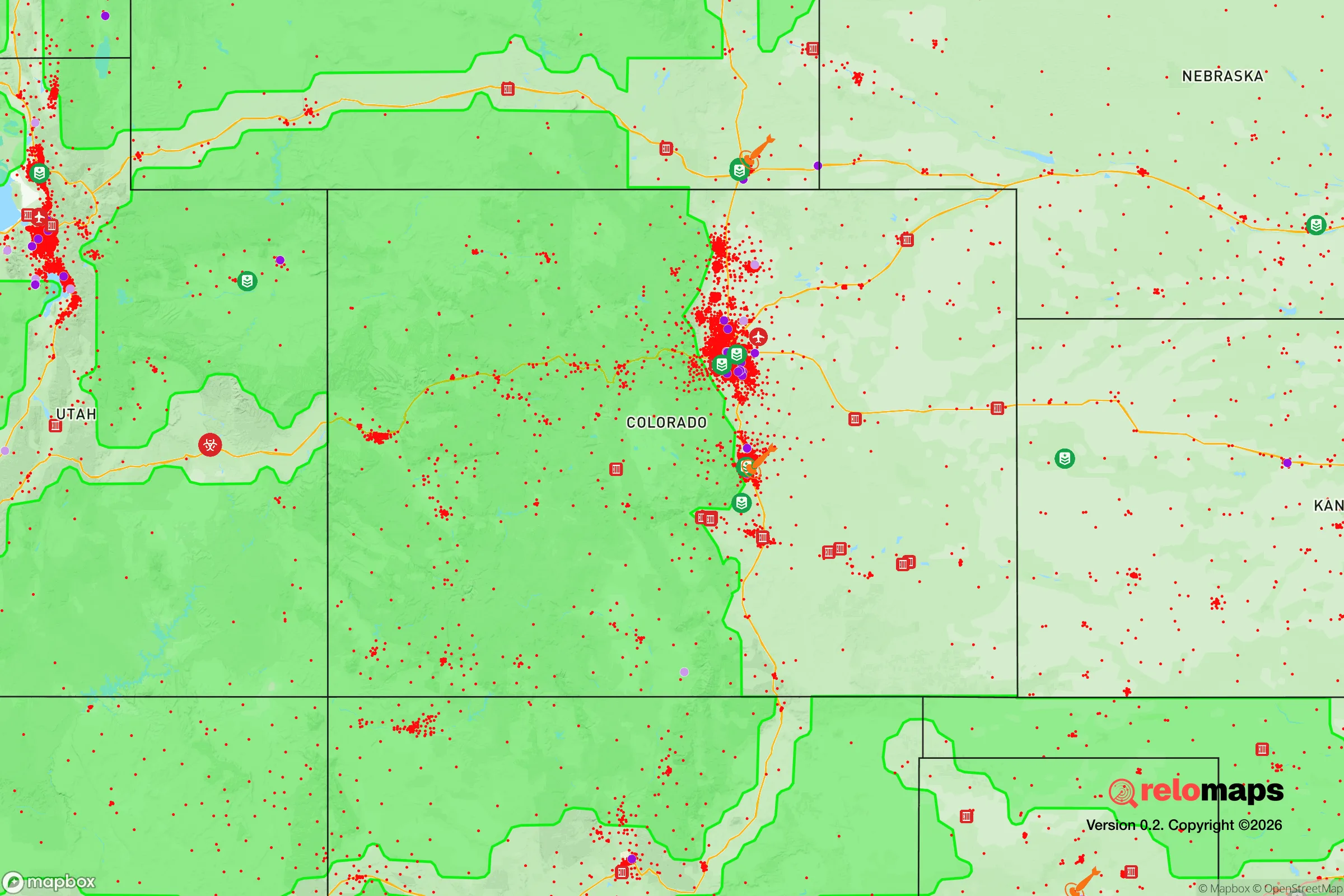
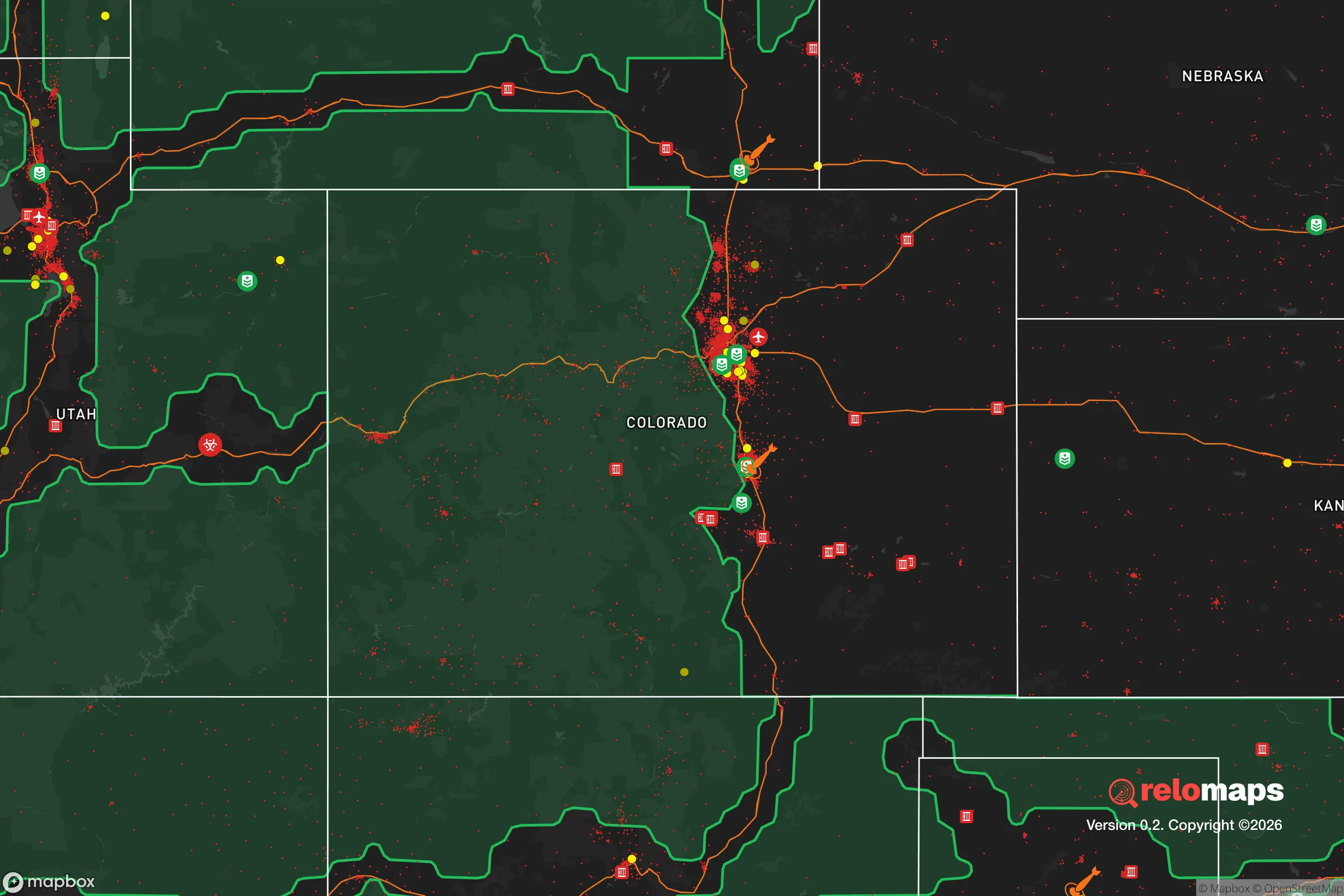


Important Note: For informational purposes only. This does not mean nothing bad ever happens in the green zones. Please use common sense. This is based on public data and modeled with AI. We tried to take a conservative approach but mistakes happen. We update this regularly as new information becomes available.
Solar Generator Recommendations
Backup power matters more here than in safer locations. We've picked three solar generators across budgets and capacity tiers — start with the budget unit if you only need a few essentials, or step up if you want to run a fridge and HVAC for days at a time.

Jackery Portable Power Station Explorer 300
Budget OptionPower on the Go: Weighing only 11 lbs, it's convenient to set up and store with book-sized foldable solar panels

BLUETTI Portable Power Station AC180
Designed for both indoor and outdoor scenarios, AC180 is highly capable as it has a robost capacity and continuous output power.

EF ECOFLOW DELTA Pro Ultra Power Station
Upgraded PickEcoFlow DELTA Pro Ultra is a whole-home energy system designed to grow with your family. Integrated with the Smart Home Panel 2, it scales to meet your evolving energy needs — keeping your home powered, intelligent, and secure through every stage of life.
We earn a commission, at no additional cost to you.
Strategic Assessment Analysis
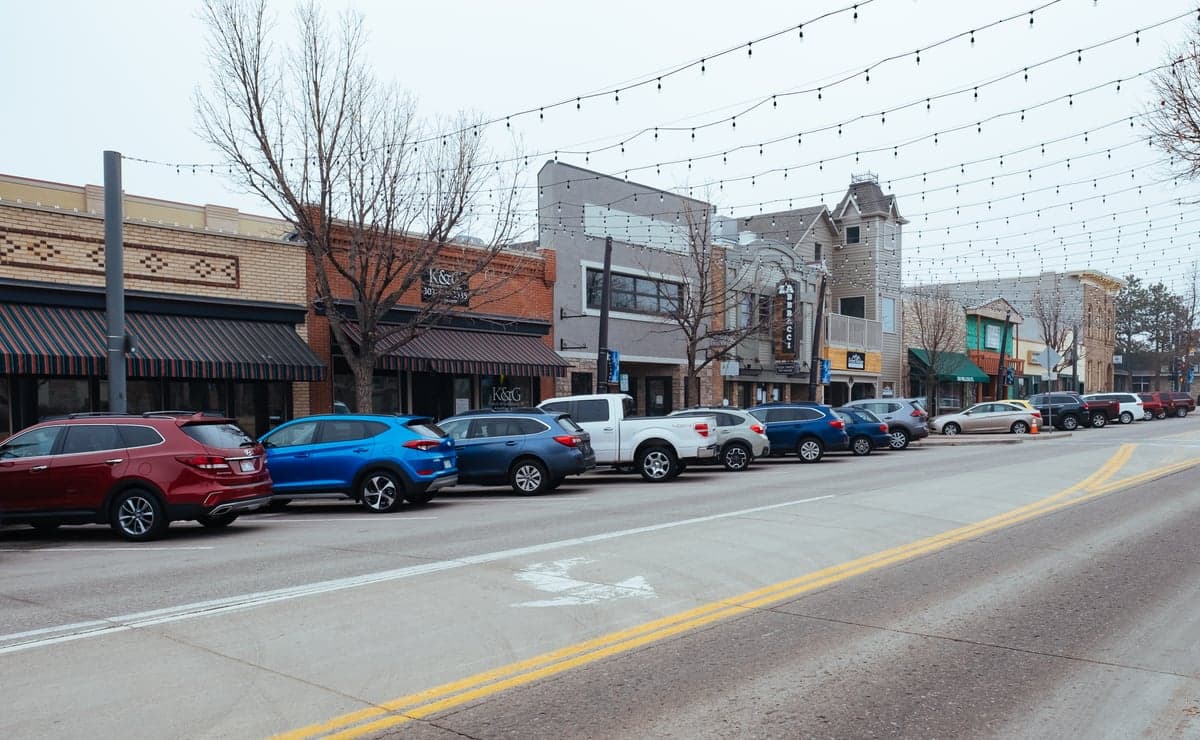
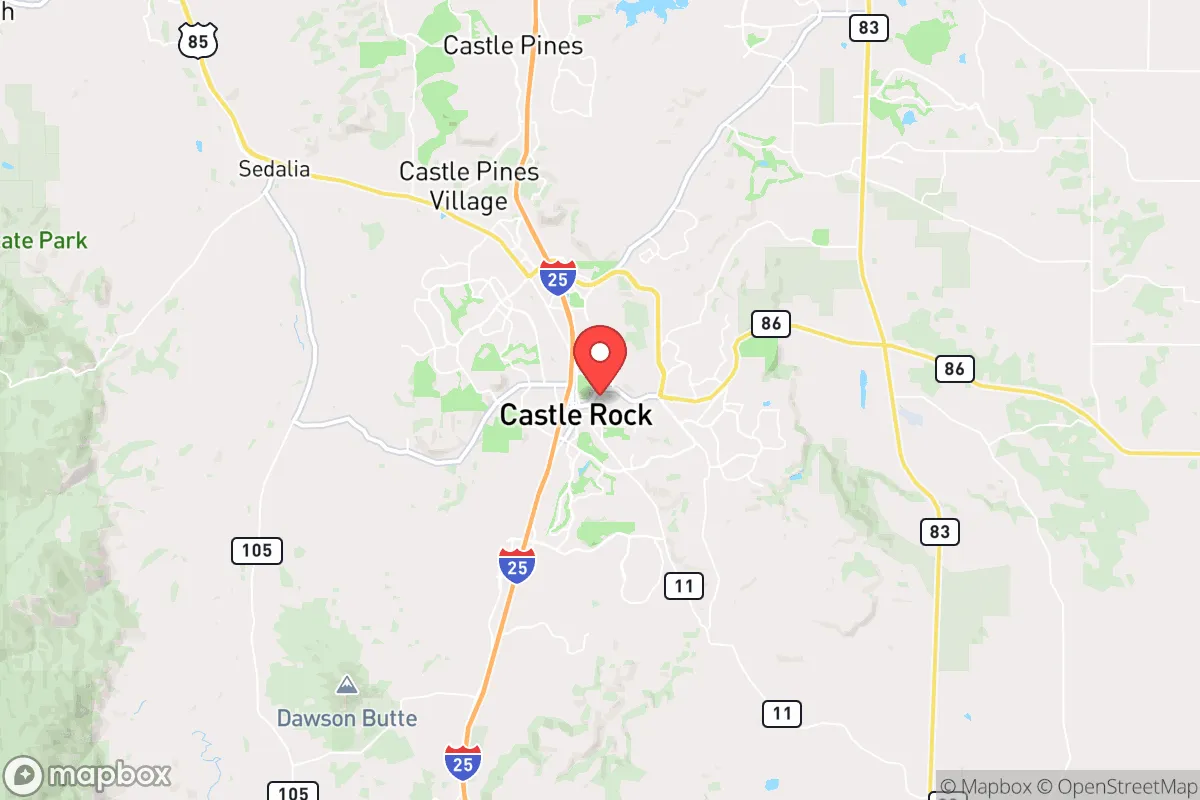
Castle Rock, Colorado, sits in a strategic sweet spot that few relocation destinations can match: close enough to Denver’s resources to be practical, yet far enough to avoid the worst of a major urban collapse. Its position along the I-25 corridor, roughly 30 miles south of Denver and 30 miles north of Colorado Springs, gives residents a buffer zone that can be leveraged for supply runs or evacuation, while the town itself remains a defensible, semi-rural enclave. For a conservative-leaning prepper or survivalist, Castle Rock offers a rare combination of geographic isolation, natural resource access, and community resilience that makes it a serious contender for a long-term relocation base.
Geographic position and natural advantages for long-term security
Castle Rock’s elevation—roughly 6,200 feet—places it in a high-desert climate that is both a blessing and a challenge. The area receives about 16 inches of precipitation annually, mostly as snow, which means water is not abundant but is manageable with proper planning. The town is nestled against the Front Range of the Rocky Mountains, with the Palmer Divide to the south providing a natural barrier against severe weather patterns. This ridge also creates a microclimate that often spares Castle Rock from the worst of Denver’s hailstorms and tornado threats. The surrounding terrain is a mix of rolling hills, open prairie, and pine-dotted ridges, offering multiple natural choke points and observation positions for anyone concerned with perimeter security. The town’s namesake—a 200-foot volcanic butte—provides a literal high ground that could serve as a rally point or lookout in a crisis. For a relocator, the key advantage is that Castle Rock sits outside the immediate blast radius of any major military or industrial target in the Denver metro area, while still being within a two-hour drive of critical infrastructure like the Rocky Mountain Arsenal (a former chemical weapons site) and the U.S. Air Force Academy in Colorado Springs.
Risks, exposures, and proximity to fallout-relevant landmarks
No strategic assessment is complete without a hard look at vulnerabilities, and Castle Rock has several that demand attention. The most immediate risk is its proximity to the Denver metropolitan area—home to 2.9 million people. In a scenario involving civil unrest, mass casualty events, or a major disaster, the I-25 corridor could become a funnel for refugees fleeing the city. Castle Rock’s population of roughly 80,000 would be overwhelmed quickly if Denver’s population surged south. The town is also within 50 miles of the Rocky Flats National Wildlife Refuge, a former nuclear weapons production site that still contains plutonium contamination. While the site is monitored, a major earthquake or deliberate attack could release hazardous materials. Additionally, the nearby Buckley Space Force Base in Aurora and the U.S. Northern Command at Peterson Space Force Base in Colorado Springs are high-value targets in any conflict scenario. Castle Rock sits roughly 40 miles from both, meaning a ground-level detonation or EMP event could disrupt power, communications, and transportation for weeks. The town’s water supply—primarily from the South Platte River and local reservoirs—is vulnerable to contamination or sabotage, especially if upstream infrastructure fails. For the prepper, these risks are manageable but require proactive planning: stockpiling water filtration systems, maintaining off-grid communication gear, and having a secondary bug-out location in the mountains west of town.
Practical resilience for a relocator: food, water, energy, and defensibility
Castle Rock’s practical resilience hinges on its semi-rural character and the mindset of its residents. The town is surrounded by agricultural land—Douglas County is one of Colorado’s top producers of hay, cattle, and grain—meaning local food sources are within a 15-minute drive. Farmers’ markets and CSAs operate year-round, and the county’s right-to-farm laws protect agricultural operations from nuisance complaints, which is a subtle but important advantage for anyone looking to raise livestock or grow crops. Water is the critical pinch point. Castle Rock’s municipal water comes from a mix of surface water and groundwater, but the town has implemented strict conservation measures since the 2012 drought. A prepper should plan for a minimum of 30 days of stored water per person, plus a well if purchasing rural property—many homes on the outskirts already have private wells, which is a major plus. Energy resilience is solid: the area gets over 300 days of sunshine per year, making solar panels a viable primary or backup power source. Natural gas is widely available, and wood-burning stoves are common in older homes. Defensibility is where Castle Rock truly shines. The town’s layout—with its historic downtown on a hill, surrounded by newer subdivisions on ridges—creates natural defensive positions. The Douglas County Sheriff’s Office is well-funded and has a strong relationship with the community, and the county’s constitutional sheriff stance (the sheriff has publicly stated he will not enforce federal gun bans) aligns with conservative values. For a single individual or family, the key is to buy property on the periphery—preferably with a view of the approach roads—and to establish a network of like-minded neighbors. Castle Rock has a growing prepper community, with regular meetups at local gun ranges and survival stores like the Colorado Preppers Supply in nearby Parker.
The overall strategic picture for Castle Rock is one of calculated risk with high reward. It is not a remote bunker—it is a working town with schools, hospitals, and a Walmart—but it is positioned to weather most crises better than 90% of American suburbs. The proximity to Denver is a double-edged sword: it provides access to medical centers, supply chains, and job opportunities, but it also makes Castle Rock a likely destination for evacuees. For the conservative relocator who values community, self-reliance, and a government that respects property rights, Castle Rock offers a rare balance. The key is to move early, secure a property with a well and solar capability, and integrate into the local network of ranchers, veterans, and preppers who already call this area home. In a world where the unthinkable becomes increasingly thinkable, Castle Rock is not just a place to live—it is a place to survive.

* Values derived from national, state, county, city and local statistics and may differ in a specific area. Last updated: 2026-04-21T18:57:08.000Z
Narrative content on this page is AI-generated and may contain mistakes. Verify any details that matter before acting on them.
ReloMaps may earn a commission from affiliate links at no extra cost to you.

