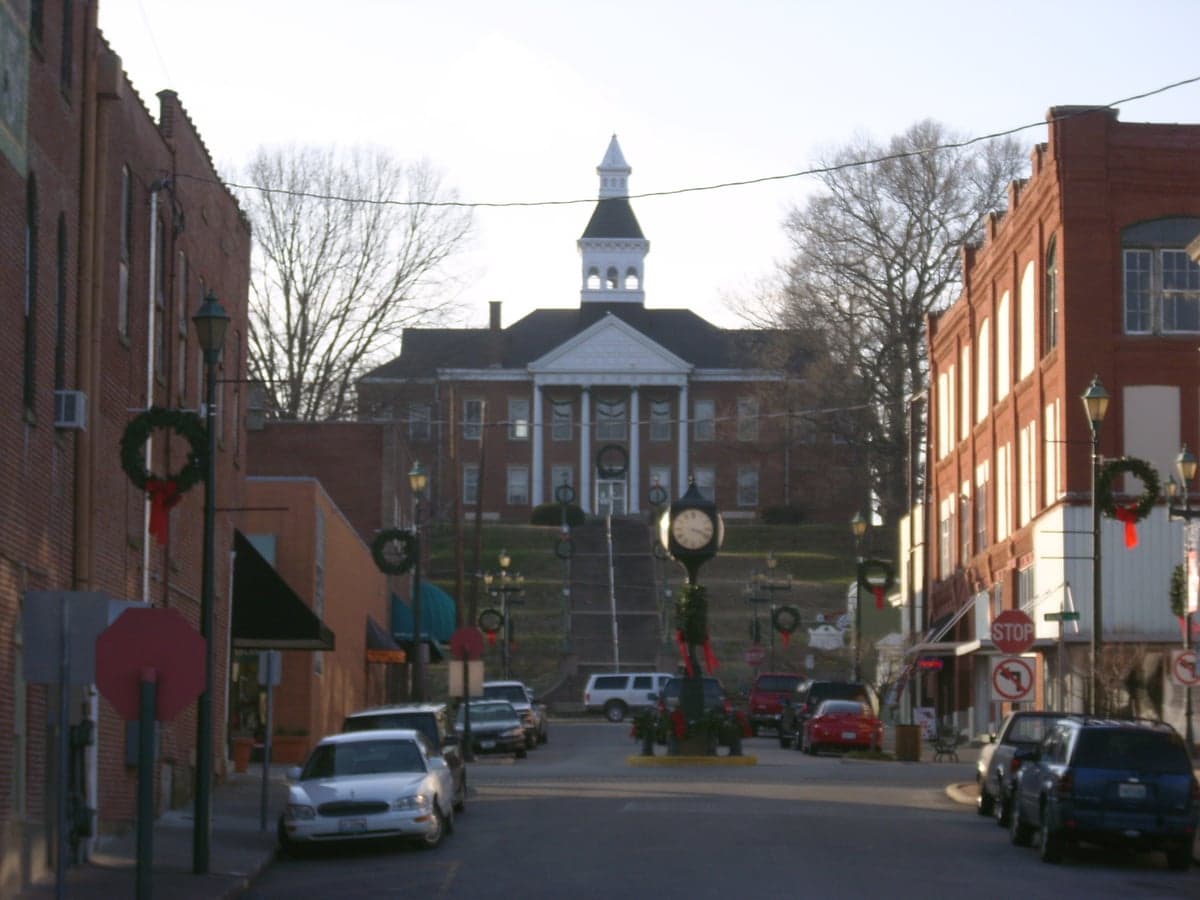
Photo: Wikipedia
Political ClimatePolitical Climate in Cape Girardeau, MO
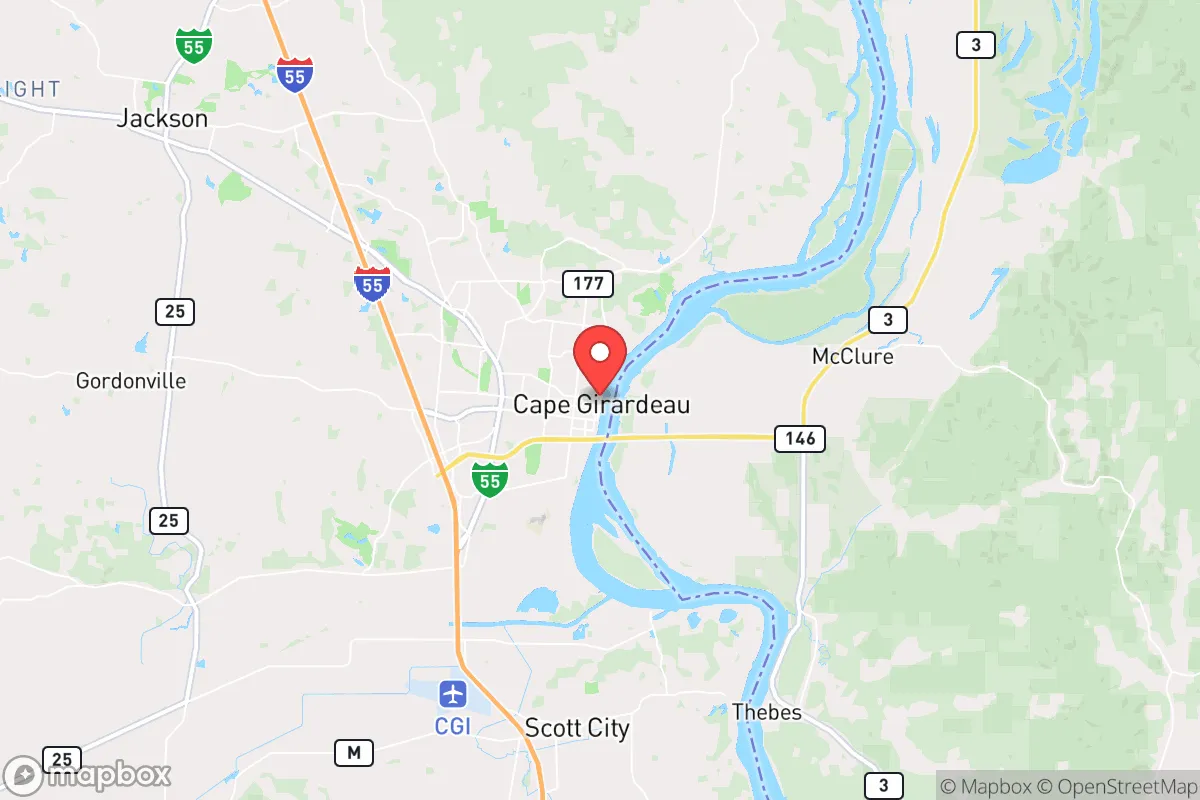
District shown is the primary district for this city’s centroid. Cities may span multiple districts.
Local Political AnalysisPolitical Analysis of Cape Girardeau, MO
Cape Girardeau sits firmly in the deep-red corner of Missouri, and if you’ve lived here as long as I have, you know that’s not just a statistic—it’s the air we breathe. The Cook PVI clocks us at R+27, which means this area votes about 27 points more Republican than the national average. That’s not a fluke; it’s a tradition. We’ve been reliably conservative for decades, and while the national winds shift, Cape stays anchored. The last few election cycles have only reinforced that, with local turnout consistently favoring candidates who prioritize limited government, Second Amendment rights, and local control over schools and zoning. You don’t see the kind of progressive drift here that you’d find in St. Louis or Columbia, and frankly, most folks prefer it that way.
How it compares
Drive 30 minutes north to Jackson, and you’ll find a similar vibe—rural, church-going, and skeptical of federal overreach. But head south toward Sikeston or east across the river into Illinois, and the contrast is stark. Illinois towns like Carbondale lean hard left, with higher taxes and more state mandates that often feel like they’re testing how much freedom you’re willing to trade for a promise of safety. Cape Girardeau, by contrast, has kept its independence. We don’t have the same pressure to adopt progressive housing policies or defund the police that you see in bigger cities. Our county commission and city council still operate on the principle that the government closest to the people governs best. That’s a big deal when you’re deciding whether to let a state agency dictate your property rights or your child’s curriculum.
What this means for residents
For the average family here, the political climate translates into lower taxes, fewer regulations, and a school system that still answers to parents, not bureaucrats. You won’t find mask mandates lingering in 2026 or aggressive DEI programs in the local school board. The city council has pushed back on state-level overreach before, but mostly they’ve been left alone to run things sensibly. Property taxes are manageable, and you can still buy a home without worrying about rent control or inclusionary zoning. That said, there’s a quiet concern among long-time residents that the national culture war could trickle down. We’ve seen a few younger transplants from bigger cities try to push for more “inclusive” policies—like bike lanes that nobody uses or diversity committees that feel performative. So far, those efforts have fizzled, but it’s something to keep an eye on. If you value personal freedom and don’t want the government telling you how to live, Cape Girardeau is still a safe bet.
Culturally, Cape Girardeau is a place where the local paper still runs editorials defending the Second Amendment, and the biggest annual event is the SEMO District Fair—not a pride parade. That’s not to say we’re closed off; we’ve got Southeast Missouri State University bringing in a mix of students, but the town’s character remains rooted in faith, family, and a healthy distrust of centralized power. The biggest policy fights in recent memory have been over zoning for a new truck stop and whether to allow Sunday alcohol sales—not the kind of battles you see in blue cities. If you’re looking for a place where the government stays out of your business and the neighbors wave from their porches, this is it. Just don’t expect the politics to change anytime soon, and honestly, that’s a relief.

State Political ClimatePolitical Climate in Missouri
State Political AnalysisPolitical Environment in the State
Missouri has long been considered a bellwether state, but over the past 15 years it has shifted decisively from a classic purple swing state to a solidly red one. The Show-Me State now leans Republican by about 10 points in statewide elections, a dramatic swing from 2008 when it was one of the closest states in the nation. This shift is driven by a combination of rural consolidation, suburban realignment, and a steady outflow of urban Democratic voters from the St. Louis and Kansas City metros. For a conservative considering relocation, Missouri offers a policy environment that has become increasingly aligned with limited government principles, though the state’s two major cities remain progressive islands in an otherwise conservative sea.
Urban vs. rural divide
The political geography of Missouri is stark. The state’s two major population centers—St. Louis and Kansas City—vote overwhelmingly Democratic, with St. Louis County and Jackson County (Kansas City) delivering margins of 60-70% for Democratic candidates. These urban cores are surrounded by deep-red suburbs and exurbs that have only grown redder. St. Charles County, just west of St. Louis, is now one of the most reliably Republican large counties in the Midwest, voting +30 points for Trump in 2024. The rural "Bootheel" counties like Dunklin and Pemiscot are heavily Democratic in local races but vote Republican in national elections due to cultural conservatism. The real story is the Springfield and Joplin corridor in southwest Missouri, which is the state’s most conservative region—these areas vote +40 to +50 points Republican and drive the state’s rightward tilt. Columbia (home to the University of Missouri) and Jefferson City are notable exceptions: Columbia is a liberal college town, while the capital is a moderate Republican stronghold. The Lake of the Ozarks region has seen explosive growth of conservative retirees and second-home owners, further solidifying the rural-urban divide.
Policy environment
Missouri’s policy environment is a mixed bag for conservatives, but the trend is clearly toward more freedom. The state has a flat income tax rate of 4.5% (down from 5.4% in 2020) and is on a path to eliminate the income tax entirely by 2027 under legislation passed in 2023. Property taxes are among the lowest in the nation, with an effective rate of about 0.85% of home value. The state is a right-to-work state (though the law was repealed by ballot initiative in 2018, the legislature has since passed a new version), and it has no state-level rent control or price controls. Education policy is a bright spot: Missouri has a robust charter school law in St. Louis and Kansas City, and in 2024 the legislature expanded the Missouri Empowerment Scholarship Accounts program, allowing parents to use state funds for private school tuition. The state also passed a Parents’ Bill of Rights in 2023, requiring schools to notify parents of any curriculum changes involving sexuality or gender identity. Healthcare is more complicated: Missouri expanded Medicaid under the Affordable Care Act via ballot initiative in 2020, a move that conservatives opposed but which has since been implemented. The state has some of the most restrictive abortion laws in the country, with a near-total ban in effect since the Dobbs decision. Election laws have been tightened: voter ID is required, and the state purged inactive voters from rolls in 2023. Overall, the policy environment is friendly to families and small businesses, with a clear emphasis on parental rights and fiscal restraint.
Trajectory & freedom
Missouri is becoming more free by most conservative metrics, but the path has been uneven. The most significant expansion of liberty came in 2021 with the passage of the Second Amendment Preservation Act (SAPA), which declared federal gun laws that infringe on the Second Amendment to be null and void in Missouri. This law has been challenged in court but remains in effect, and it has made Missouri a haven for gun owners. In 2023, the legislature passed a religious freedom restoration act that provides heightened legal protection for religious exercise. On the parental rights front, the 2023 Parents’ Bill of Rights (HB 634) requires schools to obtain parental consent before administering any mental health or sexual education surveys. The state also passed a transgender athlete ban for K-12 and college sports in 2023. However, not all trends are positive: the 2020 Medicaid expansion, while popular, added a large entitlement program that conservatives worry will grow. The state also saw a controversial gas tax increase in 2021 (2.5 cents per gallon per year for five years), which was a rare tax hike in a generally tax-cutting state. On balance, Missouri is moving in the direction of greater personal freedom, particularly on guns, religion, and education, but the Medicaid expansion and gas tax are warning signs of potential future government growth.
Civil unrest & political movements
Missouri has a history of civil unrest, most notably the Ferguson protests of 2014, which erupted after the police shooting of Michael Brown in the St. Louis suburb of Ferguson. Those protests led to a national conversation about policing and racial justice, and they left a lasting political scar: the St. Louis region remains deeply polarized, with white flight to St. Charles County accelerating after 2014. More recently, the state has seen organized conservative movements, including the Missouri Right to Life and Missouri Gun Owners groups, which are highly active in lobbying. The Missouri Freedom Caucus in the state legislature has pushed for more aggressive nullification-style legislation, including a bill to nullify federal vaccine mandates. Immigration politics are relatively quiet in Missouri compared to border states, but the state has seen a surge of Afghan and Ukrainian refugees resettled in St. Louis and Kansas City, which has created some local tension. There have been no major secession or nullification movements, but the SAPA law is effectively a nullification measure. Election integrity has been a flashpoint: the 2020 election saw a controversial recount in St. Louis City, and the 2023 voter purge was criticized by Democrats as suppression. A new resident would notice that political signs are ubiquitous in rural areas, and that the state’s two major cities have a visible activist presence, while the rest of the state is quietly conservative.
Projection
Over the next 5-10 years, Missouri is likely to become more conservative as in-migration from blue states (particularly Illinois and California) accelerates. The Springfield and Branson areas are growing rapidly with retirees and remote workers seeking lower taxes and a slower pace of life. The Lake of the Ozarks region is seeing a boom in second-home construction, which is bringing in wealthier, more conservative residents. The St. Louis and Kansas City metros will continue to lose population to their red suburbs, further diluting Democratic influence. The state’s income tax is on a path to zero, which will make it even more attractive to high-earners. However, the Medicaid expansion will create long-term fiscal pressure, and the state’s aging population (Missouri ranks 6th in the nation for median age) will strain healthcare budgets. The biggest wildcard is the St. Louis City depopulation crisis: the city has lost 20% of its population since 2000, and if that trend continues, the state could lose a congressional seat after 2030, further reducing Democratic influence. A conservative moving to Missouri now should expect to find a state that is increasingly aligned with their values, but they should also be prepared for the cultural divide between the urban cores and the rest of the state.
For a conservative individual or family considering relocation, Missouri offers a compelling package: low taxes, strong gun rights, parental control in education, and a political trajectory that is moving in the right direction. The key practical takeaway is to choose your location carefully. If you want a deep-red environment, look at St. Charles County, Springfield, or the Lake of the Ozarks. If you need to be near a city for work, the suburbs of Kansas City (like Lee’s Summit or Blue Springs) are reliably conservative. Avoid St. Louis City and the inner-ring suburbs of Kansas City if you want to minimize exposure to progressive policies. Missouri is not a perfect state—the Medicaid expansion and gas tax are real concerns—but it is one of the few states where the political winds are blowing in a conservative direction, and that makes it a smart bet for the next decade.
* Values derived from national, state, county, city and local statistics and may differ in a specific area. Last updated: 2026-10-10T16:26:49.000Z
Narrative content on this page is AI-generated and may contain mistakes. Verify any details that matter before acting on them.
ReloMaps may earn a commission from affiliate links at no extra cost to you.

