Photo: Wikipedia
Demographics of Canton, OH
Affluence Level in Canton, OH
A below-average socioeconomic profile. Incomes, home values, and educational attainment trail the U.S., with higher poverty and unemployment.
People of Canton, OH
The people of Canton, Ohio, today number 70,105, forming a dense, working-class city with a distinctive blue-collar character rooted in its industrial past. The population is predominantly White (60.1%) with a significant Black community (24.3%) and a growing Hispanic presence (6.3%), while the foreign-born share is very low at 1.4%. Only 15.4% of adults hold a college degree, reflecting a city where manufacturing trades and family-run businesses have long defined the local identity. Canton remains a place where neighborhoods are strongly tied to the ethnic waves that built them, from German and Italian enclaves to later African American and Hispanic settlements.
How the city was settled and grew
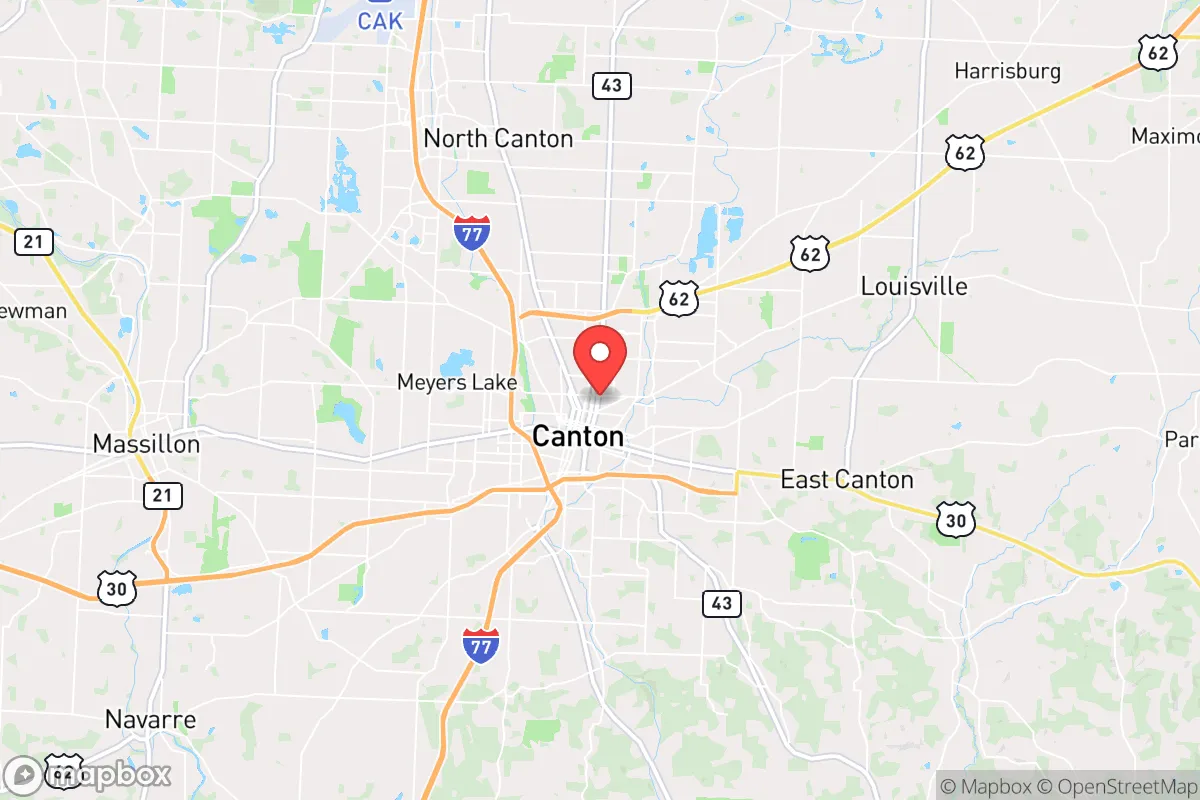
Canton was founded in 1805 by Bezaleel Wells, a surveyor from Maryland, on land granted for his service in the Revolutionary War. The city’s early growth was driven by the Ohio & Erie Canal and later by the railroad, which made it a hub for agricultural trade. The real population boom came with the rise of the steel and manufacturing industries in the late 19th and early 20th centuries. The Timken Company, founded in 1899, and the Hoover Company, founded in 1908, drew waves of European immigrants seeking factory work. German immigrants settled heavily in the Ridgewood neighborhood, building churches and social halls that still anchor the area. Italian immigrants concentrated in the northeast part of the city, around what is now the Market Avenue corridor, establishing a tight-knit community centered on St. Anthony’s Catholic Church. By 1920, Canton’s population had surged past 87,000, making it one of Ohio’s largest cities. The Great Migration brought African Americans from the South, who primarily settled in the Southeast Canton neighborhoods, including the historic Cherry Avenue corridor, where Black-owned businesses and churches flourished through the mid-20th century.
Modern era (post-1965)
The post-1965 era brought significant demographic shifts to Canton, driven by deindustrialization and suburbanization. The 1970s and 1980s saw the closure of major manufacturing plants, including the Republic Steel mill, which triggered a population decline from a peak of 116,000 in 1950 to roughly 70,000 today. White residents moved in large numbers to surrounding suburbs like Jackson Township and North Canton, leaving a city that became increasingly Black and lower-income. The African American population concentrated in the southwest and southeast quadrants, particularly in the Shorb Avenue and Tuscarawas Street East areas, where housing stock was older and more affordable. The Hispanic population, largely of Mexican and Puerto Rican origin, began growing in the 1990s and 2000s, settling primarily in the northwest neighborhoods near 12th Street NW, where a small but visible cluster of Latino-owned businesses and a Spanish-language church now operate. The East/Southeast Asian population remains tiny at 0.3%, with a handful of families scattered across the city, while the Indian-subcontinent population is negligible at 0.1%. The foreign-born share of 1.4% is among the lowest for any Ohio city of comparable size, indicating that Canton has not been a significant destination for recent international immigration.
The future
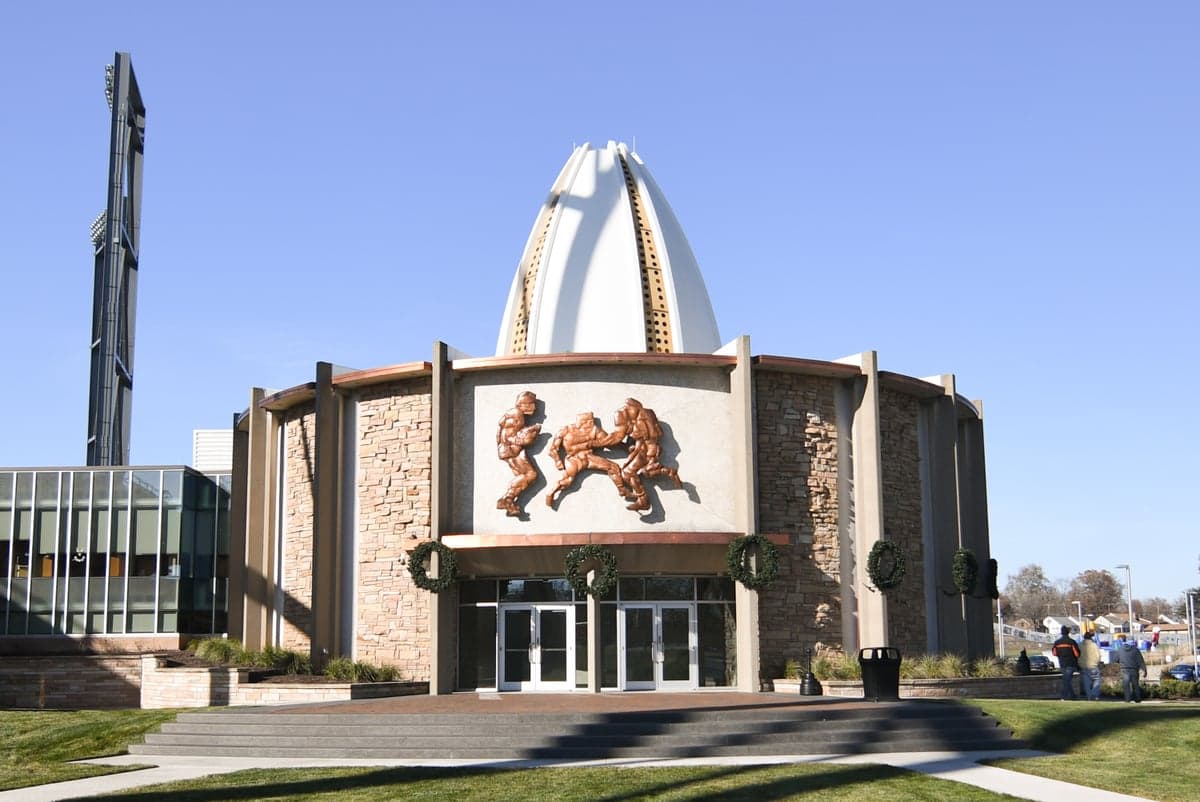
Canton’s population is projected to continue a slow decline, with the city losing roughly 1-2% of its residents per decade as outmigration to suburbs and other regions persists. The White population is aging and shrinking, while the Black population is stabilizing and the Hispanic share is slowly rising, likely reaching 8-10% by 2040. The city is not homogenizing; rather, it is tribalizing into distinct enclaves, with the northwest Hispanic corridor becoming more defined and the southeast Black neighborhoods remaining heavily segregated by race and income. The East/Southeast Asian and Indian communities are not expected to grow meaningfully, as Canton lacks the high-skilled job base or university presence that attracts these groups to other Ohio cities like Columbus or Cleveland. The low college attainment rate (15.4%) and weak job growth in manufacturing suggest the population will continue to skew older, less educated, and more economically strained. New development is concentrated in the downtown arts district and near the Pro Football Hall of Fame, but these projects have not reversed the broader population loss.
For someone moving in now, Canton is a city where neighborhood choice is critical: the northwest and southwest areas offer lower home prices but higher crime rates, while the more stable, predominantly White areas near the city’s edge blend into suburban Jackson Township. The city’s identity remains rooted in its industrial past, but the future points toward a smaller, more racially divided, and economically challenged population. The low foreign-born share means little cultural diversity from immigration, and the shrinking tax base will continue to strain public services and schools.

* Values derived from national, state, county, city and local statistics and may differ in a specific area. Last updated: 2026-04-21T19:35:24.000Z
Narrative content on this page is AI-generated and may contain mistakes. Verify any details that matter before acting on them.
ReloMaps may earn a commission from affiliate links at no extra cost to you.

