Photo: Wikipedia
Demographics of Cameron Park, TX
Affluence Level in Cameron Park, TX
A low-income area with significant economic hardship. Household wealth and educational attainment are well below national averages.
People of Cameron Park, TX
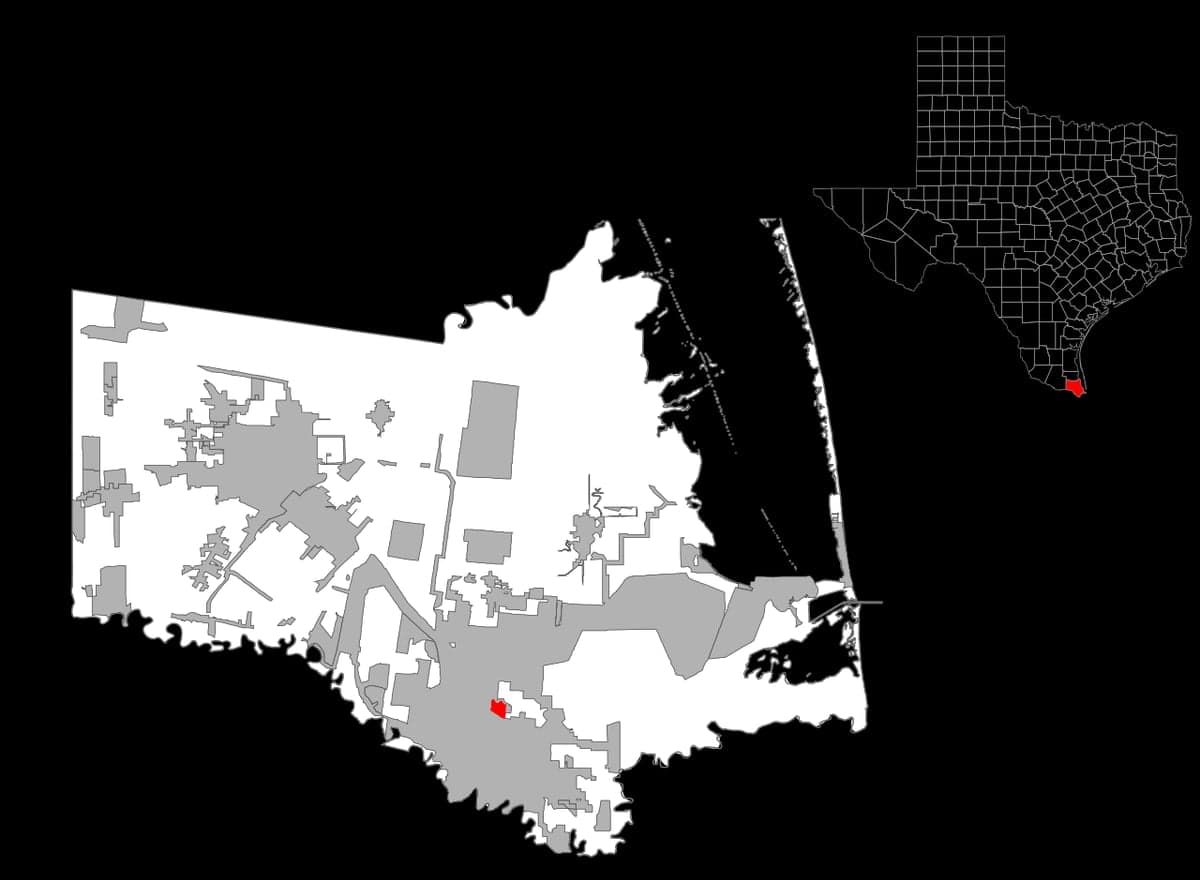
Cameron Park, Texas, is a densely populated, overwhelmingly Hispanic community of 6,180 residents where nearly 97% of the population shares that heritage, making it one of the most ethnically homogeneous cities in the Rio Grande Valley. With a foreign-born share of 21.3% and a college attainment rate of just 6.1%, the city is characterized by a working-class, family-oriented population with deep roots in northern Mexico and South Texas. The city’s identity is shaped by its history as a colonia — an unincorporated settlement that later incorporated — and its residents remain closely tied to the agricultural and service economies of Cameron County.
How the city was settled and grew
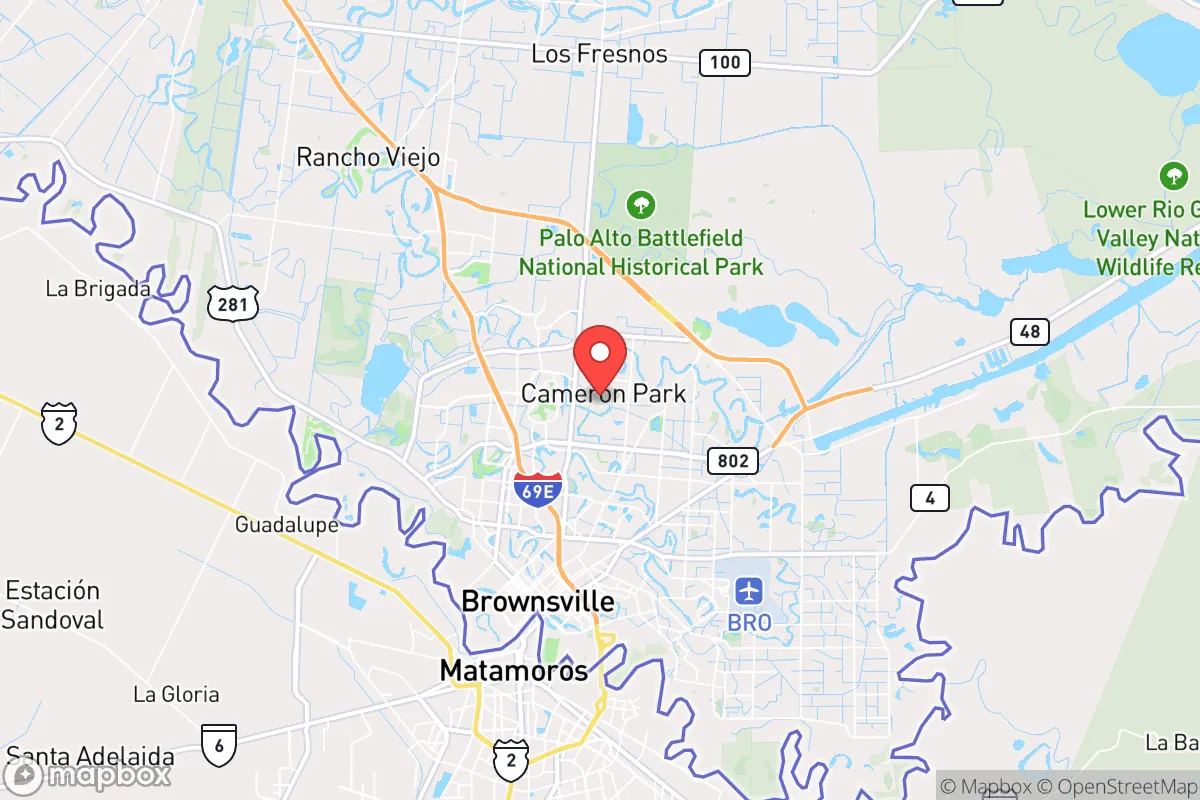
Cameron Park’s origins lie not in a formal town plat but in the informal land subdivisions known as colonias that sprang up along the U.S.-Mexico border in the mid-20th century. The area that became Cameron Park was originally farmland, part of the vast irrigated agricultural zone of the Lower Rio Grande Valley. In the 1950s and 1960s, developers subdivided these rural tracts into small, unserviced lots and sold them cheaply to Mexican-American farmworkers and Mexican immigrants seeking affordable homeownership outside Brownsville’s city limits. The first wave of settlers — primarily first-generation Mexican immigrants from the border states of Tamaulipas and Nuevo León — built homes gradually, often without water, sewer, or paved roads. The original core of this settlement, now known as Colonia Cameron Park (the historic heart of the city around Cameron Road and Old Port Isabel Road), was where these families established the first informal grid of dirt streets and cinder-block houses. A second early cluster, Las Palmas (the area west of the original colonia), grew in the 1960s as more lots were sold to extended family networks. By 1970, the population had reached roughly 2,000, almost entirely Hispanic, with a small number of Anglo farm owners living on the periphery.
Modern era (post-1965)
The post-1965 immigration reforms did not dramatically alter Cameron Park’s ethnic composition because the city was already overwhelmingly Mexican-origin. Instead, the key shift was domestic in-migration from other parts of the Rio Grande Valley and from Texas cities like Houston and Dallas, as second- and third-generation Mexican-Americans moved back to the border region for family and lower housing costs. The 1980s and 1990s saw the city’s population double, driven by continued lot sales in newer subdivisions such as Villa Nueva (the southeastern quadrant, developed in the 1980s) and Los Ebanos (the northeastern section, built in the 1990s). These areas attracted a mix of U.S.-born Mexican-Americans and newer immigrants, but the foreign-born share remained high — around 25% in 2000 — because the colonia model continued to offer an affordable entry point for Mexican nationals. The city incorporated in 1981 to gain control over basic services, but the demographic pattern held: by 2010, the Hispanic share was 98.5%, and the White non-Hispanic population had dwindled to under 1%. The Central Cameron Park neighborhood (the area around the city hall and community center) became the commercial and civic hub, while South Cameron Park (south of Old Port Isabel Road) remained the most recently developed and most heavily immigrant section, with a foreign-born share exceeding 30% in some blocks.
The future
Cameron Park’s population is projected to remain overwhelmingly Hispanic for the foreseeable future, with little in-migration from other ethnic groups. The city’s low cost of land and housing continues to attract Mexican immigrants and Mexican-American families from more expensive parts of Texas, but the foreign-born share has declined slightly from its 2000 peak as the U.S.-born second generation matures. The key demographic trend is aging in place: the median age is 28, but the 65+ population is growing as the original colonia settlers retire. Younger adults are increasingly moving to newer subdivisions in Brownsville or to suburban areas like Los Fresnos, leaving Cameron Park with a slightly older, more settled population. The city is not tribalizing into distinct enclaves — it is already a single, cohesive Hispanic community — but it is homogenizing further as the tiny non-Hispanic population (under 1%) continues to shrink through out-migration. The next 10-20 years will likely see slow population growth (perhaps 1-2% annually), a gradual decline in the foreign-born share to around 15-18%, and a continued concentration of the city’s Mexican-American identity. No significant influx of East/Southeast Asian, Indian, Black, or White residents is expected, given the city’s remote location, limited job base, and lack of housing diversity.
For a conservative-leaning mover considering Cameron Park, the city offers a stable, family-oriented environment where Spanish is the dominant language and community ties are strong. The population is not diversifying — it is deepening its existing character. New residents will find a place where the colonia heritage is still visible in the self-built homes and unpaved roads, but where incorporation has brought basic services and a sense of civic identity. The bottom line: Cameron Park is a working-class Mexican-American community that is slowly maturing, not transforming, and it will remain one of the most ethnically concentrated cities in Texas for the next generation.

* Values derived from national, state, county, city and local statistics and may differ in a specific area. Last updated: 2026-05-14T18:46:18.000Z
Narrative content on this page is AI-generated and may contain mistakes. Verify any details that matter before acting on them.
ReloMaps may earn a commission from affiliate links at no extra cost to you.

