Photo: Wikipedia
Demographics of Calera, AL
Affluence Level in Calera, AL
An upper-middle-class area. Household wealth, education levels, and homeownership run ahead of national benchmarks.
People of Calera, AL
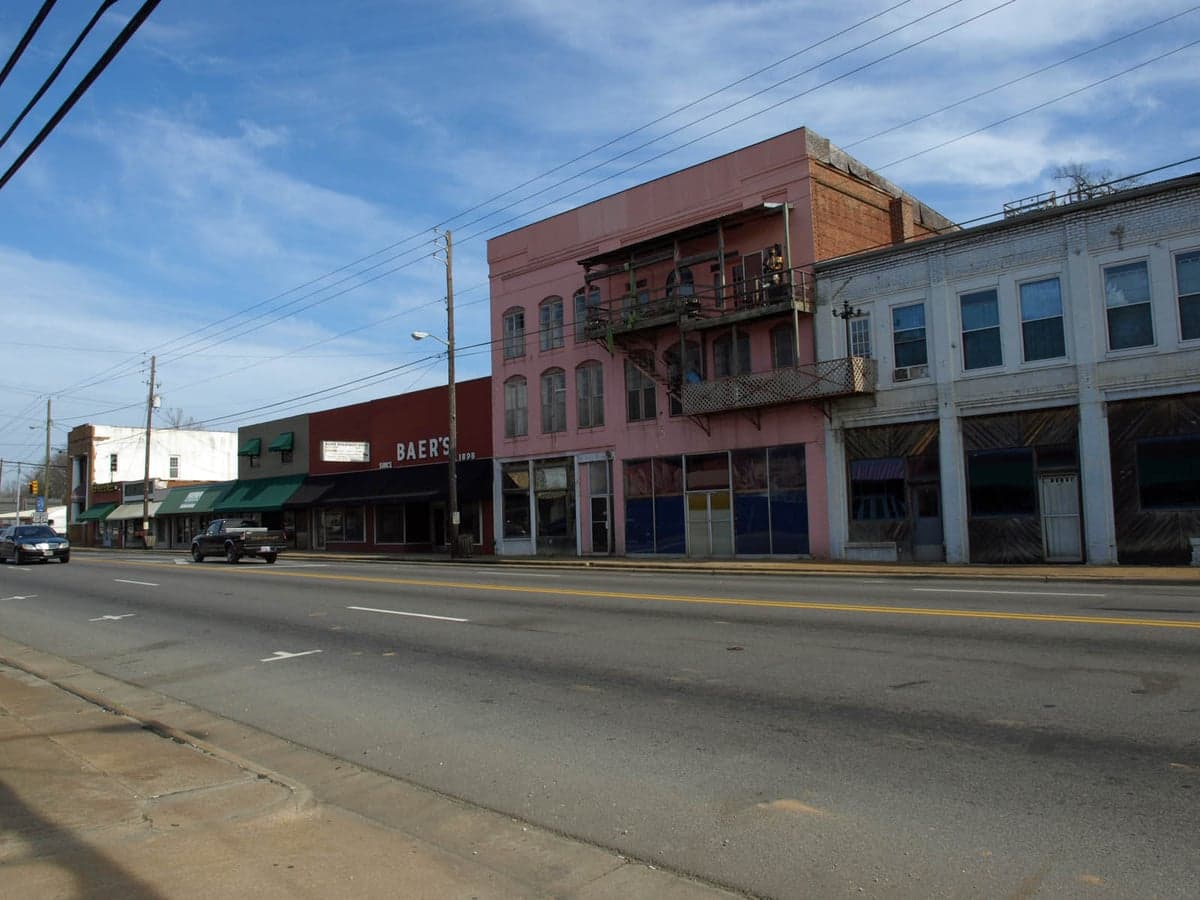
Calera, Alabama, today is a rapidly growing city of 17,188 residents that blends small-town Southern roots with suburban expansion driven by Birmingham’s spillover. Its population is notably diverse for a central Alabama city, with a White majority of 56.8%, a substantial Black community at 32.1%, and a growing Hispanic population of 8.6%, while the foreign-born share remains low at 3.2%. The city’s character is defined by its dual identity: a historic railroad town that has transformed into a bedroom community for families and workers seeking affordable housing within commuting distance of Birmingham and Montgomery. With 37.1% of adults holding a college degree, Calera attracts a mix of blue-collar tradespeople and white-collar professionals, creating a pragmatic, family-oriented atmosphere.
How the city was settled and grew
Calera’s human history begins with its founding as a railroad town in the 1880s, when the Louisville and Nashville Railroad established a depot here to serve the region’s timber and coal industries. The original population was overwhelmingly White, drawn from rural Alabama and Tennessee by railroad jobs and the promise of land along the newly laid tracks. These early settlers clustered in what is now Old Town Calera, the historic core around the railroad depot, where modest wood-frame houses and a handful of brick commercial buildings still stand. By the early 1900s, a small Black community had formed, largely composed of families working as railroad laborers, domestic servants, and sharecroppers on nearby farms. They settled in the Southside neighborhood, south of the tracks, where a few historic churches and cemeteries remain as markers of this early African American presence. The city remained a small, rural service center through the mid-20th century, with a population hovering around 1,000, as the railroad declined and the timber industry mechanized.
Modern era (post-1965)
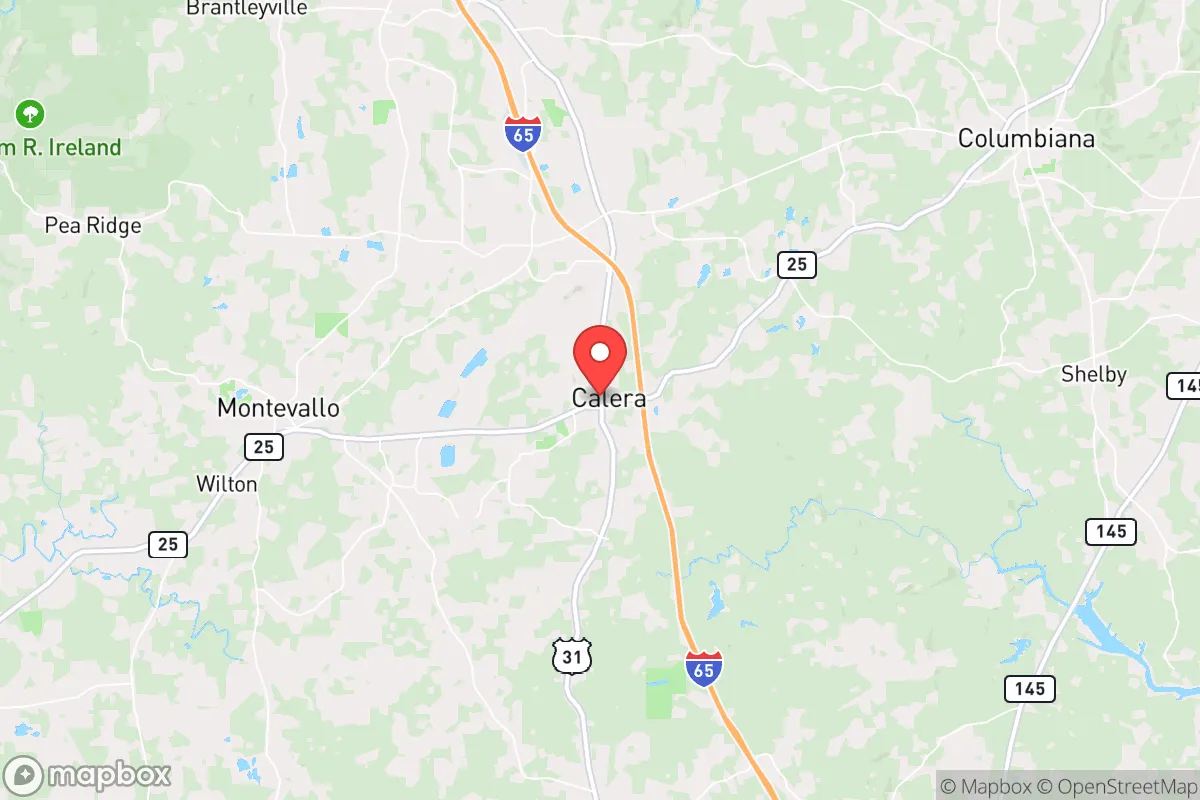
The modern transformation of Calera began in earnest after the 1965 Immigration and Nationality Act, though the city’s growth was driven less by international migration and more by domestic suburbanization. The completion of Interstate 65 in the 1970s, which runs directly through Calera, turned the city into a viable commuter suburb for Birmingham (30 miles north) and Montgomery (50 miles south). This triggered a wave of White middle-class families moving from Birmingham’s inner suburbs, seeking larger lots and lower taxes. They settled in new subdivisions like Briarwood and Highland Lakes, which began development in the 1980s and 1990s, featuring ranch-style homes and cul-de-sacs. Simultaneously, the Black population grew as African American families moved from rural Shelby and Chilton counties into established neighborhoods like Southside and newer developments such as Calera Estates, drawn by affordable housing and proximity to industrial jobs at plants like the Mercedes-Benz U.S. International factory in nearby Vance (opened 1997). The Hispanic population, while small, began to appear in the 2000s, primarily as workers in construction, landscaping, and poultry processing plants in the region. They concentrated in the West Calera area near the Interstate, where a handful of Mexican grocery stores and taquerias now serve the community. The Asian population remains minimal at 0.8%, with no visible ethnic enclave, and the Indian subcontinent population is effectively zero.
The future
Calera’s population is heading toward continued growth and modest diversification, though the city is likely to remain predominantly White and Black with a growing Hispanic minority. The city’s population has more than doubled since 2000 (from 6,000 to 17,188), and annexations of surrounding farmland suggest this trend will continue as Birmingham’s exurban sprawl pushes south. The Hispanic share, currently 8.6%, is expected to rise as second-generation families age into homeownership and new arrivals fill service-sector jobs, but the foreign-born share (3.2%) suggests immigration is not a primary driver. The White and Black populations are likely to remain stable in share, though the city is not tribalizing into distinct enclaves; instead, newer subdivisions like Savannah Ridge and Spring Creek are attracting a mix of White and Black families, reflecting a degree of integration uncommon in many Alabama suburbs. The college-educated share (37.1%) is above the state average, and if this trend continues, Calera may attract more remote workers and professionals, further homogenizing the population around middle-class values rather than ethnic lines. The East/Southeast Asian and Indian communities are unlikely to grow significantly given the lack of a tech or academic anchor.
For someone moving in now, Calera is becoming a pragmatic, family-oriented exurb where affordability and proximity to jobs outweigh urban amenities. The city’s demographic trajectory points toward steady, moderate growth with a stable racial mix, making it a predictable choice for conservative-leaning families seeking a low-crime, school-focused environment without the rapid cultural change seen in larger metros. The historic railroad town character is fading, replaced by a commuter-driven identity that prioritizes space and convenience over distinct neighborhood character.

* Values derived from national, state, county, city and local statistics and may differ in a specific area. Last updated: 2026-04-19T18:45:38.000Z
Narrative content on this page is AI-generated and may contain mistakes. Verify any details that matter before acting on them.
ReloMaps may earn a commission from affiliate links at no extra cost to you.

