Photo: Wikipedia
Political ClimatePolitical Climate in Cabot, AR
District shown is the primary district for this city’s centroid. Cities may span multiple districts.
Local Political AnalysisPolitical Analysis of Cabot, AR
Cabot, Arkansas, sits solidly in the red column, with a Cook PVI of R+23 that reflects a deeply conservative community where traditional values and limited government are the default. This isn't a purple suburb hedging its bets; it's a place where the local culture and voting patterns have been reliably Republican for decades, and the trajectory is holding steady. While you'll see some national trends ripple through, the core political identity here remains rooted in a belief that the best government is the one that stays out of your business, your family, and your paycheck.
How it compares
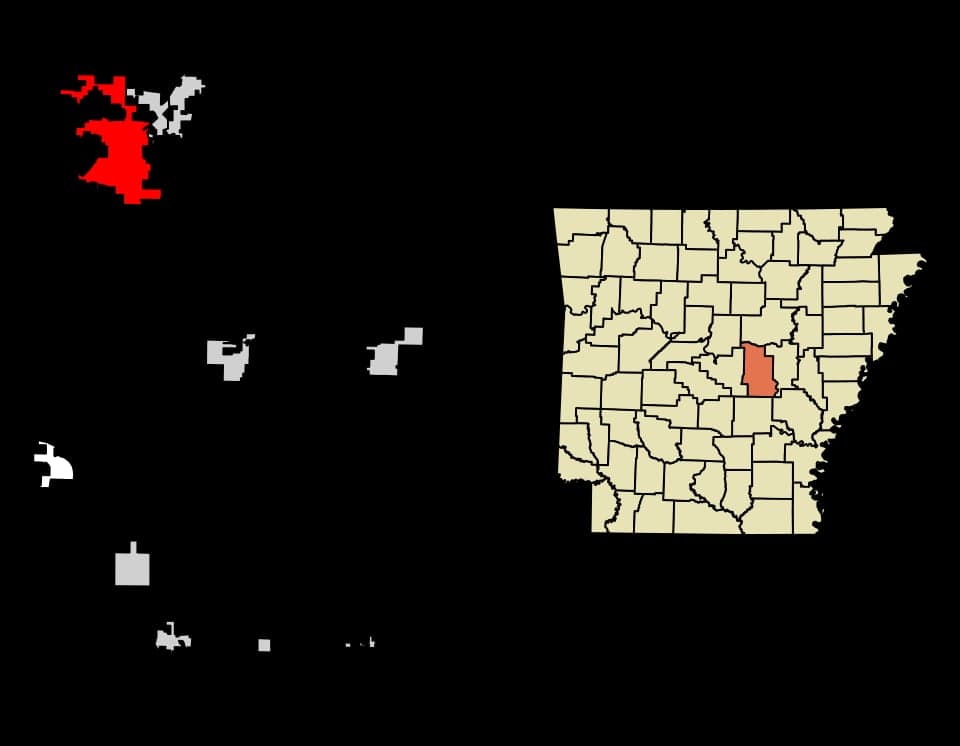
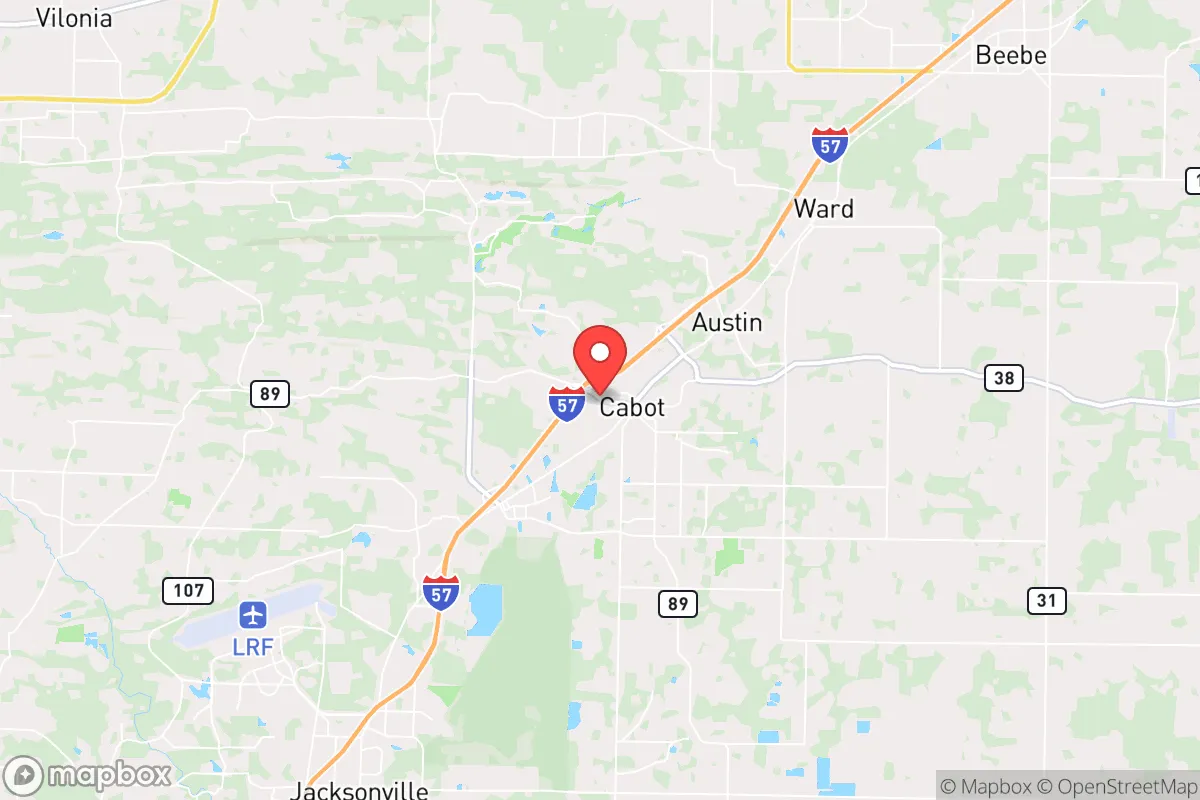
To understand Cabot's political climate, you have to look at the map. Drive 20 miles south to Little Rock, and you're in a blue island where progressive policies and higher taxes are more common. That contrast is stark and intentional. Cabot's R+23 rating puts it in the same conservative stronghold as nearby Searcy and Beebe, but it's notably more Republican than the broader Pulaski County suburbs. The surrounding Lonoke County votes even more heavily Republican than the city itself, which tells you the rural areas are even more skeptical of federal overreach. If you're coming from a place like Fayetteville or even Conway, you'll notice the difference immediately — there's less tolerance here for what many locals see as government intrusion into personal freedoms, from gun rights to school curriculum.
What this means for residents
For the people who live here, the political climate translates into a daily life that feels less regulated and more self-directed. Property taxes are low, zoning is minimal, and the local school board tends to push back against state or federal mandates that feel like overreach. You won't find mask mandates or vaccine passports being enforced at local businesses — that kind of thing gets shut down fast by public opinion. The city council and county officials are overwhelmingly Republican, so proposals for new taxes or progressive social programs rarely gain traction. For someone who values personal liberty and wants to keep government at arm's length, Cabot offers a refuge from the creeping regulation you see in larger cities. The trade-off is that services like public transit and social safety nets are limited, but most residents here prefer it that way — they'd rather keep their money and handle their own problems.
What daily life is like for families
If you're raising kids here, the political climate shapes everything from school policies to community events. The local schools emphasize patriotism, parental rights, and a curriculum that avoids what many see as progressive indoctrination. You'll see more "In God We Trust" signs than pride flags, and the annual Veterans Day parade is a bigger deal than any political rally. Neighbors tend to look out for each other without expecting the government to step in. That said, there's a growing concern among longtime residents that national trends — like the push for diversity initiatives or climate mandates — could eventually trickle down. The fear is that federal overreach might try to override local values, which is why you see strong turnout in every election, even the small ones. The long-term outlook is cautiously optimistic: as long as the community stays engaged and votes its conscience, Cabot will likely remain a place where personal freedom isn't just a talking point — it's the way of life.

State Political ClimatePolitical Climate in Arkansas
State Political AnalysisPolitical Environment in the State
Arkansas is a deeply red state, with Republicans holding every statewide office and supermajorities in both legislative chambers, but the political climate here is more nuanced than a simple party label suggests. The state has shifted dramatically over the past 20 years, moving from a conservative Democratic stronghold to a solidly Republican one, driven largely by the realignment of rural and suburban voters around cultural and economic issues. While the overall lean is reliably conservative, the intensity and flavor of that conservatism vary sharply depending on whether you’re in the northwest corner, the Delta, or the central part of the state.
Urban vs. rural divide
The political map of Arkansas is a study in contrasts. The booming Northwest Arkansas corridor—anchored by Fayetteville, Bentonville, Rogers, and Springdale—is the state’s economic engine and its most politically interesting region. Bentonville and Rogers are reliably Republican, driven by the corporate culture of Walmart and a growing population of fiscally conservative professionals. Fayetteville, home to the University of Arkansas, is the state’s most liberal city, consistently voting Democratic and hosting visible progressive activism. Springdale is a working-class swing area with a large Hispanic population that leans conservative on social issues but is less predictable on economics. The rest of the state is overwhelmingly rural and red. Little Rock and its suburbs in Pulaski County are a Democratic island, with the city proper voting blue while the surrounding counties like Saline and Faulkner are deeply Republican. The Delta region along the Mississippi River, including towns like Helena-West Helena and Pine Bluff, is poor, majority-black, and votes heavily Democratic, but its population is shrinking. The Ozark and Ouachita mountain regions are among the most conservative areas in the entire country, with many counties routinely giving Republicans 75-80% of the vote.
Policy environment
Arkansas’s policy environment is aggressively conservative, with a strong emphasis on limiting government reach. The state has a flat income tax that has been cut repeatedly, currently at 4.4% for most earners, with a goal of reaching 3.9% by 2027. There is no state property tax, though local property taxes are moderate. The regulatory climate is business-friendly, with few licensing hurdles and a right-to-work law that has kept union influence minimal. On education, the state passed the Arkansas LEARNS Act in 2023, a comprehensive school choice law that created universal Education Freedom Accounts, allowing public funds to follow students to private or homeschool settings. This was a major win for parental rights advocates. Healthcare is a mixed bag: the state expanded Medicaid under the private option model, but the legislature has consistently rejected any move toward a government-run system. Election laws have been tightened, with voter ID requirements and restrictions on ballot harvesting, though the state has not seen the kind of election integrity controversies that have roiled other states. The legislature also passed a near-total abortion ban in 2019, with no exceptions for rape or incest, which remains in effect.
Trajectory & freedom
On the whole, Arkansas is moving in a direction of expanded personal freedom, particularly on issues of gun rights, parental rights, and economic liberty. The state is a constitutional carry state, meaning no permit is needed to carry a concealed firearm, and the legislature has repeatedly rejected any red flag laws. The Arkansas Parental Rights Amendment, passed in 2023, enshrined in state law the right of parents to direct the upbringing, education, and healthcare of their children, including the right to opt out of any school curriculum they find objectionable. This was a direct response to COVID-era overreach and critical race theory concerns. On medical freedom, the state passed a law prohibiting vaccine mandates by private employers and government entities, though it was later partially blocked by a federal court. Property rights are strong, with no statewide zoning mandates and a general reluctance to use eminent domain for private development. The biggest area of concern for liberty-minded residents is the state’s high incarceration rate and a criminal justice system that can be heavy-handed on nonviolent offenses, though recent sentencing reforms have begun to chip away at that.
Civil unrest & political movements
Arkansas has seen relatively little large-scale civil unrest compared to other states. The most visible flashpoints have been around Confederate monument controversies in Little Rock and Fayetteville, where local activists pushed for removal, leading to heated city council meetings and counter-protests. The Black Lives Matter protests in 2020 were smaller and less destructive here than in many states, concentrated mainly in Little Rock and Fayetteville. On the right, the most organized movements are around gun rights and parental rights in education. The Arkansas Citizens for Liberty and local Moms for Liberty chapters are active in school board races and legislative advocacy. Immigration politics are less charged than in border states, but there is a strong undercurrent of concern about illegal immigration, particularly in Springdale and Rogers, where the Hispanic population has grown rapidly. There has been no serious secession or nullification rhetoric, though the legislature has passed resolutions asserting state sovereignty under the Tenth Amendment. Election integrity is not a major controversy here; the state’s voting system is seen as secure by most residents, and there were no significant disputes in 2020 or 2022.
Projection
Over the next 5-10 years, Arkansas is likely to become more conservative, not less, driven by two key trends. First, the continued growth of Northwest Arkansas is bringing in a wave of new residents from blue states like California and Illinois, but these are largely corporate professionals and retirees who are fiscally conservative and socially moderate—they are not shifting the region left. Second, the rural areas that are already deeply red are not losing population as fast as the Delta, so the overall political weight of the state is shifting toward the Ozarks and River Valley. The Democratic strongholds in Little Rock and the Delta will continue to shrink in relative influence. The biggest wildcard is whether the Fayetteville area’s liberal tilt will spread to the rest of the northwest corridor as the university grows, but so far, the surrounding counties have held firm. Expect further tax cuts, continued school choice expansion, and a hardening of the state’s position on abortion and gun rights. The state is unlikely to see any major shift toward progressive policies unless there is a dramatic demographic change, which is not on the horizon.
For a new resident, the bottom line is this: Arkansas offers a political environment that is reliably conservative, stable, and increasingly aligned with traditional values around family, faith, and freedom. You won’t find the kind of cultural warfare or policy whiplash that plagues swing states. The trade-off is that the state’s conservatism can feel insular and slow-moving, with a resistance to change that can frustrate those who want more dynamism. If you value low taxes, strong gun rights, parental control over education, and a government that mostly stays out of your business, Arkansas is a solid bet. Just be prepared for a pace of life and politics that is deeply rooted in local tradition, not national trends.
* Values derived from national, state, county, city and local statistics and may differ in a specific area. Last updated: 2026-05-03T20:21:49.000Z
Narrative content on this page is AI-generated and may contain mistakes. Verify any details that matter before acting on them.
ReloMaps may earn a commission from affiliate links at no extra cost to you.

