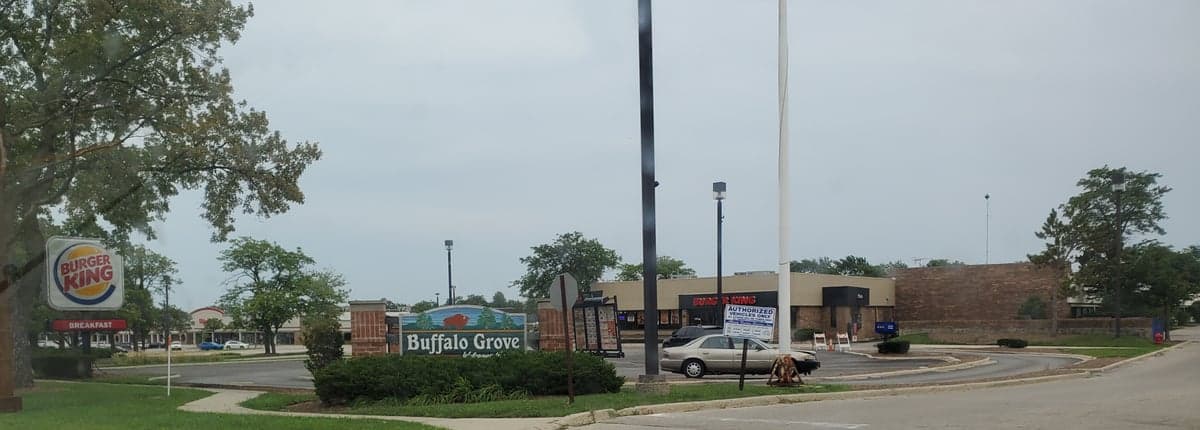
Photo: Wikipedia
Political ClimatePolitical Climate in Buffalo Grove, IL
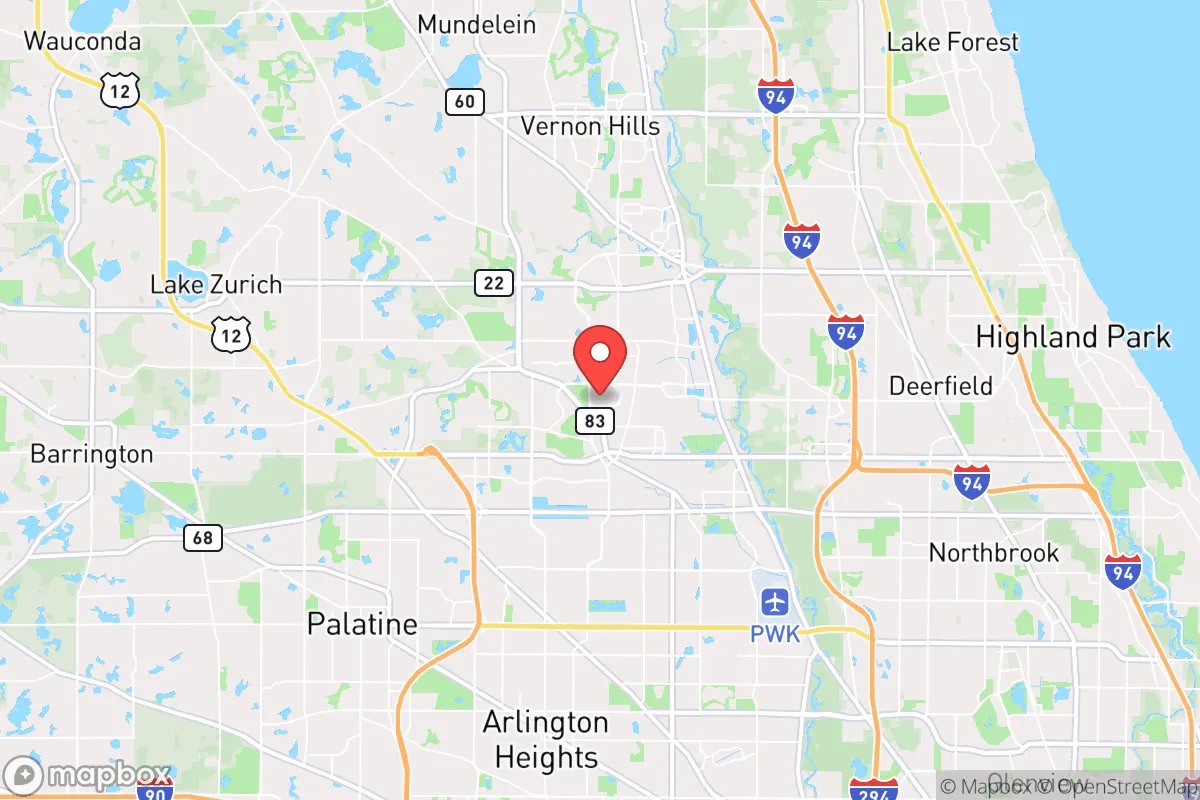
District shown is the primary district for this city’s centroid. Cities may span multiple districts.
Local Political AnalysisPolitical Analysis of Buffalo Grove, IL
Buffalo Grove leans heavily Democratic, with a Cook PVI of D+12, meaning the area votes about 12 points more Democratic than the national average. This wasn’t always the case—back in the 90s and early 2000s, this village was a classic swing suburb, with local elections often decided by a few hundred votes and a healthy mix of conservative and moderate voices. Over the last decade, though, the shift has been steady and unmistakable. The 2020 and 2024 presidential elections saw Buffalo Grove go blue by wide margins, and local school board and village board races have followed suit, with progressive candidates increasingly dominating. If you’re a conservative or even a moderate who values limited government, you’ve probably felt like the ground is moving under your feet.
How it compares
Buffalo Grove sits in a political bubble compared to its neighbors. Drive ten minutes west to Long Grove or Kildeer, and you’ll find more balanced or even conservative-leaning precincts—those areas still have a strong independent streak and lower taxes. Head south to Arlington Heights, and you’re in similar D+ territory, but with a more vocal progressive activist base. The real contrast is with Lake County’s more rural towns like Wauconda or Fox Lake, where conservative values still hold sway and local officials push back on state mandates. Buffalo Grove, by contrast, has embraced the Cook County machine, with property taxes among the highest in the state and a village board that rarely questions Springfield’s one-size-fits-all policies. The difference isn’t subtle—it’s a daily reality in how your wallet and your freedoms are treated.
What this means for residents
For families and longtime residents, the political tilt translates into real-life friction. Property taxes here are among the highest in Lake County, driven by school districts and village spending that rarely face serious opposition. The village has also adopted progressive zoning and housing policies that prioritize density over single-family neighborhoods, which can feel like a direct hit on your property rights. Local schools have shifted toward DEI and social-emotional learning curricula, often at the expense of academic rigor and parental input. If you value the freedom to raise your kids without government overreach in the classroom, you’ll find yourself increasingly at odds with the local direction. The police department remains professional and community-oriented, but there’s growing pressure from activist groups to defund or reform, which is a red flag for anyone who believes in public safety first.
Culturally, Buffalo Grove has lost much of its old-school, middle-American character. The village used to be a place where neighbors knew each other, and local politics was about potholes and parks, not social engineering. Today, you’ll see more “In This House We Believe” signs than American flags, and the annual community events have become platforms for progressive messaging. The long-term trajectory is concerning: as the population ages and younger, more liberal families move in from Chicago, the conservative voice is being squeezed out. If you’re thinking of moving here, understand that you’ll be a minority in your own town, and your values will be tested at the ballot box and the school board meeting. It’s still a safe, well-maintained suburb, but the political climate is a warning sign for anyone who values personal freedom and limited government.

State Political ClimatePolitical Climate in Illinois
State Political AnalysisPolitical Environment in the State
Illinois has been a reliably blue state in presidential elections for decades, with Democrats holding a structural advantage in statewide races and the state legislature. Over the past 20 years, the state has shifted from a purple-leaning-blue battleground to a solidly Democratic stronghold, driven by the massive population and political machine of Chicago and its inner suburbs. However, this top-line blue label masks a deep and growing urban-rural divide, with downstate counties like Williamson, Effingham, and Adams voting overwhelmingly Republican, while the collar counties around Chicago have trended sharply left since the 1990s. For a conservative considering relocation, the state presents a complex picture: low property taxes in some rural areas but a high overall tax burden, a powerful state government that has expanded its reach into education, healthcare, and gun control, and a political culture that often feels like two separate states under one capitol.
Urban vs. rural divide
The political map of Illinois is essentially a story of Chicago versus the rest. Cook County, home to Chicago, casts roughly 40% of the state’s vote and delivers margins of 70-80% for Democrats. The inner ring of suburbs—places like Evanston, Oak Park, and Skokie—are among the most liberal in the nation. The collar counties of DuPage, Lake, Kane, and Will, once reliably Republican, have flipped dramatically. DuPage County, which voted for George W. Bush by 18 points in 2000, voted for Joe Biden by 10 points in 2020. This suburban shift, driven by college-educated professionals and an influx of voters from Chicago, has cemented Democratic dominance. Meanwhile, downstate Illinois—everything south of I-80 and west of the Chicago metro—is deeply red. Counties like Madison, St. Clair, and Sangamon (home to Springfield) are competitive, but further south, places like Marion, Carbondale, and the Quad Cities area are solidly conservative. The rural-urban split is so stark that many downstate residents feel politically and culturally disconnected from Chicago, fueling talk of secession and a persistent "two Illinois" dynamic.
Policy environment
Illinois’s policy environment is a mixed bag for conservatives. The state has a progressive income tax structure—though a 2020 attempt to switch to a graduated income tax failed at the ballot box—and the flat tax rate of 4.95% is moderate. However, property taxes are among the highest in the nation, averaging over 2% of home value, which can be a shock for newcomers from Texas or Florida. The state also has a high sales tax rate, with local add-ons pushing it above 10% in Chicago. On education, Illinois has a strong public school system in affluent suburbs but a deeply troubled one in Chicago and many rural districts. The state’s school funding formula has been a source of constant litigation and legislative battles. In healthcare, Illinois expanded Medicaid under the Affordable Care Act and has some of the most generous public assistance programs in the Midwest. On election law, Illinois has no voter ID requirement, offers same-day registration, and has automatic voter registration, which conservatives view as a vulnerability. The state also has a strong "sanctuary" law, the Illinois Trust Act, which limits local law enforcement cooperation with federal immigration authorities.
Trajectory & freedom
Over the past decade, Illinois has moved decisively in a progressive direction on several fronts, which many conservatives see as a contraction of personal freedom. In 2019, the state passed a sweeping reproductive health act that codified abortion rights and removed parental notification requirements for minors. In 2021, Illinois became the first state in the nation to eliminate cash bail through the Pretrial Fairness Act, a move that critics argue reduces public safety. On gun rights, Illinois has some of the strictest laws in the Midwest, including a 2023 ban on assault weapons and high-capacity magazines, which was signed by Governor J.B. Pritzker. The state also has a Firearm Owners Identification (FOID) card system that requires a state-issued license to own guns. On parental rights, Illinois has moved in the opposite direction of states like Florida, with laws that allow minors to access reproductive healthcare without parental consent and that protect LGBTQ+ students from discrimination. The state’s tax burden, while not increasing dramatically, remains high, and the state’s massive unfunded pension liability—over $140 billion—looms as a future tax increase or service cut. For a conservative, the trajectory is clear: more government involvement in personal decisions, higher costs, and less local control.
Civil unrest & political movements
Illinois has seen its share of political flashpoints. The 2020 George Floyd protests in Chicago were among the largest and most destructive in the country, with looting and property damage that led to a significant police reform package. The state has a vocal and organized progressive activist network, particularly in Chicago and the collar counties, that has pushed for defunding the police, rent control, and environmental justice. On the right, there is a growing "secession" movement in downstate counties, with several counties passing symbolic resolutions to explore leaving Illinois to form a new state. This movement, while not legally viable, reflects deep frustration with Chicago-centric governance. Immigration politics are a constant flashpoint, with the state’s sanctuary policies clashing with federal enforcement, and the arrival of thousands of migrants bused from Texas has strained Chicago’s resources and sparked local backlash. Election integrity is a persistent concern among conservatives, with the state’s mail-in voting expansion and lack of voter ID laws seen as vulnerabilities. The 2022 gubernatorial race saw a hard-fought but unsuccessful challenge from conservative Darren Bailey, who won downstate but was crushed in the Chicago metro.
Projection
Over the next 5-10 years, Illinois is likely to become even more Democratic and progressive. Demographic trends favor the party: the Chicago metro is growing in diversity and liberal leaning, while downstate continues to lose population. The state’s pension crisis will force difficult choices, likely leading to higher taxes or cuts to services that disproportionately affect rural areas. The gun ban and other progressive policies are unlikely to be repealed, as the state legislature is firmly under Democratic control. In-migration patterns are a net negative—Illinois has lost population for nine consecutive years, with many residents moving to Florida, Texas, and Indiana. Those who stay or move in are increasingly those who align with the state’s political direction. For a conservative, the realistic outlook is that Illinois will continue to be a state where your vote in statewide elections is largely irrelevant, where your tax dollars flow to Chicago and Springfield, and where your personal freedoms on guns, education, and healthcare are increasingly constrained by state law. The best-case scenario for a conservative is to find a red pocket in a blue state, but even those pockets are losing political influence.
For a conservative considering Illinois, the bottom line is this: you can find a good life here in a conservative community like Effingham, Quincy, or the rural parts of the Metro East, but you will be swimming against a strong political current. Your property taxes will be high, your gun rights will be limited, and your vote for president or governor will not count. If you value low taxes, gun rights, and local control, Illinois is likely a poor fit. If you have a job or family ties that keep you here, the best strategy is to live in a red county, stay engaged in local politics, and brace for a state government that will continue to push policies you likely oppose. The state is not getting more free—it is getting more managed, more expensive, and more centralized.
* Values derived from national, state, county, city and local statistics and may differ in a specific area. Last updated: 2026-04-23T15:54:49.000Z
Narrative content on this page is AI-generated and may contain mistakes. Verify any details that matter before acting on them.
ReloMaps may earn a commission from affiliate links at no extra cost to you.

