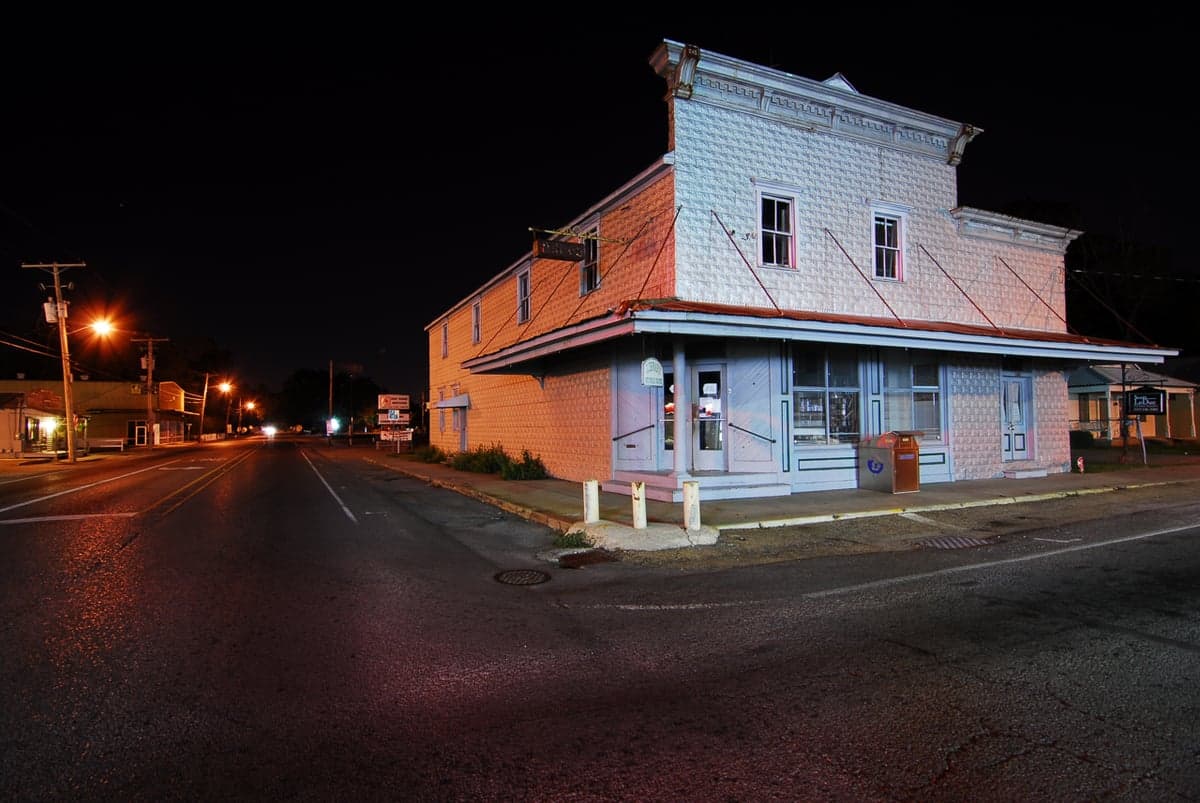
Photo: Wikipedia
Political ClimatePolitical Climate in Broussard, LA
District shown is the primary district for this city’s centroid. Cities may span multiple districts.
Local Political AnalysisPolitical Analysis of Broussard, LA
Broussard, Louisiana, is about as solidly conservative as a place can get, and that’s not changing anytime soon. The Cook PVI of R+22 tells you the story in a single number — this area votes Republican by a massive margin, and it’s been that way for as long as anyone can remember. You don’t see the kind of political whiplash here that you get in some of the bigger cities nearby; Broussard’s lean is deep and stable, rooted in a culture that values personal responsibility, limited government, and the right to live your life without a bunch of bureaucratic nonsense getting in the way.
How it compares
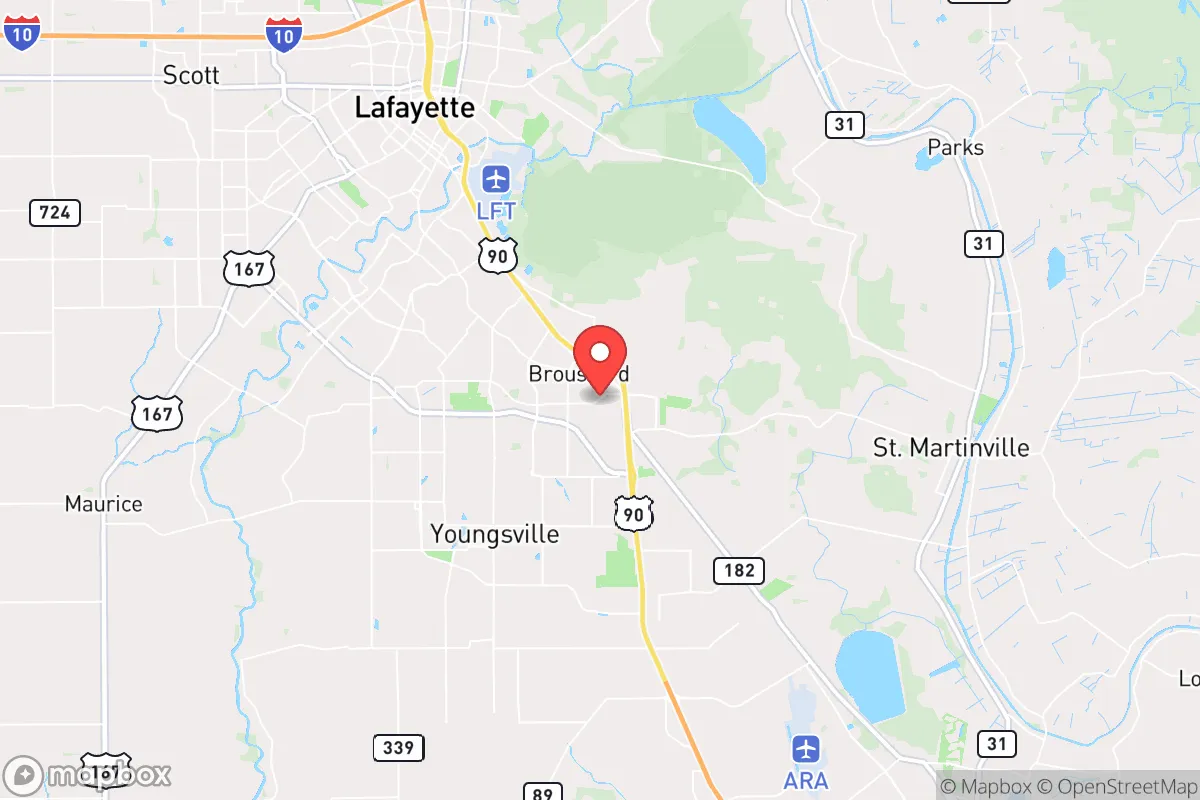
If you drive 15 minutes east into Lafayette, you’ll start to feel the political temperature shift. Lafayette is more of a mixed bag — still conservative overall, but with a noticeable progressive streak, especially in the university crowd and some of the newer developments. Broussard, by contrast, feels like a different world. The local elections here are dominated by candidates who talk about cutting taxes, protecting gun rights, and pushing back against state or federal overreach. Compare that to a place like New Orleans, which is a solid blue island, or even Baton Rouge, which has a more competitive split, and Broussard stands out as a place where conservative values aren’t just tolerated — they’re expected. The surrounding towns like Youngsville and Scott lean the same way, so there’s a real sense of community around these beliefs.
What this means for residents
For folks living here, the political climate translates into a pretty straightforward daily reality. You’re not going to see a bunch of new regulations coming down from the city council that mess with your property rights or your small business. The tax burden is low compared to most of the country, and there’s a general attitude of “we’ll handle our own problems” rather than looking to the government for every solution. That said, there are some warning signs on the horizon. As the area grows — and it is growing, fast — there’s always the risk that new people moving in from more progressive areas bring their ideas with them. You see it in some of the school board meetings and zoning debates, where a few voices start pushing for things like diversity initiatives or environmental restrictions that feel out of step with the local culture. So far, those efforts haven’t gained much traction, but it’s something to keep an eye on. The long-term trajectory depends on whether the community stays engaged and keeps electing people who understand that the best government is the one that stays out of your way.
One thing that really sets Broussard apart is the way local policy reflects a deep respect for personal freedoms. You won’t find the kind of mask mandates or business shutdowns here that you saw in other parts of the country during the pandemic — the city took a hands-off approach, trusting residents and business owners to make their own decisions. That’s the kind of cultural distinction that matters. It’s not just about party labels; it’s about a fundamental belief that you know what’s best for your own family, your own property, and your own livelihood. As long as that attitude holds, Broussard will stay the kind of place where conservative values aren’t just a talking point — they’re the way things are done.

State Political ClimatePolitical Climate in Louisiana
State Political AnalysisPolitical Environment in the State
Louisiana has long been a reliably Republican state at the presidential level, voting for the GOP candidate in every election since 2000, but it’s a deep shade of red with a stubborn blue undercurrent. The state’s overall partisan lean is roughly +15 to +20 points Republican in federal races, driven by a coalition of evangelical Christians, rural conservatives, and a growing number of suburban families fleeing New Orleans and Baton Rouge. Over the last 10-20 years, the trajectory has been a slow but steady march rightward, with Democrats losing their last statewide footholds and the legislature becoming increasingly conservative, though the state’s unique Cajun and Creole cultures still produce occasional Democratic wins in local races.
Urban vs. rural divide
The political map of Louisiana is a textbook study in the urban-rural split. New Orleans and its inner suburbs like Metairie and Kenner are the state’s Democratic strongholds, powered by a coalition of Black voters, progressive whites, and a growing Hispanic population. Orleans Parish routinely delivers 75-80% of its vote to Democrats, making it a blue island in a red sea. Baton Rouge is more of a toss-up, with East Baton Rouge Parish trending blue in recent cycles due to university influence and Black voters, but the surrounding suburbs like Prairieville and Denham Springs are deep red. The state’s other major metro, Lafayette, is a fascinating case — it’s culturally Cajun and historically more moderate, but the oil-and-gas economy and strong Catholic conservatism have pushed it reliably Republican in federal races. The rural parishes — places like Rapides, Ouachita, and Beauregard — are where the GOP’s margins are built, often delivering 70-80% of the vote for Republican candidates. The Florida Parishes (the region north of Lake Pontchartrain) have flipped hard red in the last decade, with Livingston Parish becoming a conservative bastion as families fled New Orleans after Hurricane Katrina.
Policy environment
Louisiana’s policy environment is a mixed bag for conservatives. On the plus side, the state has no personal property tax, and the homestead exemption is generous — the first $75,000 of a home’s value is exempt from parish property taxes. The state income tax is a flat 4.25% as of 2025, down from a progressive top rate of 6% in the early 2010s, and there’s serious talk of eliminating it entirely. The regulatory posture is generally business-friendly, especially for oil and gas, with the Louisiana Department of Environmental Quality being notoriously lax compared to neighboring states. On the downside, the state’s sales tax is among the highest in the nation, averaging around 9.5% when local add-ons are included, and the state’s education system is a perennial concern — Louisiana ranks near the bottom in K-12 outcomes, though the school choice movement has made significant inroads, with the Louisiana Scholarship Program allowing low-income students to attend private schools. Healthcare policy is a flashpoint: the state expanded Medicaid under the Affordable Care Act in 2016, a decision that many conservatives view as a government overreach, and the state’s certificate-of-need laws still restrict the opening of new hospitals and clinics, limiting competition. Election laws are solidly conservative — voter ID is required, early voting is limited to 7 days, and there’s no same-day registration. The state also has a closed primary system for most offices, which tends to favor more partisan candidates.
Trajectory & freedom
On the freedom front, Louisiana has been moving in a positive direction for conservatives, but the pace is frustratingly slow. The state passed a constitutional carry law in 2021, allowing law-abiding citizens to carry concealed firearms without a permit — a major win for gun rights. Parental rights were strengthened in 2024 with the passage of the “Parents’ Bill of Rights,” which requires schools to notify parents of any changes to a child’s mental or physical health and prohibits schools from hiding information about a child’s gender identity. Medical autonomy took a hit during the COVID-19 pandemic, when Governor John Bel Edwards imposed mask mandates and business closures, but the legislature has since passed laws banning vaccine mandates for public employees and restricting the governor’s emergency powers. Property rights are generally strong, with Louisiana being a “right-to-farm” state that protects agricultural operations from nuisance lawsuits, though the state’s unique Napoleonic Code legal system can create headaches for property owners, especially regarding inheritance and community property laws. Taxation is a mixed bag — the flat income tax is a step in the right direction, but the high sales tax and a state gasoline tax that’s among the highest in the South are ongoing concerns. The biggest red flag for freedom-minded residents is the state’s heavy reliance on federal funding — Louisiana receives more federal dollars per capita than almost any other state, which creates a dependency that limits the state’s ability to chart its own course.
Civil unrest & political movements
Louisiana has a history of political flashpoints, but the last few years have been relatively calm compared to other states. The most visible unrest in recent memory was the 2016 Baton Rouge protests following the shooting of Alton Sterling, which included clashes with police and a high-profile ambush that killed three officers. Since then, the state has seen a rise in organized conservative activism, particularly around school board meetings and library board elections, where parents have mobilized against what they see as inappropriate books and curriculum. The immigration issue is less acute here than in border states, but there’s a growing tension in rural parishes where meatpacking plants and agricultural operations have drawn a significant Hispanic workforce — places like Scott and Breaux Bridge have seen demographic shifts that are starting to change local politics. There’s no serious secession movement, but there’s a strong strain of “Louisiana exceptionalism” that manifests in resistance to federal overreach, particularly on environmental regulations affecting the oil and gas industry. Election integrity has been a hot topic since 2020, with the legislature passing a law in 2024 that requires all absentee ballots to be returned by mail (no drop boxes) and mandates signature verification — a move that was praised by conservatives but criticized by voting rights groups. The most visible political movement right now is the push for a constitutional convention to rewrite the state’s tax code and limit government spending, which has strong support in the legislature but faces opposition from teacher unions and local government associations.
Projection
Looking ahead 5-10 years, Louisiana is likely to continue its slow drift rightward, but with some important caveats. The in-migration patterns are a double-edged sword: the state is attracting conservative-leaning families from California and the Northeast who are drawn to the low cost of living and the cultural conservatism, but it’s also losing its young, educated population to Texas and Tennessee, which could create a demographic hole. The biggest wild card is the state’s economy — if the oil and gas industry continues to be squeezed by federal regulations and the global shift to renewables, the state could face a fiscal crisis that forces either tax increases or severe spending cuts. The most likely scenario is that Louisiana remains a solidly red state in federal elections, with the legislature becoming more conservative on social issues (abortion restrictions, parental rights, school choice) while struggling to address the state’s chronic problems with infrastructure, healthcare, and education. A new resident moving in now should expect to find a state that is culturally conservative and welcoming to families, but one that is also grappling with the legacy of decades of corruption and inefficiency. The freedom trajectory is positive, but it’s a slow boat — don’t expect Texas-level dynamism anytime soon.
For a conservative family or individual considering a move, Louisiana offers a genuine bargain: low housing costs, a strong sense of community, and a political environment that is generally respectful of traditional values. The trade-offs are real — the schools are weak, the roads are rough, and the state’s dependence on federal money creates a vulnerability that could become a problem down the road. But if you’re looking for a place where your neighbors will wave from their porches, where the hunting and fishing are world-class, and where the government mostly leaves you alone, Louisiana is worth a serious look. Just keep an eye on Baton Rouge — the fight for the state’s soul is far from over.
* Values derived from national, state, county, city and local statistics and may differ in a specific area. Last updated: 2026-04-23T04:54:31.000Z
Narrative content on this page is AI-generated and may contain mistakes. Verify any details that matter before acting on them.
ReloMaps may earn a commission from affiliate links at no extra cost to you.

