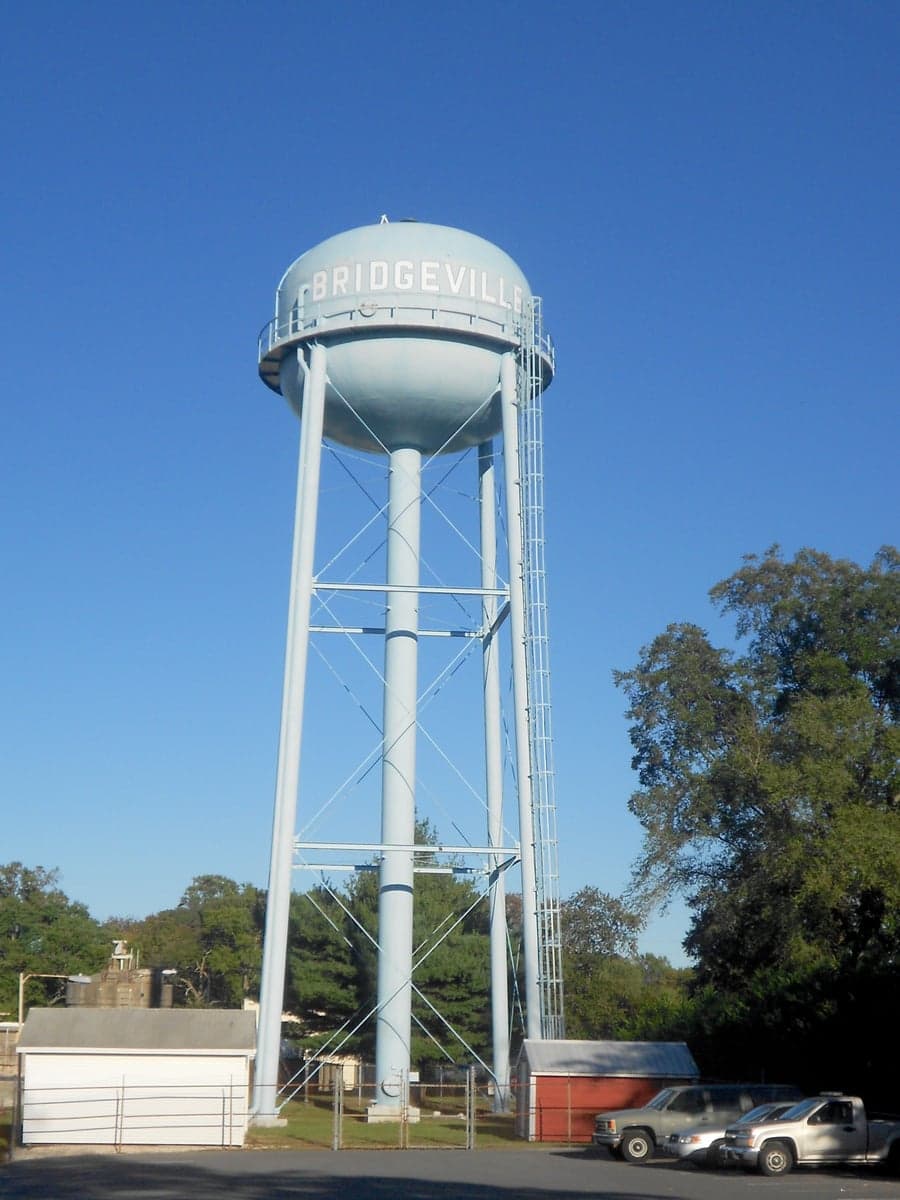
Photo: Wikipedia
Political ClimatePolitical Climate in Bridgeville, DE
District shown is the primary district for this city’s centroid. Cities may span multiple districts.
Inherited from parent state — no local data available.
Local Political AnalysisPolitical Analysis of Bridgeville, DE
Bridgeville, Delaware, sits in a political landscape that has shifted noticeably leftward in recent years, with a Cook PVI of D+8 that reflects a solid Democratic lean at the county level. If you’ve been around here as long as I have, you remember when Sussex County was a reliably conservative stronghold, and Bridgeville itself felt like a quiet, common-sense community where folks mostly kept to themselves and didn’t expect the government to run their lives. That’s changing, and not for the better in my view. The area’s voting patterns now align more with the progressive tilt of northern Delaware, driven largely by an influx of newcomers from places like New York and New Jersey who bring different ideas about what a community should look like.
How it compares
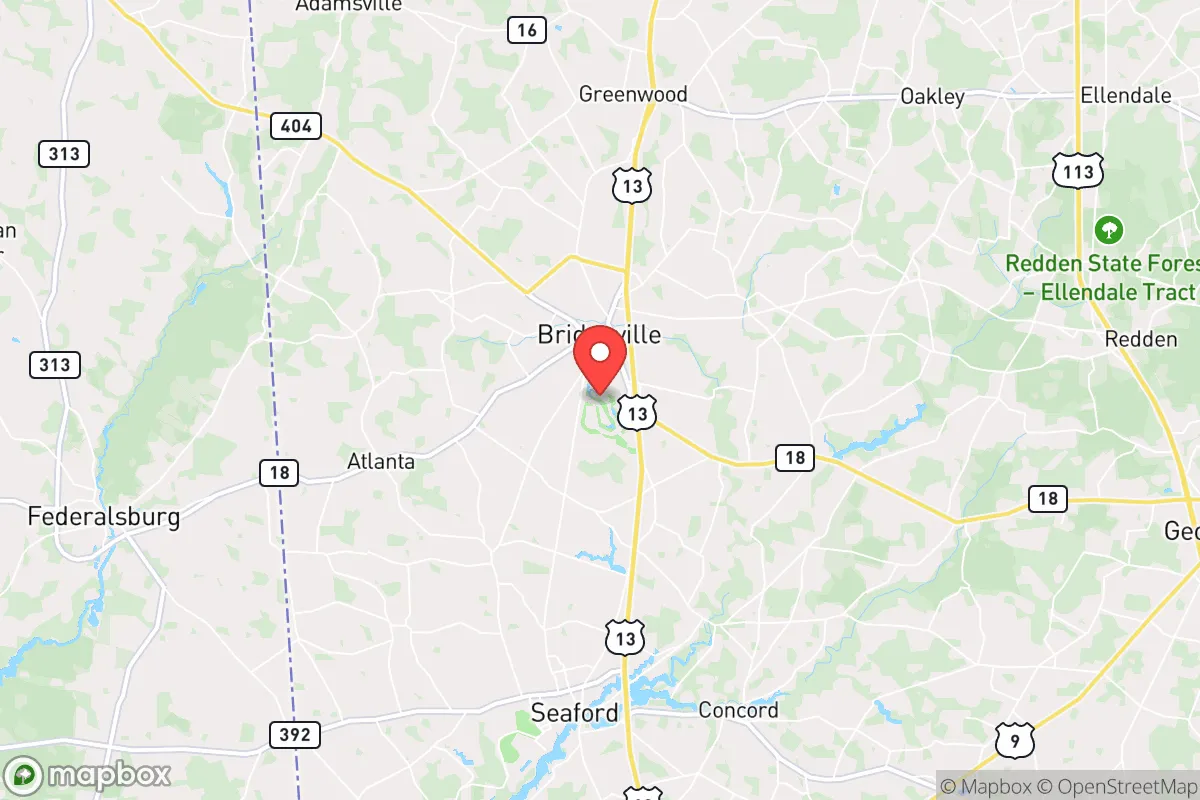
To understand Bridgeville’s political climate, you have to look at the towns around it. Head a few miles west to Seaford, and you’ll find a more mixed bag—still some old-school conservative values, but with a growing progressive presence that’s pushing for higher taxes and more regulations. Go east toward Georgetown, the county seat, and you’re in a place that’s been trending blue for a decade, with local government increasingly focused on diversity initiatives and environmental mandates that feel like they came straight from Dover. Meanwhile, towns like Laurel and Delmar to the south still hold onto a more traditional, limited-government outlook, but they’re getting squeezed. The contrast is stark: Bridgeville used to be part of that conservative belt, but now it’s becoming a bedroom community for folks who work in the more liberal corridors of the state. The D+8 rating doesn’t tell the whole story—it masks a real tension between long-time residents who value personal freedom and newcomers who seem comfortable with more government oversight in their daily lives.
What this means for residents
For those of us who’ve lived here for decades, the shift is more than just election results—it’s about how the town feels day to day. You’re seeing more local ordinances that nibble away at property rights, like stricter building codes and land-use restrictions that make it harder to do what you want with your own land. The school board has become a battleground, with debates over curriculum and parental rights that would have been unthinkable ten years ago. If you value being left alone to raise your family without the government breathing down your neck, you’re starting to feel like an outsider in your own hometown. The tax burden is creeping up too, as the county adopts more social programs and green-energy mandates that sound nice on paper but hit your wallet hard. It’s not a disaster yet, but the trajectory is concerning—each election cycle brings a little more progressive policy, and a little less room for the independent spirit that made this area worth living in.
One cultural distinction worth noting: Bridgeville still has its annual Apple Scrapple Festival, a down-home event that celebrates local agriculture and tradition, and that’s a bright spot. But even that feels like a holdout against the tide. The real worry is that as the political climate continues to drift left, the policies that follow—higher taxes, more regulations, and a focus on collective goals over individual rights—will erode what made Bridgeville a great place to raise a family. If you’re thinking of moving here, just know that the old Bridgeville is fading, and the new one is being shaped by forces that don’t always put personal freedom first. Keep an eye on local elections and zoning board meetings; that’s where the future of this town is really being decided.

State Political ClimatePolitical Climate in Delaware
State Political AnalysisPolitical Environment in the State
Delaware has historically been a swing state, but over the past 20 years it has drifted steadily leftward, now leaning reliably Democratic at the statewide level. The dominant coalition is a mix of New Castle County’s dense, educated suburbs and Wilmington’s urban core, which together deliver roughly 60% of the vote. Republicans hold a shrinking stronghold in Sussex County and parts of Kent County, but the overall trajectory is concerning for conservatives: the state voted for Biden by 19 points in 2020 and has not backed a Republican for president since 1988. For a conservative relocating here, the key takeaway is that Delaware’s political center of gravity is shifting away from traditional values, driven by in-migration from the Northeast and a growing progressive activist class.
Urban vs. rural divide
The political map of Delaware is a tale of three counties. New Castle County, home to Wilmington, Newark, and the suburbs around I-95, is the Democratic engine. Wilmington itself is a deep-blue city with a strong progressive base, while suburbs like Hockessin and Greenville lean left but are more moderate on fiscal issues. Kent County, anchored by Dover, is a true swing area—Dover’s government and military presence (Dover Air Force Base) creates a mix of moderate Democrats and Republicans, but the rural parts lean red. Sussex County, including Lewes, Rehoboth Beach, and Georgetown, is the conservative heartland, but even there, the influx of retirees from New York and New Jersey is slowly diluting the GOP advantage. The divide is stark: New Castle County votes 65% Democratic, while Sussex County votes 55% Republican, but the population imbalance means the left dominates statewide elections.
Policy environment
Delaware’s policy environment is increasingly progressive, with a tax structure that is high by national standards. The state has a progressive income tax topping out at 6.6%, and property taxes are moderate but rising. Sales tax is 0%, which sounds good, but the state makes up for it with high fees and corporate taxes—Delaware is the legal home for most U.S. corporations, which brings revenue but also a regulatory culture that favors big business over individuals. On education, the state has moved toward centralized control, with the Delaware Department of Education pushing Common Core and equity-based funding models that often shortchange rural districts like Indian River School District in Sussex County. Healthcare policy is heavily regulated, with Medicaid expansion under the ACA and a state-run insurance exchange. Election laws have been loosened: no-excuse absentee voting was made permanent in 2022, and same-day voter registration was expanded, which critics argue weakens election integrity. For conservatives, the policy environment feels like a slow creep toward government overreach, especially in education and taxation.
Trajectory & freedom
Delaware is becoming less free, particularly in the areas of personal liberty and parental rights. In 2023, the legislature passed House Bill 150, which codified abortion access and removed parental notification requirements for minors—a direct blow to family autonomy. On gun rights, the state enacted a ban on “assault weapons” and high-capacity magazines in 2022 (House Bill 450), along with a permit-to-purchase requirement, making it one of the most restrictive states in the Mid-Atlantic for firearm owners. Parental rights took a hit with the passage of Senate Bill 200 in 2021, which mandated LGBTQ-inclusive curriculum in public schools without an opt-out for parents. Property rights are under pressure from zoning reforms in New Castle County that allow higher-density development, often overriding local control. The tax burden has increased, with the gas tax indexed to inflation and a new “clean energy” surcharge on electricity bills. For a conservative, the trajectory is clear: each legislative session chips away at individual freedoms in the name of progressive social goals.
Civil unrest & political movements
Civil unrest in Delaware has been relatively muted compared to neighboring states, but flashpoints exist. Wilmington saw protests in 2020 following George Floyd’s death, with some property damage and a heavy police response. The Delaware Liberation Front, a left-wing activist group, has organized around police reform and housing policy, while conservative groups like the Delaware Family Policy Council and local Moms for Liberty chapters have mobilized around school board elections and parental rights. Immigration politics are less heated than in border states, but Delaware is a “sanctuary” state in practice—state law limits cooperation with ICE, and Wilmington has a formal sanctuary city policy. Election integrity remains a concern for conservatives: the 2020 election saw widespread use of drop boxes and mail-in ballots, and a 2024 audit found minor discrepancies in voter rolls, though no fraud was proven. The most visible flashpoint is the Indian River School District board meetings, where debates over critical race theory and transgender policies have drawn large, passionate crowds. A new resident would notice these tensions most in school board races and local zoning hearings.
Projection
Over the next 5-10 years, Delaware will likely continue its leftward drift. In-migration from the Northeast—particularly from New York, New Jersey, and Pennsylvania—is accelerating, with Sussex County seeing the fastest growth. These newcomers tend to be moderate-to-liberal retirees and remote workers who bring their voting habits with them. The Democratic Party’s dominance in New Castle County is unlikely to be challenged, and the GOP’s base in Sussex County will shrink as a share of the total population. The state’s economy is heavily tied to the legal and financial sectors, which favor stability over disruption, so radical policy shifts are unlikely, but incremental progressivism will persist. Expect further gun control, higher taxes on the wealthy, and more centralized education mandates. For a conservative moving in now, the realistic expectation is that Delaware will feel more like a smaller version of New Jersey or Maryland within a decade—blue, regulated, and expensive, with pockets of red resistance in the rural south.
For a new resident, the bottom line is that Delaware offers a mixed bag. The low sales tax and proximity to major East Coast cities are genuine advantages, but the political climate is increasingly hostile to conservative values. If you’re looking for a place where your voice on school boards, gun rights, and taxes still matters, stick to Sussex County—specifically towns like Millsboro or Selbyville, where the local culture remains more traditional. But be prepared for a long-term fight: the state’s trajectory is blue, and the only question is how fast it gets there.
* Values derived from national, state, county, city and local statistics and may differ in a specific area. Last updated: 2026-04-30T04:02:47.000Z
Narrative content on this page is AI-generated and may contain mistakes. Verify any details that matter before acting on them.
ReloMaps may earn a commission from affiliate links at no extra cost to you.

