Photo: Wikipedia
Demographics of Bridgehampton, NY
Affluence Level in Bridgehampton, NY
An elite concentration of wealth — high incomes, strong home values, advanced degrees, and minimal poverty signal a top-tier socioeconomic profile.
People of Bridgehampton, NY
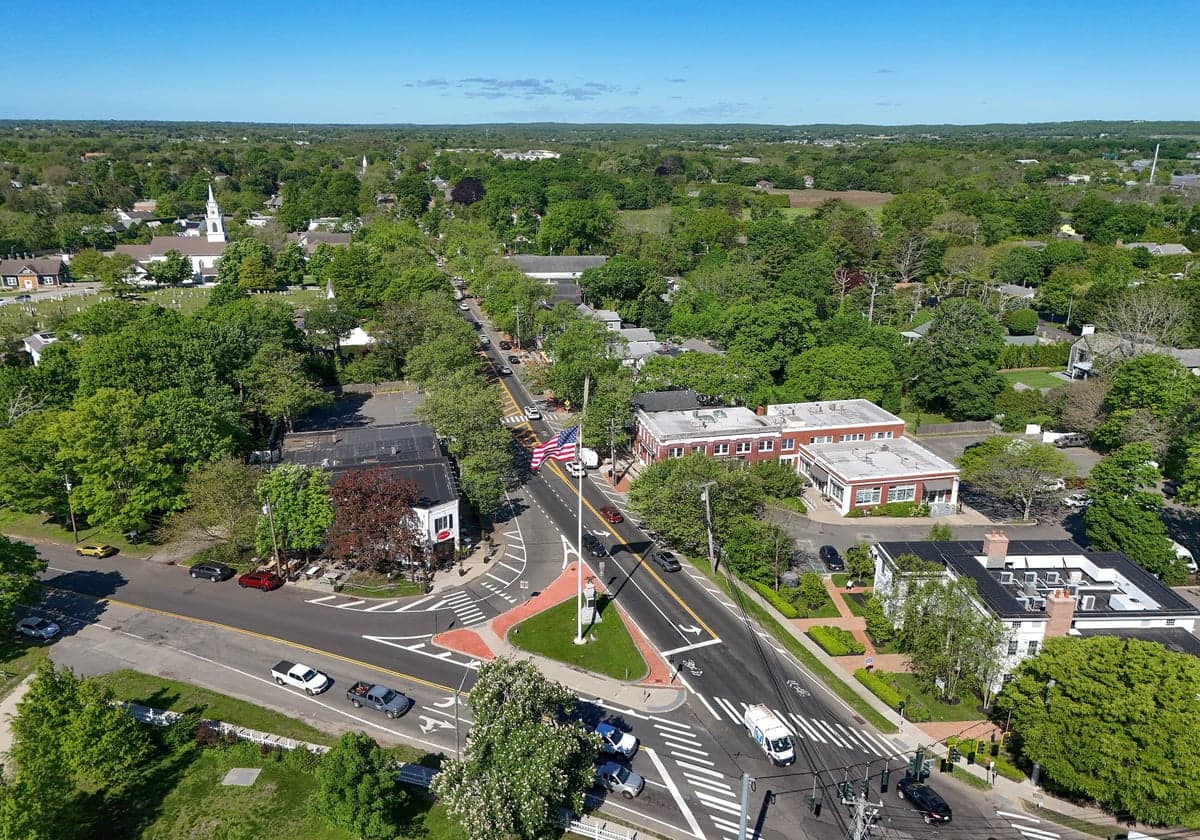
Bridgehampton, New York, is a small hamlet of 1,322 residents that remains overwhelmingly white (77.7%) and highly educated (75.7% college-educated), with a modest but growing Hispanic population (16.4%) and a small Black community (5.4%). Its character is defined by deep-rooted Yankee families, a seasonal influx of wealthy second-home owners, and a working-class service population that has historically lived in distinct enclaves. The hamlet’s identity is a blend of old-money agricultural heritage and modern luxury tourism, with little ethnic diversity beyond the white and Hispanic groups. For a conservative-leaning mover, Bridgehampton offers a stable, low-crime environment with strong community institutions, though housing costs and seasonal crowding are significant considerations.
How the city was settled and grew
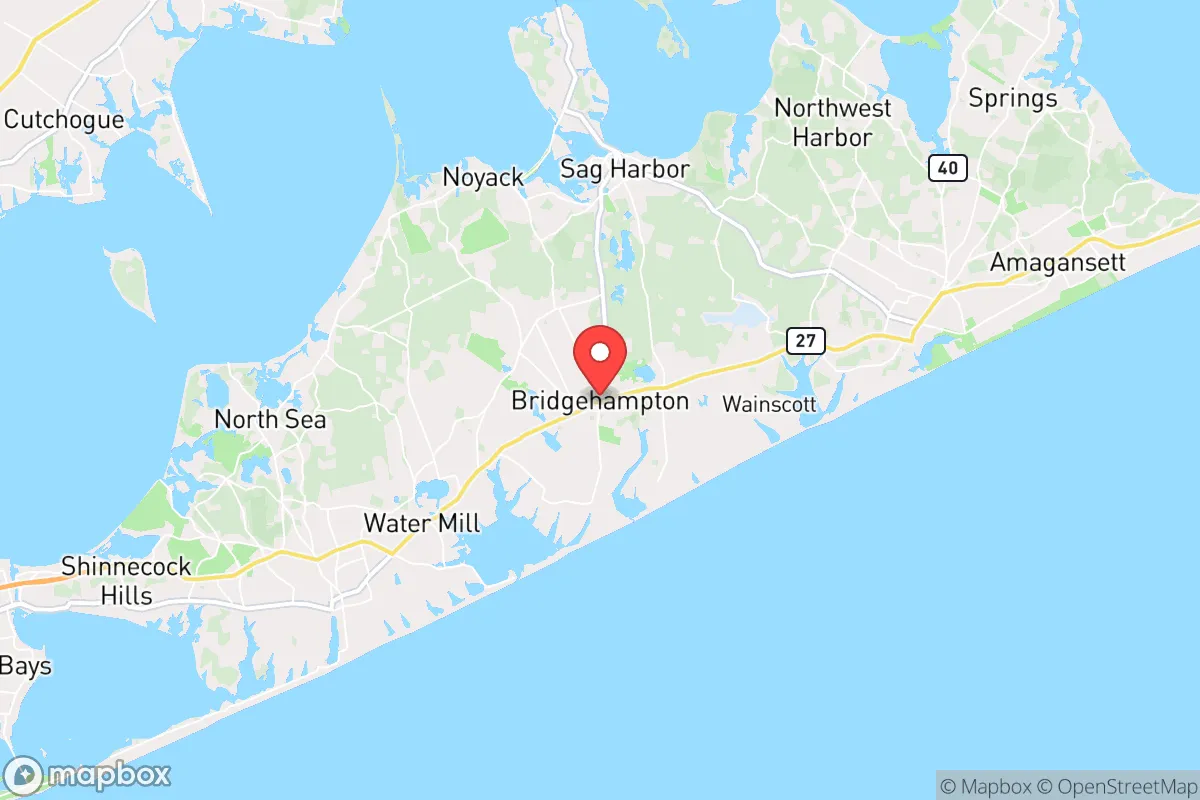
Bridgehampton’s population history begins with English Puritan settlers from the Connecticut Colony, who purchased land from the Shinnecock and Montaukett peoples in the mid-17th century. The original settlement, known as Mecox, was established in 1656 and centered on farming and whaling. The hamlet’s core—Bridgehampton Village—was laid out around the intersection of Montauk Highway and Ocean Road, with early homes clustered near the Presbyterian Church (founded 1670). By the 18th century, the area was dominated by yeoman farmers and a small number of wealthy landowners who built estates along Main Street and Hempstead Lane. The 19th century brought Irish and German immigrants who worked as farmhands and domestic servants, settling in modest cottages along School Street and Corwith Avenue. The arrival of the Long Island Rail Road in 1870 spurred a summer tourism economy, attracting wealthy New York City families who built shingle-style “cottages” in the Ocean Road and Dune Road areas. By 1900, the population was nearly entirely native-born white, with a small Black community centered around Hayground Road, descendants of freed slaves who had worked on local farms.
Modern era (post-1965)
The post-1965 period saw Bridgehampton’s population stabilize rather than boom, as zoning restrictions and high land values limited new development. The white population remained dominant, but the Hispanic share grew from near zero in 1970 to 16.4% today, driven by Mexican and Central American immigrants who arrived to work in landscaping, construction, and hospitality. These families concentrated in rental apartments and older homes along Scuttlehole Road and Hayground Road, forming a distinct working-class enclave. The Black population, historically small, declined from about 8% in 1990 to 5.4% today, as younger generations moved to more affordable areas. The Asian population (East/Southeast Asian) remains at 0.0%, and the Indian-subcontinent population is also 0.0%, reflecting the hamlet’s lack of professional-class immigration. The college-educated share surged from 35% in 1990 to 75.7% today, as wealthy professionals from New York City and other metro areas bought second homes, particularly in the Ocean Road and Dune Road luxury districts. This influx has driven up property taxes and home prices, pushing out many middle-class families and creating a bifurcated community of wealthy seasonal residents and a year-round service workforce.
The future
Bridgehampton’s population is likely to remain small and stable, with modest growth in the Hispanic share as the service economy expands. The white population, while still dominant, is aging—the median age is 52—and younger families are increasingly priced out. The Hispanic community is growing through natural increase and continued immigration, but is not assimilating into the white enclaves; instead, it is consolidating in the Hayground Road and Scuttlehole Road areas. The Black population is plateauing, with little in-migration. The Asian and Indian populations are expected to remain negligible, as the hamlet lacks the tech or academic jobs that attract these groups. Over the next 10-20 years, Bridgehampton will likely become more economically stratified, with the wealthy white seasonal population and the Hispanic service population becoming more entrenched in separate neighborhoods. The year-round population may shrink slightly as more homes are converted to vacation rentals.
For a conservative-leaning mover, Bridgehampton offers a stable, safe, and historically rooted community with strong schools and low crime, but at a high cost of entry. The hamlet is becoming a place of two distinct populations—wealthy seasonal residents and a working-class Hispanic service workforce—with little middle ground. New residents should expect a quiet, rural-suburban lifestyle with limited ethnic diversity and a strong sense of local tradition, but also high property taxes and a housing market that favors the affluent.

* Values derived from national, state, county, city and local statistics and may differ in a specific area. Last updated: 2026-04-24T01:49:11.000Z
Narrative content on this page is AI-generated and may contain mistakes. Verify any details that matter before acting on them.
ReloMaps may earn a commission from affiliate links at no extra cost to you.

