
Photo: Wikipedia
Political ClimatePolitical Climate in Bowling Green, KY
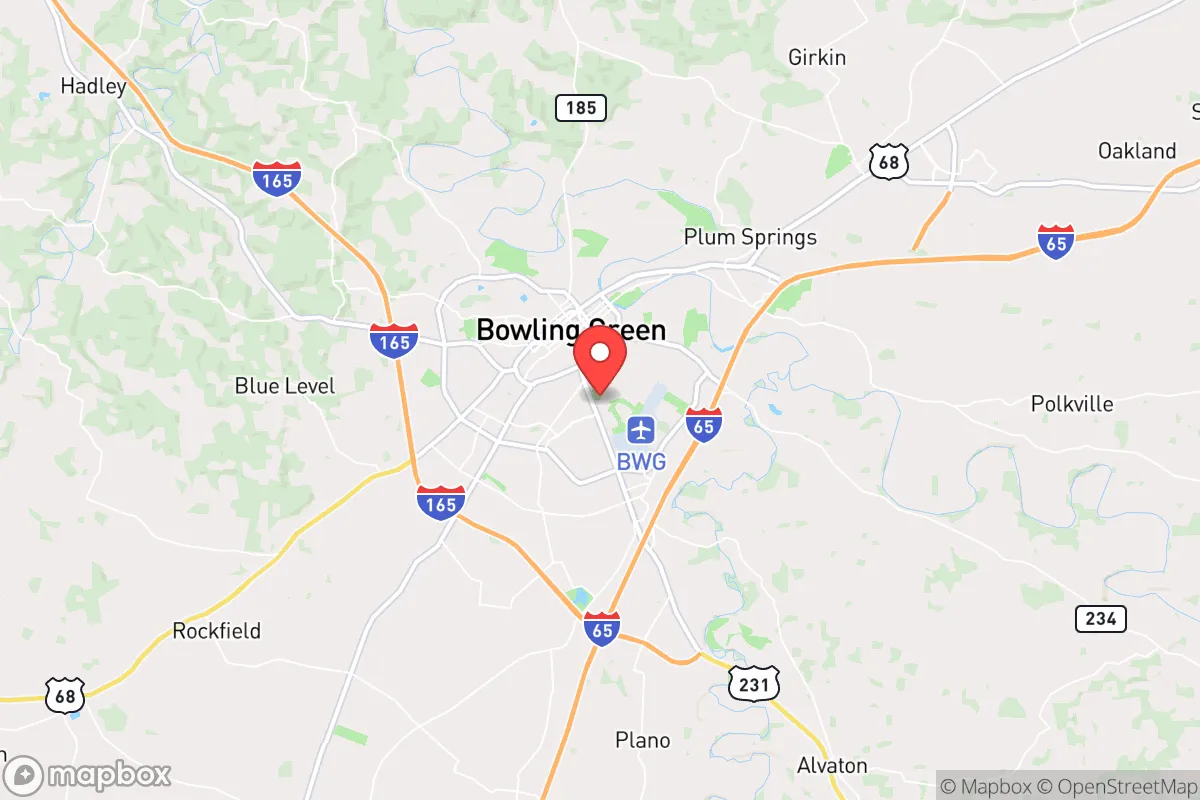
District shown is the primary district for this city’s centroid. Cities may span multiple districts.
Local Political AnalysisPolitical Analysis of Bowling Green, KY
Bowling Green has long been a solidly conservative stronghold, and that hasn't changed much. The Cook PVI rating of R+20 tells you everything you need to know about the political lean here—this area votes Republican by a wide margin, and it's been that way for as long as anyone can remember. You'll see that in local elections, state races, and national contests alike. The trajectory, though, is something worth watching: while the city itself has stayed reliably red, the surrounding county and nearby towns like Franklin and Scottsville are even more conservative, so Bowling Green actually feels a little more moderate by comparison. Still, the overall direction is steady, with no real signs of a major shift leftward anytime soon.
How it compares
If you're coming from a place like Nashville or Louisville, you'll notice the difference immediately. Bowling Green is a lot more traditional in its values, and the politics reflect that. Compared to Warren County as a whole, Bowling Green is slightly less conservative—there's a small but vocal progressive presence near Western Kentucky University, but it's not enough to swing anything. Drive 30 minutes south to Franklin, and you'll find an even deeper red, with fewer of the cultural tensions you might see in a college town. The contrast is sharpest when you look at Lexington or Louisville, where progressive policies have taken hold in city government. Here, you don't have to worry about the same kind of government overreach into personal freedoms—things like business regulations, property rights, and Second Amendment protections are taken seriously. The local leadership tends to keep a light touch, which is a big reason why people move here from more restrictive areas.
What this means for residents
For someone who values personal liberty and limited government, Bowling Green is a breath of fresh air. You won't see the kind of aggressive zoning or tax policies that pop up in blue cities. The local government generally stays out of your way, whether you're running a small business or just living your life. That said, there's been a slow creep of progressive ideas, especially around the university—things like diversity initiatives and climate resolutions that don't really reflect the broader community's priorities. It's not a crisis yet, but it's something to keep an eye on. Most residents I know just shrug it off because the practical impact is minimal. The real concern is if those ideas start bleeding into county-level policy, which hasn't happened so far. For now, you can count on low taxes, sensible gun laws, and a school system that isn't pushing an agenda on your kids.
One thing that sets Bowling Green apart is its strong sense of local identity. You don't see the same kind of political division here that you do in bigger cities. People tend to focus on what works, not on ideological battles. The Corvette plant and the logistics hub keep the economy humming, and that practical mindset carries over into politics. There's a healthy skepticism of federal overreach, and most folks prefer local control over schools, land use, and public safety. If you're looking for a place where you can live your life without the government breathing down your neck, this is it. Just don't expect the progressive wave to hit anytime soon—this town knows what it likes, and it's not interested in changing for the sake of change.

State Political ClimatePolitical Climate in Kentucky
State Political AnalysisPolitical Environment in the State
Kentucky has been a reliably red state for decades, but it’s not as simple as a straight-party vote. The state leans Republican by about 15-20 points in presidential elections—Trump won it by 26 points in 2024—but the real story is the slow, steady shift away from the old Democratic machine that once dominated state politics. Over the last 20 years, the state has moved from a purple-ish blue to a solid red, driven by rural voters abandoning the national Democratic Party and a growing conservative coalition in the suburbs and exurbs. That said, there are pockets of blue—Louisville and Lexington—that keep things interesting, and the state’s political culture is more about individual liberty and local control than any top-down party line.
Urban vs. rural divide
The political map of Kentucky is a textbook case of the urban-rural split. Louisville (Jefferson County) and Lexington (Fayette County) are the two blue anchors, each voting Democratic by 15-20 points in recent elections. These metros are home to the state’s universities, healthcare systems, and a growing professional class—think UPS Worldport, Humana, and the University of Kentucky. But drive 20 minutes outside either city, and you’re in deep red territory. Bowling Green, home to Western Kentucky University and a growing manufacturing base (GM’s Corvette plant), is a conservative stronghold that’s been trending redder. Northern Kentucky—the Cincinnati suburbs like Covington, Florence, and Independence—leans Republican but has a more moderate, business-friendly flavor. The real red meat is in the eastern coal counties (Pike, Harlan, Letcher) and the western Purchase region (Paducah, Murray), where Trump won by 50-60 points. The Louisville suburbs like Oldham County and Shelby County are reliably red, while the inner-ring suburbs of Lexington (like Jessamine County) are shifting right as well. The divide isn’t just about geography—it’s about culture. Rural Kentuckians see the state as a last bastion of self-reliance, while urbanites are more concerned with services and infrastructure.
Policy environment
Kentucky’s policy environment is a mixed bag for conservatives. On the plus side, the state has a flat income tax that’s been cut from 6% to 4% over the last few years, with a path to elimination by 2029. There’s no state property tax, and the sales tax is a modest 6%. The regulatory climate is business-friendly, especially for manufacturing and logistics—Kentucky is a right-to-work state, and the legislature has preempted local labor ordinances. On education, the state passed a school choice program in 2022 (the “Education Opportunity Account Act”), but it’s been tied up in court battles. Homeschooling and private schools are popular, especially in the Louisville and Lexington suburbs. Healthcare is a sore spot: the state expanded Medicaid under the Affordable Care Act, and while there’s been talk of work requirements, they haven’t stuck. Election laws are solid—voter ID is required, and the state has cleaned up its voter rolls. The legislature also passed a constitutional carry law in 2019, allowing permitless concealed carry. Overall, the policy direction is conservative, but the pace can be frustrating for those who want faster movement on school choice and tax reform.
Trajectory & freedom
Kentucky is becoming more free in several key areas, but there are warning signs. The 2019 constitutional carry law was a big win for gun rights, and the state has preempted local gun ordinances—so Louisville can’t pass its own magazine bans. Parental rights got a boost with the 2022 “Parents’ Bill of Rights,” which requires schools to notify parents about curriculum changes and medical services. Medical freedom took a hit during COVID—Governor Andy Beshear (a Democrat) imposed lockdowns and mask mandates that were controversial, but the legislature has since passed laws limiting emergency powers. Property rights are strong, with no statewide zoning and low property taxes. The biggest concern is the growing influence of federal money—Kentucky has taken billions in infrastructure and broadband funding, which comes with strings attached. The state also has a high incarceration rate and a criminal justice system that can feel heavy-handed. On the whole, Kentucky is trending toward more personal liberty, but the battle is ongoing, especially in the courts over school choice and abortion (which is now banned with limited exceptions).
Civil unrest & political movements
Kentucky has seen its share of political flashpoints, but nothing like the chaos in Portland or Seattle. The 2020 Breonna Taylor protests in Louisville were the biggest—they lasted for months, with some violence and property damage, and led to a state-level ban on no-knock warrants. That movement was largely urban and left-leaning, and it deepened the rural-urban divide. On the right, the “Let Them Play” movement in 2020-2021 saw parents and students protesting school closures and mask mandates, especially in rural counties like Bullitt and Nelson. There’s also a strong Second Amendment sanctuary movement—over 70 counties have passed resolutions vowing not to enforce federal gun laws. Immigration politics are muted—Kentucky has a small foreign-born population (about 4%), but there’s been tension in places like Louisville’s Shelby Park neighborhood, where a growing refugee community has sparked some local pushback. Election integrity is a hot topic—the 2020 election saw no major fraud, but the legislature passed stricter voter ID laws and banned ballot drop boxes. You won’t see daily protests, but the political energy is real, especially around school board meetings and county commission hearings.
Projection
Over the next 5-10 years, Kentucky will likely stay red but get more complicated. In-migration is picking up—people are moving from Illinois, Ohio, and California to places like Bowling Green, Richmond, and the Lake Cumberland area (Somerset, Monticello). These newcomers tend to be conservative-leaning but may bring different priorities, like more emphasis on environmental quality or tech infrastructure. The Louisville and Lexington suburbs will continue to grow, and they’ll be the battlegrounds for future elections. The biggest wild card is demographics: the state’s population is aging, and younger people are leaving rural areas for cities or out of state. That could shift the balance toward urban priorities over time. School choice will likely expand, and the income tax may be eliminated. But the state’s reliance on federal funding—especially for healthcare and infrastructure—will be a constant tension. If the national Democratic Party continues to move left, Kentucky’s rural voters will only dig in deeper. A new resident moving in now should expect a state that’s conservative but not libertarian, with a strong sense of local community and a government that’s generally hands-off—but not afraid to step in on social issues.
Bottom line for a new resident: Kentucky offers a high degree of personal freedom—low taxes, strong gun rights, and a culture of self-reliance—but it’s not a free-for-all. You’ll find a welcoming community in the suburbs and rural areas, but the cities have a different vibe. If you’re looking for a place where your voice matters and the government stays out of your business, Kentucky is a solid bet. Just be prepared for the occasional political fight—especially over schools and local control—and know that the state’s trajectory is on your side, as long as you stay engaged.
* Values derived from national, state, county, city and local statistics and may differ in a specific area. Last updated: 2026-04-21T09:51:58.000Z
Narrative content on this page is AI-generated and may contain mistakes. Verify any details that matter before acting on them.
ReloMaps may earn a commission from affiliate links at no extra cost to you.

