 Popular
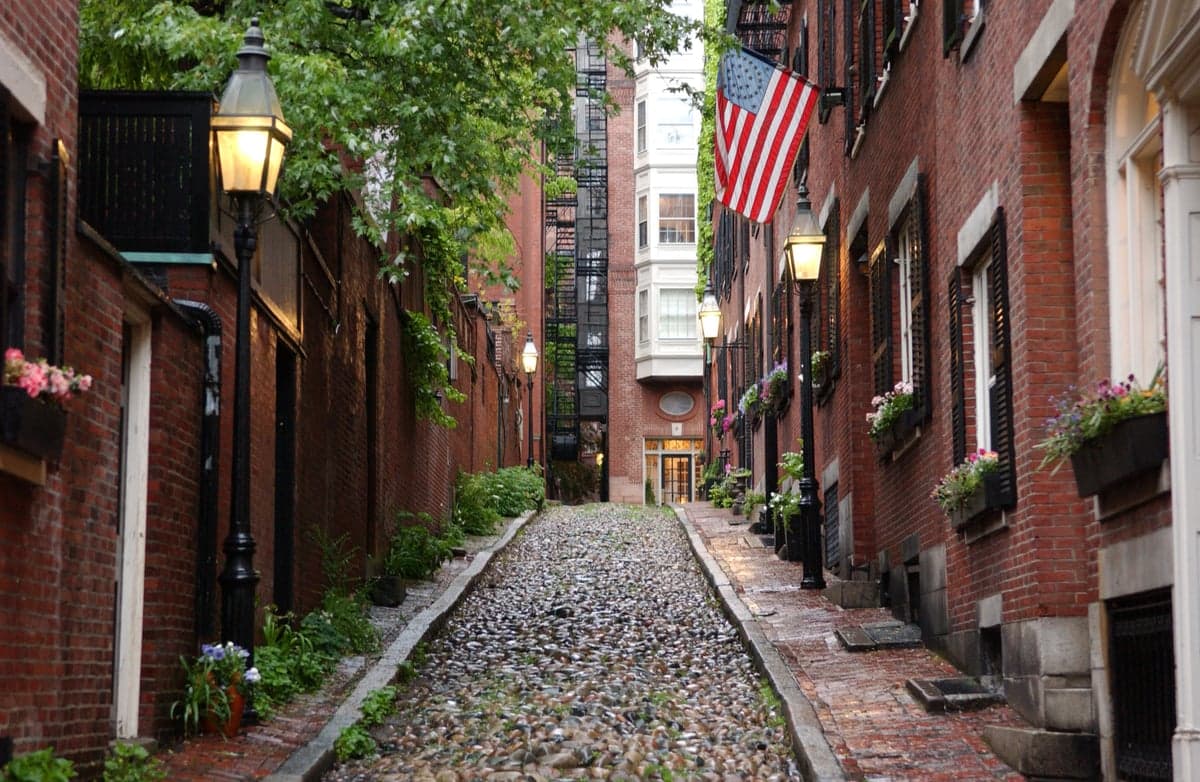
Photo: Wikipedia
Personal Sovereignty in Boston, MA
Viable for self-reliance. Generally workable, though some barriers may limit total independence.
What does Personal Sovereignty tell us?
Personal Sovereignty measures your capacity for self-reliance and independence with minimal government friction. Higher scores mean fewer barriers between you and the way you want to live... but it assumes you have the space you need and good neighbors.
What does this tell us?
Personal Sovereignty measures your capacity for self-reliance and independence with minimal government friction. Higher scores mean fewer barriers between you and the way you want to live... but it assumes you have the space you need and good neighbors.
State Policy
Energy independence: Importer (5% of energy produced in-state)
Personal Liberty
Homesteading

Personal Liberty Analysis
Boston, Massachusetts, presents a challenging environment for personal sovereignty, particularly for those with a survivalist or prepper mindset who prioritize autonomy and self-reliance. The city operates within a state framework that consistently ranks among the most restrictive in the nation for individual liberties, from firearm ownership to medical choice and property rights. For a conservative-leaning individual or family evaluating relocation, Boston’s dense urban core and deep-blue political culture mean that government oversight touches nearly every aspect of daily life, from what you can build on your land to how you can defend your home. While the city offers world-class infrastructure and economic opportunity, the trade-off is a significant erosion of the personal freedoms many consider essential for long-term security and independence.
Tax burden and regulatory posture: How Massachusetts restricts financial autonomy
Massachusetts imposes one of the heaviest tax burdens in the country, which directly impacts a household’s ability to build wealth and self-sufficiency. The state’s flat income tax rate of 5% on all earned income, combined with a 6.25% sales tax and some of the highest property taxes in the nation—averaging roughly 1.2% of assessed home value annually in Boston proper—means a significant portion of earnings goes to the government before you can allocate it to preparedness, land, or supplies. Boston’s regulatory environment is equally dense: strict zoning laws, building codes, and environmental regulations make it difficult to modify property for self-reliant purposes like installing solar panels, rainwater catchment systems, or even keeping backyard chickens without navigating a labyrinth of permits. The state’s “millionaire’s tax” (an additional 4% surtax on income over $1 million) signals a broader willingness to extract wealth from productive citizens, and the city’s high cost of living—median home prices exceeding $800,000—further constrains financial freedom. For a prepper, this tax-and-regulate posture means less capital for stockpiling, land acquisition, or bug-out property elsewhere.
Self-defense and gun law specifics: What Boston’s restrictions mean for personal protection
Boston is one of the most difficult places in the United States to legally own or carry a firearm for self-defense, a critical concern for anyone prioritizing personal sovereignty. Massachusetts operates under a “may-issue” licensing system for both firearms and ammunition, and Boston’s police department is notoriously restrictive in granting licenses. The city requires a License to Carry (LTC) for any handgun, and approval is discretionary—applicants must demonstrate a “proper purpose,” which does not include general self-defense. In practice, this means many law-abiding residents are denied or face years-long delays. The state also bans “assault weapons” and large-capacity magazines, and imposes a 10-round limit on magazines. Furthermore, Massachusetts has no “Stand Your Ground” law; instead, it imposes a “duty to retreat” if safely possible before using deadly force. For a survivalist, this legal landscape means that even if you manage to obtain a firearm, your ability to use it in a home defense or civil unrest scenario is heavily constrained by law. The state’s strict storage laws also require firearms to be locked when not in use, potentially compromising rapid access during an emergency. For those who view the Second Amendment as a cornerstone of liberty, Boston is a hostile jurisdiction.
Self-reliance and homesteading viability: Lot sizes, zoning, and off-grid feasibility
Boston’s urban density and zoning codes make traditional homesteading or off-grid living nearly impossible within city limits. The average residential lot size in Boston is less than 0.1 acres, with most housing consisting of multi-unit buildings, condos, or small single-family homes on tiny plots. Zoning regulations prohibit agricultural activities on most residential parcels; keeping livestock like chickens or goats requires a special permit that is rarely granted, and even vegetable gardens can be restricted by homeowners’ associations or city ordinances. Off-grid systems such as solar panels, composting toilets, or rainwater collection face significant regulatory hurdles—Boston requires building permits for solar installations, and rainwater harvesting is limited by state water rights laws. The city’s reliance on centralized utilities (grid electricity, municipal water, sewer) means that a grid-down scenario would leave residents without basic necessities. For a prepper seeking self-sufficiency, the practical reality is that Boston is a consumption hub, not a production hub. The best strategy for a Boston-based survivalist is to view the city as a temporary base for income generation while securing a rural property in a less restrictive state—such as New Hampshire or Maine—for actual homesteading and long-term resilience.
Personal liberties: Parental rights, medical autonomy, speech, and property
Massachusetts consistently ranks as one of the most restrictive states for personal liberties across multiple domains. On parental rights, the state has a strong track record of intervening in family decisions; for example, Massachusetts mandates that parents cannot opt their children out of comprehensive sex education or LGBTQ-inclusive curricula, and the state’s child protective services have broad authority to investigate families. Medical autonomy is heavily curtailed: Massachusetts was one of the first states to mandate COVID-19 vaccines for school attendance and healthcare workers, and it maintains strict vaccine requirements for children. The state also has a “right to shelter” law that can compel property owners to house homeless individuals under certain conditions, a direct infringement on property rights. Free speech is protected under the First Amendment, but Boston’s city government has imposed permit requirements and buffer zones around abortion clinics that have been used to limit peaceful protest. Property rights are further eroded by rent control measures in some neighborhoods and by the state’s “Chapter 40B” law, which allows developers to bypass local zoning to build affordable housing, often reducing property values for existing homeowners. For a conservative individual, these policies represent a systematic reduction of personal sovereignty in favor of state authority.
In the broader landscape of American cities, Boston ranks among the lowest for personal sovereignty, comparable to San Francisco or New York City in its regulatory density and hostility to individual autonomy. For a survivalist or prepper, the city offers excellent economic opportunities and access to world-class medical care, but these come at the cost of severely constrained freedoms in self-defense, property use, medical choice, and family decision-making. The strategic relocation advice for a conservative-leaning individual is clear: Boston is best approached as a temporary economic hub, not a permanent home for those seeking to build a self-reliant, sovereign lifestyle. The surrounding states of New Hampshire and Maine offer far more favorable environments for gun rights, homesteading, and lower taxes, making them more viable long-term bases for personal liberty and preparedness.

* Values derived from national, state, county, city and local statistics and may differ in a specific area. Last updated: 2026-04-15T23:33:52.000Z
Narrative content on this page is AI-generated and may contain mistakes. Verify any details that matter before acting on them.
ReloMaps may earn a commission from affiliate links at no extra cost to you.

