Photo: Wikipedia
Demographics of Birch Run, MI
Affluence Level in Birch Run, MI
A middle-class area roughly in line with national averages across income, home values, education, and employment.
People of Birch Run, MI
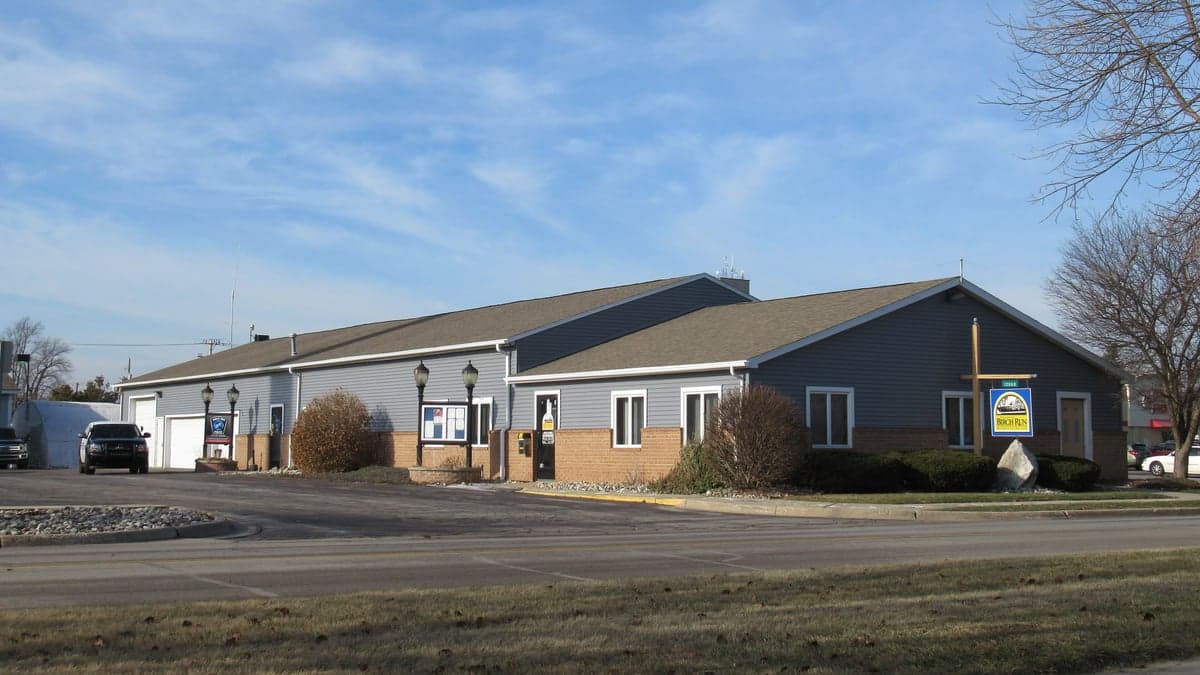
Birch Run, Michigan, is a small, tight-knit village of 1,236 residents where the population is overwhelmingly White (92.5%) and native-born (foreign-born residents make up just 0.6%). The community retains a distinctly rural, blue-collar character, shaped by its agricultural roots and the steady presence of the automotive industry in the surrounding Saginaw Valley. With a college attainment rate of 16.1%, well below the national average, the village’s identity is grounded in practical trades, family-owned businesses, and a strong local church and school network.
How the city was settled and grew
Birch Run’s original population arrived in the 1850s and 1860s, drawn by the promise of fertile farmland and the expansion of the Pere Marquette Railroad. The earliest settlers were primarily Yankees from New York and New England, followed by a wave of German immigrants who cleared the dense forests and established the area’s first farms. These German families built the core of what is now the Old Village District along Main Street, where many of the original 19th-century homes and the historic Birch Run United Methodist Church still stand. A smaller contingent of Polish immigrants arrived in the 1880s and 1890s, settling just east of the village center in what locals still call the Polish Flats area, a low-lying neighborhood along the Birch Run River where they worked in local sawmills and sugar beet fields. By 1900, the population had reached roughly 400, and the village was incorporated in 1903, with the economy revolving around agriculture, lumber, and the railroad depot.
Modern era (post-1965)
After the 1965 Immigration and Nationality Act, Birch Run saw virtually no new foreign-born arrivals — the foreign-born share today is a mere 0.6%, unchanged from the 1970s. Instead, the village’s modern demographic story is one of domestic out-migration and modest suburbanization. The construction of I-75 in the early 1960s made Birch Run a convenient stop for travelers, leading to the development of the Birch Run Premium Outlets area (opened 1986) and a strip of motels and fast-food restaurants along the highway. This commercial corridor drew a small number of new residents — mostly White families from Flint and Saginaw seeking lower taxes and quieter streets — into subdivisions like Pine Ridge Estates (built in the 1990s) and Meadowbrook Acres (early 2000s). The Hispanic population, now at 5.1%, began to appear in the 1990s, primarily as migrant farmworkers who later settled year-round in rental properties along Gera Road and the southern edge of the village. The Black population remains very small at 1.5%, concentrated in a handful of households in the Old Village District, with no distinct ethnic neighborhood forming. The Asian and Indian populations are effectively zero, reflecting the village’s limited economic pull for professional immigrants.
The future
Birch Run’s population is projected to remain stable or decline slightly over the next 10–20 years, mirroring trends across rural Michigan. The village’s age profile is aging — the median age is 42, and the school district has seen enrollment drop by roughly 15% since 2010. The Hispanic share is likely to grow slowly, potentially reaching 8–10% by 2040, as families from the surrounding agricultural sector continue to settle in the Gera Road corridor. However, the overall racial and ethnic composition will remain overwhelmingly White, as the village lacks the job base — no major employers beyond retail and a few light industrial shops — to attract significant domestic or international migration. New housing construction is limited to a handful of custom-built homes on large lots in Birch Run Estates, a small subdivision on the village’s west side, but there is no planned development that would substantially increase density or diversity. The cultural identity of the village is likely to remain rooted in its rural, conservative, and family-oriented character, with the Birch Run Area Schools and local churches continuing to serve as the primary community anchors.
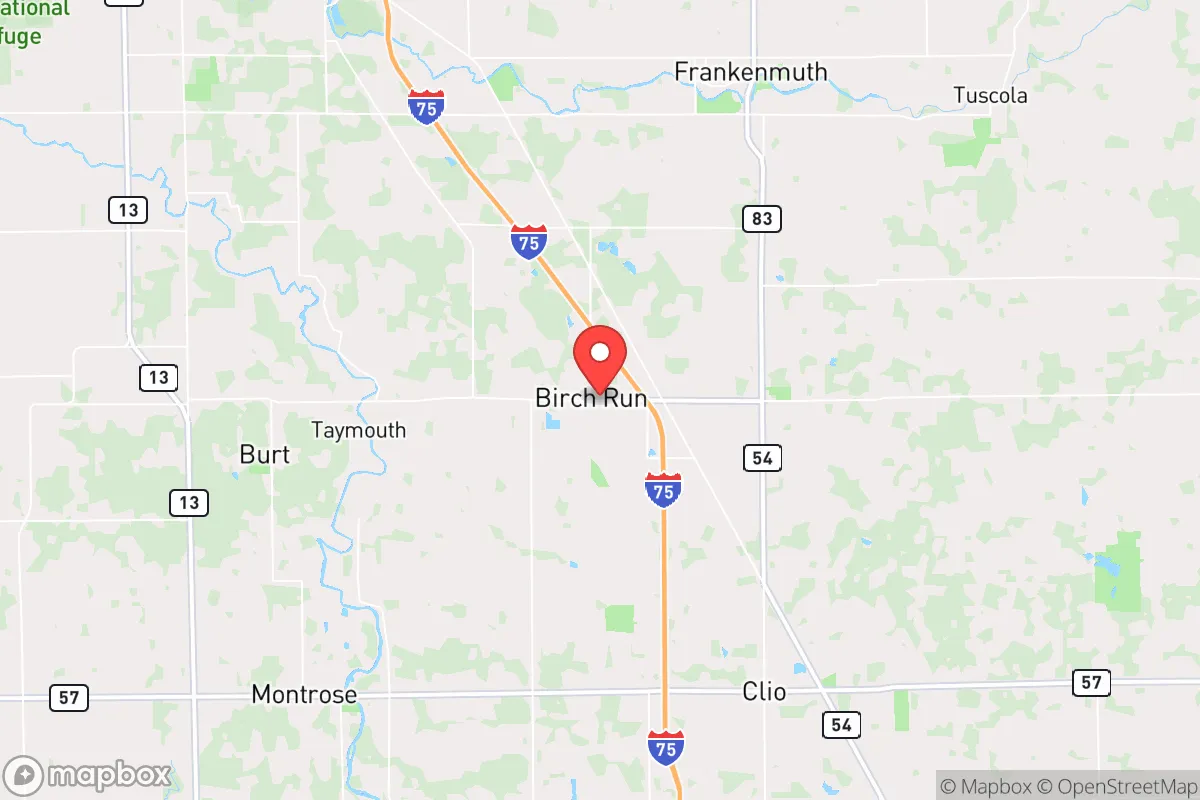
For someone moving in now, Birch Run offers a stable, low-crime, and affordable environment — median home values hover around $130,000 — but it is not a place of rapid demographic change or economic dynamism. The village is best suited for those seeking a quiet, small-town lifestyle within commuting distance of Saginaw (15 minutes) or Flint (25 minutes), and who value a community where nearly everyone knows their neighbors and the pace of life is slow. The population is not diversifying quickly, and the future points toward continued stability rather than transformation.

* Values derived from national, state, county, city and local statistics and may differ in a specific area. Last updated: 2026-08-17T17:31:13.000Z
Narrative content on this page is AI-generated and may contain mistakes. Verify any details that matter before acting on them.
ReloMaps may earn a commission from affiliate links at no extra cost to you.

