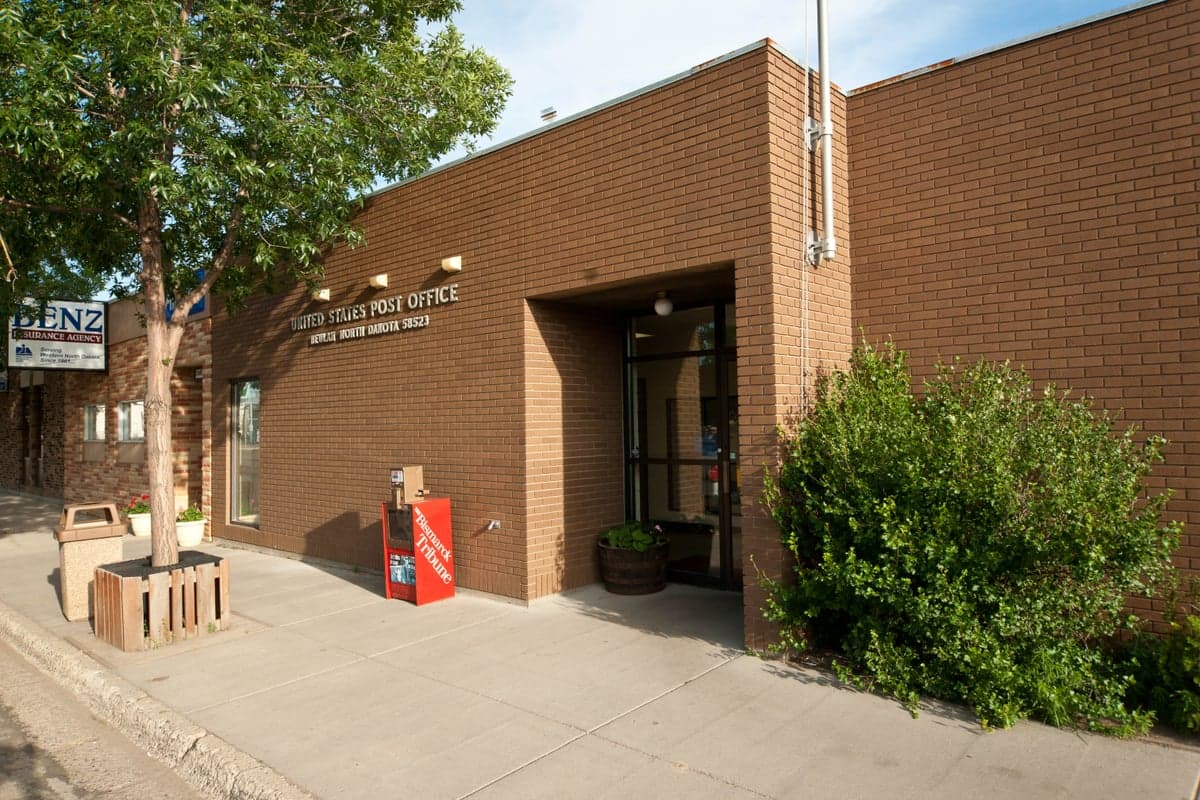
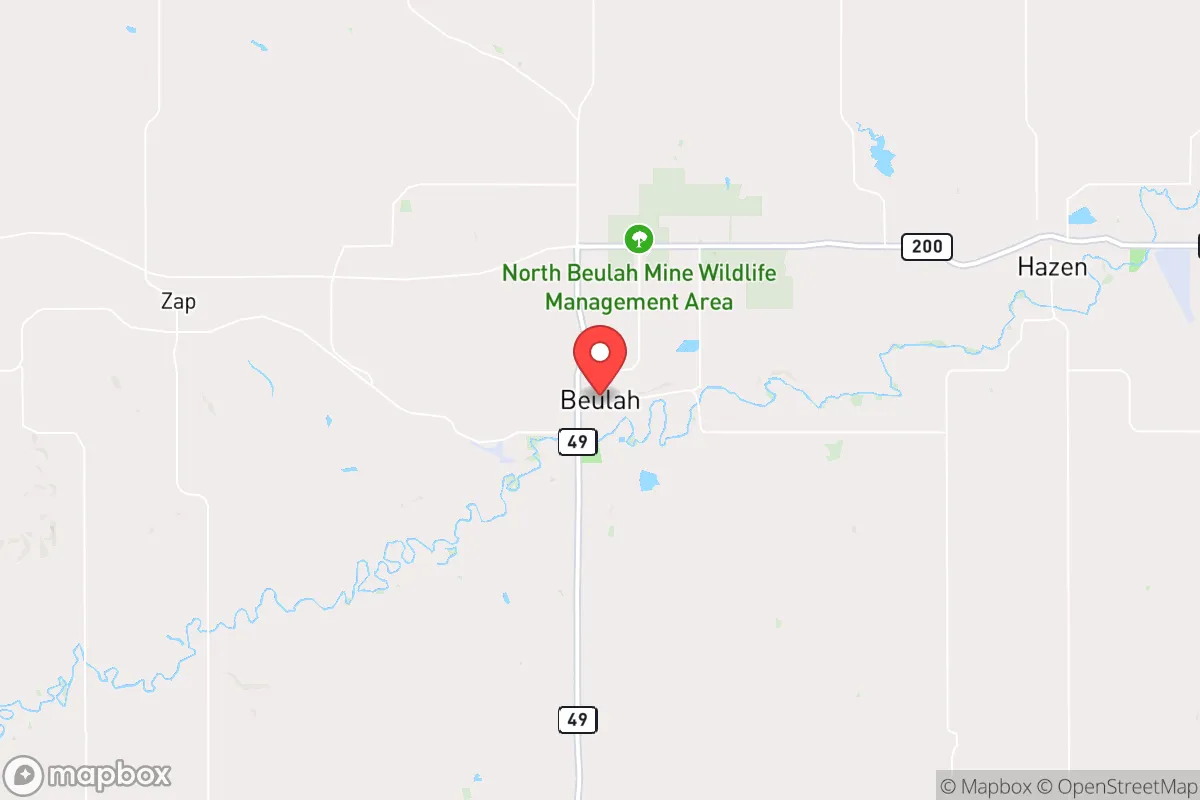
Photo: Wikipedia
Strategic Assessment of Beulah, ND
Strong survivability profile. Good buffer from population centers, with manageable environmental and tactical risks.
What does the Strategic Assessment tell us?
Our Strategic Assessment grades tactical survivability of an area. Major population centers, military targets, fallout zones, natural disasters, and border exposure all drive risk — lower exposure means a more defensible position in a crisis.
This is heavily inspired by Joel Skousen's Strategic Relocation book. Highly recommended you checkout the book ($)What does this tell us?
Our Strategic Assessment grades tactical survivability of an area. Major population centers, military targets, fallout zones, natural disasters, and border exposure all drive risk — lower exposure means a more defensible position in a crisis.
This is heavily inspired by Joel Skousen's Strategic Relocation book. Highly recommended you checkout the book ($)Strategic Pillars

Key Distances
Regional Safe Places
Below is our recommended "safe zones" in North Dakota and the surrounding area based on our strategic heuristics. For most people, it's unrealistic to live in a “safe zone” full-time due to work, family or other personal reasons. They tend to be more rural. However, many of these areas are perfect for second homes and retreat properties that double as a vacation home or even a short-term rental.
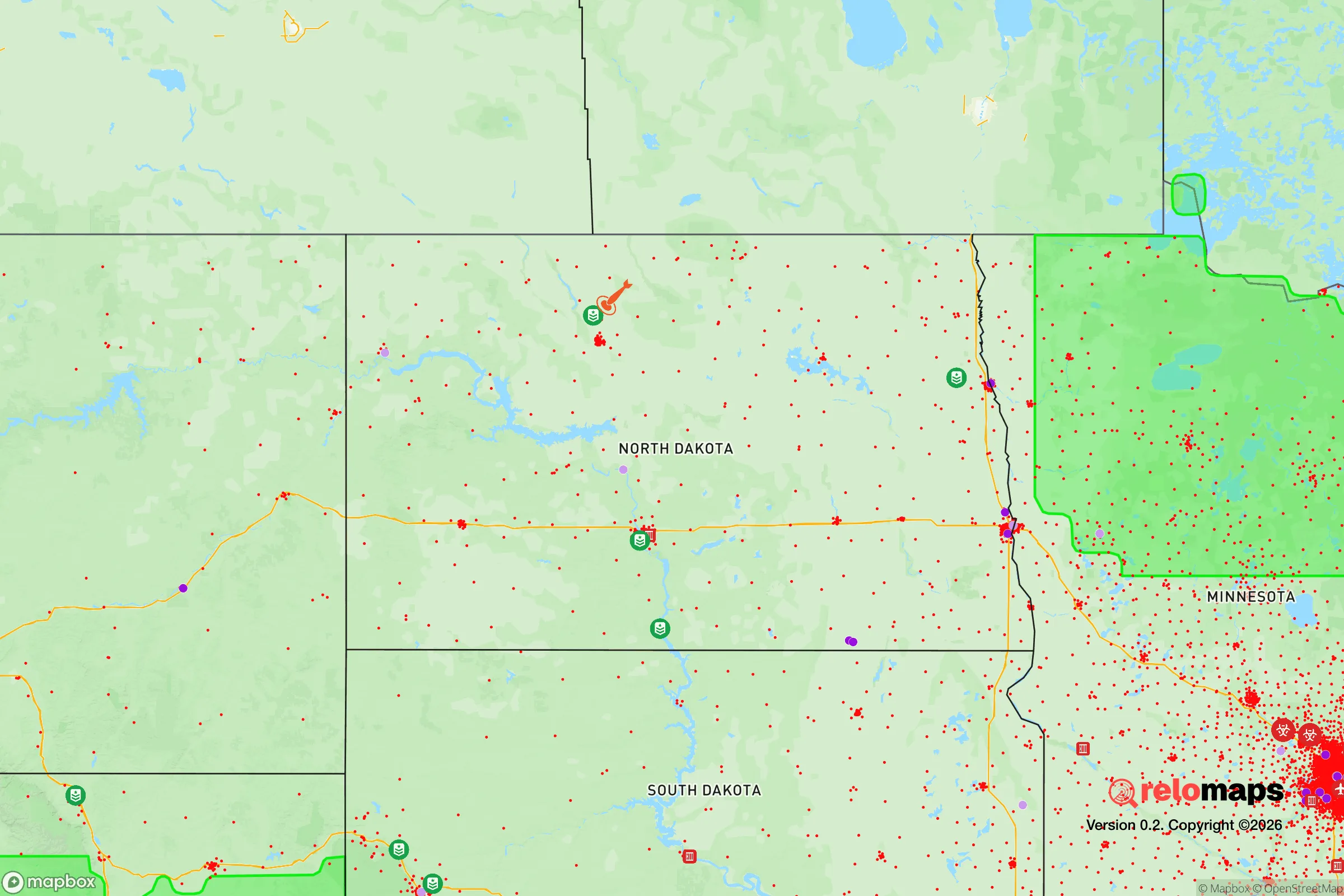
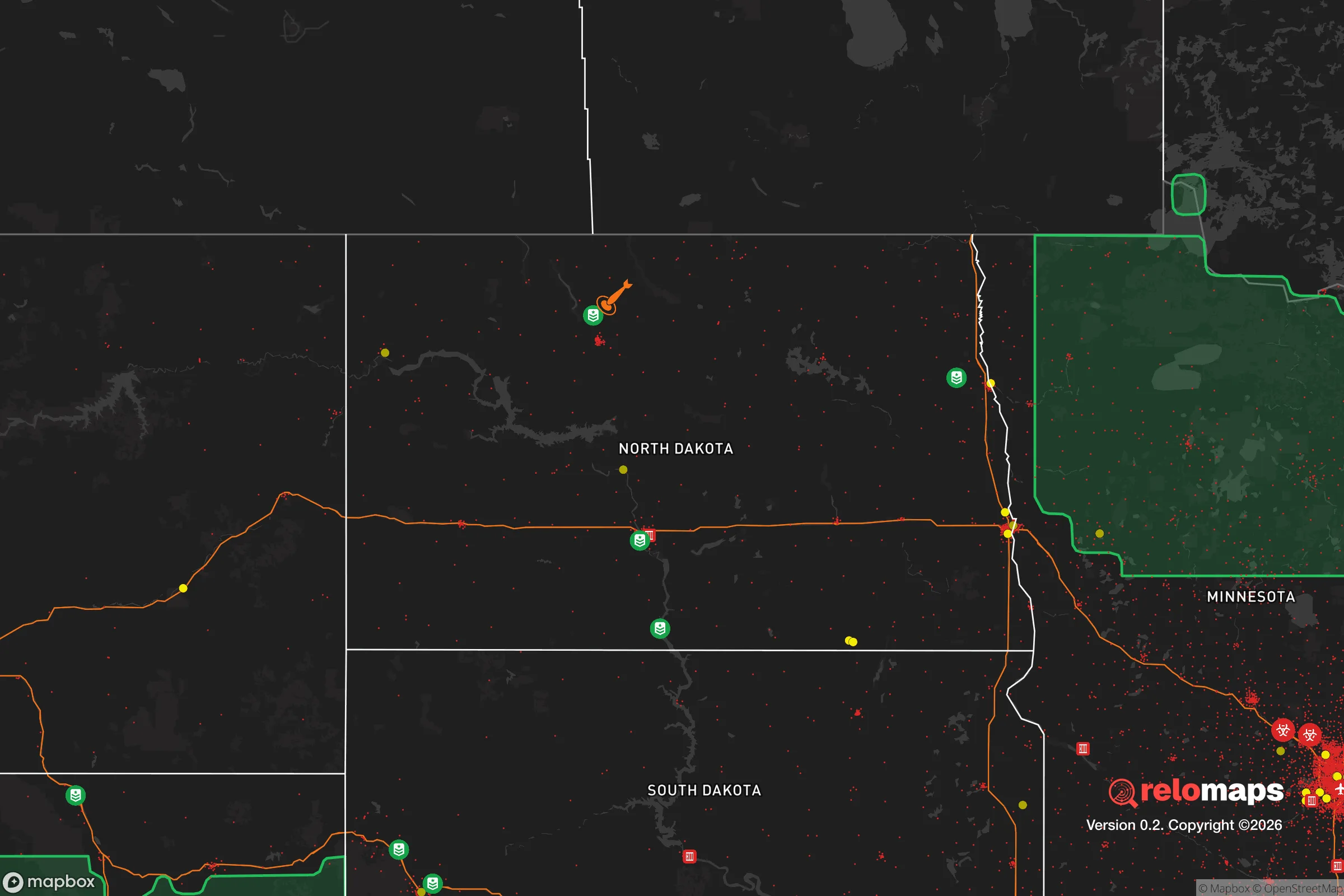


Important Note: For informational purposes only. This does not mean nothing bad ever happens in the green zones. Please use common sense. This is based on public data and modeled with AI. We tried to take a conservative approach but mistakes happen. We update this regularly as new information becomes available.
Solar Generator Recommendations
Backup power matters more here than in safer locations. We've picked three solar generators across budgets and capacity tiers — start with the budget unit if you only need a few essentials, or step up if you want to run a fridge and HVAC for days at a time.

Jackery Portable Power Station Explorer 300
Budget OptionPower on the Go: Weighing only 11 lbs, it's convenient to set up and store with book-sized foldable solar panels

BLUETTI Portable Power Station AC180
Designed for both indoor and outdoor scenarios, AC180 is highly capable as it has a robost capacity and continuous output power.

EF ECOFLOW DELTA Pro Ultra Power Station
Upgraded PickEcoFlow DELTA Pro Ultra is a whole-home energy system designed to grow with your family. Integrated with the Smart Home Panel 2, it scales to meet your evolving energy needs — keeping your home powered, intelligent, and secure through every stage of life.
We earn a commission, at no additional cost to you.
Strategic Assessment Analysis
Beulah, North Dakota, offers a compelling strategic position for those prioritizing resilience and self-sufficiency in an uncertain future. Situated in Mercer County, roughly 70 miles northwest of Bismarck, this town of roughly 3,000 people sits on the edge of the Missouri River Valley, providing a blend of isolation and access that is rare in the Lower 48. Its location places it far from major population centers like Minneapolis or Denver, yet within a manageable distance to regional infrastructure, making it a strong candidate for a relocation focused on weathering civic unrest, economic collapse, or large-scale disasters. The area's low population density and harsh climate naturally filter out those unprepared for a serious self-reliant lifestyle, which is a net positive for a community-minded prepper.
Geographic position and natural advantages for long-term survival
Beulah's geographic position is its primary strategic asset. It sits on the western edge of the Missouri Plateau, with the Missouri River and Lake Sakakawea to the north and west, providing a natural water buffer and a massive freshwater reservoir. The town is surrounded by agricultural land—primarily wheat, corn, and cattle ranching—which means local food production is a reality, not a hypothetical. The area's elevation (around 1,800 feet) and distance from any major fault lines or coastal storm zones mean it is virtually immune to earthquakes, hurricanes, and tsunamis. The climate is harsh, with winter temperatures frequently dropping below -20°F, but this cold acts as a natural barrier to large-scale migration during a crisis; few will attempt a winter move to North Dakota. The region's flat to gently rolling terrain also offers good lines of sight for security, and the sparse tree cover reduces the risk of wildfires spreading unchecked. For a relocator, the key takeaway is that Beulah is not a target—it is a hard-to-reach, hard-to-live-in place that rewards preparation and grit.
Risks, exposures, and proximity to fallout-relevant landmarks
No location is without risk, and Beulah has specific exposures that a strategic relocator must weigh. The most immediate concern is the proximity to the Dakota Gasification Company plant, a major synthetic natural gas facility located just south of town. This industrial site, while a key employer, also represents a potential target for sabotage or a source of hazardous material release during a crisis. Additionally, the Coal Creek Station, a large coal-fired power plant about 20 miles north, and the nearby Antelope Valley Station are critical infrastructure points that could draw attention in a grid-down scenario. On the nuclear front, Beulah is roughly 150 miles from the Fort Calhoun Nuclear Station in Nebraska and about 200 miles from the Prairie Island Nuclear Plant in Minnesota—far enough to avoid immediate fallout from a worst-case event, but close enough that prevailing winds could carry contamination in a major release. The town's location along the BNSF Railway mainline is a double-edged sword: it provides a supply route but also a vector for potential unrest or military movement. For a prepper, these risks are manageable with proper planning—stockpiling water filtration, maintaining a bug-out vehicle, and having a secondary retreat site further north or west—but they cannot be ignored.
Practical resilience for a relocator: food, water, energy, and defensibility
Beulah's practical resilience is where it shines for a serious relocator. Water is abundant—the Missouri River and Lake Sakakawea are within a 20-minute drive, and the local aquifer is deep and reliable. Most homes in the area have private wells or access to rural water systems, and with a hand pump or solar-powered well setup, a family can secure a long-term water supply. Energy is a major plus: Mercer County is home to the aforementioned coal plants and the gasification facility, meaning the local grid is robust, but more importantly, the region has strong wind resources and ample space for solar panels. Many rural properties already have backup generators, and the local culture is one of self-reliance—neighbors help neighbors, and the county's emergency services are well-organized but not overburdened. Food production is viable: the growing season is short (about 120 days), but cold-hardy crops like potatoes, carrots, and kale thrive, and the surrounding ranches mean beef and bison are available locally. The town itself has a small grocery store, a hardware store, and a few basic services, but a relocator should plan to be largely self-sufficient within a year. Defensibility is good: the town is compact, with a single main highway (ND-49) providing access, and the surrounding farmland offers open fields that make approach detection easy. The local population is predominantly conservative, gun-friendly, and community-oriented—a significant advantage for those seeking like-minded neighbors in a crisis. The Mercer County Sheriff's Office is responsive, but in a widespread collapse, the real security will come from neighborhood watch and mutual aid networks.
The overall strategic picture for a conservative relocator
Beulah, ND, presents a strong strategic option for a conservative-leaning individual or family looking to relocate with a prepper mindset. It is not a glamorous choice—the winters are brutal, the amenities are sparse, and the industrial infrastructure nearby requires awareness—but it offers a rare combination of isolation, natural resources, and a community that values self-sufficiency. The town's distance from major urban centers (over 400 miles from Minneapolis, 200 miles from Fargo) means it is unlikely to see the kind of mass migration that could overwhelm smaller towns during a crisis. The local economy, anchored by energy and agriculture, is stable and less susceptible to the boom-and-bust cycles of coastal regions. For a relocator, the key is to arrive prepared: bring a reliable 4x4 vehicle, stockpile at least six months of supplies, invest in a good heating system (wood or propane), and build relationships with neighbors before trouble hits. Beulah is not a bug-out location for a weekend—it is a long-term homesteading play for those willing to endure the cold and the quiet. If the country faces a prolonged period of unrest, economic collapse, or natural disaster, this corner of North Dakota will likely remain a relatively safe harbor, provided you have the grit to stay and the foresight to prepare.

* Values derived from national, state, county, city and local statistics and may differ in a specific area. Last updated: 2026-04-19T05:34:48.000Z
Narrative content on this page is AI-generated and may contain mistakes. Verify any details that matter before acting on them.
ReloMaps may earn a commission from affiliate links at no extra cost to you.

