 Popular
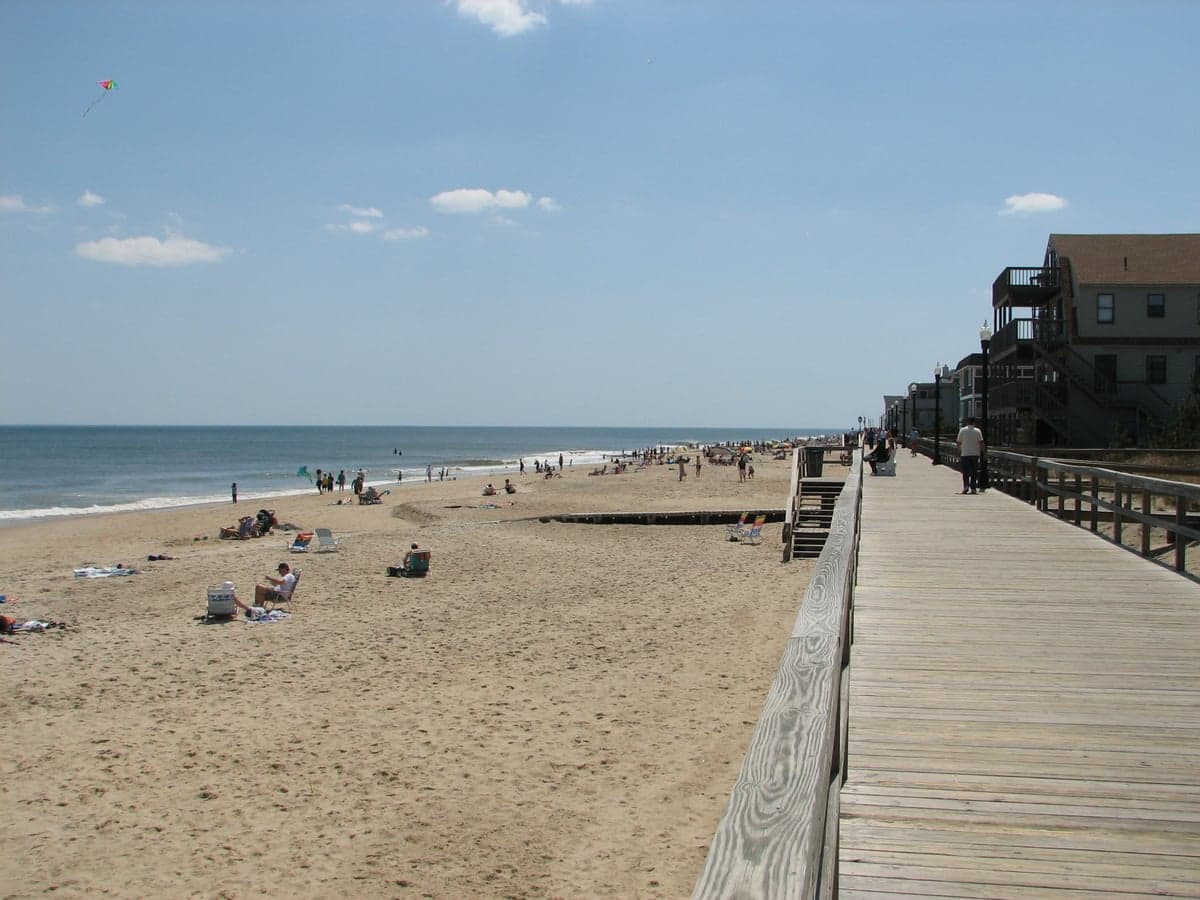
Photo: Wikipedia
Demographics of Bethany Beach, DE
Affluence Level in Bethany Beach, DE
An upper-middle-class area. Household wealth, education levels, and homeownership run ahead of national benchmarks.
People of Bethany Beach, DE
The 923 residents of Bethany Beach, Delaware form one of the most homogeneous small-town populations on the Mid-Atlantic coast, with 95.6% identifying as white and a foreign-born share of just 1.7%. This is a community defined by seasonal tourism, second-home ownership, and a retiree-heavy permanent base, where 64.8% of adults hold a college degree. The town’s character is less a year-round melting pot and more a quiet, affluent enclave where summer crowds from the Washington-Baltimore corridor vastly outnumber the permanent population. For a conservative-leaning individual or family, Bethany Beach offers a stable, low-diversity environment with strong property values and a deliberate small-town pace.
How the city was settled and grew
Bethany Beach was founded in 1901 as a planned Methodist summer resort, not as a fishing village or agricultural settlement. The original population consisted of middle-class white families from Washington, D.C., and Philadelphia who purchased lots through the Bethany Beach Improvement Company. The town’s first permanent residents were a mix of retired clergy, small business owners, and seasonal workers who built modest cottages along what is now Garfield Parkway, the main commercial spine. The early 20th-century wave concentrated in the Central Business District and the blocks immediately north and south of the boardwalk, an area still known as “The Mile” for its dense cluster of historic summer homes. No significant immigrant or minority populations settled here during this period; the town remained overwhelmingly white and Protestant through the 1950s. The 1960s brought a second wave of retirees and second-home buyers, who expanded development into Sea Colony, a gated oceanfront condominium community built in the 1970s that now houses a large share of the permanent population.
Modern era (post-1965)
After the 1965 Hart-Cellar Act reshaped U.S. immigration patterns nationally, Bethany Beach saw virtually no change in its ethnic composition. The town’s foreign-born population today is 1.7%, and its Asian (East/Southeast Asian) share is 1.8%, with no Indian-subcontinent residents recorded. The Hispanic share is 1.3%, and the Black population is 0.3%. These numbers reflect a community that has not absorbed post-1965 immigration waves in any meaningful way. Instead, the modern era has been defined by domestic in-migration of affluent white retirees and second-home owners from the Mid-Atlantic suburbs. The Sea Colony neighborhood absorbed most of the new permanent residents in the 1970s and 1980s, while the South Bethany area (a separate incorporated town but functionally contiguous) attracted families seeking larger lots and canal-front properties. The Bethany West subdivision, built in the 1990s, drew younger professional families who wanted proximity to the beach but could not afford oceanfront lots. No distinct ethnic enclaves formed because the population remained nearly all white throughout this period.
The future
Bethany Beach’s population is aging and plateauing. The town added fewer than 50 new residents between 2010 and 2020, and the median age has climbed past 60. The next 10-20 years will likely see continued homogenization: the permanent population will remain overwhelmingly white, college-educated, and retired or semi-retired. The small East/Southeast Asian and Hispanic shares (1.8% and 1.3%, respectively) are not growing at rates that would shift the demographic balance. The Sea Colony and Bethany West neighborhoods will continue to absorb the few new arrivals, while the historic Garfield Parkway core becomes increasingly commercial and seasonal. The town faces no pressure from immigrant communities or minority population growth; the main demographic trend is aging in place, with younger families priced out by rising home values. For a conservative-leaning mover, this means Bethany Beach will remain a stable, low-crime, culturally traditional environment for the foreseeable future.
Bethany Beach is becoming a quieter, older, and more expensive version of itself. For someone moving in now, the town offers a predictable, low-diversity community with strong property appreciation and minimal demographic change. The trade-off is a permanent population that skews heavily toward retirees and seasonal residents, with limited year-round social infrastructure for young families or singles. This is not a place of demographic transformation but of deliberate stasis.

* Values derived from national, state, county, city and local statistics and may differ in a specific area. Last updated: 2026-04-30T02:27:06.000Z
Narrative content on this page is AI-generated and may contain mistakes. Verify any details that matter before acting on them.
ReloMaps may earn a commission from affiliate links at no extra cost to you.

