Photo: Wikipedia
Strategic Assessment of Beaumont, TX
Multiple tactical vulnerabilities. Population density, target proximity, or disaster risk are likely compounding. A retreat property and exit planning is required.
What does the Strategic Assessment tell us?
Our Strategic Assessment grades tactical survivability of an area. Major population centers, military targets, fallout zones, natural disasters, and border exposure all drive risk — lower exposure means a more defensible position in a crisis.
This is heavily inspired by Joel Skousen's Strategic Relocation book. Highly recommended you checkout the book ($)What does this tell us?
Our Strategic Assessment grades tactical survivability of an area. Major population centers, military targets, fallout zones, natural disasters, and border exposure all drive risk — lower exposure means a more defensible position in a crisis.
This is heavily inspired by Joel Skousen's Strategic Relocation book. Highly recommended you checkout the book ($)Strategic Pillars

Key Distances
Regional Safe Places
Below is our recommended "safe zones" in Texas and the surrounding area based on our strategic heuristics. For most people, it's unrealistic to live in a “safe zone” full-time due to work, family or other personal reasons. They tend to be more rural. However, many of these areas are perfect for second homes and retreat properties that double as a vacation home or even a short-term rental.

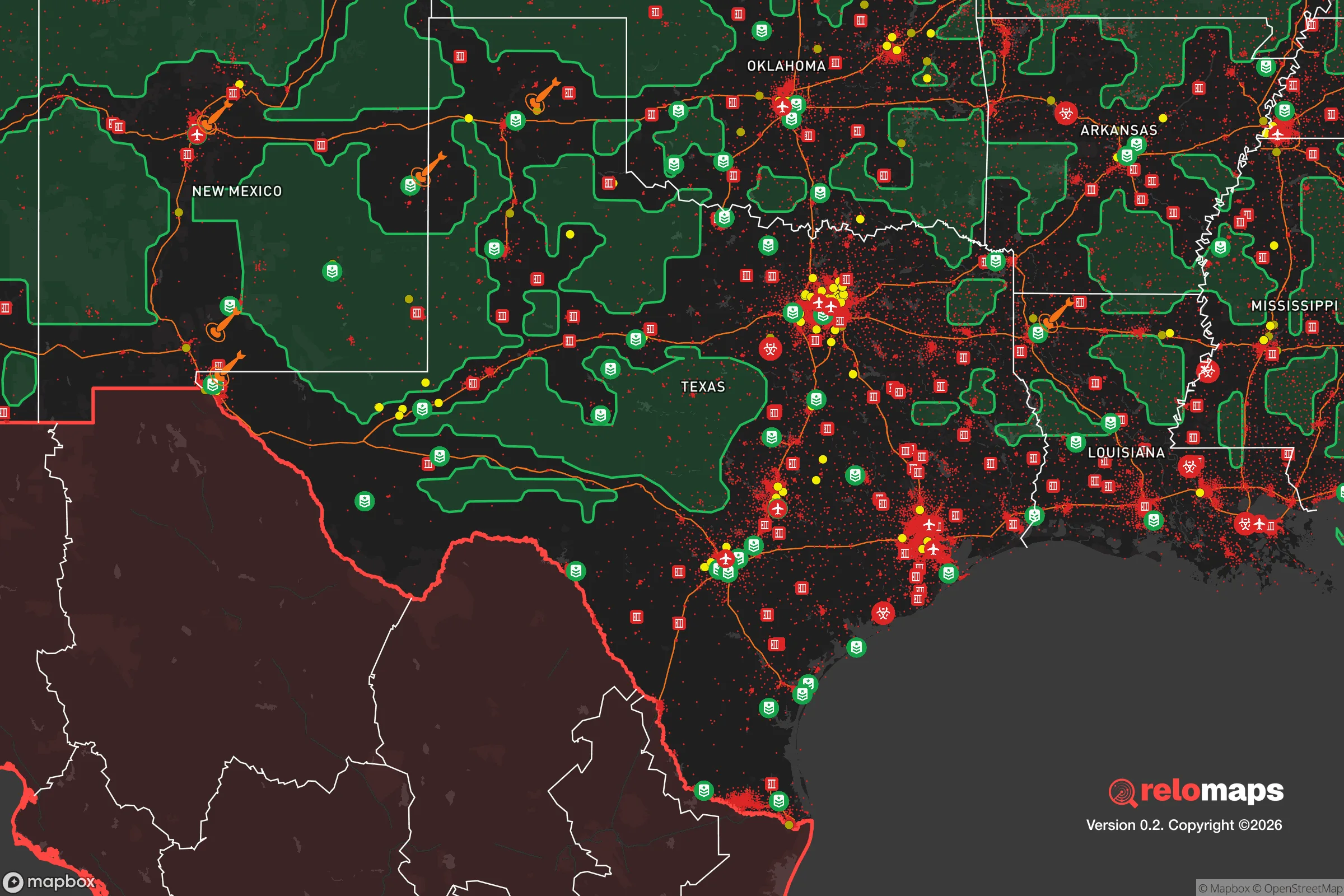


Important Note: For informational purposes only. This does not mean nothing bad ever happens in the green zones. Please use common sense. This is based on public data and modeled with AI. We tried to take a conservative approach but mistakes happen. We update this regularly as new information becomes available.
Solar Generator Recommendations
Backup power matters more here than in safer locations. We've picked three solar generators across budgets and capacity tiers — start with the budget unit if you only need a few essentials, or step up if you want to run a fridge and HVAC for days at a time.

Jackery Portable Power Station Explorer 300
Budget OptionPower on the Go: Weighing only 11 lbs, it's convenient to set up and store with book-sized foldable solar panels

BLUETTI Portable Power Station AC180
Designed for both indoor and outdoor scenarios, AC180 is highly capable as it has a robost capacity and continuous output power.

EF ECOFLOW DELTA Pro Ultra Power Station
Upgraded PickEcoFlow DELTA Pro Ultra is a whole-home energy system designed to grow with your family. Integrated with the Smart Home Panel 2, it scales to meet your evolving energy needs — keeping your home powered, intelligent, and secure through every stage of life.
We earn a commission, at no additional cost to you.
Strategic Assessment Analysis
Beaumont, Texas, sits at a strategic crossroads that makes it a serious candidate for anyone thinking about long-term resilience and relocation. Its position along the Neches River and proximity to the Gulf of Mexico offer both economic lifelines and natural buffers, but the same geography that makes it a logistics hub also places it near some of the most sensitive infrastructure in the country. For a conservative-leaning prepper or survivalist, Beaumont presents a mixed picture: genuine advantages in energy, water, and food production are offset by exposure to hurricane risks and proximity to petrochemical complexes that could become fallout zones during civil unrest or a major disaster. Understanding this balance is critical before making a move.
Geographic position and natural advantages for long-term survival
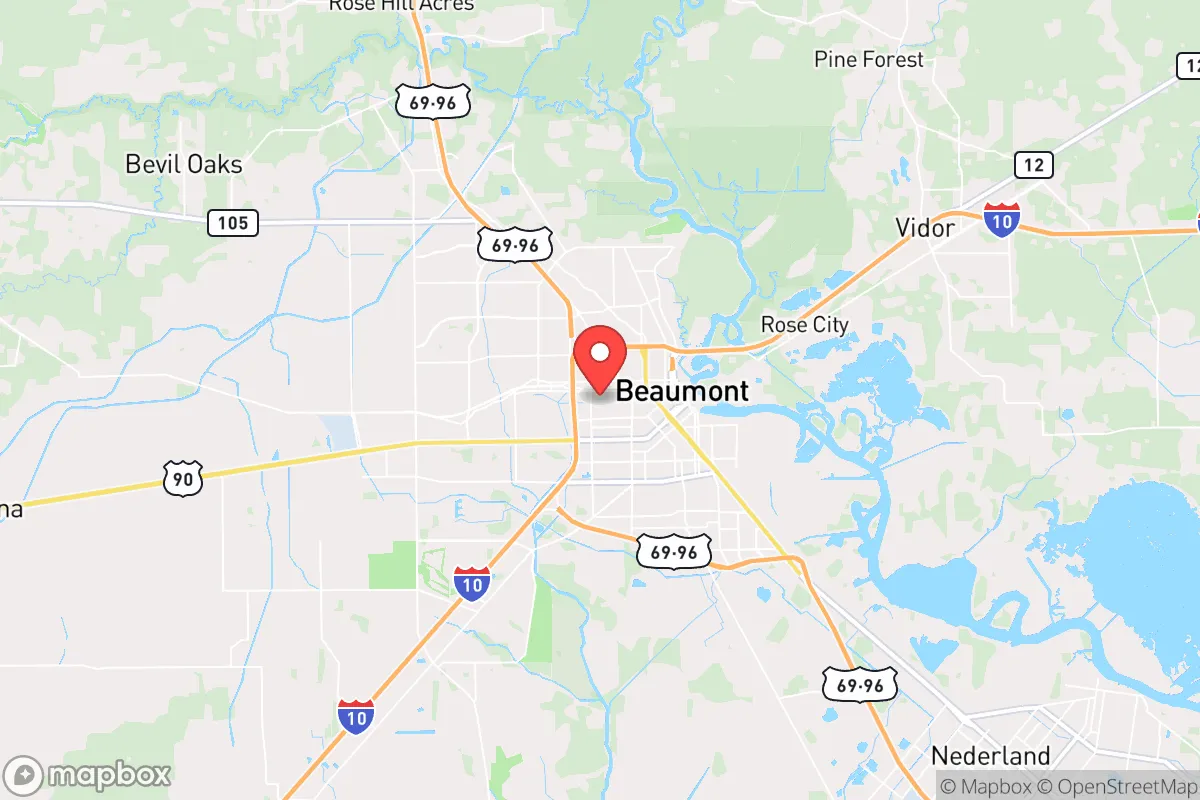
Beaumont’s location in Southeast Texas, roughly 85 miles east of Houston and 20 miles north of the Gulf, gives it a unique set of natural advantages. The area sits on the Gulf Coastal Plain, with flat terrain that is not prone to earthquakes, landslides, or wildfires—common threats in other parts of the country. The Neches River and the Sabine River provide abundant surface water, and the region’s high annual rainfall (around 55 inches per year) means groundwater recharge is reliable. For a relocator focused on self-sufficiency, this water availability is a major plus. The soil in the surrounding counties—Jefferson, Orange, and Hardin—is sandy loam and clay, suitable for gardening and small-scale agriculture if properly amended. The growing season is long, typically from March to November, allowing for multiple crop cycles. Beaumont is also within a few hours’ drive of the Piney Woods region to the north, which offers timber, game, and additional retreat options. The city’s position on Interstate 10 and U.S. Highway 69/96/287 provides multiple evacuation routes, though these can clog quickly during a hurricane evacuation. For a prepper, the key takeaway is that Beaumont is not a remote bunker location—it’s a regional hub with good water and soil, but it requires a plan for both staying and leaving.
Risks, exposures, and proximity to fallout-relevant landmarks
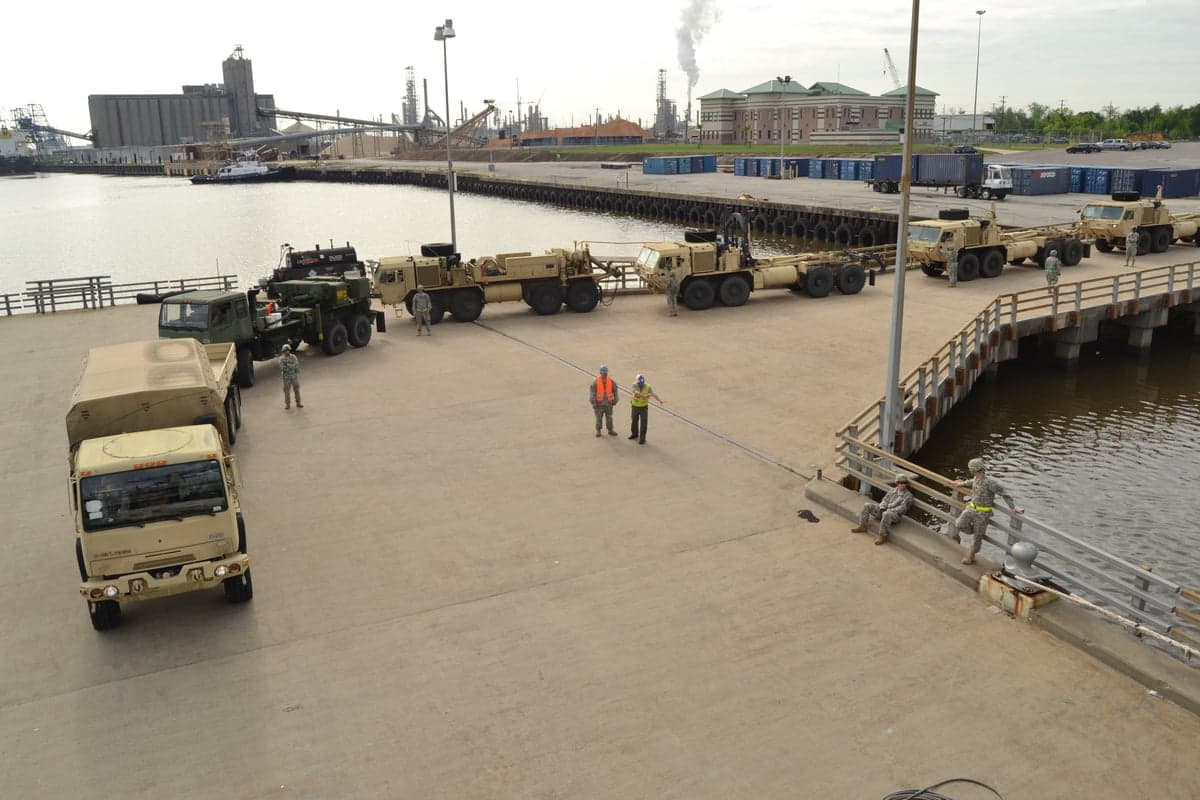
The most significant risk for Beaumont is its location in the heart of the Gulf Coast petrochemical corridor. The area is home to the Port of Beaumont, one of the busiest military cargo ports in the country, and is surrounded by refineries and chemical plants, including ExxonMobil’s Beaumont refinery and the Sabine Pass LNG terminal. In a scenario of civil unrest or a major disaster, these facilities become high-value targets for sabotage, accidental release, or collateral damage. A major explosion or toxic release at any of these sites could render large parts of the city uninhabitable for weeks or months. Additionally, Beaumont is within 100 miles of the Strategic Petroleum Reserve at Bryan Mound and the Sabine River nuclear plant (though that plant is currently decommissioned). The proximity to Houston—a major population center and potential flashpoint for unrest—means that any large-scale event in that city could spill over into Beaumont via I-10. Hurricane risk is also real: Beaumont was hit hard by Hurricane Harvey in 2017, with widespread flooding that overwhelmed drainage systems. The city’s low elevation (average 16 feet above sea level) makes it vulnerable to storm surge from the Gulf, especially if a Category 3 or higher storm makes landfall nearby. For a survivalist, the calculus is clear: Beaumont offers good baseline resources, but the concentration of industrial targets and hurricane exposure means you need a robust bug-out plan and a well-stocked shelter that can handle a chemical event or flood.
Practical resilience for a relocator: food, water, energy, and defensibility
On the practical side, Beaumont has several strong points for a prepper. Water is abundant: the Neches River and local aquifers provide reliable sources, and the city’s water treatment infrastructure is generally robust, though it failed during Harvey. A well on private property outside city limits is a smart investment. Food production is feasible: the region supports year-round gardening, and local farmers’ markets (like the Beaumont Farmers Market) offer fresh produce and livestock. Hunting is available in the surrounding national forests (Sabine National Forest is about an hour north) for deer, feral hogs, and small game. Energy is a mixed bag: Beaumont is in the heart of oil and gas country, so fuel is readily available, but the grid is vulnerable to hurricanes and ice storms (as seen in the 2021 winter storm). Solar panels with battery storage are a wise addition, as the area gets about 215 sunny days per year. Defensibility is the weak point. Beaumont is a flat, spread-out city with no natural chokepoints or high ground. The population is around 115,000, with a mix of urban and suburban neighborhoods. For a single individual or family, a rural property in Hardin or Tyler County (north of Beaumont) offers better defensibility—more land, fewer neighbors, and easier access to timber and water. Inside the city, a home with a concrete safe room or a basement (rare in Texas) would be a priority. The local law enforcement presence is adequate for day-to-day safety, but during a major event, police and emergency services could be overwhelmed quickly. The Beaumont Police Department and Jefferson County Sheriff’s Office are professional but under-resourced for a city of this size. For a relocator, the best strategy is to live on the outskirts or in a small town like Silsbee or Lumberton, where you can maintain a lower profile and have more control over your perimeter.
The overall strategic picture for Beaumont is one of calculated trade-offs. It is not a remote survivalist paradise—it is a working-class city with real industrial risks and weather hazards. But for someone who values water security, agricultural potential, and proximity to Gulf Coast trade routes, it offers a foundation that can be built upon with the right preparations. The conservative culture of Southeast Texas—self-reliance, gun ownership, and community networks—aligns well with a prepper mindset. The key is to avoid the flood zones and the refinery shadows, secure a reliable water source, and have a bug-out route north into the Piney Woods. If you can manage those variables, Beaumont can be a viable base for weathering the storms—both literal and societal—that lie ahead.

* Values derived from national, state, county, city and local statistics and may differ in a specific area. Last updated: 2026-10-10T16:26:32.000Z
Narrative content on this page is AI-generated and may contain mistakes. Verify any details that matter before acting on them.
ReloMaps may earn a commission from affiliate links at no extra cost to you.

