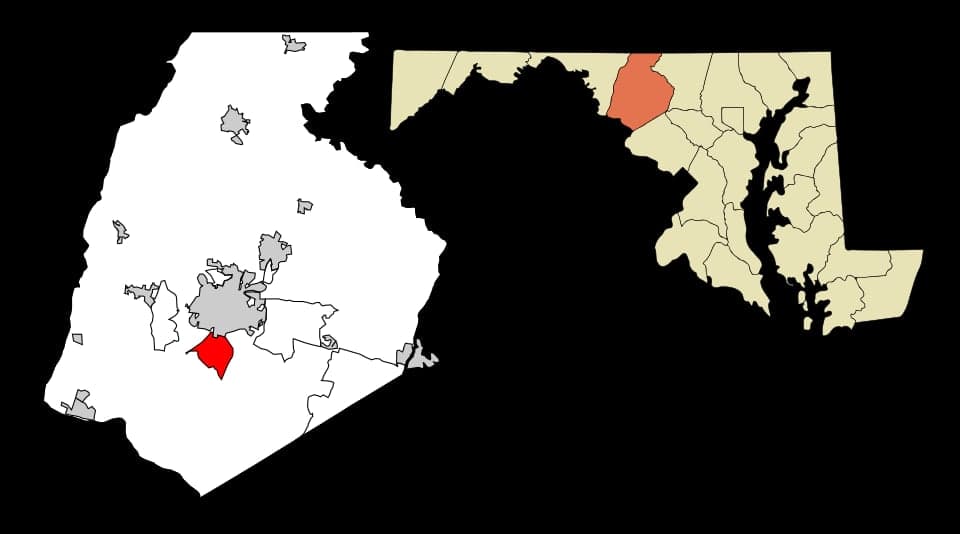
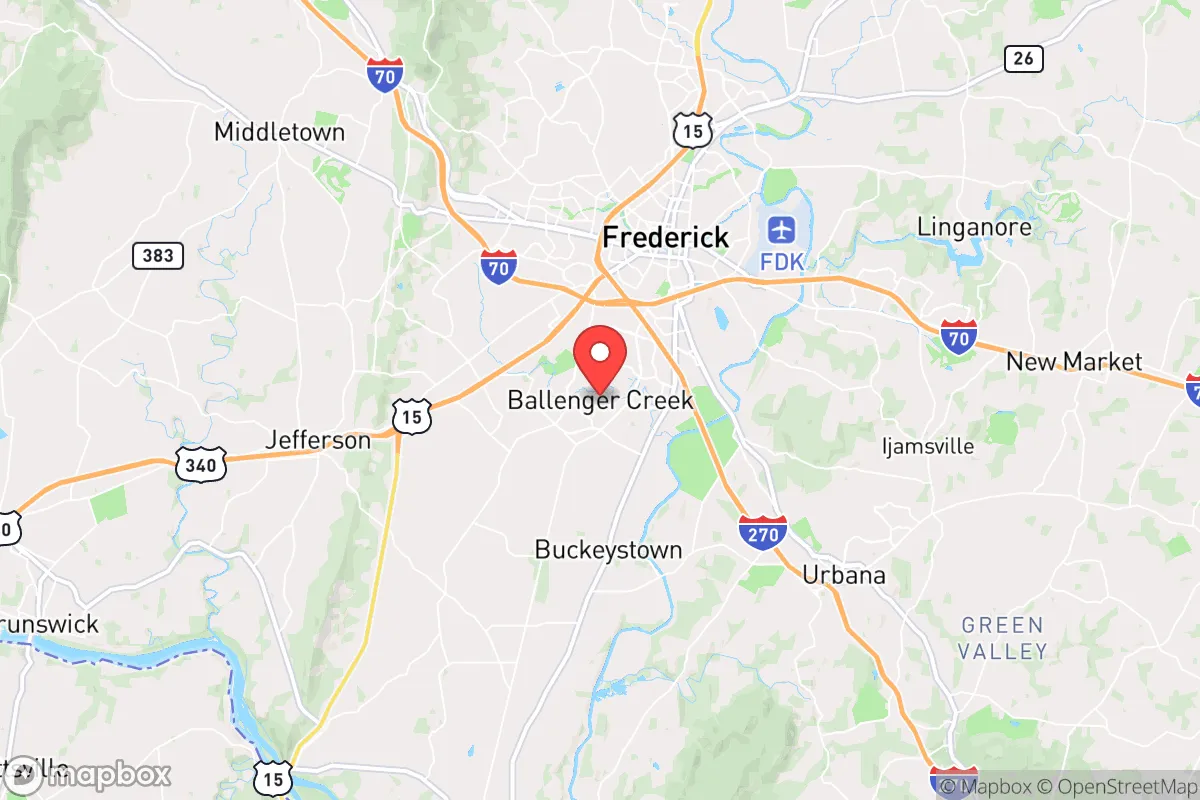
Photo: Wikipedia
Strategic Assessment of Ballenger Creek, MD
Meaningful friction. Expect exposure to either population pressure, blast zones, or natural disaster risk. Consider buying a retreat property.
What does the Strategic Assessment tell us?
Our Strategic Assessment grades tactical survivability of an area. Major population centers, military targets, fallout zones, natural disasters, and border exposure all drive risk — lower exposure means a more defensible position in a crisis.
This is heavily inspired by Joel Skousen's Strategic Relocation book. Highly recommended you checkout the book ($)What does this tell us?
Our Strategic Assessment grades tactical survivability of an area. Major population centers, military targets, fallout zones, natural disasters, and border exposure all drive risk — lower exposure means a more defensible position in a crisis.
This is heavily inspired by Joel Skousen's Strategic Relocation book. Highly recommended you checkout the book ($)Strategic Pillars

Key Distances
Regional Safe Places
Below is our recommended "safe zones" in Maryland and the surrounding area based on our strategic heuristics. For most people, it's unrealistic to live in a “safe zone” full-time due to work, family or other personal reasons. They tend to be more rural. However, many of these areas are perfect for second homes and retreat properties that double as a vacation home or even a short-term rental.
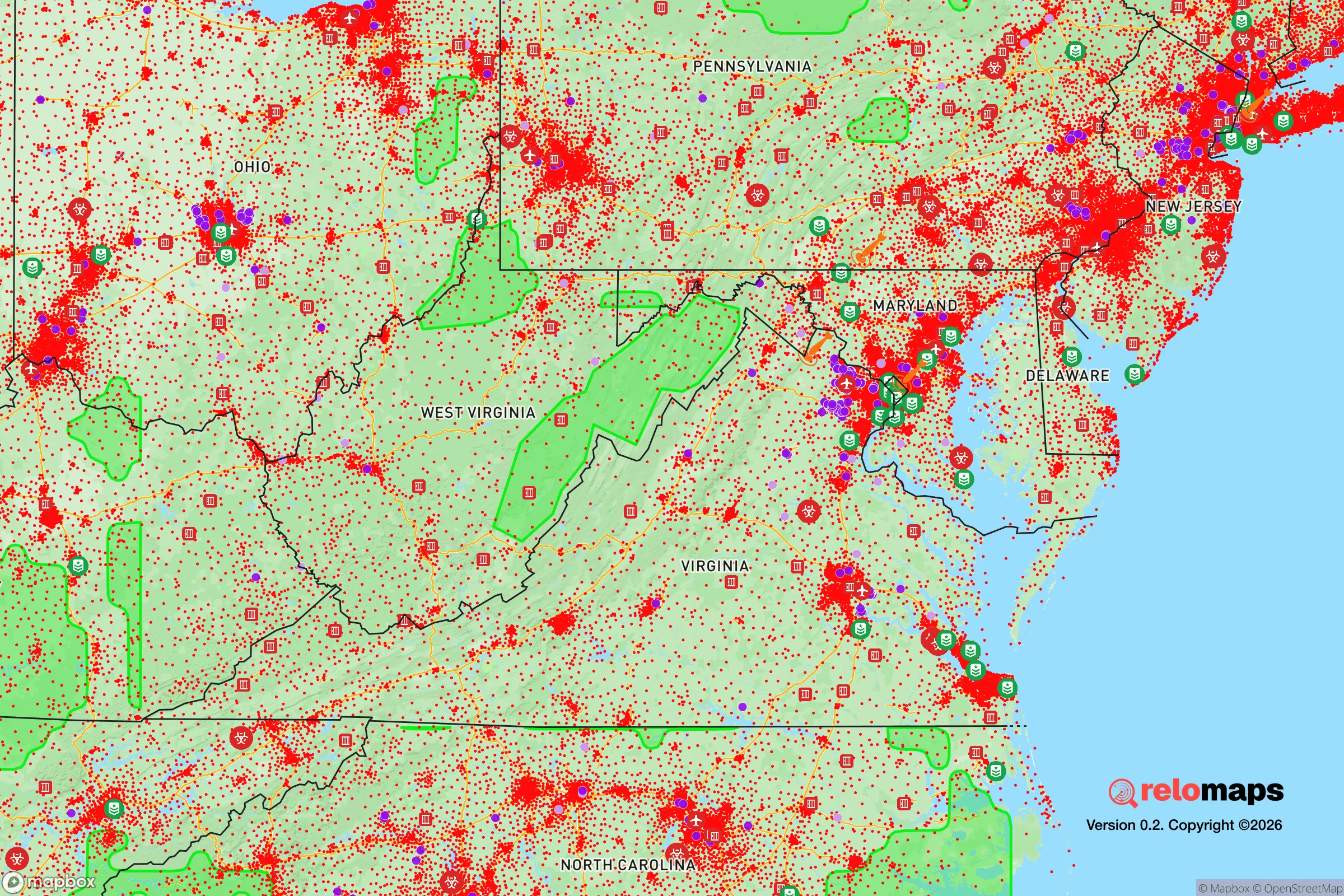
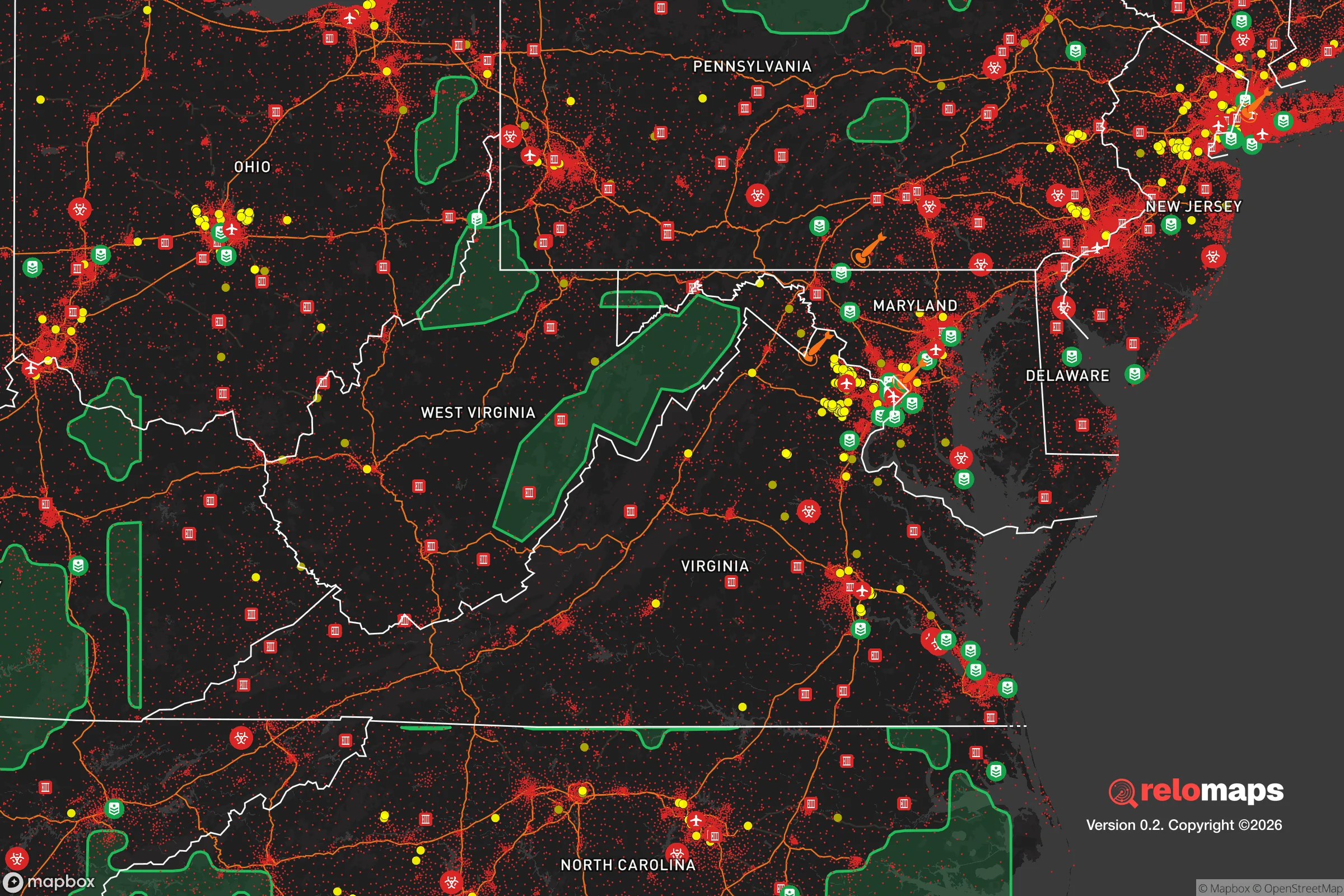


Important Note: For informational purposes only. This does not mean nothing bad ever happens in the green zones. Please use common sense. This is based on public data and modeled with AI. We tried to take a conservative approach but mistakes happen. We update this regularly as new information becomes available.
Solar Generator Recommendations
Backup power matters more here than in safer locations. We've picked three solar generators across budgets and capacity tiers — start with the budget unit if you only need a few essentials, or step up if you want to run a fridge and HVAC for days at a time.

Jackery Portable Power Station Explorer 300
Budget OptionPower on the Go: Weighing only 11 lbs, it's convenient to set up and store with book-sized foldable solar panels

BLUETTI Portable Power Station AC180
Designed for both indoor and outdoor scenarios, AC180 is highly capable as it has a robost capacity and continuous output power.

EF ECOFLOW DELTA Pro Ultra Power Station
Upgraded PickEcoFlow DELTA Pro Ultra is a whole-home energy system designed to grow with your family. Integrated with the Smart Home Panel 2, it scales to meet your evolving energy needs — keeping your home powered, intelligent, and secure through every stage of life.
We earn a commission, at no additional cost to you.
Strategic Assessment Analysis
Ballenger Creek, Maryland, offers a mixed strategic picture for the relocation-minded reader focused on resilience and self-sufficiency. Its primary advantage is a location that balances proximity to the economic engine of Frederick and the Washington, D.C. metro area with a buffer of rural and agricultural land to the north and west. However, this same proximity introduces significant vulnerabilities, particularly regarding man-made risks and the logistical challenges of a potential mass evacuation. For the conservative-leaning individual or family prioritizing preparedness, Ballenger Creek is best understood as a suburban outpost with moderate natural advantages but serious exposure to the fallout of a major metropolitan crisis.
Geographic position and natural advantages for self-sufficiency
Ballenger Creek sits in Frederick County, a region that benefits from the natural barrier of the Catoctin Mountains to the west and the Monocacy River to the east. This topography provides a degree of natural defensibility and limits the sprawl from the D.C. metro area, creating a more contained community. The area's location along the I-270 corridor offers quick access to Frederick city's resources, but the real strategic value lies in the surrounding agricultural land. Frederick County is one of Maryland's leading producers of dairy, poultry, and grains, meaning local food supply chains are robust and not entirely dependent on distant logistics. The region's climate is temperate, with reliable rainfall and a growing season long enough for substantial home gardening, which is a key advantage for anyone seeking to reduce reliance on external food systems. The presence of the Potomac River and numerous smaller creeks and reservoirs provides a solid foundation for water security, though access to these sources is not universal and depends on specific property location.
Risks, exposures, and proximity to fallout-relevant landmarks
The most significant risk for Ballenger Creek is its location within the broader Washington, D.C. metropolitan area. The area is within the blast and fallout zone of a major event at the nation's capital, and its position along the I-270 corridor makes it a primary evacuation route for hundreds of thousands of people. This creates a dual threat: direct exposure to a man-made disaster and the secondary crisis of being caught in a gridlocked, panicked exodus. The nearby Fort Detrick, a U.S. Army biodefense research facility, adds another layer of concern for the preparedness-minded. While the facility is a major employer and economic driver, its mission inherently involves handling dangerous pathogens, and any accident or security breach could have localized consequences. Natural disaster risks are moderate but real. The area is prone to severe thunderstorms, occasional tornadoes, and flooding along the Monocacy River and its tributaries. Winter storms can be disruptive, but they are typically manageable with proper preparation. The overall risk profile is dominated by man-made threats tied to the area's proximity to high-value government and military targets, which is a serious consideration for anyone prioritizing long-term security.
Practical resilience for a relocator: food, water, energy, and defensibility
For the individual or family looking to establish a resilient homestead, Ballenger Creek presents a mixed bag. The suburban nature of the community means most lots are small, limiting the potential for large-scale gardening, livestock, or rainwater catchment. However, the surrounding rural areas of Frederick County offer more viable options for those willing to commute a bit further. The local water supply is generally reliable and comes from a combination of groundwater and surface water sources, but a well on your own property is the gold standard for self-sufficiency, and that is rare in the Ballenger Creek development itself. Energy resilience is a challenge. The grid is reliable under normal conditions but is vulnerable to storm damage and, more concerning, to potential cyber or physical attacks on the broader Mid-Atlantic grid. Solar panels with battery storage are a viable option, but homeowners' associations in some subdivisions may restrict their installation. Defensibility is low in the suburban core. The area is dense, with multiple access points and a transient population, making it difficult to secure in a crisis. The best strategy for a relocator is to view Ballenger Creek as a base of operations with access to urban amenities and employment, while maintaining a more defensible retreat property in the nearby mountains or rural farmland to the west.
The overall strategic picture for Ballenger Creek is one of calculated trade-offs. It offers a strong local economy, good schools, and access to the resources of Frederick and the D.C. area, which are real advantages for building a life and a career. For the preparedness-minded, however, it is not a location that lends itself to a high degree of self-sufficiency or security without significant effort and compromise. The proximity to high-risk targets and the potential for mass evacuation scenarios are serious liabilities. The area is best suited for someone who wants to be close to opportunity but is willing to invest in a secondary, more defensible property and maintain a high level of personal preparedness. For those whose primary goal is a standalone, resilient homestead far from metropolitan risks, the rural areas west of Frederick or further into the Appalachian region would be a more strategic choice. Ballenger Creek is a suburban compromise, not a survivalist's paradise, and should be evaluated with clear eyes on both its advantages and its vulnerabilities.

* Values derived from national, state, county, city and local statistics and may differ in a specific area. Last updated: 2026-07-31T16:06:27.000Z
Narrative content on this page is AI-generated and may contain mistakes. Verify any details that matter before acting on them.
ReloMaps may earn a commission from affiliate links at no extra cost to you.

