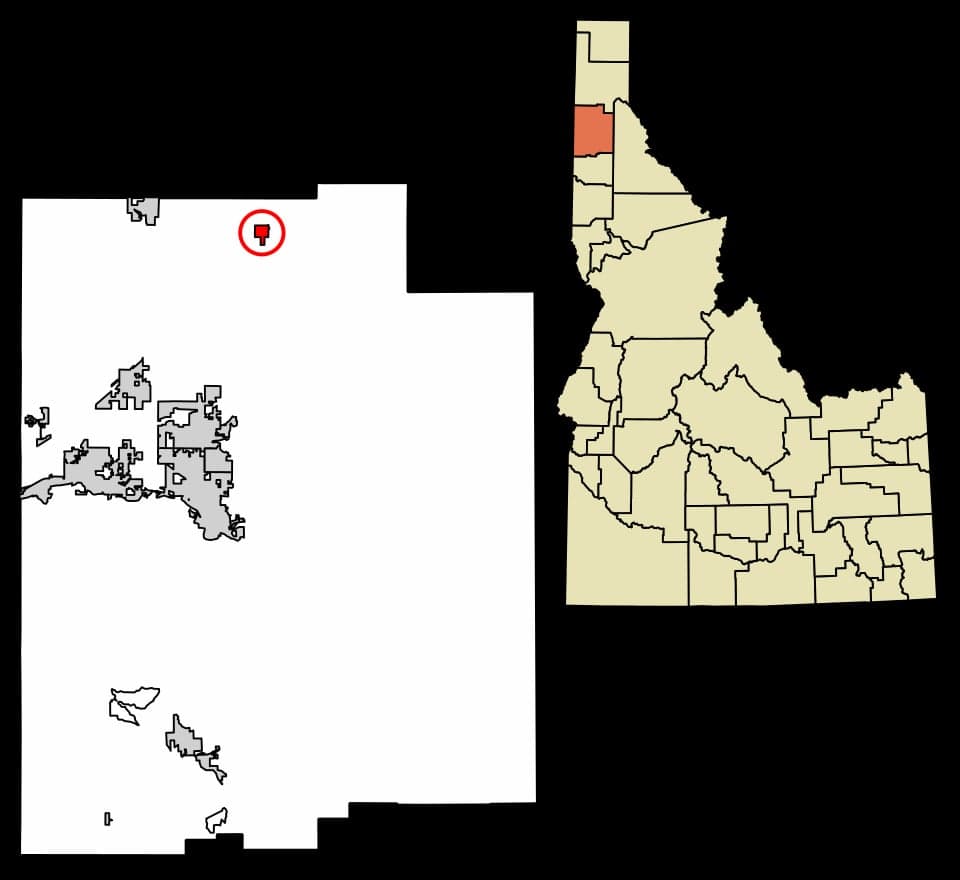
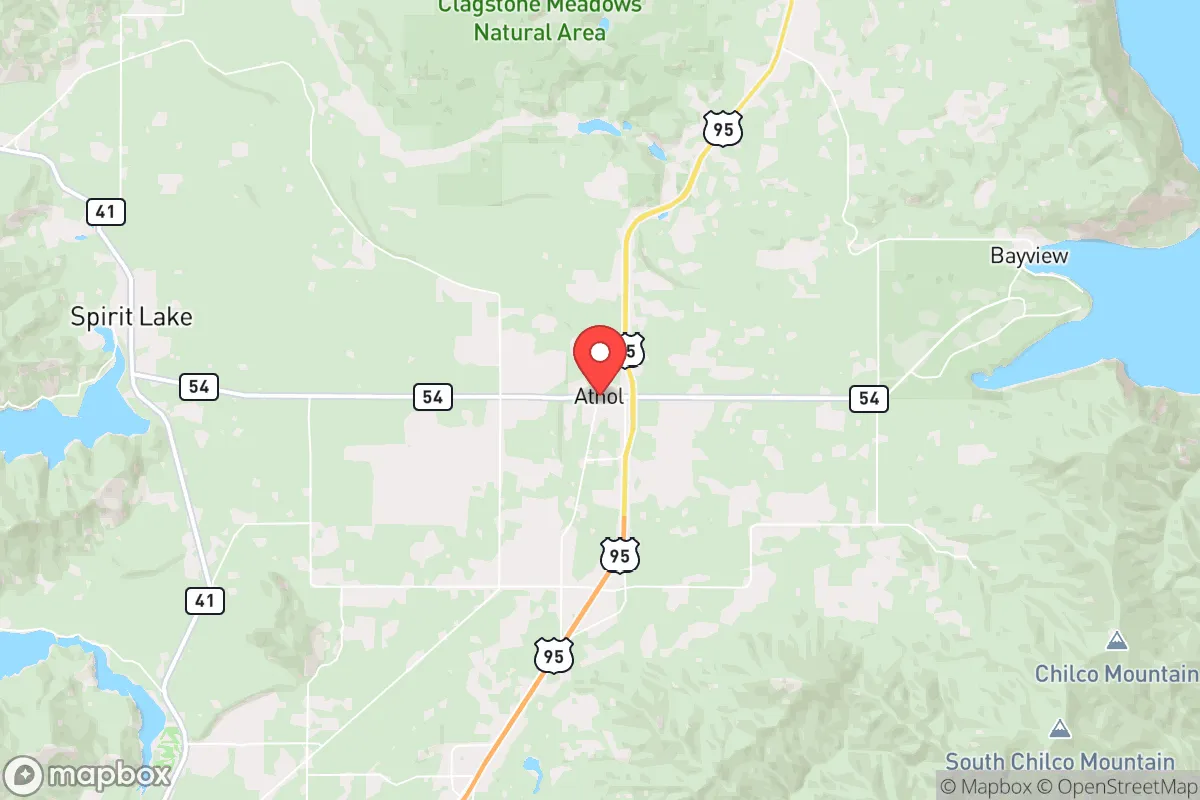
Photo: Wikipedia
Personal Sovereignty in Athol, ID
Viable for self-reliance. Generally workable, though some barriers may limit total independence.
What does Personal Sovereignty tell us?
Personal Sovereignty measures your capacity for self-reliance and independence with minimal government friction. Higher scores mean fewer barriers between you and the way you want to live... but it assumes you have the space you need and good neighbors.
What does this tell us?
Personal Sovereignty measures your capacity for self-reliance and independence with minimal government friction. Higher scores mean fewer barriers between you and the way you want to live... but it assumes you have the space you need and good neighbors.
State Policy
Energy independence: Importer (25% of energy produced in-state)
Personal Liberty
Homesteading

Personal Liberty Analysis
Athol, Idaho, offers a notably high degree of personal sovereignty, rooted in the state’s strong constitutional protections, low-tax posture, and a culture that prizes self-reliance. For individuals and families who prioritize autonomy—whether in financial decisions, self-defense, or lifestyle choices—Athol represents an environment where government intervention is comparatively minimal. The town’s small size (roughly 700 residents) and rural Kootenai County setting amplify this dynamic, as local governance tends to be less intrusive than in larger, more urbanized areas. However, the practical expression of sovereignty here depends on understanding specific state and local frameworks, from tax policy to land use rules, which generally favor individual discretion over regulatory oversight.
Tax burden and regulatory posture: How Idaho’s low-tax framework shapes daily life
Idaho’s overall tax burden is among the lightest in the nation, and Athol residents benefit directly from this. The state levies a flat income tax of 5.8% (as of 2025), with no local income taxes, and property taxes in Kootenai County average roughly 0.7% of assessed value—below the national median. For a family owning a $400,000 home, that translates to about $2,800 annually in property taxes. Sales tax is a flat 6%, applied to most goods but not groceries or prescription drugs. The regulatory environment in Idaho is similarly restrained: the state has no general business license requirement, no franchise tax, and minimal occupational licensing compared to coastal states. Zoning in Athol itself is light-touch, with most residential parcels outside the town limits falling under Kootenai County’s rural zoning, which allows a wide range of uses without special permits. The state’s “right-to-farm” law further shields agricultural activities from nuisance lawsuits, reinforcing a hands-off approach to land use. For a relocation-minded reader, the key takeaway is that Idaho’s tax and regulatory structure is designed to minimize friction—both for earning a living and for owning property—making Athol a low-hassle environment for those who value financial independence.
Self-defense and gun law specifics: What the Second Amendment means in practice here
Idaho is a constitutional carry state, meaning no permit is required to carry a concealed firearm for anyone 18 or older who can legally possess a gun. Athol residents enjoy this right without local restrictions—Kootenai County has no additional firearm ordinances beyond state law. The state’s “stand your ground” statute (Idaho Code § 19-202A) eliminates any duty to retreat before using deadly force in self-defense, provided the person is lawfully present and not engaged in criminal activity. Castle doctrine protections extend to vehicles and occupied structures. For those concerned about legal exposure, Idaho also offers strong civil immunity for justified self-defense acts. Background checks are required only for commercial sales; private transfers between individuals require no paperwork. Magazine capacity, firearm types, and ammunition are unregulated at the state level. In practical terms, this means a resident moving to Athol can immediately exercise full self-defense rights without waiting periods, permits, or local interference. The sheriff’s office in Kootenai County is known for a pro-Second Amendment stance, and the county has been designated a “Second Amendment Sanctuary” by local resolution, signaling that county resources will not be used to enforce federal gun laws deemed unconstitutional. For a family prioritizing personal safety autonomy, this legal framework is among the most permissive in the country.
Self-reliance and homesteading viability: Lot sizes, zoning, and off-grid feasibility
Athol’s rural character makes it a strong candidate for homesteading and off-grid living. Most residential parcels in the surrounding area are zoned as “Rural” (R-1) by Kootenai County, which requires a minimum lot size of 2.5 acres for a single-family dwelling without public sewer. Many properties available in the Athol area range from 5 to 40 acres, providing ample space for gardens, livestock, and small-scale agriculture. The county allows accessory dwelling units, barns, and workshops without extensive permitting, as long as they meet basic setback and septic requirements. Off-grid feasibility is high: Idaho has no state law prohibiting rainwater collection, and solar panel installation is unrestricted. However, any permanent dwelling must comply with the Idaho Residential Code, which includes structural and electrical standards—so a fully off-grid cabin still requires a permit and inspection. Wells and septic systems are regulated by the Idaho Department of Environmental Quality, but the process is straightforward for standard installations. The county does not enforce zoning restrictions on keeping chickens, goats, or up to two horses on parcels under 5 acres, and larger livestock are allowed on properties over 5 acres. For a family seeking to reduce reliance on municipal utilities and grocery stores, Athol’s zoning and regulatory environment is accommodating, though not entirely unregulated. The key practical consideration is that while the county encourages self-sufficiency, it does require basic health and safety compliance—a balance that most homesteaders find reasonable.
Personal liberties: Parental rights, medical autonomy, speech, and property
Idaho law provides strong protections for parental rights, including a 2024 statute (Idaho Code § 33-138) that requires schools to obtain parental consent before administering any health-related survey or providing instruction on gender identity or sexual orientation. Parents have the right to opt their children out of any curriculum they find objectionable, and the state’s “Parents’ Bill of Rights” (Idaho Code § 33-138A) explicitly affirms that parents have the fundamental right to direct their children’s education, healthcare, and moral upbringing. Medical autonomy is similarly robust: Idaho has no state vaccine mandate for adults, and while school immunization requirements exist, philosophical exemptions are permitted for all vaccines. The state’s 2023 law (Idaho Code § 39-4801) prohibits the enforcement of any federal public health emergency order that would restrict individual movement or require medical treatment, effectively blocking future lockdown-style mandates. Free speech is protected under the Idaho Constitution, which includes an explicit guarantee that “no law shall be passed restraining the free expression of opinion.” Property rights are reinforced by Idaho’s “private property rights” act (Idaho Code § 67-6532), which requires government agencies to perform a takings analysis before any regulation that could diminish property value. In practice, this means Athol residents face little risk of zoning changes that would restrict their use of land. For a reader concerned about government overreach in family or medical decisions, Idaho’s legal framework is designed to keep the state at arm’s length.
Overall, Athol offers a sovereignty profile that ranks among the highest in the Pacific Northwest, comparable to rural areas in Montana or Wyoming but with closer proximity to services in Coeur d’Alene (about 20 minutes south). The combination of low taxes, permissive gun laws, homestead-friendly zoning, and strong protections for parental and medical autonomy creates an environment where individual choice is the default, not the exception. For a family or individual who values personal freedom as a primary relocation criterion, Athol represents a practical, legally grounded option—not a theoretical libertarian ideal, but a real place where the regulatory footprint is light and the culture reinforces self-reliance. The trade-off is that this autonomy comes with limited public services and a expectation that residents handle their own problems, from snow removal to medical emergencies. For those prepared to accept that responsibility, Athol delivers on the promise of personal sovereignty.

* Values derived from national, state, county, city and local statistics and may differ in a specific area. Last updated: 2026-07-31T01:56:42.000Z
Narrative content on this page is AI-generated and may contain mistakes. Verify any details that matter before acting on them.
ReloMaps may earn a commission from affiliate links at no extra cost to you.

