Photo: Wikipedia
Demographics of Arlington, TN
Affluence Level in Arlington, TN
An upper-middle-class area. Household wealth, education levels, and homeownership run ahead of national benchmarks.
People of Arlington, TN
The people of Arlington, Tennessee today number 14,989, forming a predominantly white (80.2%) and highly educated (50.1% college degree) community that blends small-town roots with Memphis-commuter affluence. The city is notably homogeneous by Shelby County standards, with a Black population of 11.9%, a Hispanic share of 2.9%, and a foreign-born rate of just 0.7% — well below national averages. East/Southeast Asian and Indian-subcontinent residents each account for 0.2% of the population, making Arlington one of the least ethnically diverse suburbs in the Memphis metro area. The city’s identity is shaped by its rapid post-2000 growth, its reputation for low crime and strong schools, and a population that is overwhelmingly native-born and family-oriented.
How the city was settled and grew
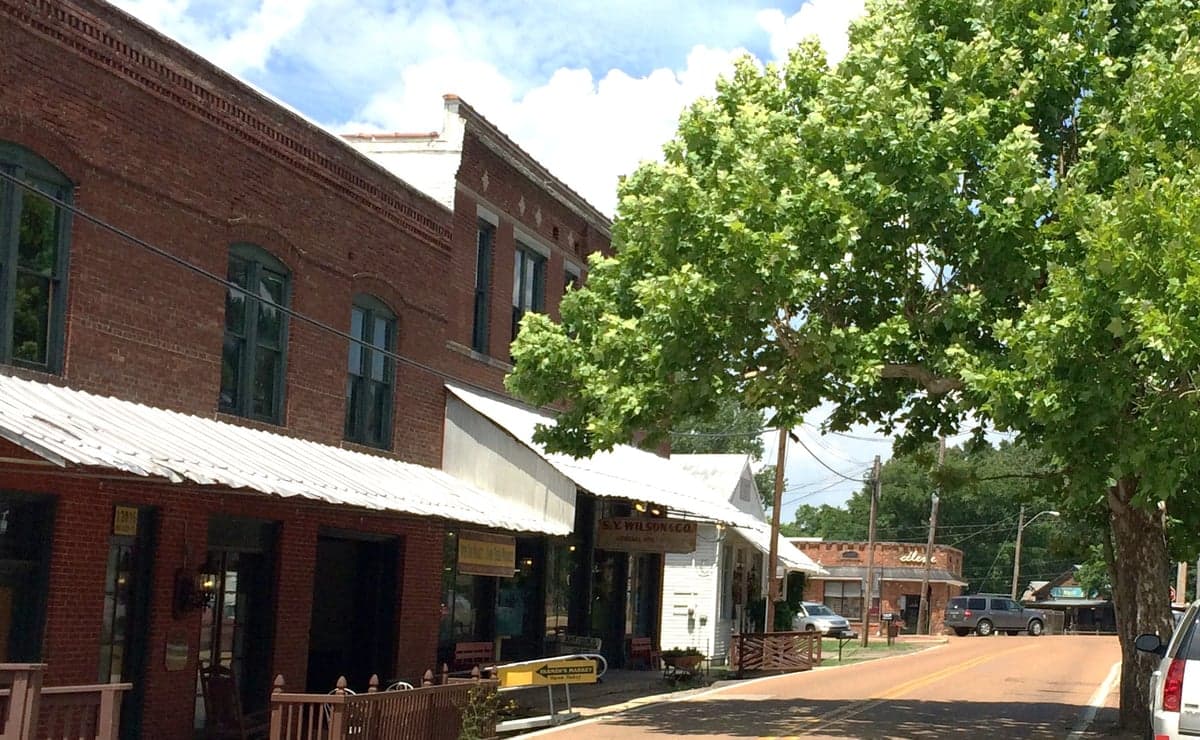
Arlington’s original population arrived in the 1830s and 1840s, drawn by land grants and the promise of cotton agriculture along the Wolf River bottomlands. The town was formally incorporated in 1877 as a stop on the Memphis and Paducah Railroad, which brought a wave of merchants, cotton factors, and small-scale planters. The historic Downtown Arlington district — centered on the railroad depot at what is now the intersection of Highway 70 and Highway 205 — became the commercial and social hub for a population that was overwhelmingly white and of British Isles descent. A smaller Black population, largely composed of sharecroppers and domestic workers, settled in what is now the Belle Meade area along the southern edge of town, near the Wolf River floodplain. The community remained a sleepy agricultural hamlet through the 1950s, with fewer than 1,000 residents, as cotton and livestock farming dominated the local economy.
Modern era (post-1965)
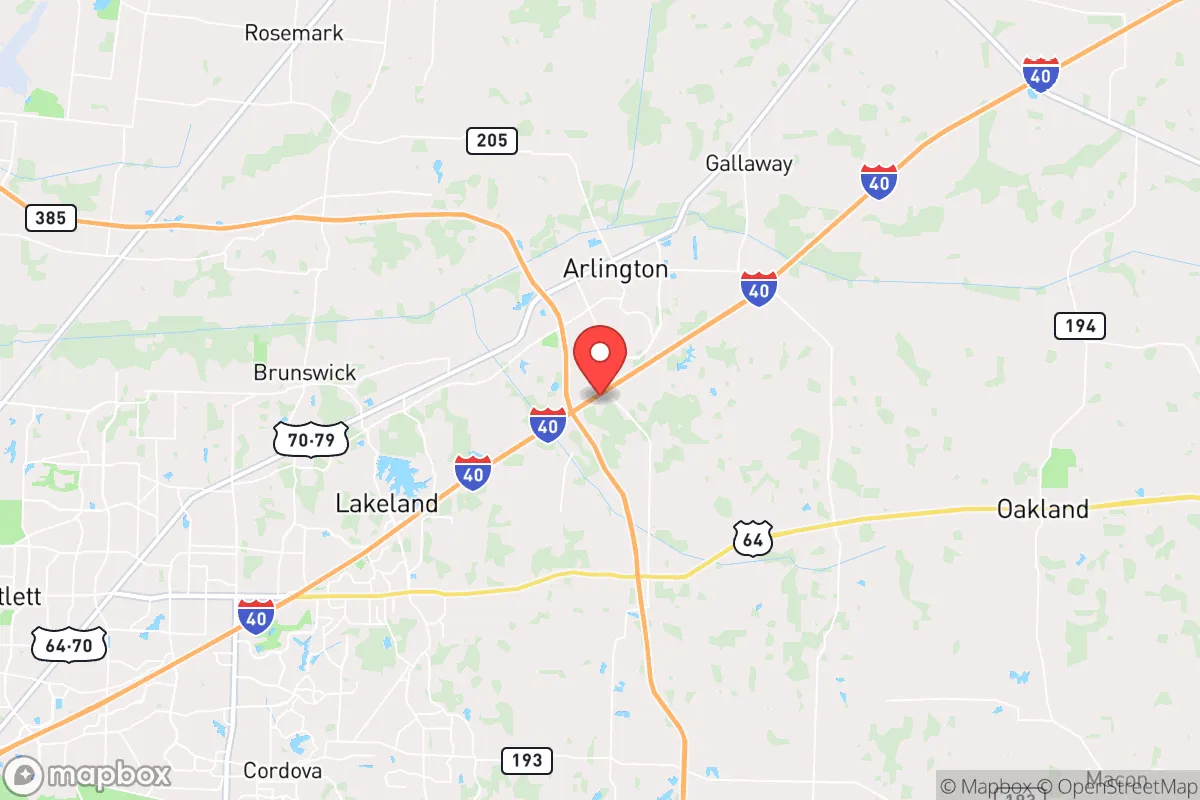
Arlington’s modern population boom began in the 1990s and accelerated sharply after 2000, driven by white flight from Memphis and the expansion of the FedEx hub at Memphis International Airport. The 1968 Fair Housing Act and subsequent school desegregation orders in Memphis City Schools pushed many white families to seek homogeneous, low-tax suburbs — and Arlington, with its rural character and independent school system, became a prime destination. The Briarcrest subdivision, developed in the late 1990s off Highway 70, absorbed the first wave of these relocating families, offering large lots and new construction. The Stonebridge neighborhood, built in the early 2000s near the Arlington Municipal Center, attracted a second wave of upper-middle-class professionals, many of whom worked in Memphis’s logistics and healthcare sectors. The Black population, which had historically been concentrated in the Belle Meade area, grew modestly from roughly 5% in 1990 to 11.9% today, but remains largely clustered in older subdivisions along Highway 205. The Hispanic share (2.9%) is concentrated in the Willow Creek area, where a small number of construction and service workers have settled since 2010. East/Southeast Asian and Indian-subcontinent residents are scattered thinly across newer subdivisions like Arlington Farms, with no single ethnic enclave forming. The foreign-born rate of 0.7% — the lowest in Shelby County — reflects Arlington’s status as a destination for domestic, not international, migration.
The future
Arlington’s population is likely to continue growing slowly, with the city projecting 18,000–20,000 residents by 2040 based on current annexation plans and available land. The population is expected to remain overwhelmingly white and native-born, as the city’s high housing costs ($400,000+ median home price) and lack of rental stock filter out lower-income and immigrant households. The Hispanic share may rise to 4–5% as construction and landscaping workers seek affordable lots in the Southwind area near the Shelby Farms border, but the foreign-born rate is unlikely to exceed 2% given the absence of refugee resettlement or ethnic churches. The Black population is plateauing, with most growth occurring through natural increase rather than in-migration, and remains residentially concentrated in the Belle Meade and Highway 205 corridor. The city is not tribalizing into distinct ethnic enclaves — rather, it is homogenizing into a predominantly white, college-educated, conservative-leaning suburb. The small Asian and Indian populations are assimilating into the broader community, with children attending Arlington High School and participating in the same sports and church networks.
For a conservative-leaning individual or family moving to Arlington now, the bottom line is this: you are joining a community that is stable, safe, and demographically predictable — a place where the population is becoming more educated and more affluent, but not more diverse. The city’s future is one of slow, controlled growth, with little immigration and minimal ethnic change. If you value racial and cultural homogeneity, low taxes, and a school system that consistently ranks among Tennessee’s best, Arlington offers exactly that. If you seek a truly multicultural or globally connected environment, you will find it in Memphis, 25 minutes west — but not here.

* Values derived from national, state, county, city and local statistics and may differ in a specific area. Last updated: 2026-04-21T10:11:30.000Z
Narrative content on this page is AI-generated and may contain mistakes. Verify any details that matter before acting on them.
ReloMaps may earn a commission from affiliate links at no extra cost to you.

