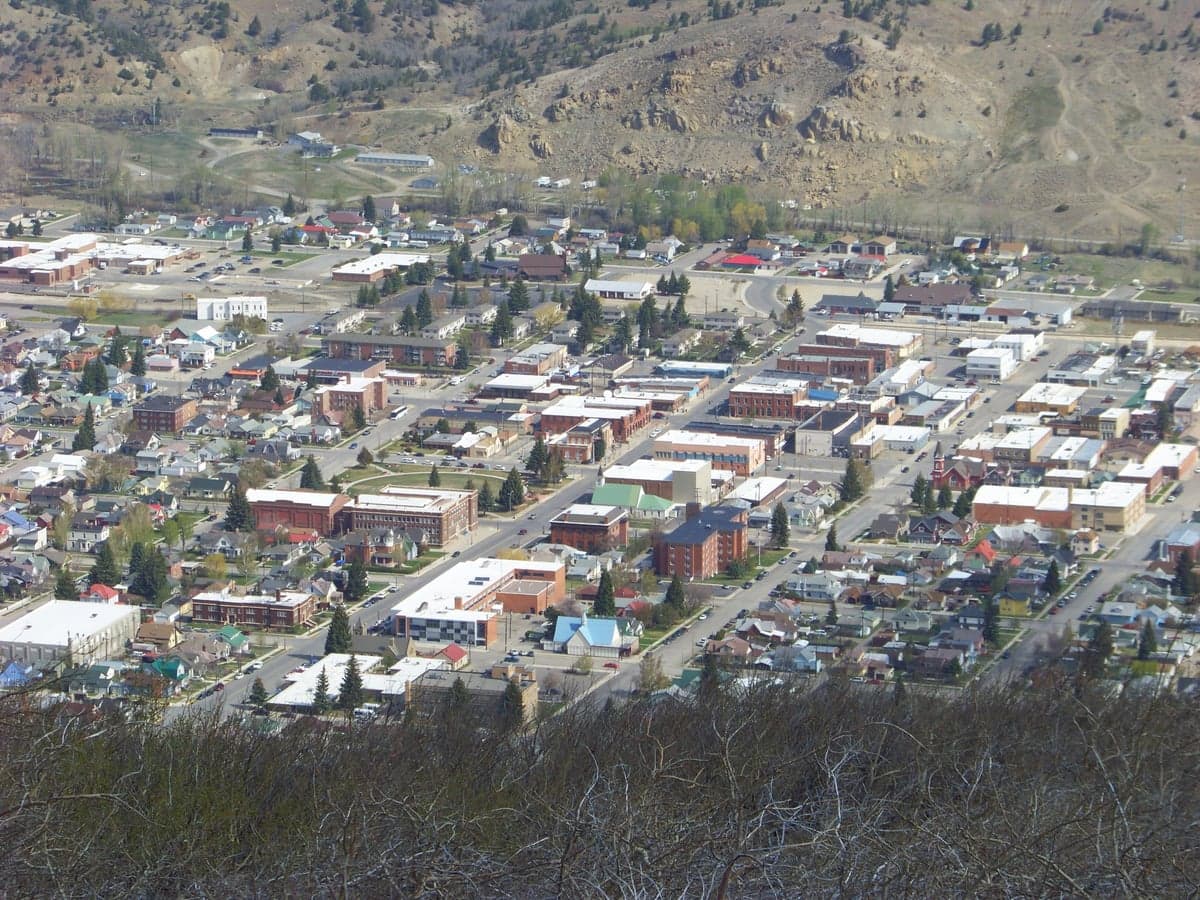
Photo: Wikipedia
Strategic Assessment of Anaconda, MT
Deep buffer from population centers and strategic targets. Low natural disaster risk and minimal exposure to border or coastal threats.
What does the Strategic Assessment tell us?
Our Strategic Assessment grades tactical survivability of an area. Major population centers, military targets, fallout zones, natural disasters, and border exposure all drive risk — lower exposure means a more defensible position in a crisis.
This is heavily inspired by Joel Skousen's Strategic Relocation book. Highly recommended you checkout the book ($)What does this tell us?
Our Strategic Assessment grades tactical survivability of an area. Major population centers, military targets, fallout zones, natural disasters, and border exposure all drive risk — lower exposure means a more defensible position in a crisis.
This is heavily inspired by Joel Skousen's Strategic Relocation book. Highly recommended you checkout the book ($)Strategic Pillars

Key Distances
Regional Safe Places
Below is our recommended "safe zones" in Montana and the surrounding area based on our strategic heuristics. For most people, it's unrealistic to live in a “safe zone” full-time due to work, family or other personal reasons. They tend to be more rural. However, many of these areas are perfect for second homes and retreat properties that double as a vacation home or even a short-term rental.
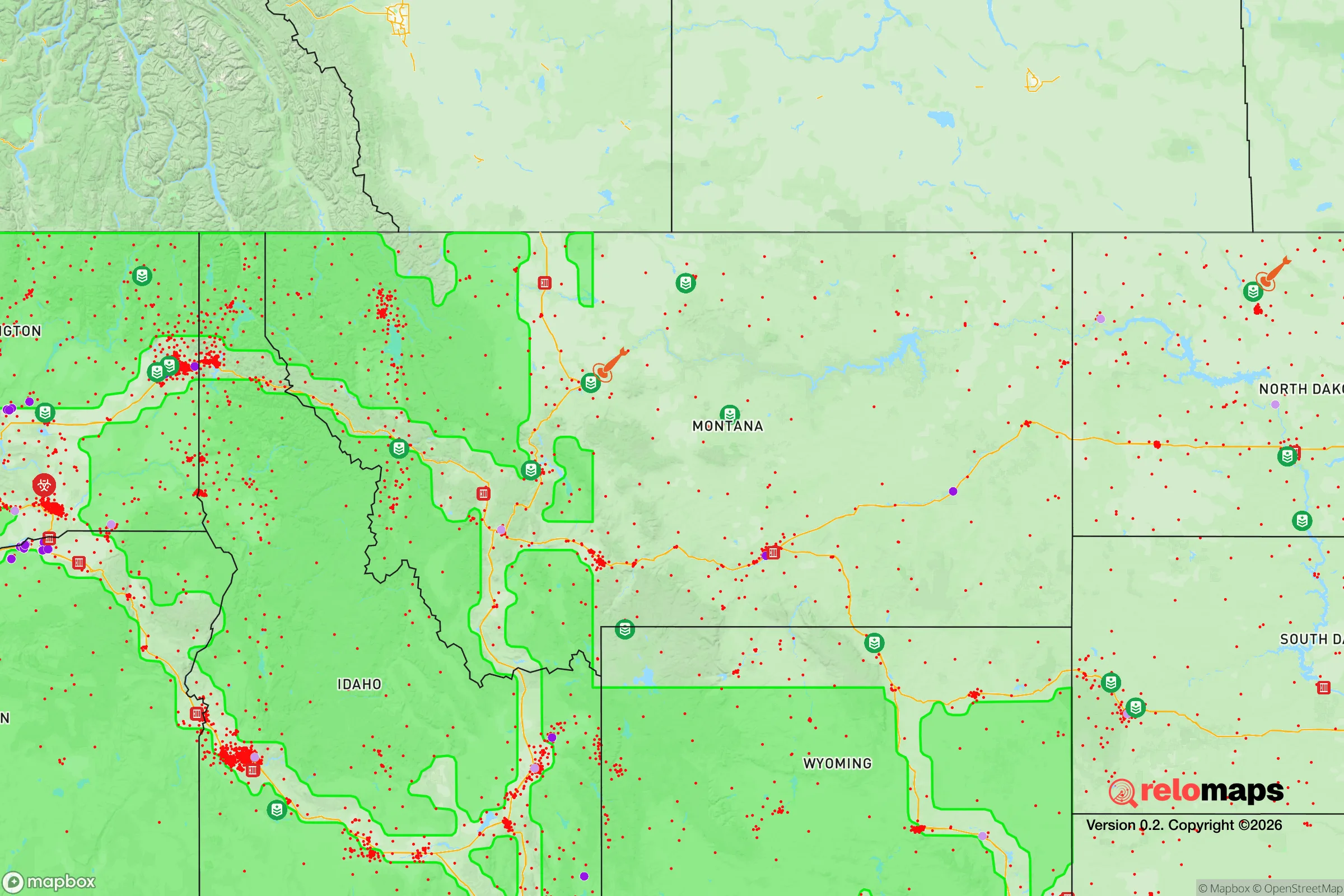


Important Note: For informational purposes only. This does not mean nothing bad ever happens in the green zones. Please use common sense. This is based on public data and modeled with AI. We tried to take a conservative approach but mistakes happen. We update this regularly as new information becomes available.
Solar Generator Recommendations
Backup power matters more here than in safer locations. We've picked three solar generators across budgets and capacity tiers — start with the budget unit if you only need a few essentials, or step up if you want to run a fridge and HVAC for days at a time.

Jackery Portable Power Station Explorer 300
Budget OptionPower on the Go: Weighing only 11 lbs, it's convenient to set up and store with book-sized foldable solar panels

BLUETTI Portable Power Station AC180
Designed for both indoor and outdoor scenarios, AC180 is highly capable as it has a robost capacity and continuous output power.

EF ECOFLOW DELTA Pro Ultra Power Station
Upgraded PickEcoFlow DELTA Pro Ultra is a whole-home energy system designed to grow with your family. Integrated with the Smart Home Panel 2, it scales to meet your evolving energy needs — keeping your home powered, intelligent, and secure through every stage of life.
We earn a commission, at no additional cost to you.
Strategic Assessment Analysis
Anaconda, Montana, sits in a strategic sweet spot that few relocators fully appreciate: far enough from the major population centers of the Front Range to avoid the blast radius of a worst-case scenario, yet close enough to Butte and I-90 to maintain supply lines and economic access. The town’s history as a copper-smelting hub means the infrastructure for heavy industry and independent power generation is already baked into the landscape, and its position in the Deer Lodge Valley offers a natural funnel for monitoring movement from the west and south. For someone thinking in terms of decades rather than election cycles, Anaconda presents a rare combination of remoteness, existing hard infrastructure, and a population that still remembers what self-reliance looks like.
Geographic position and natural advantages for long-term security
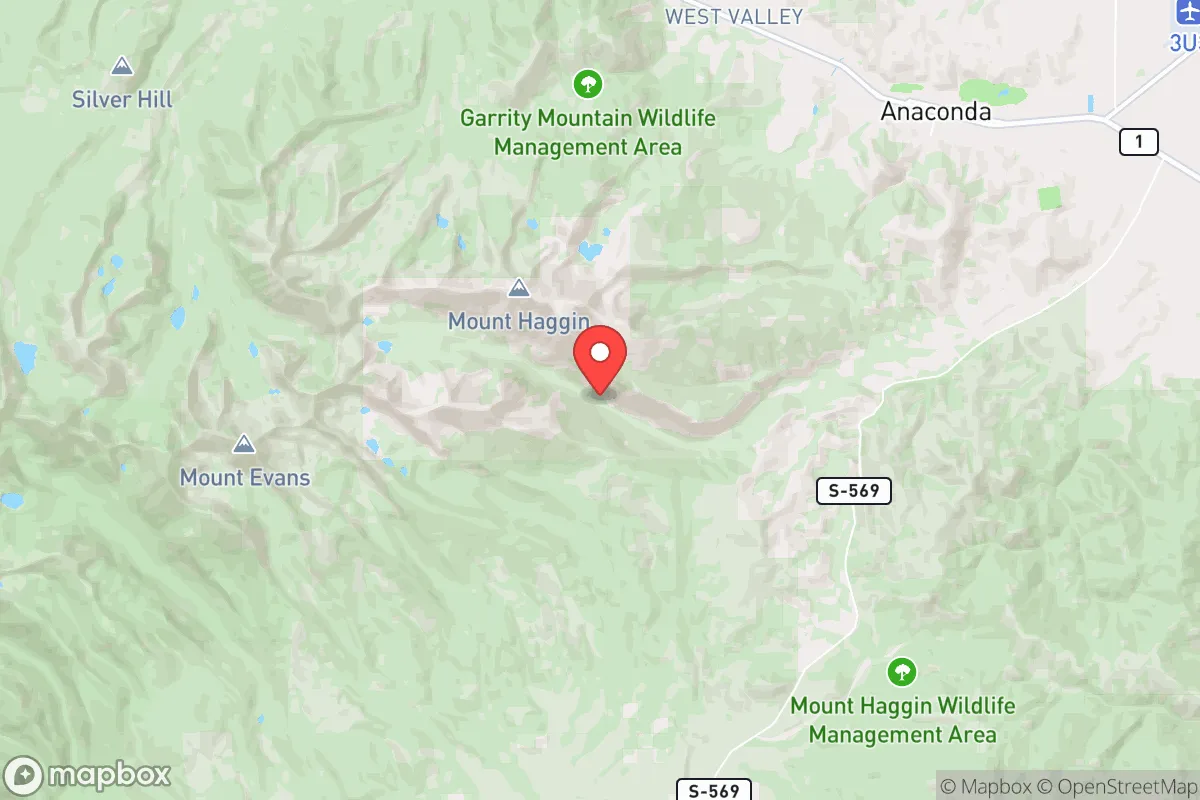
Anaconda sits at the southern end of the Deer Lodge Valley, ringed by the Pintler Mountains to the west and the Anaconda Range to the south. This gives the area a natural defensive posture: the only practical road access from the west comes over the Pintler Pass via Highway 1, and from the south over the Continental Divide at Pipestone Pass. Both routes are easily monitored and, in a grid-down scenario, could be controlled with minimal manpower. The valley floor itself is wide enough for agriculture but narrow enough that a small community can maintain situational awareness. The elevation—5,200 feet—means a shorter growing season, but it also means less risk of the kind of drought-driven crop failure that plagues lower-elevation areas. Snowpack in the surrounding ranges provides a reliable water source well into summer, and the area’s mining history means there are existing wells, springs, and water rights that a prepared relocator can tap into. The proximity to the Anaconda-Pintler Wilderness and the Beaverhead-Deerlodge National Forest gives immediate access to timber, game, and forage, all within a 20-minute drive from town.
Risks, exposures, and proximity to fallout-relevant landmarks
No location is without trade-offs, and Anaconda’s primary risk is its proximity to Butte, 25 miles to the east. Butte is a regional hub with a population of around 35,000, a major hospital, and the Berkeley Pit—a Superfund site that, while not a direct fallout risk, represents a long-term environmental liability if civil order collapses and containment systems fail. The interstate corridor (I-90) running through Butte is a double-edged sword: it provides supply access now, but in a crisis it becomes a funnel for refugees and looters from Missoula and Bozeman. Anaconda itself sits directly under the flight path for inbound traffic to the Bert Mooney Airport in Butte, which could be a target in a conflict scenario. Further out, the Montana Rail Link line that runs through the valley carries hazardous materials, including crude oil and anhydrous ammonia, through the heart of the area. A derailment or intentional strike on a tanker car could render parts of the valley uninhabitable for weeks. The good news is that Anaconda is 120 miles from the nearest major military installation (Malmstrom Air Force Base near Great Falls) and over 200 miles from the nearest nuclear power plant (Columbia Generating Station in Washington). For a relocator weighing fallout risk, the calculus favors Anaconda over most of the Front Range or the Pacific Northwest.
Practical resilience for a relocator: food, water, energy, and defensibility
Water is the first thing to lock down, and Anaconda has it in spades. The city draws from the Big Hole River watershed via the Anaconda Water Treatment Plant, but the real value is in the private wells and springs scattered throughout the valley. A prepper who buys a few acres north of town on the Georgetown Lake side will have year-round surface water and a short overland route to the lake itself for backup. The soil in the valley is volcanic loam—not the best for row crops, but adequate for potatoes, root vegetables, and hardy grains like spelt and emmer. The growing season is short (roughly 90 frost-free days), so a greenhouse or high tunnel is non-negotiable for serious food production. Energy is where Anaconda shines: the old smelter site has existing electrical substations and industrial-grade transformers that could be repurposed, and the surrounding mountains offer consistent wind for small-scale turbines. The area also has a history of geothermal exploration—the Anaconda Geothermal Project was studied in the 1980s and could be revived by a determined community. For defensibility, the town’s layout is favorable: the residential neighborhoods are clustered around the old downtown grid, with wide streets that provide clear sightlines and multiple egress routes. The surrounding hills offer natural observation points, and the railroad grade along the western edge of town can serve as a berm for cover. The local population skews older and more conservative than the national average, which means a higher baseline of firearm ownership and a lower tolerance for nonsense—both assets in a prolonged disruption.
The overall strategic picture for Anaconda is one of high potential with moderate upfront work. It is not a bug-out location for someone who wants to disappear into the woods with a rifle and a bag of rice; it is a community that, with the right influx of skilled relocators, could become a self-sustaining redoubt. The existing infrastructure—schools, a hospital, a rail spur, a working airport 25 minutes away—means you are not starting from scratch. The risks are real but manageable: Butte’s proximity is a concern, but it also means access to medical specialists and heavy equipment that a truly remote location would lack. For a conservative-leaning individual or family who wants to be part of building something that can survive the next 20 years, Anaconda deserves a serious look. The valley has the water, the defensible terrain, and the industrial bones. What it needs is people who understand that resilience is not a product you buy—it is a place you choose and then work to protect.

* Values derived from national, state, county, city and local statistics and may differ in a specific area. Last updated: 2026-04-30T03:41:35.000Z
Narrative content on this page is AI-generated and may contain mistakes. Verify any details that matter before acting on them.
ReloMaps may earn a commission from affiliate links at no extra cost to you.

