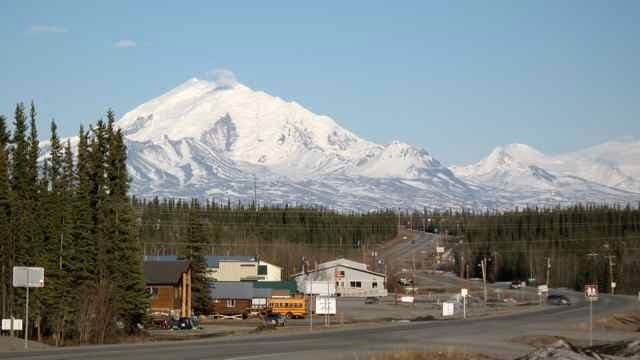
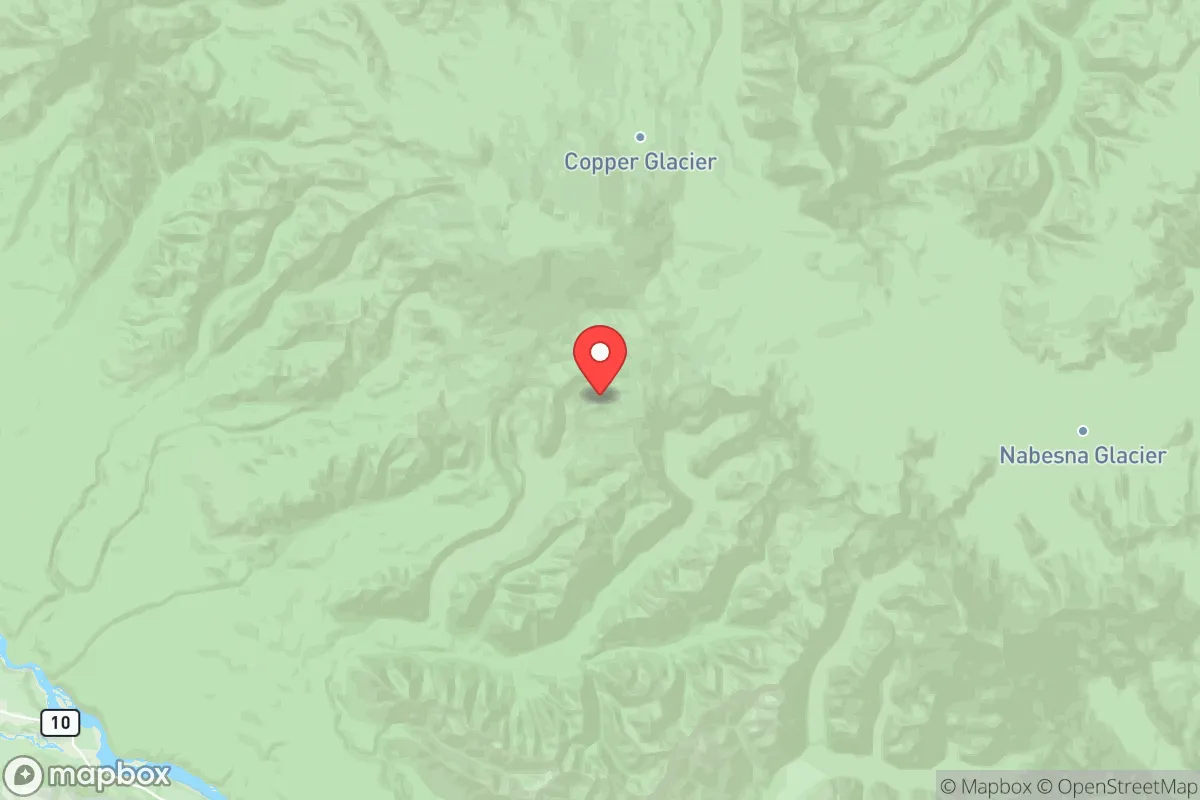
Photo: Wikipedia
Demographics of Copper River County
Historical data isn't available for Copper River County. Trends shown are for Alaska.
Affluence Level in Copper River County
A middle-class area roughly in line with national averages across income, home values, education, and employment.
People of Copper River County
Copper River County, Alaska, is home to 2,626 people, making it one of the most sparsely populated regions in the state, with a character defined by its rugged isolation and deep Indigenous roots. The population today is predominantly White (53.2%), with a significant Alaska Native presence, a small Hispanic community (3.9%), and a foreign-born population of just 0.7%. The county’s identity is shaped by subsistence living, a strong connection to the Copper River and its salmon runs, and a history of gold rush-era settlement that never gave way to large-scale urbanization.
Settlement & growth (pre-1960)
The human history of Copper River County begins with the Ahtna Athabascans, who have inhabited the Copper River basin for thousands of years. The Ahtna people, organized into several bands, lived a semi-nomadic lifestyle based on fishing, hunting, and trading across the vast interior. Their settlements were concentrated along the Copper River and its tributaries, with key villages including Chitina (originally "Tsedi Na’," meaning "copper river"), Copper Center, and Gulkana. The Ahtna name for the region reflects its most valuable resource: copper, which they mined and traded long before European contact.
Russian exploration of the area began in the early 19th century, but unlike coastal Alaska, the interior saw limited Russian settlement. The Russians established trading posts and introduced the Russian Orthodox faith, which still has adherents among the Ahtna today. However, the real demographic shift came with the Klondike Gold Rush of the late 1890s, which funneled prospectors through the Copper River Valley en route to the Yukon. The construction of the Copper River and Northwestern Railway (1907–1911) to serve the Kennecott copper mines brought a wave of American and European laborers, including Irish, Italian, and Scandinavian immigrants, who settled in Chitina and Kennicott (the mining camp, distinct from the modern Kennecott). At its peak, the Kennecott mines employed over 300 workers, and Chitina became a bustling railroad hub with a population of several thousand.
The collapse of the copper mines in 1938 triggered a sharp population decline, as the railroad was abandoned and most workers left. The region reverted to a subsistence-based economy, with the Ahtna population remaining the largest group in villages like Mentasta Lake and Tazlina. By 1960, the county’s population had fallen to just over 1,000, with the majority living in small, isolated communities along the Richardson Highway.
Modern era (post-1965)
The 1965 Hart-Cellar Act had minimal direct impact on Copper River County, as the region never attracted significant international immigration. The foreign-born population today is only 0.7%, and the county remains overwhelmingly native-born. Instead, the modern demographic story is one of domestic migration and the Alaska Native Claims Settlement Act (ANCSA) of 1971, which established the Ahtna, Inc. regional corporation and gave the Ahtna people a formal economic and political structure. This act solidified the Ahtna’s role as the county’s foundational population, with villages like Cantwell and Chistochina serving as centers of Ahtna governance and culture.
Since the 1970s, the county has seen a slow influx of non-Native residents drawn by the region’s natural beauty, hunting and fishing opportunities, and a desire for an off-grid lifestyle. These newcomers, predominantly White and often from the Lower 48, have settled in Glennallen, the county’s largest community and commercial hub, as well as in Copper Center and along the Richardson Highway corridor. The Hispanic population, at 3.9%, is small but growing, largely due to seasonal work in fishing and construction. The East/Southeast Asian population (0.4%) and Indian subcontinent population (0.1%) are negligible, reflecting the county’s lack of urban job markets or ethnic enclaves.
The Black population (0.1%) is virtually nonexistent, and the county has not experienced the suburbanization or racial diversification seen in Anchorage or Fairbanks. Instead, the modern era has been defined by a tension between the Ahtna’s traditional land use and the influx of recreational and residential development. The population has remained stable at around 2,600 since the 1990s, with growth limited by the harsh climate, lack of employment beyond government and resource extraction, and the high cost of living.
The future
Copper River County is likely to remain one of Alaska’s least diverse regions, with the White population holding steady or declining slightly as younger residents move to urban areas for education and jobs. The Ahtna population, which is younger on average, may see modest growth due to higher birth rates, but out-migration to Anchorage and Fairbanks will continue to offset gains. The Hispanic population could increase slowly as seasonal workers settle permanently, but it will remain a small minority.
The county’s cultural identity will continue to be shaped by the Ahtna’s stewardship of the land and the subsistence lifestyle, even as tourism and second-home development bring more seasonal residents. The lack of significant immigration or domestic in-migration means the population will remain small, aging, and predominantly White and Alaska Native. For someone moving in now, Copper River County offers a deeply rural, community-oriented life with strong ties to the land, but little demographic change on the horizon.
Copper River County is becoming a place where the past and present coexist quietly—a region where the Ahtna’s ancient presence remains the defining cultural force, and where new arrivals are drawn by the same wilderness that has always defined it. For a relocating individual or family, this means joining a small, tight-knit population where self-reliance and respect for Native traditions are essential, and where the population is unlikely to grow or diversify significantly in the coming decades.

* Values derived from national, state, county, city and local statistics and may differ in a specific area. Last updated: 2026-10-13T15:59:36.000Z
Narrative content on this page is AI-generated and may contain mistakes. Verify any details that matter before acting on them.
ReloMaps may earn a commission from affiliate links at no extra cost to you.

