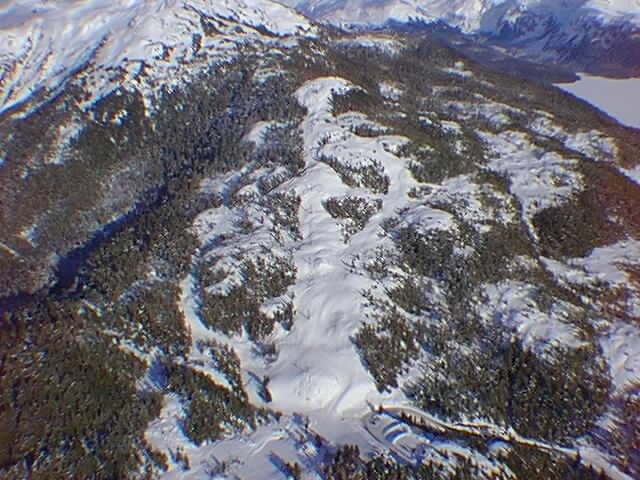
Photo: Wikipedia
Demographics of Chugach County
Historical data isn't available for Chugach County. Trends shown are for Alaska.
Affluence Level in Chugach County
A middle-class area roughly in line with national averages across income, home values, education, and employment.
People of Chugach County
Chugach County, Alaska, is home to approximately 6,964 residents, a population defined by its remote coastal geography, a predominantly white demographic makeup (72.0%), and a strong connection to the region's maritime and resource-extraction industries. The county's identity is shaped by its sparse settlement pattern, with most residents living in the small port town of Cordova, the only incorporated city, and in scattered Native villages like Chenega Bay and Tatitlek. With a foreign-born population of just 1.9%, the area remains one of the least ethnically diverse regions in the United States, and its people are characterized by a self-reliant, frontier-oriented culture rooted in fishing, subsistence living, and a deep history of Indigenous Alaskan presence.
Settlement & growth (pre-1960)
The human history of Chugach County begins with the Alutiiq (Sugpiaq) people, who have inhabited the Prince William Sound coastline for thousands of years. These maritime-oriented peoples established seasonal villages along the shores, relying on salmon, halibut, seals, and sea otters. The Alutiiq name for the region, "Chugach," is derived from their language, and their descendants still maintain a presence in the modern villages of Chenega Bay and Tatitlek, where subsistence traditions remain central to daily life. Russian colonization, beginning in the late 18th century, brought fur traders and Orthodox missionaries to the area, but the rugged coastline and lack of arable land limited permanent Russian settlement. The Alaska Purchase of 1867 transferred control to the United States, but for decades, the region remained largely untouched by American settlers, with only a handful of traders and prospectors passing through.
The first major wave of American settlement came with the copper boom of the early 20th century. The discovery of rich copper deposits in the Wrangell Mountains led to the construction of the Copper River and Northwestern Railway, which terminated at the newly founded town of Cordova in 1908. Cordova quickly grew into a bustling company town, with thousands of workers—many of them immigrants from Scandinavia, Ireland, and Italy—arriving to build the railroad and work the Kennecott mines. At its peak, Cordova's population exceeded 2,000, and the town became a hub of commerce and transportation. However, the collapse of copper prices in the 1930s and the closure of the mines in 1938 devastated the local economy, leading to a sharp population decline. Many workers left, but a core of families stayed, transitioning to commercial fishing as the new economic mainstay.
Throughout the mid-20th century, Chugach County's population remained small and stable, centered almost entirely on Cordova. The fishing industry—particularly salmon, halibut, and crab—drew a steady trickle of new residents, including fishermen from the Pacific Northwest and Alaska's other coastal communities. The Native villages of Chenega Bay and Tatitlek, meanwhile, experienced significant disruption. The 1964 Good Friday earthquake and subsequent tsunami destroyed the original Chenega village, killing 23 of its 68 residents. Survivors were relocated to a new site, Chenega Bay, on Evans Island, where they rebuilt their community. This disaster, combined with federal assimilation policies, accelerated the shift from a subsistence-based lifestyle to a mixed economy of fishing, government employment, and cash income.
Modern era (post-1965)
The post-1965 era in Chugach County has been defined not by immigration from abroad—the foreign-born share remains minuscule at 1.9%—but by domestic migration patterns and the consolidation of the fishing economy. The Alaska Native Claims Settlement Act (ANCSA) of 1971 created regional and village corporations, including the Chugach Alaska Corporation, which provided a new institutional framework for Native communities. This led to a modest influx of Alaska Natives from other parts of the state seeking employment or reconnecting with ancestral lands, but the overall population growth has been slow. The county's population peaked at around 9,000 in the 1980s, driven by the construction of the Trans-Alaska Pipeline and related support activities in the region, but declined as those projects wound down.
Today, the county's racial composition reflects its historical settlement patterns. Whites make up 72.0% of the population, a figure that includes descendants of the early 20th-century Scandinavian and Irish immigrants who settled in Cordova, as well as more recent arrivals from the Lower 48 drawn by the fishing industry or a desire for a remote, outdoor-oriented lifestyle. The East/Southeast Asian population stands at 5.9%, a notable presence that is almost entirely concentrated in Cordova and consists primarily of Filipino-Americans who arrived in the 1970s and 1980s to work in the seafood processing plants. These workers, many of whom came from the Philippines via cannery labor networks, have established a small but stable community, with families now in their second and third generations. The Hispanic population is 5.2%, a mix of Mexican-American and Central American workers who have also found employment in the seafood industry, though they are more transient than the Filipino community. The Black population is just 1.4%, and the Indian subcontinent population is effectively zero. The Native Alaskan population, while not broken out in the provided data, remains a significant minority, concentrated in Chenega Bay and Tatitlek, where they make up the majority of residents.
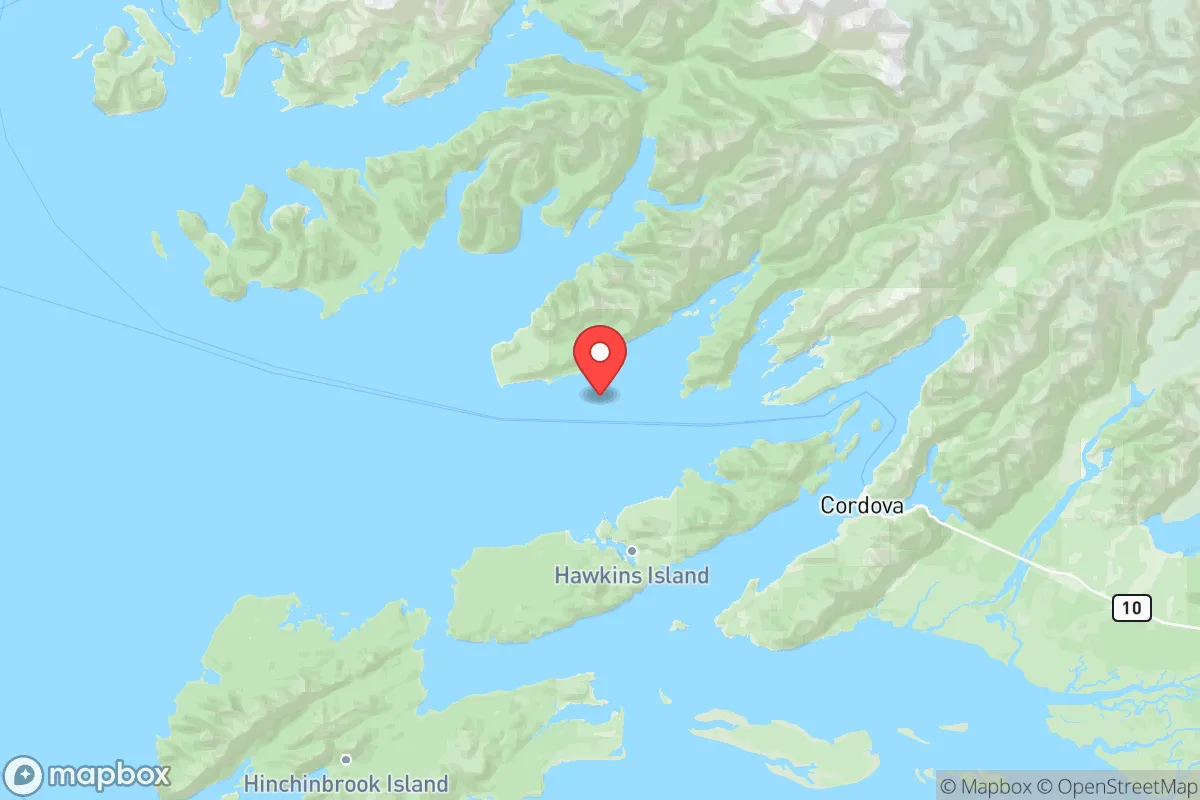
Suburbanization has not occurred in Chugach County in any meaningful sense. The rugged terrain, lack of road connections to the rest of Alaska (Cordova is accessible only by air or ferry), and the absence of a large urban center have prevented the kind of sprawl seen in the Anchorage or Mat-Su regions. Instead, the population has remained clustered in a few isolated communities, with Cordova serving as the commercial and administrative hub. The decline of the fishing industry due to salmon farm competition, climate change, and regulatory restrictions has led to a slow population drain, particularly among younger residents who leave for education and job opportunities in Anchorage or the Lower 48.
The future
The demographic trajectory of Chugaga County points toward continued slow decline and gradual aging. The population has fallen from roughly 9,000 in the 1980s to under 7,000 today, and projections suggest further contraction as the fishing industry faces ongoing challenges. The county's remote location and limited economic base make it unlikely to attract significant in-migration from outside Alaska. The Filipino and Hispanic communities, while stable, are not growing rapidly, and the Native Alaskan population is also experiencing out-migration to urban areas. The white population, which is older on average, is declining through natural decrease—more deaths than births—and out-migration of younger adults.
What growth does occur is likely to come from two sources: retirees and remote workers seeking a low-density, nature-oriented lifestyle, and a small number of Alaska Natives returning to their ancestral villages as part of cultural revitalization efforts. The county is not homogenizing in the sense of becoming more diverse; rather, it is becoming more uniformly white and older, with the small minority communities remaining stable but not expanding. The cultural identity of the region—rooted in fishing, subsistence, and a fierce independence—is likely to persist, but it will be carried by a smaller, older population. For someone moving in now, Chugach County offers a tight-knit, traditional community with a strong sense of place, but also limited economic opportunity and a demographic future that is more about preservation than growth.
In summary, Chugach County is becoming a quieter, older, and more insular place—a region where the descendants of early 20th-century settlers and ancient Alutiiq peoples coexist in a landscape that resists change. For a conservative-leaning individual or family seeking a low-crime, rural, and culturally stable environment, the county offers a genuine frontier experience, but one that comes with the trade-offs of economic stagnation and geographic isolation.

* Values derived from national, state, county, city and local statistics and may differ in a specific area. Last updated: 2026-05-12T10:29:30.000Z
Narrative content on this page is AI-generated and may contain mistakes. Verify any details that matter before acting on them.
ReloMaps may earn a commission from affiliate links at no extra cost to you.

