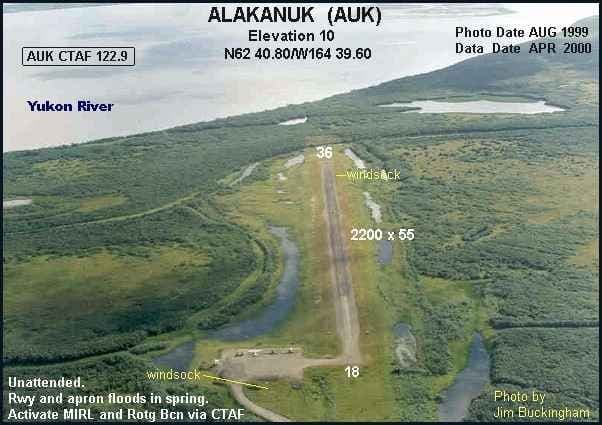
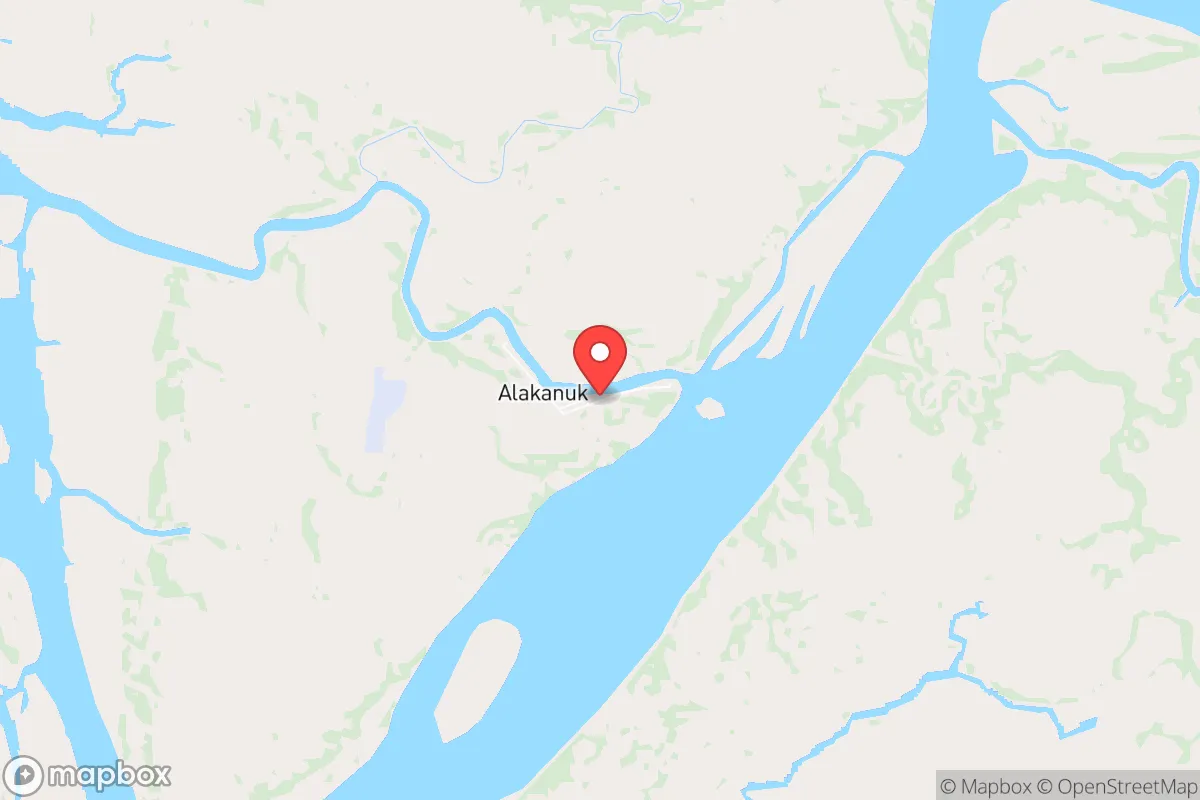
Photo: Wikipedia
Political ClimatePolitical Climate in Alakanuk, AK
District shown is the primary district for this city’s centroid. Cities may span multiple districts.
Inherited from parent state — no local data available.
Local Political AnalysisPolitical Analysis of Alakanuk, AK
Alakanuk, Alaska, leans solidly conservative, with a Cook PVI of R+6 that reflects a deep-rooted preference for limited government and personal responsibility. This isn't a place that's suddenly flipped; it's been a Republican stronghold for as long as anyone can remember, and the trajectory is holding steady. While some of the bigger towns in the state, like Anchorage or Juneau, have drifted leftward in recent years, Alakanuk has stayed true to its values, with local elections and community sentiment consistently favoring candidates who prioritize local control and individual freedoms over top-down mandates.
How it compares
To get a real sense of Alakanuk's political character, you have to look at the surrounding region. Up the river in Emmonak, you'll find a similar conservative bent, though maybe a bit more mixed with tribal council dynamics. But drive a few hours to Bethel, and you're in a different world entirely—a hub of government services and progressive activism that can feel like a foreign country. Alakanuk is the quiet, steady anchor in that contrast. Where Bethel might embrace new social programs or environmental regulations that feel like government overreach, Alakanuk folks tend to ask, "Who's paying for that, and who's making the rules?" The R+6 rating isn't just a number; it's a reflection of a community that values self-sufficiency and distrusts distant bureaucrats meddling in local affairs.
What this means for residents
For the people living here, the political climate translates into a daily life that's largely free from the kind of progressive policy experiments you see in urban Alaska. There's no push for strict gun control or heavy-handed land-use restrictions that would interfere with subsistence hunting and fishing—the backbone of life in Alakanuk. The local school board and city council tend to focus on practical issues like infrastructure and public safety, not on culture-war battles imported from Outside. That said, there's a growing concern among long-time residents about the slow creep of state and federal mandates, especially around environmental regulations that threaten traditional ways of life. The feeling is that if you leave folks alone to manage their own business, they'll do just fine—and that's the core of the conservative ethos here.
One thing that sets Alakanuk apart is its fierce independence from the party machinery. You won't find much of the national Republican circus here; it's more about local common sense. The cultural distinction is that this is a Yup'ik community where traditional values of family, hard work, and respect for elders align naturally with conservative principles. There's a wariness of outside ideologies—whether from the left or the right—that don't respect the unique challenges of living in a remote village. The biggest policy distinction is the near-universal opposition to any form of carbon tax or climate regulation that would raise fuel prices or restrict subsistence harvests. In Alakanuk, the political climate isn't about abstract debates; it's about protecting the right to live your life without someone in Juneau or Washington telling you how to do it. And that's a fight that's not going away anytime soon.

State Political ClimatePolitical Climate in Alaska
State Political AnalysisPolitical Environment in the State
Alaska has long been a politically unique state, leaning Republican in presidential elections but with a fiercely independent, libertarian streak that often defies national party labels. Over the past 20 years, the state has shifted from reliably red to a more volatile battleground, with the 2020 election seeing Joe Biden win a single electoral vote while Donald Trump carried the state by 10 points. The dominant coalition is a mix of rural conservatives, resource-industry workers, and fiscally conservative but socially moderate independents, though recent in-migration from blue states and a growing progressive base in Anchorage and Juneau are slowly nudging the state leftward. For a conservative-leaning relocator, Alaska still offers a high degree of personal freedom, but the trajectory is worth watching closely.
Urban vs. rural divide
The political map of Alaska is starkly divided between its few urban centers and vast rural expanse. Anchorage, home to 40% of the state’s population, is the key swing region; it voted for Trump in 2016 and 2020 but elected a Democratic mayor in 2021 and has seen its state legislative seats trend purple. Juneau, the capital, is reliably blue, driven by government workers and a growing progressive activist class. Fairbanks leans conservative but is more moderate than the Mat-Su Valley, which is the state’s conservative stronghold. The Matanuska-Susitna Borough (Wasilla, Palmer) is where the GOP base lives—think Sarah Palin country—with precincts routinely voting 65-70% Republican. Rural villages in the Bush, like Nome and Barrow (Utqiaġvik), vote heavily Democratic due to tribal affiliation and federal dependency, but their turnout is low. The divide isn’t just urban vs. rural; it’s between the resource-extraction economy (oil, mining, fishing) that favors low regulation and the government-and-tourism economy that leans left.
Policy environment
Alaska’s policy environment is a mixed bag for conservatives. On the plus side, there is no state income tax and no statewide sales tax, though local sales taxes can reach 7% in places like Anchorage. The state’s Permanent Fund Dividend (PFD) is a unique cash payment to every resident, funded by oil revenues—a direct check that keeps many Alaskans skeptical of big government. Property taxes are low, with no tax on the first $150,000 of assessed home value in many boroughs. However, the state has a highly regulated oil industry and a permitting process that can frustrate small developers. Education policy is locally controlled, but the state’s Alaska Performance Scholarship and a recent push for charter school expansion have been modest wins for school choice. Healthcare is expensive due to rural logistics, but the state has no Medicaid expansion drama—it was expanded in 2015. Election laws are relatively secure: Alaska uses a top-four primary and ranked-choice voting system, passed by ballot initiative in 2020, which has frustrated some conservatives who see it as diluting party power. Voter ID is required, but the system is not as strict as Texas or Florida.
Trajectory & freedom
On personal freedom, Alaska remains one of the most libertarian states in the union, but recent trends are concerning. Gun rights are strong: no permit required for concealed carry, no magazine bans, and a state preemption law that blocks local gun control. However, a 2023 bill to allow permitless carry on school grounds failed. Parental rights are generally respected, but a 2022 law requiring schools to notify parents of curriculum changes was watered down. Medical autonomy is a bright spot: Alaska has no vaccine mandate for state employees and no COVID-19 passport system. The state’s Right to Try law is among the strongest, allowing terminally ill patients access to experimental treatments. On property rights, Alaska’s vast federal land ownership (60% of the state) is a constant friction point—the Biden administration’s 2023 restrictions on oil drilling in the Arctic National Wildlife Refuge (ANWR) were seen as a federal overreach. The state’s tax freedom is eroding slightly: a 2023 legislative effort to create a state income tax failed, but the PFD has been cut in some years to balance budgets, effectively a hidden tax. The trajectory is toward more government involvement, especially in health and education, but Alaska still ranks in the top 10 for economic freedom nationally.
Civil unrest & political movements
Alaska has seen relatively little civil unrest compared to the Lower 48, but tensions are rising. The 2020 Black Lives Matter protests in Anchorage were large for the state (several thousand participants) and led to a push to remove a statue of a Russian explorer. The Alaska Independence Party, which advocates for secession, remains a fringe but vocal presence, especially in the Mat-Su Valley. Immigration politics are muted because Alaska has a small foreign-born population, but there is a growing debate over sanctuary policies in Anchorage, which in 2023 declared itself a “Welcoming City” for immigrants, though it does not fully restrict cooperation with ICE. Election integrity has been a flashpoint: the 2020 ranked-choice voting system was challenged by a 2024 ballot initiative to repeal it, which failed narrowly. The Palin-Murkowski dynamic is a microcosm of the state’s political tension—Lisa Murkowski’s moderate, cross-party votes have made her a target of the state GOP, while Sarah Palin’s 2022 congressional run showed the populist right’s enduring strength. A new resident would notice the strong anti-federal sentiment in rural areas, where “Keep the Feds Out” signs are common, and a growing progressive activism in Anchorage coffee shops.
Projection
Over the next 5-10 years, Alaska is likely to become more politically competitive, but not necessarily more liberal. The key driver is in-migration from blue states, particularly remote workers and retirees seeking low taxes and space. These newcomers tend to be fiscally conservative but socially moderate, which could push the state toward a more centrist, less populist Republicanism. The oil industry’s decline (production has fallen 70% since 1988) will force the state to diversify its economy, likely increasing reliance on federal dollars and tourism, which could shift the political center left. However, the Mat-Su Valley’s growth (population up 15% since 2010) is a counterweight, as that region is deeply conservative. The ranked-choice voting system may produce more moderate winners, frustrating the GOP base. A conservative moving in now should expect a state that remains broadly free but with a growing progressive foothold in Anchorage and Juneau. The wildcard is the Permanent Fund: if oil revenues continue to fall, the state may be forced to adopt an income tax, which would be a major blow to its libertarian identity.
For a new resident, the bottom line is this: Alaska still offers exceptional personal freedom, low taxes, and a culture of self-reliance that aligns with conservative values. But the political winds are shifting. If you’re moving for the freedom, get in now before the state’s fiscal challenges force more government intervention. Stick to the Mat-Su Valley or Fairbanks for a like-minded community, and keep an eye on Anchorage politics—it’s the bellwether for where the whole state is heading. The frontier spirit is still alive, but it’s being tested by the same forces reshaping the rest of the country.
* Values derived from national, state, county, city and local statistics and may differ in a specific area. Last updated: 2026-04-19T19:13:26.000Z
Narrative content on this page is AI-generated and may contain mistakes. Verify any details that matter before acting on them.
ReloMaps may earn a commission from affiliate links at no extra cost to you.

