How to Move Out of State Without a Job: A Complete Guide

You're staring at two things at once, a moving date and an empty offer letter. That doesn't mean the move is reckless, it means you need a tighter plan, a cleaner budget, and a destination that can absorb a job search without forcing panic decisions.
How to move out of state without a job comes down to three decisions, not one. You need enough runway to cover essentials, a housing plan that doesn't require immediate payroll proof, and a destination picked with real data instead of guesswork.
Table of Contents
- Why Moving Without a Job Is More Feasible Than You Think
- Calculating Your Financial Runway Before the Move
- Housing Strategies for the Jobless Relocator
- Generating Income During Your Relocation Period
- Using ReloMaps to Research Your Destination Before Moving
- Legal and Tax Considerations When Changing States
- Frequently Asked Questions
Why Moving Without a Job Is More Feasible Than You Think
A jobless move works best when you treat it like a risk decision, not a leap of faith. If your work can be remote, or your search can continue after arrival, the old rule of securing a job before you pack up is no longer the only workable path.
A St. Louis Fed analysis found that annual interstate migration among working-age adults fell from 2.74% in 2005 to 2.40% in 2019, then rose to 2.66% in 2022 after the pandemic disrupted work and living patterns. The same research found that the share of workers working from home tripled from 5% in 2019 to 15% in 2022, and estimated that the rise in work from home explains 57% of the increase in interstate migration from 2019 to 2022. St. Louis Fed analysis
That shift matters because it changes the decision you are making. The question is not whether moving without a job is allowed. It is whether your savings, housing plan, and job search window are strong enough to absorb the gap between arrival and income.
Why the move is no longer niche
A UC Irvine study using American Community Survey data found that 2.6% of sampled workers moved between states and 9.7% moved within a state, while fully remote employment was positively associated with moving between or within states. That pattern shows mobility is not limited to people who already have a local employer waiting on them. UC Irvine study
The broader picture is similar. The Economic Policy Institute notes that across all moves, only one in five are job related, which means roughly 80% happen for reasons like housing, family, education, or lifestyle. Economic Policy Institute
Practical rule: if your move depends on one future paycheck, it is fragile. If it depends on savings, temporary housing, and a searchable labor market, it is a planned risk.
| Motivation | Share of Moves | Typical Planning Time |
|---|---|---|
| Job related | one in five | varies by employer timing |
| Other reasons, like housing or family | roughly 80% | often self-directed and flexible |
The decisive advantage is timing. People who move first and work later usually are not acting blindly, they are using a more flexible structure than older relocation advice assumed. That only works when the budget, housing, and job search all point in the same direction.
Calculating Your Financial Runway Before the Move
Start with the runway, not the destination. If your cash buffer cannot carry you through a quiet first stretch in the new state, the move turns into a race against rent instead of a controlled job search.
A practical benchmark is 3 to 6 months of essential living expenses before departure, with move costs tracked separately. Those essentials should reflect the destination, not your current city, and include rent, utilities, groceries, transportation, insurance, and debt payments. Coursera's guidance also notes that some movers need a longer cushion, and the right target depends on how tight the local market is and how long your search may take. Coursera guidance
Build the runway in two buckets
Keep the money in two separate pools.
- Post-move living-expense runway. This covers the monthly bills that keep you housed and functional after arrival.
- Move budget. This covers deposits, travel, movers, and setup costs before the first steady paycheck lands.
That split matters because relocation costs can eat the same cash you planned to use for survival. A moving-cost guide puts a three-bedroom local move at about $2,100, while the same size home moved out of state is about $5,500. The same source says long-distance moving services generally fall in the $2,200 to $5,700 range depending on options. SelfStorage.com moving cost guide
The common mistake is treating all of it as one fund. People pay deposits, buy boxes, book transport, and then discover their emergency money is already gone before interviews have even settled into a rhythm.
Keep liquid cash available. A relocation fund tied up in investments is harder to use when you need a deposit, a hotel week, or a fast backup plan.
A simple calculation you can actually use
Start with your monthly essentials in the destination city. Multiply that number by your runway target, then add your move budget on top. If you are comparing cities, a lower-rent market gives you more room to work with, and a higher-rent market reduces that margin quickly. ReloMaps' cheapest cities in America tool is useful here because it helps you compare destination costs before you commit cash.
For a $3,200 monthly destination budget, 6 months of runway means $19,200, plus a $5,500 move budget, for $24,700 needed before departure. That kind of calculation forces the core question: can you afford the move you want, not just the one that sounds appealing?
Preserve liquidity while you save. Cash is what lets you handle delays without panic, and it should stay accessible without penalties or waiting periods.
Housing Strategies for the Jobless Relocator
Housing is usually the first hard wall. Landlords want income proof, and a jobless move asks them to accept more uncertainty than they usually prefer, so the housing plan has to match your cash position and your tolerance for risk.
Short-term furnished rentals sit at the flexible end of the range. They cost more, but they buy time to test neighborhoods, settle in, and keep the job search wide open. Sublets sit in the middle, but only if the lease terms are clear and the tenant, landlord, and sublease rules line up cleanly.
Compare your options by risk
- Short-term furnished rental: use it when speed matters and you do not want to commit before interviews are underway.
- Sublet: useful when you want a lower-commitment landing pad, but you still need to inspect the lease language carefully.
- Traditional lease with extra proof: works if you can show strong cash reserves, offer a larger security deposit, or bring in a guarantor.
- Temporary housing first: helps if you are still comparing neighborhoods and want to avoid signing blind.
Rental screening still leans heavily on local proof of stability, even for workers whose jobs are portable. That means many movers need to think in stages, first a place to land, then a place to settle.
If you are comparing cities, lower rent pressure and more forgiving entry requirements can make the difference between a workable move and a rushed one. If you need lower rent pressure with safety context, browse cheap and safe towns on ReloMaps before contacting landlords.
Landlord reality: if you do not have income yet, your cash position has to do some of the talking.
A stronger tactic is to ask for the housing conversation before the lease conversation. Some landlords will listen more closely to savings, co-signers, or a staged move if you are direct early. What does not work is locking into a long lease and hoping the job search catches up before the rent does.
Generating Income During Your Relocation Period
A move without a job still needs cash coming in. The practical goal is not a perfect career step, it is steady income you can start quickly and stop without creating a bigger problem if interviews take longer than expected.
The fastest bridge is usually work you can sell now. That may mean freelance assignments in your current field, contract consulting, virtual assistant work, or project-based help for former colleagues. Remote work is especially useful because it keeps your resume active while you change states.
Build a hybrid income plan
A workable mix often includes:
- Remote contract work for continuity.
- Short-term local gigs for immediate cash flow.
- Part-time work if you need a steady schedule while interviewing.
- Seasonal or app-based work when speed matters more than long-term fit.
The trade-off is simple. Temporary work may not match your long-term role, but it can slow runway burn and keep your budget intact while you wait for the right offer.
Keep your LinkedIn current, keep your network informed, and keep your explanation direct. A relocation gap reads better when it looks like a planned move with active search and active work. If you have a contract role or a temporary shift job, it still counts as professional continuity.
Choose work that will not create a story problem later. A short-term job in your field is easier to explain than a long stretch with no activity at all. The less visible gap you create, the less friction you face when recruiters ask what happened during the transition.
Using ReloMaps to Research Your Destination Before Moving
A jobless move gets easier when the destination is chosen with filters, not vibes. You are not just picking a city. You are testing whether it can support your runway, your housing plan, and your job search at the same time.
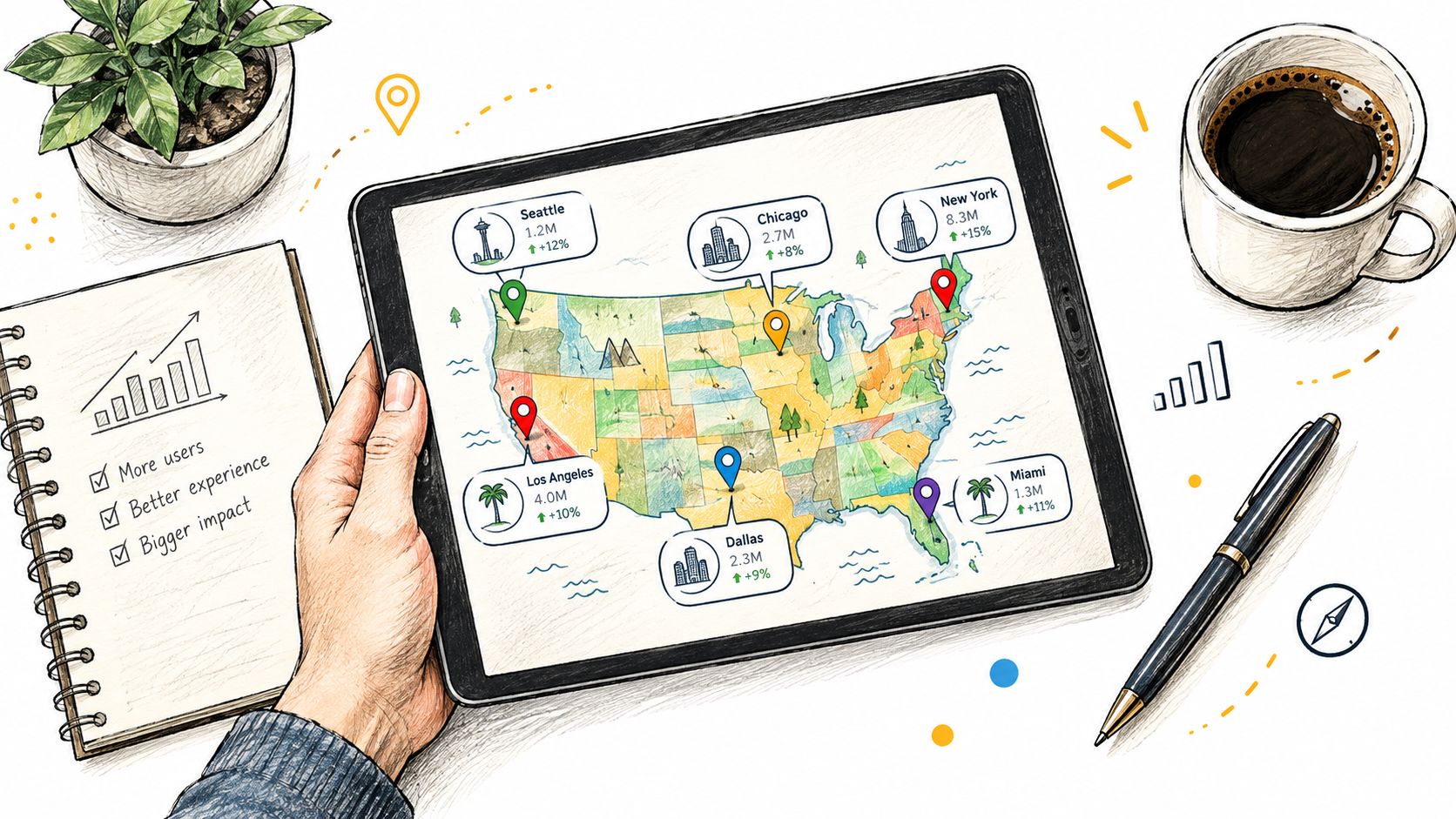
ReloMaps brings city and neighborhood context into one place by combining datasets into a ReloScore and category grades. It lets you filter by economics, demographics, education levels, home values, rents, commute times, and work-from-home rates. Use ReloMaps to compare places before you commit money to a lease, a flight, or a truck.
How to use the research workflow
Start broad, then narrow. Compare a few metro areas by affordability and work-from-home fit, then drill into neighborhoods where the housing stock and commute patterns match how you plan to live. If you are considering more than one destination, the goal is to rule out weak fits before you spend on relocation costs.
A practical workflow looks like this. Filter for a ReloScore B+ and rent below your ceiling, then compare work-from-home rates and commute times side by side before you shortlist three cities. That gives you a cleaner read on whether a place is merely inexpensive or workable while you are still job hunting.
ReloMaps is useful for that comparison because it keeps the relevant context together instead of sending you across listing sites, census pages, and local review threads. The point is not apartment hunting yet. The point is deciding whether a city can support your budget and your search before you arrive.
Do not choose a city because one listing looks convenient. Choose it because the city can carry your runway if the first month of search does not produce an offer.
Legal and Tax Considerations When Changing States
A jobless move can still go wrong after the truck is unloaded. Once you cross state lines, residency rules, tax filings, vehicle paperwork, and voter registration start to matter, and the timing affects how cleanly you can prove where you live.
The common mistake is assuming your old state stops counting the day you leave. It often does not. Many states still look for proof that you established residency elsewhere before they stop treating you as a resident for filing or administrative purposes.
Document the move like it matters
Keep a simple paper trail. Save lease agreements, utility start dates, address changes, transportation receipts, and any official notices tied to the new home. If you later need to show when you became a resident, those records separate a clean filing from a disputed one.
Update your voter registration, driver's license, and vehicle registration according to the rules in the new state. Those deadlines do not always match, so one update does not cover the others.
Benefits and assistance deserve the same attention. If you expect to use unemployment eligibility or state-specific support, check the rules before you move. Interstate changes can affect timing, residency, and where claims must be filed.
When to bring in a professional
If you had income in your old state and expect income in your new one, the filing picture can get complicated fast. A midyear move can leave you filing in two systems at once, with different residency rules and reporting requirements.
Bring in a tax professional if your move raises questions about domicile, multi-state filing, or residency proof. The cost of fixing a bad filing is usually higher than the cost of getting it reviewed first.
Frequently Asked Questions
Can I really move without a job and still stay financially safe
Yes, if you treat the move like a runway problem instead of a leap of faith. Aim for 3 to 6 months of destination-specific essentials, and keep move costs in a separate bucket so deposits, transport, and setup expenses do not drain your living cash too early.
What if my savings run out before I find work
Have a fallback ready before you leave. If savings drop below 2 months, pause the lease search, activate one remote contract, and switch to weekly furnished housing. That buys time without forcing a bad long-term commitment.
Should I tell landlords I'm unemployed
Yes, but only if you can replace the missing paycheck with something concrete. A larger deposit, a guarantor, or documented savings usually carries more weight than a vague explanation, especially if you start with temporary housing instead of a long lease.
How do I handle a resume gap caused by the move
Label the period accurately and keep it active. Contract work, freelance assignments, and short local jobs all count as ongoing professional activity, and they are easier to explain than a blank stretch.
Do I need to choose a tax-friendly state first
Not always, but tax treatment matters if the move crosses a filing year or affects residency proof. Clean records make the switch easier to defend later, especially if you are splitting time between states or changing domicile.
What should I compare before I pick a city
Compare rent, commute patterns, neighborhood fit, and how much time you can realistically spend job searching before your runway shrinks. That is where ReloMaps fits into the decision process, since it helps you compare cities before you commit to a lease or a truck booking.
Enjoying the blog? Subscribe to ReloMaps+ for premium area intelligence — and to keep us independent.
Subscribe today